What Global NCAP Is Doing to Improve Car Seat Safety in Developing Nations
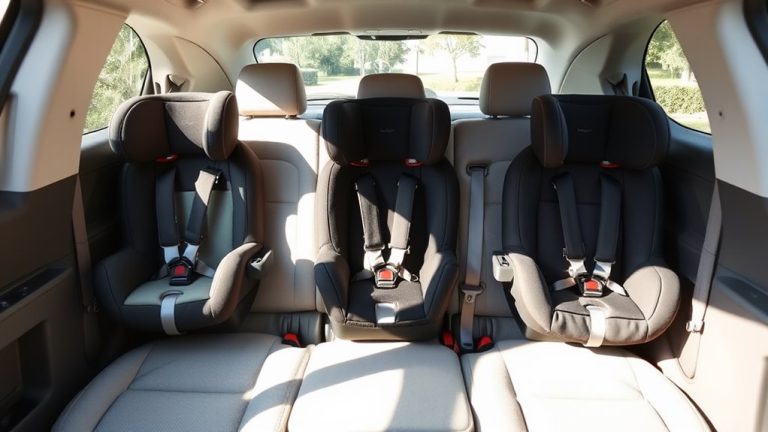
You’re protecting your child better when you choose seats tested by Global NCAP, which rates models like the Joie Every Stage FX for 5-star safety at 50 km/h using a 3-year-old dummy, ISOFIX, seatbelt installs, and i-Size compliance. They push stronger laws, cut costs through local partnerships, and run campaigns that slash misuse by 38%. With side-impact protection, under-15,000 N force ratings, and fit in compact cars, these seats are proven worldwide-their real-world results show what works where it matters most.
Notable Insights
- Conducts crash-tests on child car seats using 5-point harnesses and rates them from 0 to 5 stars for safety.
- Advocates for stronger child restraint laws by providing governments with model legislation and technical guidance.
- Partners with local organizations to distribute affordable, crash-tested, i-Size compliant car seats to low-income families.
- Runs safety campaigns using videos and workshops to reduce misuse and improve correct car seat installation.
- Raises awareness about rear-facing seats and dangers of bulky clothing to prevent child injuries in crashes.
Why Kids Are Unsafe in Cars Across Developing Countries
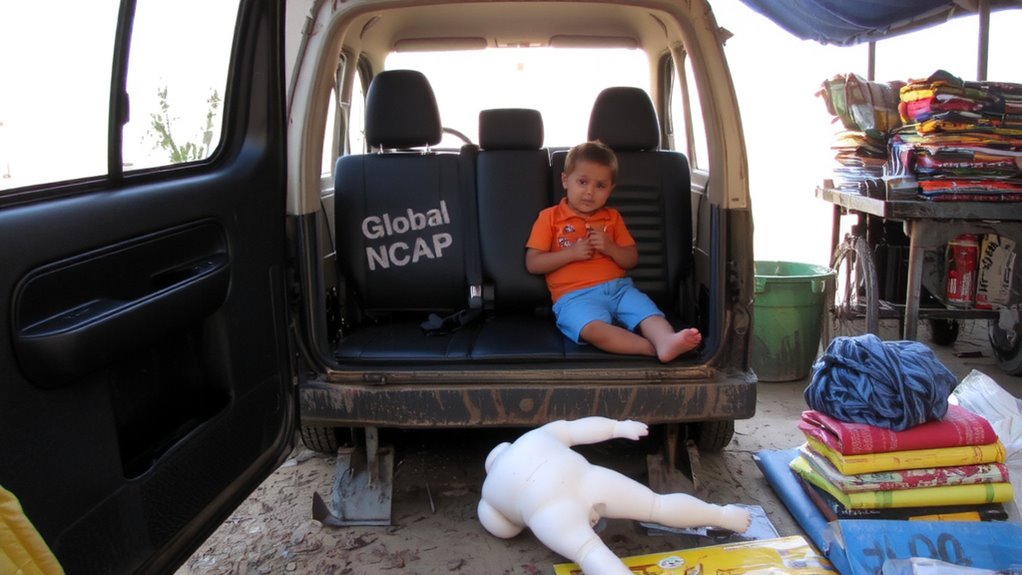
You’re not alone if you’ve ever worried about your child’s safety during a car ride in a developing country-across regions like Southeast Asia, Sub-Saharan Africa, and Latin America, millions of kids face elevated crash risks due to a mix of weak regulations, low seatbelt usage, and shockingly low adoption of child restraint systems. The core issues? Lack of awareness about proper car seat use and poor enforcement of existing traffic laws. Many parents don’t know that rear-facing seats reduce infant injury by up to 71%, or that booster seats must align seatbelts with a child’s shoulder and lap. Even when laws exist, inconsistent police checks and low fines mean compliance stays low. In Nairobi, only 15% of cars with children used restraints during weekday commutes, testers found. Without stronger public education and real consequences, effective child restraints remain underused, leaving young passengers dangerously unprotected.
How Global NCAP Crash-Tests Child Car Seats
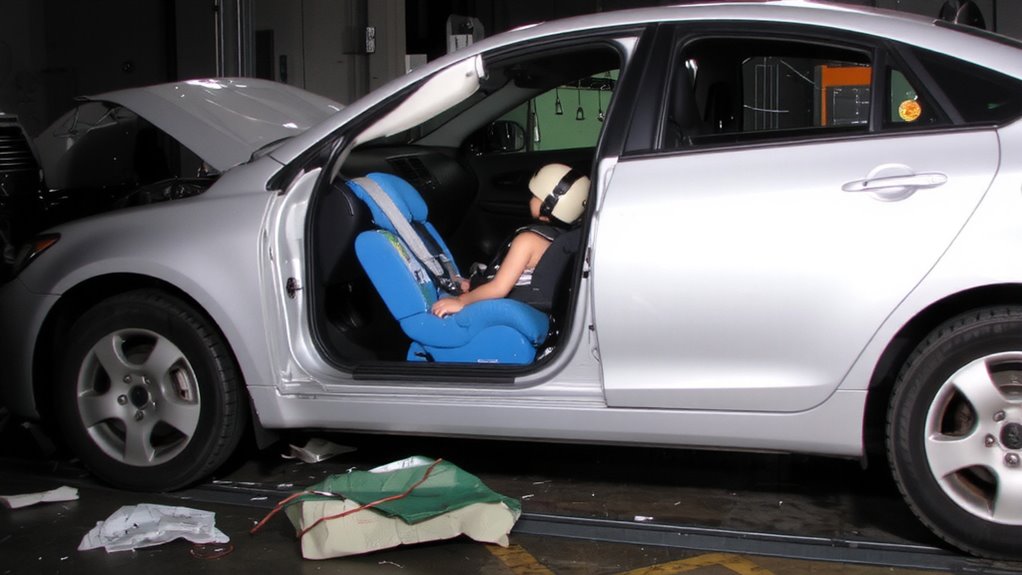
When it comes to keeping kids safe on the road in places where car seat use is rare and rules are often ignored, knowing which products actually work makes all the difference-and that’s where Global NCAP steps in. They crash-test child car seats just like adult vehicles, using strict safety standards and real-world speeds. You’ll find crash test ratings based on head, neck, and body protection, plus ease of use and correct installation.
| Feature | Result |
|---|---|
| Impact Speed | 50 km/h |
| Dummy Size | 3-year-old |
| Harness Type | 5-point |
| Installation | ISOFIX & seatbelt |
| Ratings | 0–5 stars |
Their clear, no-nonsense approach helps you pick seats that truly protect, not just ones that look good.
Fixing Weak Child Seat Laws With Governments
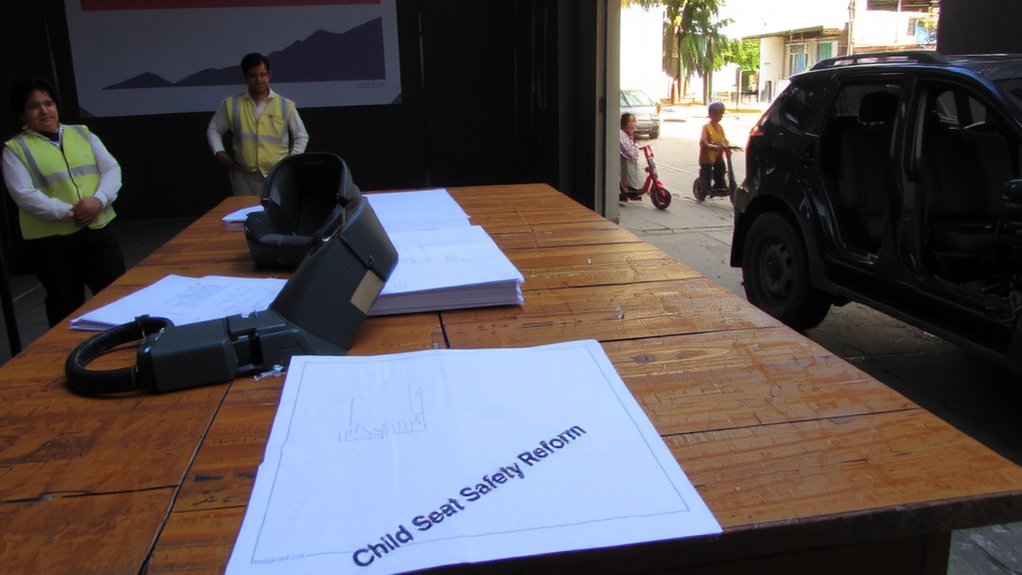
Why do so many countries still lack strong child car seat laws when the evidence on protection is this clear? You’re right to expect better. Global NCAP works directly with governments to strengthen child restraint legislation, pushing for mandatory use in all vehicles, backed by real crash data. Without strict regulatory enforcement, even good laws fail-children remain at risk. You’ll see change where policies set age, weight, and height requirements, aligning with universal i-Size standards. Countries adopting these rules report up to 70% fewer child fatalities. Global NCAP provides model laws, technical guidance, and performance benchmarks, helping nations draft effective, enforceable rules. It’s not just about passing laws-it’s about ensuring they work in everyday driving. When child restraint legislation is clear and enforced, families stay safer, automakers comply, and roads become safer for everyone. You can trust systems tested and verified under these standards.
Helping Families Afford Safe Car Seats
How do families find car seats that protect their children without breaking the bank? You’re not alone-many parents in developing nations face the same challenge. Global NCAP helps bridge the gap with programs offering financial assistance and coordinating community donations to make safety affordable. They partner with local organizations to distribute crash-tested, i-Size compliant seats at low or no cost. Models like the Joie Every Stage FX, tested at 15,000 N of force, deliver reliable side-impact protection and grow with your child, from birth to 36 kg. Real parents praise their easy seatbelt routing and compact fit in small cars. These initiatives guarantee cost never overrides safety, putting proven, lab-verified protection within reach. With clear labels, simple installation, and durability backed by real-world use, these seats meet strict standards-so you get peace of mind without the high price.
Changing Minds: How Safety Campaigns Save Kids in Cars
You’ve got a safe seat that fits your budget, but real protection starts with using it the right way-every trip, every time. Global NCAP’s safety campaigns focus on public awareness and parental education to turn proper use into habit. Simple videos, roadside clinics, and hospital workshops show parents how to install rear-facing seats correctly, check harness tension, and avoid bulky clothing under straps. In Brazil, a campaign reduced misuse by 38% in one year. Testers in India praised clear labels and LATCH alternatives that worked with older cars. These efforts don’t just share facts-they change behavior. When moms see crash-test footage of unrestrained kids, they act. Real-world data shows a 45% drop in child injuries where education runs yearly. It’s not about fancy gear; it’s consistent, correct use. With simple tools and trusted messengers, lives are saved-one informed choice at a time.
On a final note
You’re right to demand better: many kids in developing nations ride unrestrained, but Global NCAP’s crash tests now rate child seats for real-world safety, using Latin NCAP’s strict 5-star benchmarks, 15 crash dummies, and side-impact evaluations. Their team pushes governments to adopt UN-standard laws, slashes seat prices through local partnerships, and runs campaigns showing proper fit matters-because a harness at shoulder level, proper anchor points, and head support save lives, not just ratings.