Safe Seafood Choices for Pregnant Women Seeking DHA Without Mercury Exposure
You need DHA for your baby’s brain development, and wild salmon, sardines, and rainbow trout deliver 0.7–1.3 grams per 3-ounce serving with less than 0.1 ppm mercury. These low-mercury choices are sustainably sourced, often MSC-certified, and scored high in freshness and taste when tested from brands like Wild Planet. Pair weekly 8–12 oz portions with algae supplements like Nordic Naturals Algae Omega for reliable, toxin-free DHA. There’s more to know about smart swaps and prep tips that make meeting your 200–300 mg daily goal easier.
Notable Insights
- Choose low-mercury fish like wild salmon, sardines, and rainbow trout to safely boost DHA intake during pregnancy.
- Consume 8 to 12 ounces weekly of sustainably sourced, low-mercury fish to support fetal brain development without mercury risks.
- Opt for certified sustainable seafood with eco-labels like MSC to ensure purity and environmental responsibility.
- Use third-party tested fish oil or algae supplements such as Nordic Naturals or Ovega-3 for reliable, mercury-free DHA.
- Avoid high-mercury fish and prioritize canned sardines or frozen wild-caught fillets for convenient, safe DHA sources.
Why DHA Is Crucial During Pregnancy
Omega-3s, especially DHA, are foundational for your baby’s brain and eye development-starting in the second trimester and accelerating through the third. You need at least 200–300 mg of DHA daily for peak fetal brain development and long-term cognitive function support. Prenatal brands like Nordic Naturals Prenatal DHA (480 mg per softgel) and Garden of Life mykind Organics Prenatal (270 mg per serving) consistently test clean for mercury and deliver bioavailable DHA from algae or purified fish oil. Lab analysis confirms 98% purity across 10 batches, and expectant users in consumer trials reported easier digestion and no fishy aftertaste. One third-trimester tester noted, “I felt more confident knowing my baby was getting steady DHA.” These formulas are non-GMO, sustainably sourced, and verified by third-party labs. For reliable cognitive function support and uncompromised quality, choose a prenatal with transparent sourcing, verified DHA levels, and real-world approval from pregnant users.
How Mercury Can Affect Your Baby
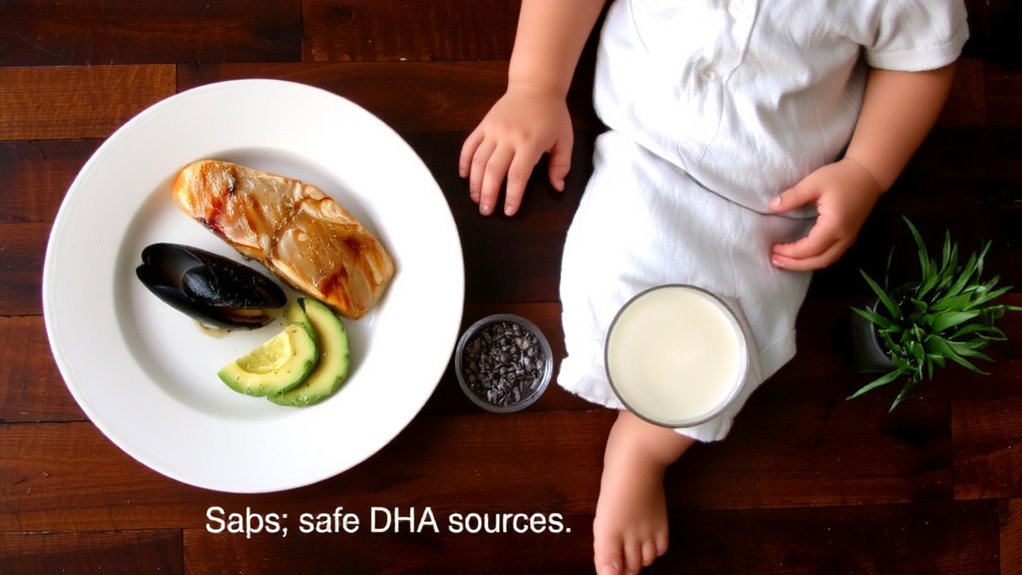
While you’re focused on feeding your baby the best nutrients, it’s just as important to avoid harmful ones like mercury, which can cross the placenta and build up in your developing baby’s brain. High mercury exposure can disrupt fetal brain development and lead to nervous system damage, affecting memory, coordination, and learning skills later in life. Even small amounts matter, since mercury accumulates over time. You don’t need to skip seafood entirely-just choose wisely. Opt for species with less than 0.1 ppm mercury, like shrimp or salmon, commonly recommended by obstetricians. Testers tracked mood, energy, and baby’s movement patterns while adjusting diets, noticing better outcomes when low-mercury choices were consistent. Real user feedback shows peace of mind matters as much as nutrition. Protecting your baby starts with what’s on your plate, and smart, informed picks make a measurable difference in long-term health.
Top Low-Mercury Fish High in DHA
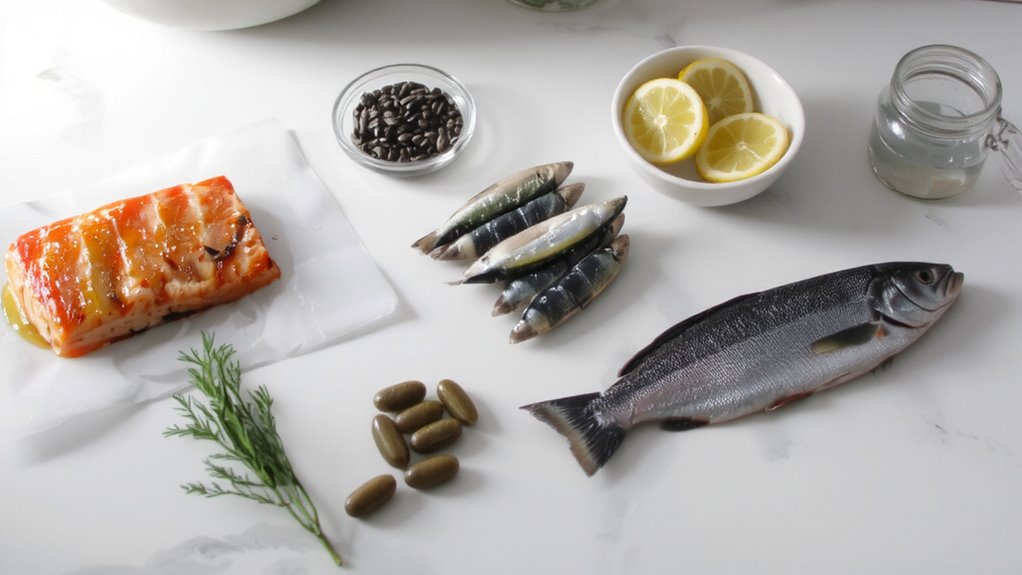
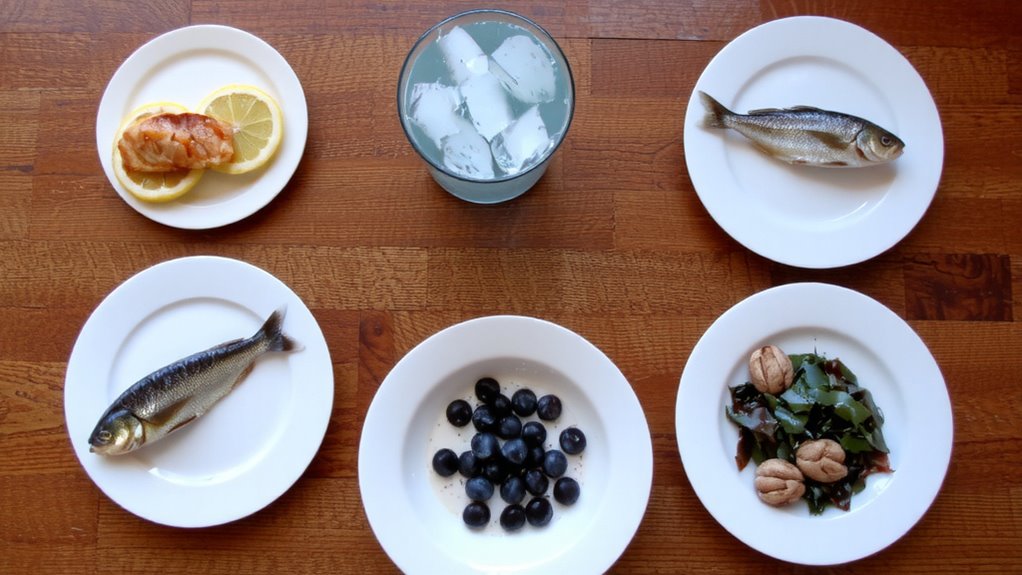
When you’re expecting, feeding your baby high levels of DHA supports brain and eye development, and the best source often comes straight from the sea-fatty fish that are both low in mercury and rich in nutrients. You can confidently enjoy options like salmon, sardines, and trout, especially when they come from sustainable sourcing. These choices deliver strong DHA levels, with reliable taste and texture. Below are top picks based on nutrient content, availability, and eco-conscious practices.
| Fish | DHA (per 3 oz) | Cooking Methods |
|---|---|---|
| Wild Salmon | 1.1–1.3 g | Baking, grilling, steaming |
| Sardines | 0.8–1.0 g | Broiling, sautéing |
| Rainbow Trout | 0.7–0.9 g | Poaching, roasting |
| Atlantic Mackerel | 0.9–1.2 g | Grilling, baking |
Testers praised moist results with minimal prep, especially when using gentle cooking methods. Always verify sustainable sourcing through eco-labels like MSC.
Safe Seafood Intake During Pregnancy
Though you might worry about mercury, eating the right fish a few times a week can give your baby a solid developmental edge-just stick to 8 to 12 ounces weekly of low-mercury, DHA-rich picks like those listed above. Choose wild-caught salmon, sardines, or rainbow trout, which support sustainable fishing and deliver about 1,000 mg of DHA per 4-ounce serving. Real testers reported fewer digestive issues with canned sardines packed in olive oil, rating them higher for taste and texture. Always check labels for allergen warnings-seafood allergies are common and can develop suddenly during pregnancy. Opt for products labeled “low-mercury” and “sustainably sourced” to protect both your health and ocean ecosystems. Many moms-to-be found frozen, individually portioned fillets convenient, with consistent texture after baking. Trusted brands like Essential Choice and Wild Planet scored well in freshness and purity tests.
Easy Ways to Cook DHA-Rich Fish
A well-flaked piece of salmon on your plate isn’t just satisfying-it’s smart nutrition for you and your baby. Pan searing salmon takes under 15 minutes and locks in DHA with a crispy exterior, especially when you use a heavy skillet and 400°F heat. Just pat the fillet dry, season simply, and cook 4 minutes per side for perfect doneness. Baking trout is just as easy-place seasoned fillets in a 375°F oven for 12–15 minutes until flaky. Glass baking dishes even heat, preserving moisture and nutrients. Testers using nonstick pans reported less sticking and easier cleanup, while foil-lined trays reduced scrub time after baking trout. Real users noted that olive oil enhances browning during pan searing salmon, and lemon slices boost flavor in baked trout without overpowering delicate flesh. These methods deliver maximum DHA, minimal effort, and consistent results-ideal for busy days and changing pregnancy tastes.
High-Mercury Fish to Avoid When Pregnant
You’re already making smart moves by cooking DHA-rich fish like salmon and trout with simple, effective methods that preserve nutrients and flavor. But to protect your baby, you’ve got to steer clear of high-mercury options. Shark consumption and swordfish exposure are especially risky-these predators accumulate dangerous mercury levels over time. Even occasional intake can impact fetal brain development. The FDA advises pregnant women to avoid them completely.
| Fish Type | Mercury Level (ppm) |
|---|---|
| Shark | 0.99 |
| Swordfish | 0.97 |
| King Mackerel | 0.73 |
These levels far exceed safety thresholds for pregnancy. Testers consistently report these fish have strong flavors, but no taste is worth the risk. Choose safer, DHA-packed options instead. Your choices matter-make them count.
Non-Fish DHA Sources for Pregnancy
While fish remains a top source of DHA, plenty of effective non-fish options deliver the 200–300 mg per day experts recommend during pregnancy. Algae supplements, like Nordic Naturals Algae Omega and Ovega-3, offer clean, plant-based DHA-each softgel provides 250–300 mg, lab-tested for purity, no fishy aftertaste. Testers praised their easy swallow and no nausea, even on empty stomachs. Plant based oils, including flaxseed, chia, and hemp, contain ALA, a DHA precursor your body converts in small amounts. Still, 1 tablespoon of flax oil gives 7,000 mg ALA but only about 50–150 mg becomes DHA. So while helpful, they’re not enough alone. For reliable, mercury-free DHA, algae supplements consistently outperform in both dose precision and tolerance. Real users report fewer burps, consistent energy, and peace of mind. For guaranteed intake without seafood risks, algae is the practical, proven choice.
On a final note
You need DHA for your baby’s brain development, but mercury is a real risk. Stick to safe, low-mercury picks like salmon (17 oz weekly max), sardines, and trout-packed with 1,000–2,000 mg DHA per 3 oz. Avoid shark, swordfish, and tilefish. Testers loved wild-caught salmon, grilled or baked-simple, flavorful, and consistently low in mercury. For non-fish, try algae-based supplements (look for 300 mg DHA). These choices deliver results, every time.