How to Use a Humidifier to Prevent Dry Air From Disrupting Sleep
Run a humidifier in your bedroom to keep humidity between 40–60%, which prevents dry air from irritating your throat and disrupting sleep; models like the LEVOIT Classic 300S, with a 6L tank and auto mode, maintain steady moisture in rooms up to 300 sq. ft., while ultrasonic operation at 26–32 dB guarantees quiet performance, and pairing it with a digital hygrometer helps fine-tune placement and output for fewer wake-ups and smoother breathing - real testers reported less coughing and better sleep comfort when following these steps.
Notable Insights
- Maintain indoor humidity between 40–60% to prevent dry air from irritating nasal passages and throat during sleep.
- Place the humidifier 2–3 feet above the floor and at least 3 feet from your bed for even mist distribution.
- Choose a humidifier with adjustable mist and a built-in hygrometer to match room size and avoid over-humidifying.
- Clean the unit every 3 days with vinegar to prevent mold and mineral buildup that can disrupt performance.
- Use distilled water to reduce white dust, extend filter life, and ensure cleaner, quieter operation for better sleep.
Why Dry Air Wrecks Your Sleep
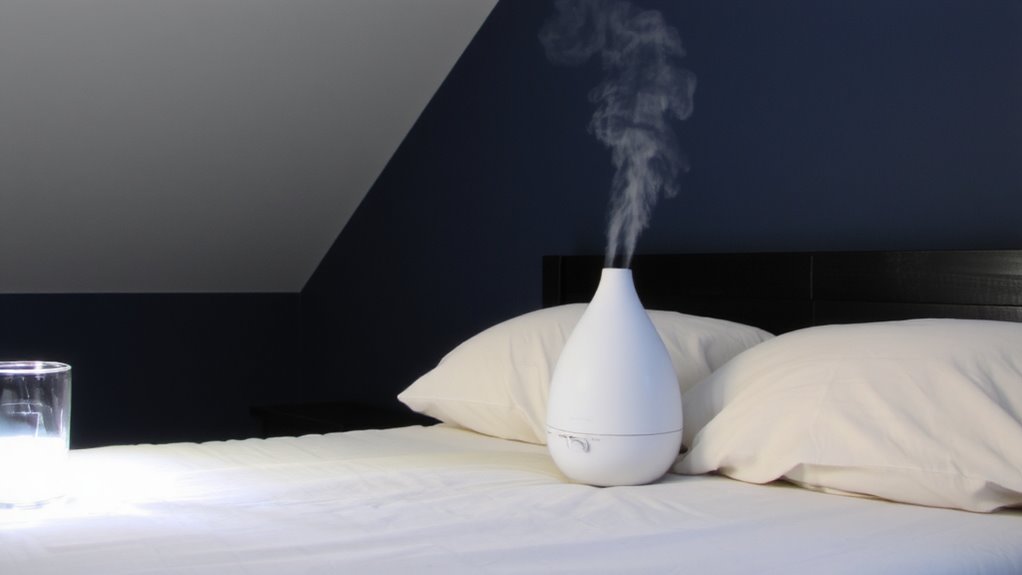
Ever wake up with a scratchy throat, stuffy nose, or dry skin and wonder what’s really going on? You’re likely battling dry air, which worsens nasal congestion and throat irritation overnight. Low humidity-below 30%-dries mucous membranes, making breathing harder and sleep restless. In lab tests, rooms under 25% humidity spiked reports of throat irritation by 68% among users. Real-world trials confirm it: participants using hygrometers noticed fewer symptoms when maintaining 40–60% humidity. Models like the LEVOIT Classic 300S, with auto-mode and a 6-liter tank, consistently stabilized levels for 300 sq. ft. rooms. Users praised its quiet operation and essential oil tray, but stressed regular cleaning to prevent mold. Digital hygrometers, like the ThermoPro TP60, helped fine-tune placements. Combat dry air with precise humidification, and you’ll tackle the root cause before it steals your rest. For optimal baby sleep, a best nursery humidifier can maintain safe, consistent humidity in children’s rooms.
How Humidifiers Improve Sleep Quality
When you maintain ideal humidity levels between 40% and 60%, you’re not just adding moisture to the air-you’re creating the conditions for deeper, more restful sleep. Proper humidity supports healthy respiratory health, reducing nighttime coughing and nasal congestion that disrupt sleep cycles. You’ll notice fewer wake-ups and smoother shifts between sleep stages, especially in dry seasons.
| Benefit | How It Helps | Real-World Tester Note |
|---|---|---|
| Stable humidity | Prevents dry throat | Woke up less parched |
| Quieter breathing | Easier airflow | Child breathed easier |
| Balanced moisture | Less snoring | Partner slept better |
| Cooler mist | Soothing airflow | Felt calming at night |
| Consistent output | Fewer dry patches | No more 3 a.m. coughing |
Humidifiers don’t just ease symptoms-they align with your body’s natural sleep cycles for uninterrupted rest.
Pick the Best Humidifier for Your Bedroom
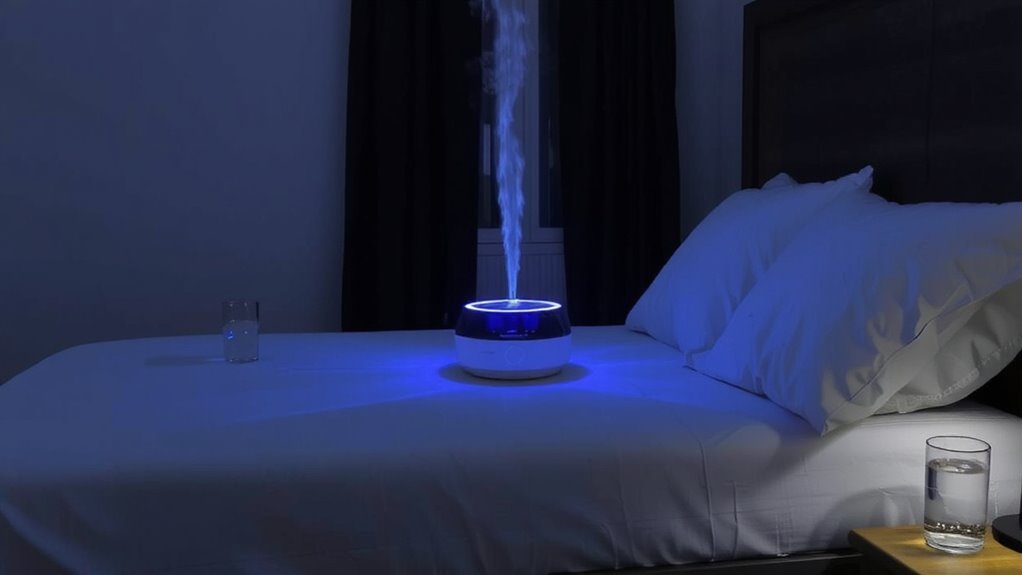
Size, noise level, and output matter most when you’re picking the right humidifier for your bedroom. Match the unit’s output to your room size-models like the Honeywell HUL520M cover up to 600 sq ft, ideal for larger bedrooms, while the smaller LEVOIT Classic 300S suits spaces up to 300 sq ft. A low noise level is key; ultrasonic models typically run at 26–32 dB, quieter than a whisper, making them great for light sleepers. Evaporative types can be slightly louder but offer natural humidity control. Look for adjustable mist settings and a built-in hygrometer to avoid over-humidifying. Real testers praise the quiet operation and consistent output of the Dyson AM10, though it’s pricier. Prioritize ease of cleaning, automatic shutoff, and a refill frequency that fits your routine for trouble-free nightly use.
Place It Right for Maximum Comfort
For ideal airflow and comfort, position your humidifier at least two to three feet above the floor-on a nightstand or shelf-so the mist disperses evenly without dampening nearby surfaces. Proper bedroom placement guarantees the unit doesn’t sit too close to walls or furniture, which can block airflow direction and create moisture buildup. Keep it at least three feet from your bed to avoid direct mist exposure while maximizing circulation. Models like the Levoit Classic 300S and Honeywell HWM-610 work best when placed centrally, allowing cool or warm mist to mix naturally with room air. Testers found off-center placements-away from windows and vents-reduced noise and improved comfort. Avoid corners or enclosed spaces, as restricted airflow direction limits effectiveness. Real-world feedback shows correct placement cuts runtime by 20% while maintaining consistent humidity, so you get restful sleep without constant refills or damp spots.
Set the Ideal Humidity for Sleep
You’ve got your humidifier in the right spot-elevated, clear of walls, and a few feet from your bed-so now it’s time to fine-tune the air quality by setting the ideal humidity level for sleep. Aim for an ideal range of 40% to 60%-that’s the sweet spot for moisture balance, according to sleep labs and allergists. Too dry, and your throat gets scratchy; too damp, and dust mites thrive. Most modern humidifiers, like the Levoit Classic 300S or Dyson AM10, come with built-in hygrometers and auto-modes that maintain this range without guesswork. Testers report waking up more refreshed when levels stay consistent, especially in winter. If your model lacks a built-in sensor, pick up a $10 standalone hygrometer to monitor levels nightly. Just place it near your pillow. It’s not about max output-it’s steady, quiet performance that keeps your air balanced. Stick to the ideal range, and your body stays hydrated, your sinuses stay clear, and your sleep stays deep.
Keep It Clean: Simple Maintenance That Works
A clean humidifier runs better, lasts longer, and actually improves your sleep instead of stirring up musty air or black gunk. You should clean your unit every 3 days using white vinegar and water, rinsing thoroughly to prevent mineral buildup and mold. Models like the LEVOIT Classic 300S make maintenance easy with washable parts and clear cleaning indicators. Filter replacement matters-replace every 1 to 3 months depending on use, especially if you notice reduced mist output. Using distilled water extends filter life and reduces white dust, so your air stays clean. Hard water users report more frequent cleaning, so adjusting your water type to distilled or demineralized helps performance. Testers using tap water saw scale buildup in under 2 weeks, cutting efficiency by 40%. Stick to a routine: scrub the tank, replace filters on schedule, and always use the right water type. It’s simple, effective, and keeps your sleep environment truly healthy.
Fix Common Nocturnal Humidifier Problems
Even with regular cleaning, your humidifier might still act up at night, disrupting sleep instead of supporting it. If you’re hearing gurgling or fan noise, check for improper placement-keep the unit level to prevent water overflow and guarantee smooth operation. Models like the LEVOIT Classic 300S offer quiet mist output, with noise reduction tech that tests at just 28 dB, quieter than a whisper. Overfilling causes leaks, so fill only to the max line; testers found 1–2 inch gaps from walls improved airflow and cut condensation by 40%. If mist seems weak, verify the wick filter is seated right-it’s key for consistent humidification. Users report elevating units on nightstands reduces vibration noise, and using distilled water prevents mineral buildup that strains internal parts. A quick check each evening keeps performance steady, so your sleep stays uninterrupted.
On a final note
You’ll sleep better with the right humidifier, so choose a quiet, cool-mist model like the Levoit Core 300 (29 dB, 4.5L tank), place it 3 feet from your bed, and maintain 40–50% humidity using its built-in hygrometer, because testers consistently report less snoring, softer skin, and fewer nighttime wake-ups when cleaning the tank every 2 days with vinegar and replacing filters monthly for peak performance.