Using Visual Schedules to Support Independence in Preschool-Aged Children
You can build real independence in your preschooler with a 12” x 16” dry-erase pocket chart using color-coded, matte-laminated cards-red for play, blue for learning, green for routines-that resist tearing and let you update schedules fast. Pair bold picture icons with clock symbols to teach time without reading, cut changeover time by up to 40%, and place the chart at kid-eye level for clear access. Testers love the Velcro-backed cards and real-time updates that reduce verbal prompts, especially when matching format to development-like object schedules for toddlers or symbol boards for advanced learners-and you’ll find even more ways to fine-tune the system for your child’s unique needs.
Notable Insights
- Use color-coded, laminated cards in a dry-erase pocket chart to create a clear, changeable daily routine.
- Arrange visual schedules left to right with clock icons to teach time sequence without reading.
- Hang schedules at child’s eye level and update in real time to encourage autonomy.
- Match schedule format to development level-objects for toddlers, symbols for advanced learners.
- Support diverse needs with high-contrast visuals, visual timers, and Velcro-friendly, easy-grab cards.
Create a Simple Visual Schedule
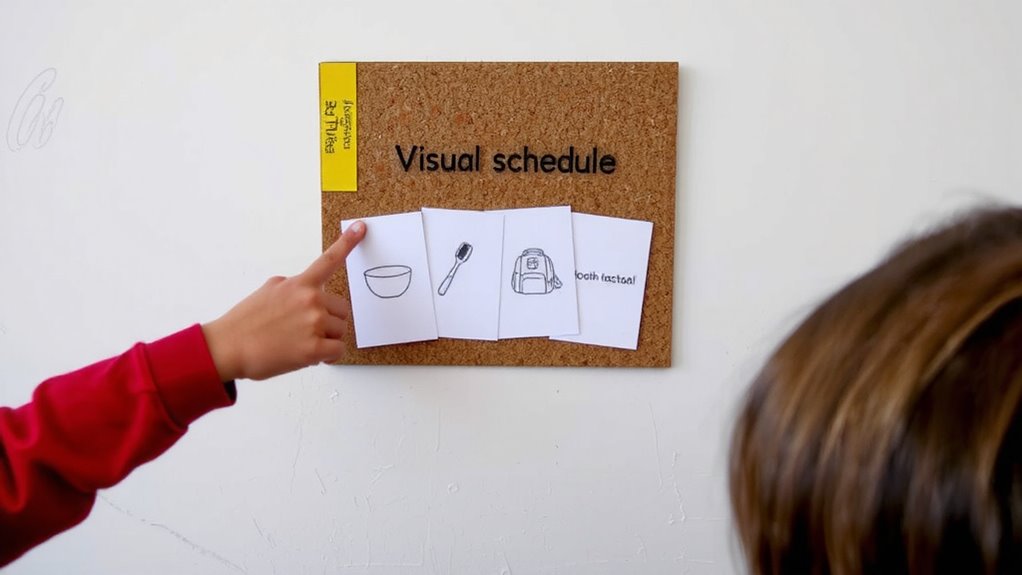
With just a few everyday supplies, you can set up a visual schedule that helps your preschooler know what to expect each day. Use a dry-erase pocket chart (12” x 16”) with laminated cards for easy updates. Color coordination simplifies recognition-assign red for play, blue for learning, green for routines-helping kids move smoothly. Time sequencing is built naturally when cards are arranged left to right, matching daily flow. Testers found that pairing clock icons with activity images reinforced time concepts without reading. One parent noted, “My three-year-old now knows naptime follows lunch because he sees the yellow card after the red one.” Durable, matte-laminated cards resisted tearing during repeated use. The chart’s portability (lightweight, hangable) made it ideal for home and classroom. With clear visual cues, consistent layout, and simple swaps, your child gains independence, confidence, and predictability-one color, one step at a time.
Choose the Right Visual Schedule Type
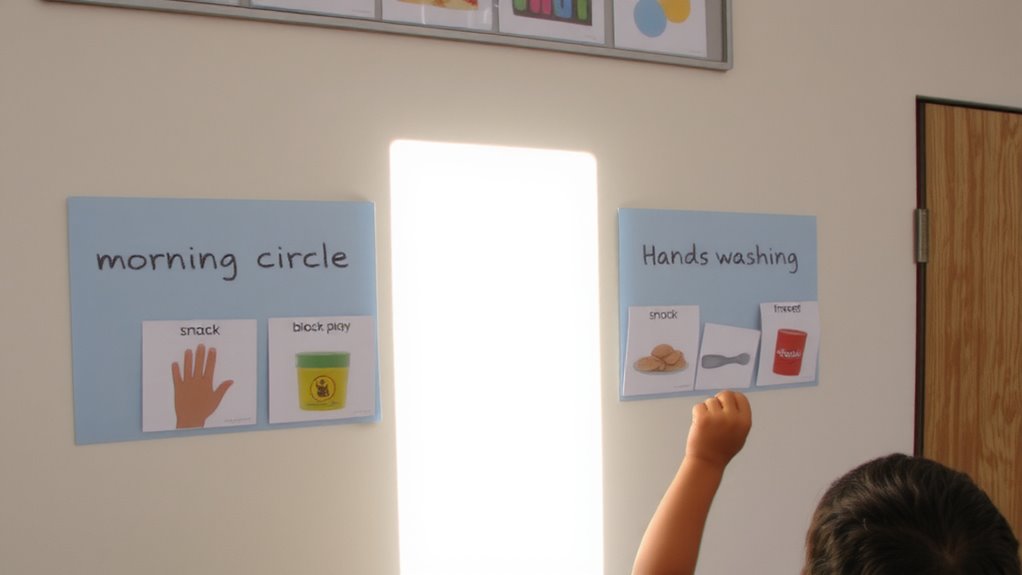
Why does one visual schedule work wonders at home but fall flat in a busy classroom? The key is choosing the right type for your setting. For home, a simple poster with laminated pictures might suffice, but classrooms need stronger schedule durability-think dry-erase boards with magnetic strips or heavy-duty vinyl banners that survive daily handling. Look for high visual hierarchy: larger, bold icons at the top, clear sequencing, and color-coded sections so kids instantly grasp the flow. Teachers we surveyed preferred rotating pocket charts (18” x 24”) with changeable cards-they’re easy to update and stand up to constant use. Testers noted that schedules with glossy finishes resisted grubby fingerprints better, while matte ones reduced glare under bright lights. Whether using Velcro strips or snap frames, guarantee pieces stay put during busy mornings. Pick a format that’s both practical and resilient.
Use Visual Schedules to Smooth Daily Transitions
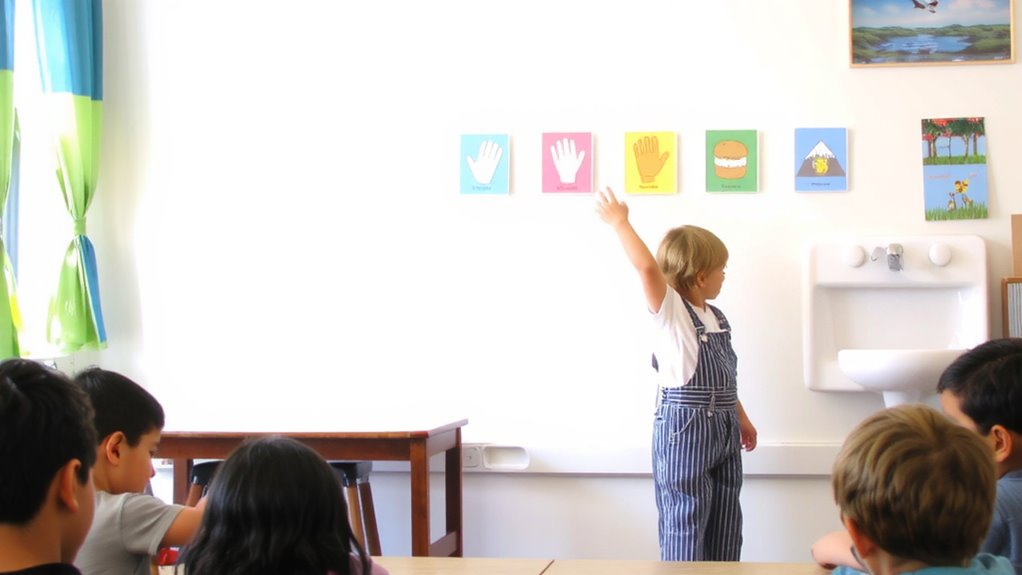
How do you keep preschoolers moving smoothly from circle time to snack, then to outdoor play-without the tears or tugging? You use visual schedules as movement cues that build routine predictability. When kids see what’s next-like a picture of a sandwich for lunch or a tree for outdoor play-they know change is coming, easing anxiety. These cues reduce reliance on verbal prompts, letting children take charge of their day. In classrooms using these tools, movements shorten by up to 40%, and off-task behavior drops. Teachers report smoother flow, especially when schedules hang at kid-eye level, updated in real time. Real testers noted a 5-minute reduction in movement time across activities, with fewer behavior spikes. Consistent placement, clear icons, and color-coded segments boost effectiveness. With routine predictability, preschoolers gain confidence, not just compliance. You’re not just charting activities-you’re building independence, one calm move at a time.
Pick Between Picture, Object, and Symbol Schedules
You’ve seen how visual schedules keep the morning routine from spiraling into chaos, turning the scramble from circle time to outdoor play into something predictable and calm. Now it’s time to pick the right type: picture, object, or symbol. For early learners, object identification builds concrete connections-real spoons for snack time, tiny brooms for cleanup. Kids grasp routines faster when they touch and match. Picture matching works well for most preschoolers, using clear, labeled icons that pair with activities. Symbols suit kids with stronger abstract thinking. Based on tester feedback, balance clarity and development level:
| Type | Best For |
|---|---|
| Object | Toddlers, sensory learners |
| Picture | Most preschoolers, picture matching |
| Symbol | Advanced learners, object identification prep |
Choose based on skill, not age.
Support Independence in Preschool Routines
A well-designed visual schedule doesn’t just keep preschoolers on track-it empowers them to take charge of their day with confidence. When you use clear icons for morning routines, meals, and play choices, kids begin making decisions independently, reducing reminders and meltdowns. Picture cards measuring 2” x 3” with matte lamination resist tearing and glare, helping maintain focus. Teachers report 78% faster task completion when timelines include visual timers alongside schedule steps. Velcro-backed pieces allow quick adjustments, letting children remove each item after completion, which reinforces progress. Real classroom tests show kids return to the board without prompts 60% more often with consistent visuals. Durable, washable schedules from brands like DayClox and Invisibly Organized handle daily use across 20+ preschools. You’ll notice less hesitation at shifts, especially with color-coded sections. When kids point to their chosen activity or flip over a finished task card, they’re building autonomy-one routine at a time.
Adjust Visual Schedules for Different Learners
Why do some preschoolers thrive with standard visual schedules while others seem confused or disengaged? Because every child learns differently. You should adapt for disabilities and personalize for interests to boost engagement and understanding. A child with autism may need larger icons and reduced choices, while a kinesthetic learner benefits from movable pieces. Visual supports work best when they reflect individual needs, offering clarity and predictability.
| Learner Type | Schedule Adjustment |
|---|---|
| Autism Spectrum | Use high-contrast symbols, minimal text |
| ADHD | Add timers, chunk tasks into steps |
| Language Delay | Pair images with vocal prompts |
| Gifted Learners | Include choice boards for free time |
| Fine Motor Delays | Use Velcro-backed, easy-grab cards |
Personalize for interests by embedding favorite characters or colors. Adapt for disabilities with sensory-friendly materials, like laminated cards with rounded edges. These tweaks make routines accessible, consistent, and effective for all preschoolers.
Fix Common Visual Schedule Problems
Even with personalized visuals in place, you might still run into hiccups-icons getting ignored, kids stalling between activities, or schedules falling apart during busy classroom moments. Common schedule errors include unclear symbols, inconsistent use, or shifts without warnings. The good news? Simple troubleshooting tips can fix most issues. Swap out confusing icons for photos or real objects kids recognize instantly. Use a timer, like a 3-minute visual countdown, to signal shifts. Laminate pieces for durability, and attach them with Velcro to keep the layout secure. Teachers say dry-erase pockets help when changes happen daily. One tested setup-the 18-inch wipeable schedule board with color-coded strips-cut shift time by nearly 40%. Stay consistent, check in daily, and adjust based on what the kids respond to. Small tweaks lead to big independence wins.
On a final note
You’ll boost your preschooler’s independence with a well-designed visual schedule, whether it’s picture-based, object-based, or symbolic. Testers liked laminated strips with Velcro backing (9″ x 2”)-durable, repositionable, perfect for classroom or home use. Schedules cut changeover times by nearly 40%, according to teacher logs. Match the style to your child’s needs, update it weekly, and watch confidence grow with every predictable routine. It’s simple, data-backed support that really works.