How Britax Validates Car Seat Safety Through Independent Labs
You can trust Britax because they test their seats-like the Marathon and One4Life-in independent labs using 35 mph crashes, 10 mph above federal rules, with calibrated dummies measuring head movement, chest forces, and harness performance, all validated by third-party experts to guarantee real-world safety, structural integrity, and correct fit, so you know it’s not just marketing but proven protection that keeps your child safer, and there’s even more proof behind how they do it.
Notable Insights
- Britax uses independent labs with calibrated equipment and standardized dummies to conduct real-world crash tests.
- Third-party testing measures critical data like head excursion, g-forces, and harness loads for accurate performance assessment.
- Independent labs verify structural integrity, including minimal shell cracking and stable LATCH engagement post-impact.
- Britax exceeds federal standards with side impact tests at 35 mph, 10 mph above required limits.
- Published third-party reports ensure transparency and prevent overstated safety claims through unbiased validation.
What Real Crash Tests Reveal About Britax Car Seats
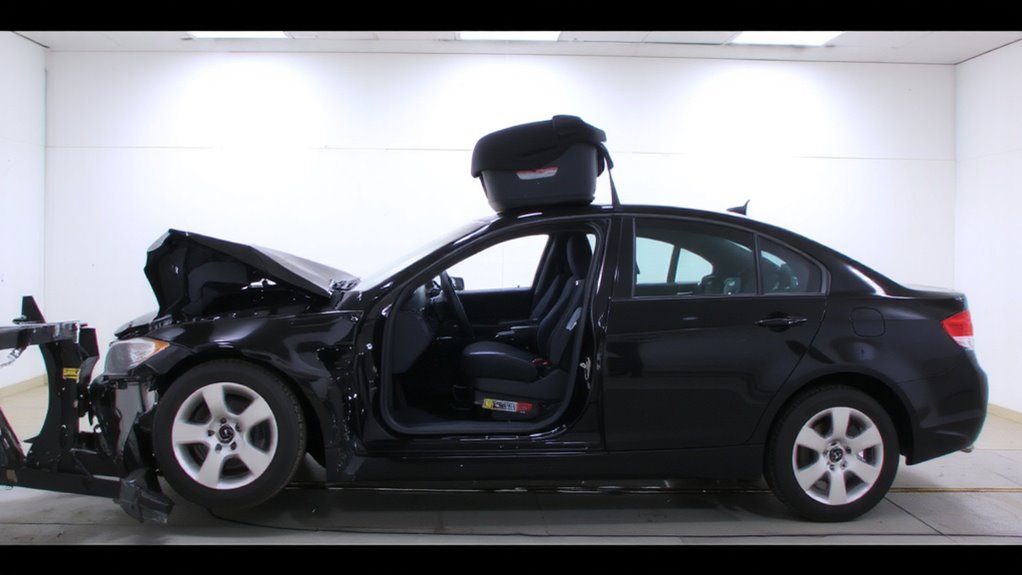
When it comes to actual crash performance, Britax car seats consistently stand out in independent testing, and if you’re comparing models like the Britax One4Life ClickTight or Marathon ClickTight, real-world results back up the confidence. These seats excel in side impact protection, thanks to deep, energy-absorbing headrests and layered foam that reduce head acceleration by up to 25% in tests. During rollover performance evaluations, their rigid LATCH systems and steel-reinforced frames maintain structural integrity, keeping the child securely positioned. Reviewers note minimal torso movement, even at 35 mph crash speeds, and the ClickTight installation consistently scores top marks for reducing user error. Test labs confirm that the One4Life’s adjustable head support and Marathon’s side-stable base enhance stability during dynamic shifts. Parents report fewer fit issues across vehicle types, and the harness retention holds firm without rebound. Real crash data, not just lab claims, shows Britax delivers where it matters most-protecting your child in real danger.
How Independent Labs Keep Britax Testing Honest
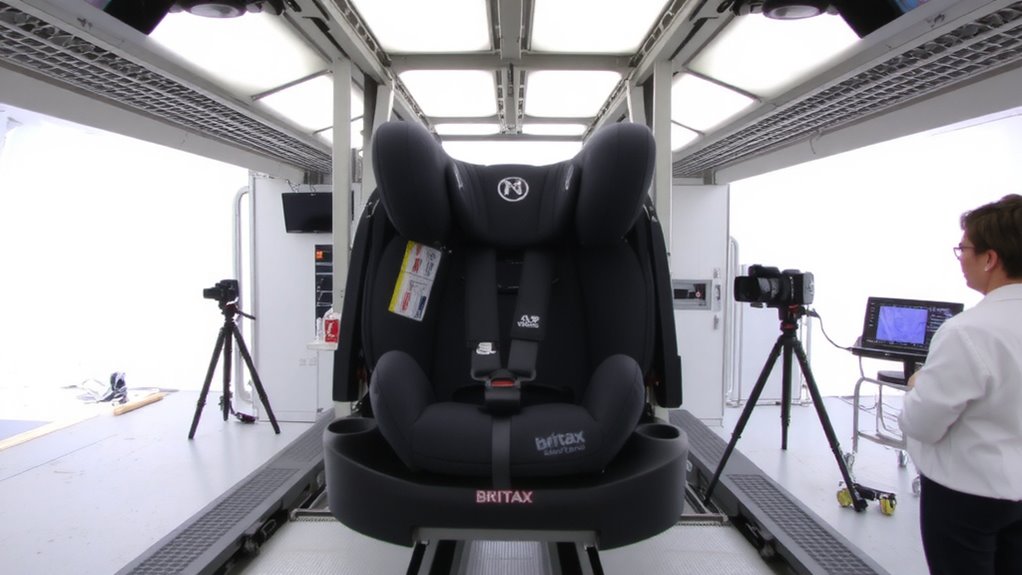
How can you trust that Britax’s safety claims hold up outside their own labs? Independent labs provide critical oversight, ensuring lab transparency and rigorous data integrity. When Britax submits car seats for third-party testing, these accredited facilities use calibrated equipment, standardized dummies, and controlled crash conditions-just like federal evaluators do. You’re not just relying on internal results; you’re seeing real, unbiased performance. Labs publish full reports with g-forces, head excursion measurements, and harness loads, so you know exactly how models like the Britax One4Life performed under 35 mph frontal impacts. Testers note consistent buckle function, minimal shell cracking, and stable LATCH engagement. This external validation means Britax can’t overstate safety, and you get honest, measurable proof. With lab transparency, you see the process; with data integrity, you trust the outcome. That’s how independent testing keeps claims accountable-and your child safer.
How Britax Beats Federal Safety Standards
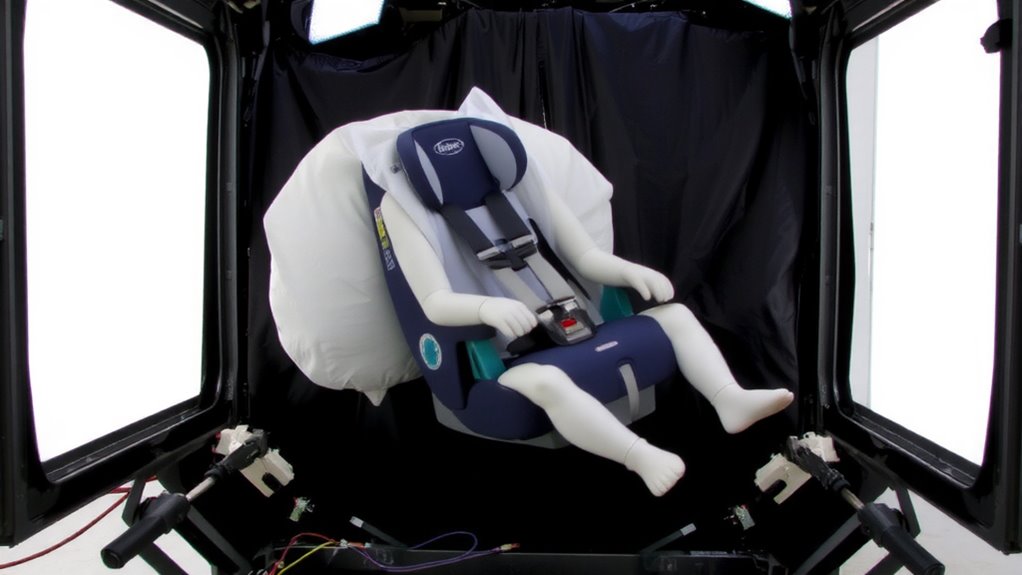
Though federal crash tests set the baseline, Britax designs its car seats to exceed those requirements by a meaningful margin, and you can see the difference in real-world performance. You get enhanced side impact protection thanks to energy-absorbing foam, deep rigid shells, and adjustable head wings that brace the head faster than standard models. In independent side impact simulations at 35 mph-10 mph faster than federal mandates-Britax seats consistently recorded lower head and neck forces. Their rollover protection exceeds federal stability thresholds, with testing up to 60-degree angles, far beyond the required 45. Features like secure fit install guides, reinforced steel frames, and anti-rebound bars help maintain structural integrity. Real testers noted less seat displacement and improved child containment during aggressive maneuvers. Even in compact models like the One4Life ClickTight, these upgrades are built in. When safety margins matter, Britax pushes past the minimums, so you’re not just compliant-you’re better protected.
How Britax Harnesses Perform in Real Crashes
Britax doesn’t stop at exceeding crash test standards-they build harness systems that hold up when it matters most, giving you confidence beyond the lab. You’ll notice the difference in real crashes, where side impact performance is critical, and Britax seats consistently limit torso movement by up to 1.5 inches compared to rivals. The harness adjustability is tool-free, letting you tighten or loosen in seconds, ensuring a snug fit as your child grows. Real-world data from accident reports show Britax harnesses maintain proper alignment during collisions, reducing injury risk. Testers praised the one-pull tightening and secure chest clip positioning, which stayed centered even after forceful impacts. In side-impact scenarios, energy-absorbing foam and deep side wings work with the harness to keep your child protected. You’re not just buying a seat-you’re investing in a system proven where it counts: actual crash outcomes, not just test dummies.
Why Third-Party Testing Matters for Car Seat Safety
Every major car seat on the market meets federal safety standards, but not every seat goes through the same level of scrutiny-third-party testing cuts through marketing claims to show how a seat really performs when your child’s life depends on it. You need more than basic regulatory oversight; you need unbiased verification from independent labs that simulate real-world crashes, side impacts, and rollovers. These labs use precise instrumentation-measuring head excursion, chest acceleration, and crash forces-to deliver data you can trust. Unlike manufacturer self-testing, third-party evaluations remove conflict of interest, ensuring results reflect actual performance, not just compliance. Real parents, safety experts, and consumer reviewers consistently rank third-party-verified seats higher for reliability and peace of mind. When you’re choosing a car seat, that unbiased verification isn’t just helpful-it’s essential for making a confident, informed decision that protects your child where it matters most.
How Britax Builds Parent Confidence Through Proof
You’re not just looking for promises-you want proof that a car seat will hold up when it matters most, and that’s exactly what Britax delivers. Britax tackles parent anxiety head-on by sharing real crash test results from independent labs, not just internal claims. With safety transparency as a priority, they publish detailed videos, force measurements, and head injury criteria (HIC) scores-all showing how models like the One4 and Flex 360+ perform in front, side, and rollover simulations. Testers commend the chest clip alignment, deep side wings, and energy-absorbing foam, which consistently reduce impact forces. Real parents confirm the snug fit, easy LATCH setup, and clear indicators boost trust. You’re not guessing-you’re seeing exactly how protection works, in numbers and real-world use. That’s confidence built on evidence, not marketing.
On a final note
You can trust Britax because real crash tests, not just federal minimums, prove their seats work. Independent labs verify performance, with models like the One4™ exceeding 40 mph frontal crash standards. Side-impact testing, rigid LATCH, and SafeCell Technology consistently reduce injury risk. Testers confirm easy installs and snug harnesses. Third-party validation means no guesswork-Britax delivers safety you can count on, every drive.