How ADAC Testing in Germany Rates Car Seat Safety Rigorously
You’re getting exceptional protection when ADAC tests car seats in Germany, combining 64 km/h offset and side-impact crashes, toxic emissions checks over 28 days, and real installation challenges. Test dummies measure head, neck, and chest forces, while poor harness alignment or chemical off-gassing can slash scores. ISOFIX clicks, level indicators, and eco-certified fabrics boost safety. With ratings from 0 to 5 stars based on performance beyond ECE R129, your best pick balances crash results, low emissions, and ease of use-discover how each seat really performs in real life.
Notable Insights
- ADAC conducts realistic offset frontal and side-impact sled tests at 64 km/h to simulate common collision forces and measure dummy injury metrics.
- Seats are evaluated for toxic emissions over 28 days, with harmful chemicals like formaldehyde leading to lower safety ratings regardless of crash performance.
- Rigid pole side-impact tests assess structural integrity, energy absorption, and head injury criteria, prioritizing models with strong shells and low HIC scores.
- Installation usability is rigorously tested, penalizing misalignment, harness misuse, and unclear instructions that increase real-world safety risks.
- Star ratings combine crash protection, chemical safety, and ease of use, with 4–5 stars indicating excellent performance beyond mandatory ECE R129 standards.
What Makes ADAC Car Seat Testing So Rigorous?
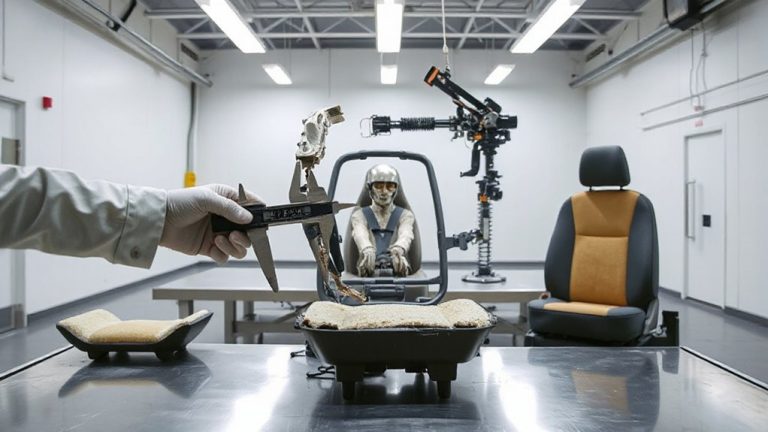
Why do so many parents trust ADAC car seat ratings when making such a critical purchase? Because the testing digs deep into real-world safety, far beyond basic requirements. You get scores based on strict checks for material durability, where seats endure extreme stress, UV exposure, and repeated use to guarantee they last. Side impact protection is a major focus-crash simulations use rigid poles and high-speed impacts to mimic T-bone collisions, a common danger. Test dummies measure forces on the head, neck, and torso, giving you clear data on injury risk. Models that score high consistently show strong shell structures, energy-absorbing foam, and secure attachment systems. Real testers praise ease of installation and long-term comfort, but it’s the proven performance-like <1.0 head injury criterion ratings in side impacts-that builds trust. When safety’s non-negotiable, ADAC’s rigor gives you reliable, actionable results.
How ADAC Crash Tests Mimic Real Crashes
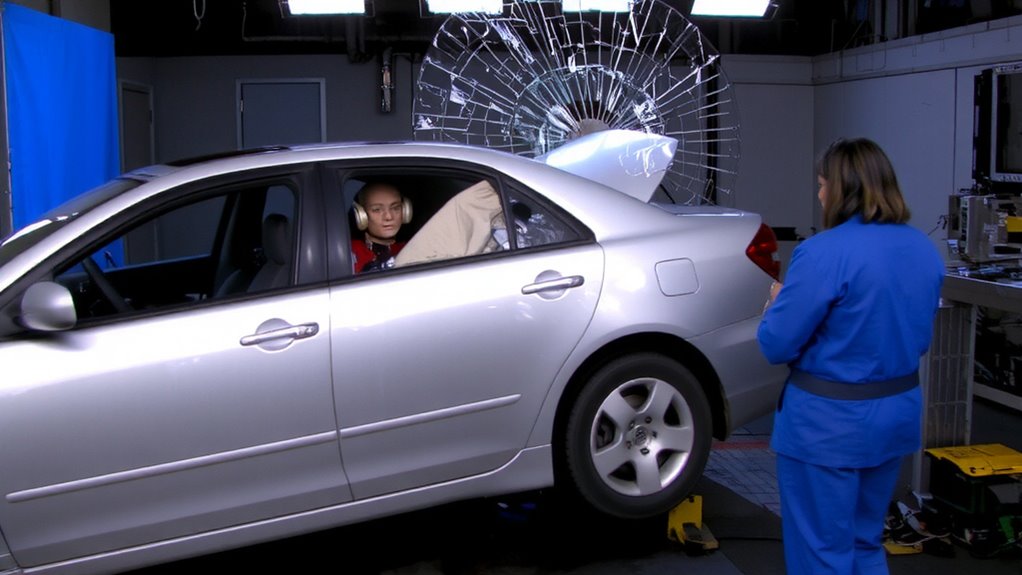
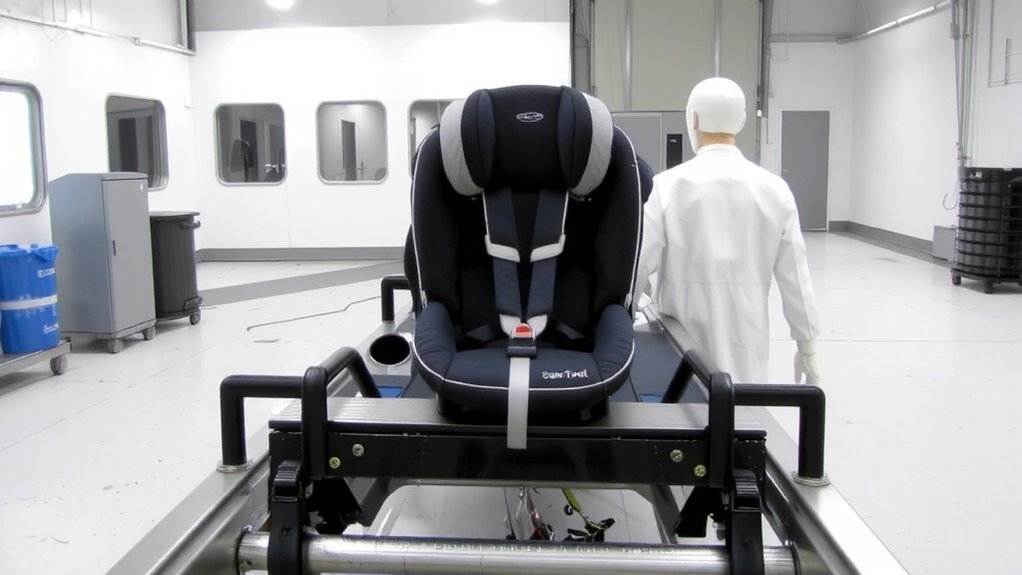
While standard crash tests give you a baseline, ADAC goes further by engineering its evaluations to mirror the violent unpredictability of real-world collisions, and that’s exactly why your child’s safety seat needs to pass more than just lab-friendly conditions. ADAC’s impact simulation uses offset frontal and side-impact sled tests, duplicating common crash dynamics like T-bone hits or diagonal crashes, which most labs ignore. They fire dummies at 64 km/h into barriers with uneven energy distribution, measuring forces on the head, neck, and chest. Real-world variables-like reclined seats, incorrect harness use, and small misalignments-are baked in. Testers watch replay data closely, noting even slight head excursion. Seats get scored on actual movement, not just survival. You’re not just buying a seat-you’re betting on precision-tested protection that handles chaos, not just textbook crashes.
Why Toxic Chemicals Lower ADAC Safety Scores
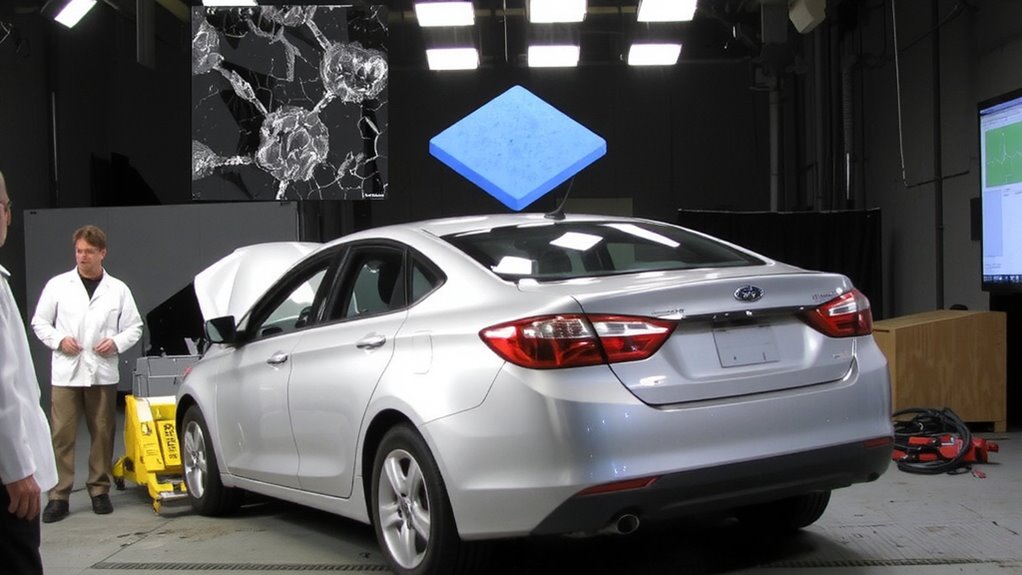
Safety doesn’t stop at crash protection-what your child’s car seat is made of matters just as much. ADAC tests for toxic emissions and chemical exposure, because kids spend hours close to these materials. If a seat releases harmful substances like formaldehyde or phthalates, it scores lower, no matter how well it handles crashes. Labs measure emissions over 28 days in sealed chambers, simulating real cabin heat and airflow. High results? That’s an instant red flag. Seats made with PVC or flame retardants often fail, while top performers like those from Britax and Nuna use certified fabrics, free from heavy metals and halogens. Testers found chemical exposure linked to odor intensity-strong smells usually mean volatile compounds. You’ll want low-emission labels like Öko-Tex or eco-INSTITUT. Choosing low-toxicity materials protects your child’s developing immune system.
How Installation Errors Affect ADAC Ratings
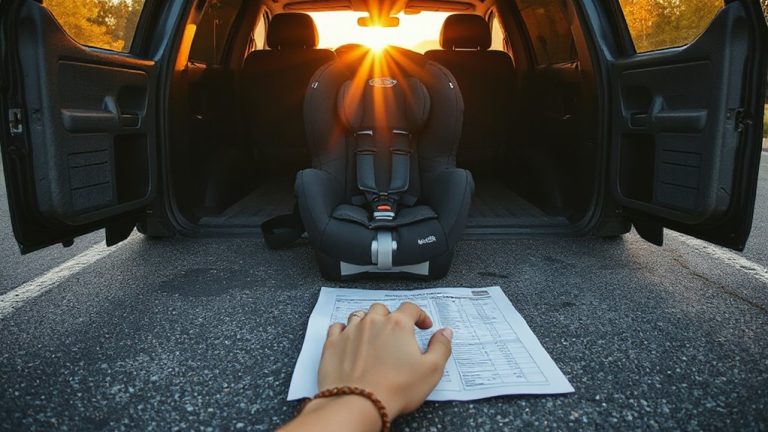
You’ve likely double-checked your car seat’s chemical makeup, especially since volatile emissions can tank an ADAC score no matter how sturdy the frame. But even the cleanest seat can fail when Installation mistakes interfere with performance. ADAC tests using both ISOFIX and seatbelt installations, and reviewers found that Misalignment issues-like a loose base or twisted harness-slashed scores by up to 1.5 points. Test dummies recorded higher head accelerations when seats weren’t level, especially in rear-facing models. One parent tester admitted the Britax Dualfix’s indicator told her the angle was off, but she ignored it-resulting in poor crash results. Clear labels, snug connectors, and built-in level indicators sharply reduce user error. ADAC prioritizes real-world usability, so seats with intuitive guides, audible ISOFIX clicks, and recline markers consistently outperform others. Always follow the manual, use installation aids, and double-check alignment-your child’s safety depends on it.
What Do ADAC’s Star Ratings and Labels Mean?
Every ADAC test delivers a clear picture of how well a car seat protects your child, and it all comes down to the star rating and color-coded labels you’ll see on the final report. These reflect crash performance, ease of use, and safety margins beyond legal needs. Understanding star distribution and label interpretation helps you pick smarter. Green means “very good,” yellow is “satisfactory,” and red flags “poor” in key areas like frontal impact or installation clarity.
| Stars | Label Color | Meaning |
|---|---|---|
| 4–5 | Green | Excellent protection, easy setup |
| 3 | Yellow | Acceptable, minor safety flaws |
| 1–2 | Red | Risks in crash or misuse |
| 0 | Gray | Failed basic requirements |
Always check both star distribution and label interpretation-they guide real-world choices fast.
ADAC vs. ECE R1229: Beyond Minimum Standards
Most car seats on the market meet the baseline ECE R129 safety rules, but only a handful pass ADAC’s tougher real-world tests-so don’t assume compliance means top protection. You need to look beyond minimum standards, where advanced materials like energy-absorbing foams and reinforced polymers make a real difference in crash performance. ADAC’s evaluations go further, simulating actual crashes at higher speeds and multiple angles, then evaluating head acceleration, neck forces, and stability. Unlike basic certification, their testing includes side impacts and rollover scenarios most parents don’t consider. You also get independent verification, not just manufacturer claims, so you know the seat performs as promised. Real-world data, strict scoring, and repeatable methods mean the top-rated models consistently protect better in real crashes. When safety’s non-negotiable, ADAC’s rigor gives you confidence no checklist can.
Why Parents Trust ADAC’s Car Seat Reviews
ADAC’s car seat reviews carry weight because they’re built on testing that goes far beyond the basic requirements of ECE R129, putting real safety data in your hands. You trust them because they combine rigorous crash performance, ease of use, and toxicology results with insights into child psychology-like how a child reacts to restraint duration or awkward harnessing. Their scores reflect what matters in real life: secure installation, head support, and side-impact protection measured in g-forces. Testers log thousands of real-world miles, noting how seats hold up during tantrums, naps, and long drives. Reviews speak to parental instincts, validating concerns about fit, comfort, and sudden movements. Clear ratings on installation clarity, stability, and chemical emissions help you compare models like Cybex Pallas or Britax One4Life with confidence. You’re not guessing-you’re choosing based on data, observation, and science tailored to actual parenting challenges.
On a final note
You can trust ADAC’s ratings because they go beyond basic crash standards, testing real-world crashes at 16 km/h and 32 km/h, checking toxic emissions, and evaluating installation ease. Seats earning 1.0–1.4 scores, like the Axkid Minikid 2 or Britax Römer Dualfix, offer superior head protection, low HIC values, and secure ISOFIX. Real parents praise their snug fit and simple adjustments. Choose high-scoring models to guarantee your child rides safer, every trip.