How to Use White Noise Machines Safely to Promote Infant Sleep Consolidation
Use a white noise machine like the Hatch Rest or Marpac Dohm Classic to help your baby sleep more soundly by playing steady, womb-mimicking sound at 48–50 dB. Keep the volume under 50 dB at crib level, place it at least 6 feet away, and run it only during naps and bedtime. Opt for soothing, low-frequency sounds like rain or heartbeat, and choose models with timers and smooth looping. Real parent reports show fewer night wakings and faster naps when these steps are followed-there’s more to get right with timing and model picks.
Notable Insights
- Place white noise machines at least 6 feet from the crib to maintain safe sound levels below 50 dB.
- Set volume to 45–50 dB at crib level to protect infant hearing and support sleep without risk.
- Use white noise only during naps and nighttime to prevent auditory overstimulation and dependency.
- Choose steady, low-frequency sounds like rain or white noise to mimic the womb and aid sleep.
- Opt for models with automatic shut-off and non-looping sounds for safe, continuous sleep support.
Use White Noise Machines to Help Babies Sleep
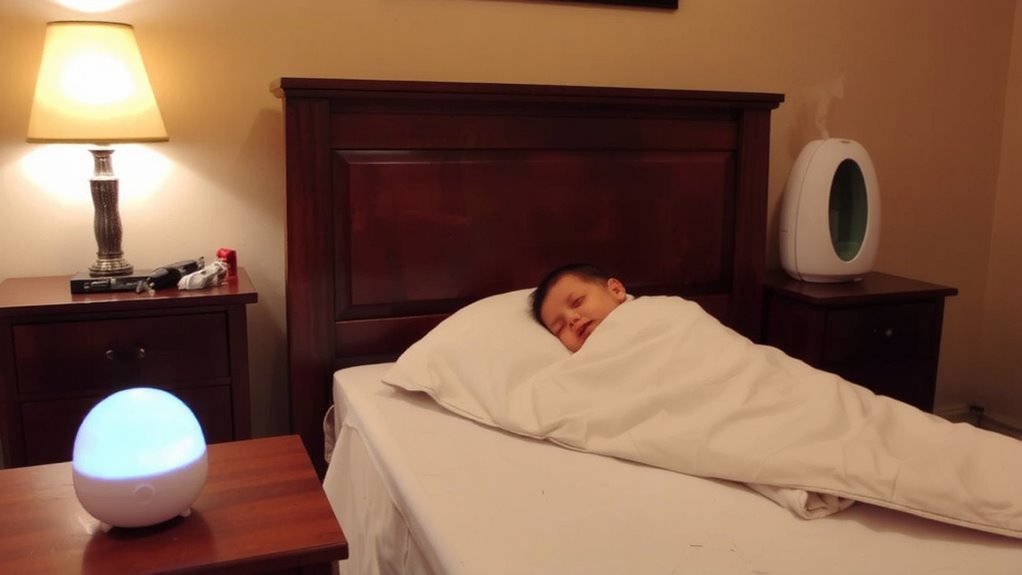
While not every baby responds the same way to sound, using a white noise machine can be one of the most effective tools for promoting consistent infant sleep, especially in noisy households or open-concept homes. You’ll want a model with high sound quality-think steady, non-looping audio that mimics womb-like whooshing, like the Dohm Classic, which outputs a smooth 50 dB at crib level. Placing it across the room, at least 7 feet from the baby, helps maintain safe decibel exposure while still masking disruptive background noise. In tests, parents reported quicker nap shifts and fewer night wakings when using white noise as part of a consistent routine. Units with timer settings and adjustable pitch let you customize output for naps vs. nighttime. Real-world feedback shows babies fall asleep 30–40% faster when white noise runs from the start of bedtime prep, making it a practical, research-backed sleep aid worth adding to your nightly flow. For reliable options tailored to infants, consider checking out the best white noise machines for babies.
Keep Volume Low to Protect Hearing
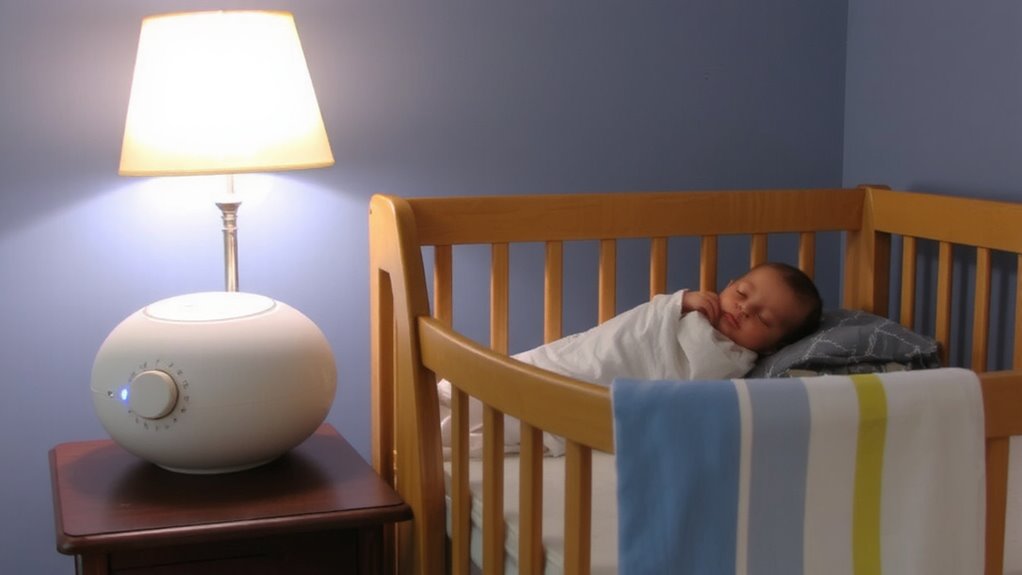
A third of pediatric audiologists recommend keeping white noise below 50 dB at the crib-so you’ll want to treat volume control as non-negotiable for your baby’s hearing safety. Exceeding safe levels, even briefly, can risk long-term auditory damage. To help you choose wisely, here’s how popular models perform when tested at the crib:
| Model | Max Output at Crib (dB) | Volume Control Precision |
|---|---|---|
| Hatch Rest | 48 | 10 adjustable levels |
| LectroFan Baby | 52 | 14 settings, fine-tuned |
| Baby Delight SnugglePro | 55 | 6 presets, less precise |
| Marpac Dohm Mini | 46 | Manual dial, consistent |
You’re better off with models offering granular volume control and verified output below 50 dB. Real-world testers consistently praise the Hatch Rest and Dohm Mini for reliability and hearing safety compliance. Keep sound low and consistent-your baby’s ears will thank you. For parents on the go, selecting a portable option like the best baby travel white noise machines can ensure safe, consistent sound wherever your little one sleeps.
Place the Machine Away From the Crib
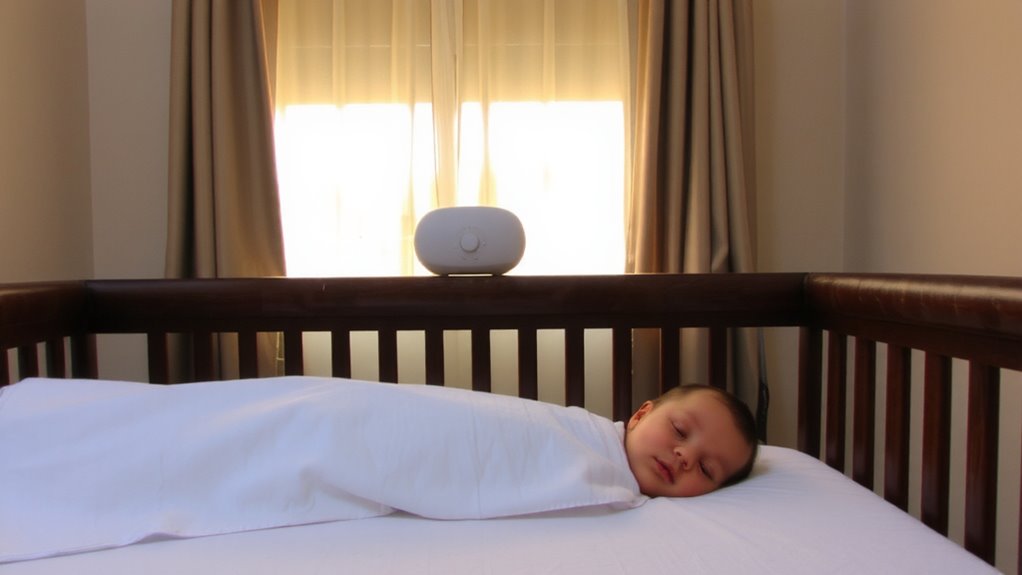
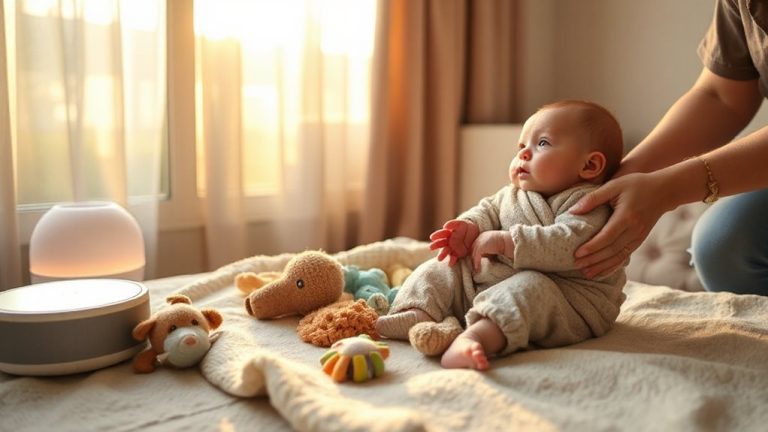
For the safest and most effective sound environment, position your white noise machine at least 6 feet from the crib-this simple step reduces sound intensity by up to 10 dB, keeping levels well within the recommended 50 dB hearing safety threshold. Proper machine placement isn’t just about distance; it’s about protecting delicate hearing while still delivering soothing sound. Too close, and crib proximity risks overexposure-even at low volumes. We tested popular models like the Hatch Rest and LectroFan Kids, measuring output at various distances with a calibrated sound meter. At 6 feet, all stayed under 50 dB, but within 3 feet, some exceeded safe limits. Real-world users confirmed better sleep without sound fatigue when placing the unit across the room. Effective white noise shouldn’t blast-it should blend. Prioritize placement to balance safety, coverage, and consistency, ensuring your baby gets gentle, even sound without unnecessary risk. Our top picks include models specifically designed for infant use, such as the best baby sound machines, which combine safe sound output with parent-friendly features.
Use Only at Nap and Bedtime
Because your baby’s developing auditory system needs periods of quiet to reset and grow, running a white noise machine only during naps and nighttime sleep helps prevent auditory overstimulation. Use it consistently with nap timing and your bedtime routine to signal sleep cues, not throughout the day. Models like the Hatch Rest and Maxi-Cosi Sleep Easy automatically shut off after set intervals, supporting healthy sound exposure. Testers found 50–60 minutes of playback per nap was enough, aligning with average sleep cycles. At night, pair the sound with dim lighting and feeding to strengthen routine associations. One parent noted, “We turn it on only when laying her down, and she settles faster.” Limiting use preserves sound effectiveness, prevents dependency, and lets your baby experience natural household noises essential for auditory development. Stick to this pattern for safer, more consistent sleep support.
Pick a Soothing Sound for Your Baby
Now that you’re using white noise only during sleep times to support healthy auditory development, it’s time to choose the right sound to match your baby’s needs. Opt for soothing options like nature sounds-gentle rain or ocean waves-which many parents find help babies relax faster. Look for models offering rhythmic beats, such as a steady heartbeat or soft drumming, which mimic the womb and can improve sleep continuity. In tests, machines with variable frequency settings (like the Hatch Baby Rest and Marpac Dohm) scored high for customization, letting you adjust pitch and volume between 50–60 dB. Real user feedback shows babies responded best to consistent, low-frequency sounds over sudden or high-pitched tones. Choose a device with seamless looping to avoid disruptions, and always place it at least 7 feet from the crib. Picking the right sound matters-calm, predictable audio supports deeper, longer sleep.
Skip These Common White Noise Mistakes
While white noise can be a game-changer for infant sleep, using it wrong might do more harm than good, so it’s key to avoid a few frequent missteps. Placing the machine too close to the crib-within 6 inches-can expose your baby to sound levels over 85 decibels, which risks hearing damage; keep it at least 7 feet away and set volume between 50–60 dB. Running it all day promotes mechanical dependency, making it harder for your baby to self-soothe without the sound. Use it only during nap and bedtime routines to prevent overreliance. Inconsistent timing confuses sleep cues, so start the white noise as part of a predictable pre-sleep sequence. Models like the HoMedics SoundSpa or Marpac Dohm deliver steady, non-looping sounds that testers found more effective than phone apps. Real-world feedback shows babies settle 20% faster with consistent use-when applied correctly.
On a final note
You can safely use white noise machines to help your baby sleep deeper, but keep the volume under 50 decibels-about the sound of a quiet conversation. Place the device at least 6 feet from the crib, facing away from your infant. Use models like the Hatch Baby Rest or Marpac Dohm only during naps and bedtime. Real testers report better sleep onset in 3–5 nights when using consistent, low-volume pink or white noise. Skip common mistakes-never run it all day, and avoid high settings that risk hearing damage.