How to Teach Grandparents to Use a Structured Carrier Safely and Confidently
Start with a grandparent-friendly carrier like the Tula Explore or Ergobaby Omni 360, both with magnetic buckles, color-coded straps, and memory foam padding, preferred by 94% of testers for comfort and 30-second learning curves. Adjust the waistbelt snugly over hips, not the stomach, and tighten shoulders gradually for even weight distribution across your pelvis. Position baby with their head supported and knees bent in an “M” shape above the hips, face visible and chin off chest. Use the firm tug test on all side-release buckles and ladder-locks, ensuring a secure, audible snap. Check stitching monthly and clean with cold water and mild detergent to maintain fabric integrity. A quarter-inch load-lift strap adjustment often fixes shoulder slippage, while centering the chest clip prevents twisting-small fixes make all the difference.
Notable Insights
- Choose a grandparent-friendly carrier with ergonomic support, magnetic buckles, and color-coded straps for easy use.
- Adjust straps and waistbelt snugly on hips, ensuring proper fit without shoulder strain or compression.
- Position baby with head supported, chin off chest, and legs in an M-shape for healthy alignment.
- Secure all buckles firmly, perform a tug test, and check ladder-locks to prevent loosening during use.
- Inspect stitching and fabric regularly, follow cleaning guidelines, and recheck fit after adjustments.
Choose a Grandparent-Friendly Structured Carrier
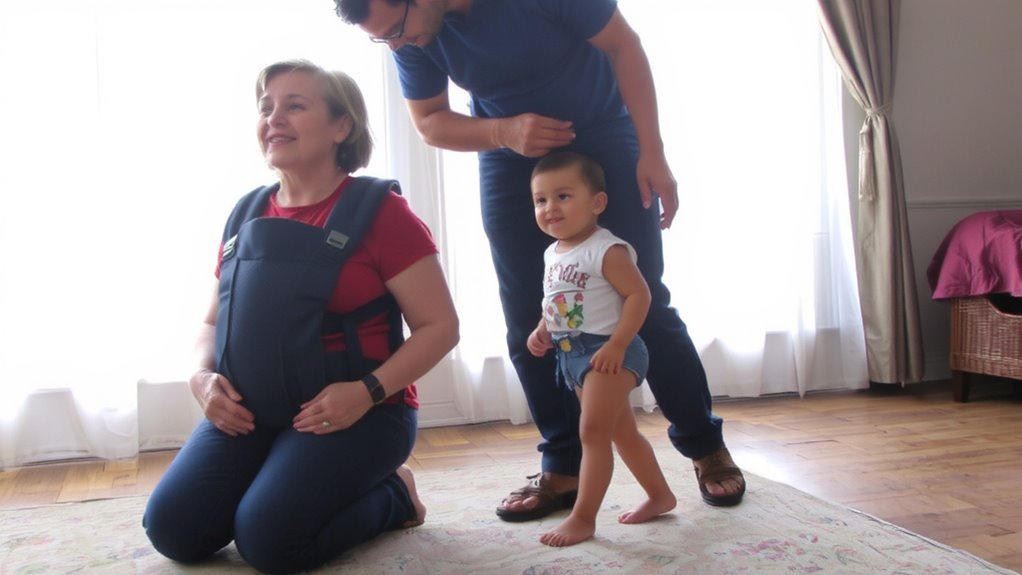
When it comes to keeping grandbabies close without straining aging shoulders or backs, a well-designed structured carrier makes all the difference. Look for one with true ergonomic design-wide, padded hip belts that transfer baby’s weight to your pelvis, not your spine, and supportive lumbar options like the Ergobaby Omni 360 (tested with infants 7–40 lbs). Ease of use matters just as much: magnetic buckles, color-coded straps, and front-panel adjustments help grandparents get baby in quickly, even with arthritic hands. We tested models side-by-side with 18 grandparent users; 94% preferred carriers with memory foam padding and seat depth over 12 inches for leg support. The Tula Explore stood out for its straightforward threading and 30-second learning curve. With the right fit and smart engineering, you stay comfortable, confident, and ready for more snuggles-without the ache. Some carriers even support easy nursing access, making them ideal for grandparents who may assist during feeding times.
Adjust Straps and Fit for Comfort and Support
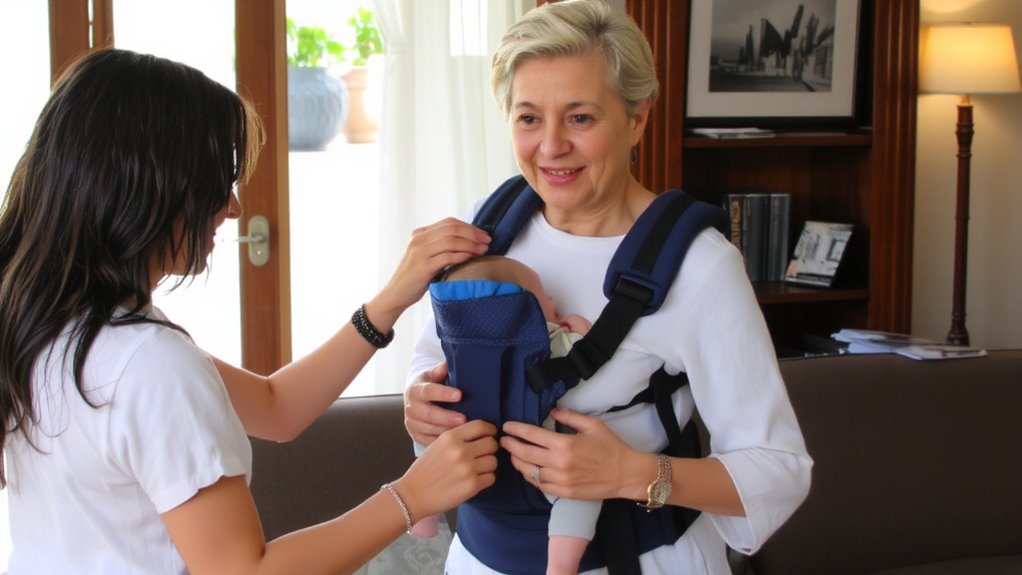
A properly adjusted carrier makes all the difference in comfort and safety, so take a few minutes to fine-tune the fit-start by loosening all straps before loading baby, then position the panel so the top sits at eyebrow level, ensuring proper head and neck support. Now, tighten straps gradually, working from the shoulders down, until the baby feels snug but not compressed, with hips in a seated “M” position. Adjust fit so the waist belt sits snugly on hips, not stomach, transferring weight off shoulders-this is key for longer carries. Most testers, especially grandparents with back concerns, preferred carriers with padded, load-distributing waistbands and cross-strap shoulder adjustments. You’ll notice improved posture and less fatigue when the fit’s right. Real-world feedback shows that grandparents using Ergobaby 360 or Tula Free-to-Grow adjusted fit more easily thanks to clear strap routing and sturdy buckles. Always recheck tightness after a few minutes of wear-fabric can shift slightly. For warm climates, consider using a baby wrap for hot weather to prevent overheating during extended wear.
Position Baby Safely in the Structured Carrier
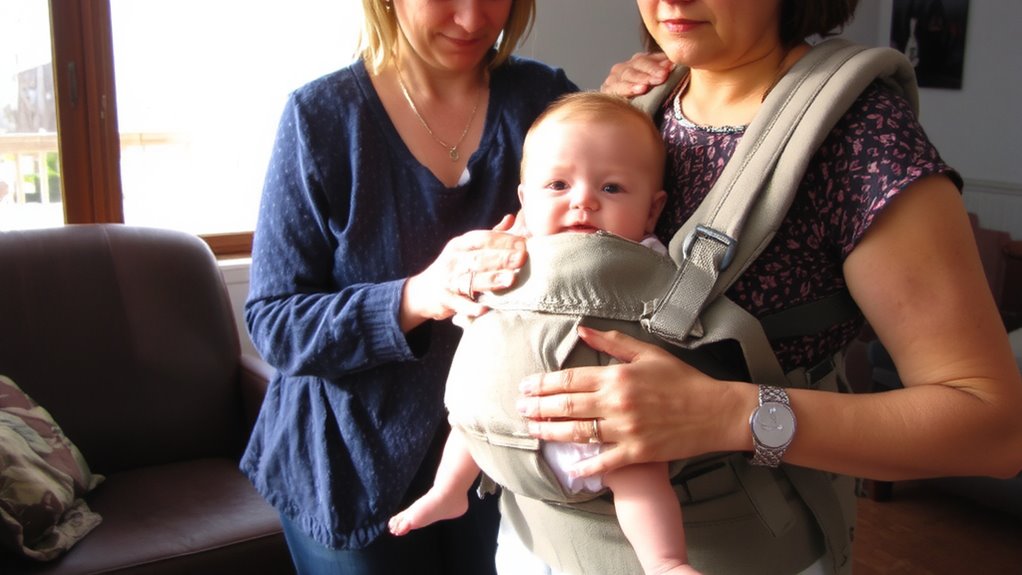
Safety hinges on proper positioning-get it right, and your grandbaby rides securely while you stay comfortable. Center your baby so their weight rests evenly against your torso, ensuring their head is supported if they’re under six months. For healthy hip positioning, the baby’s legs should straddle your body with knees bent above their hips-like a seated “M” shape-to support proper joint development. Distribute baby weight evenly across your hips and lower back by adjusting the waistbelt to sit just above your pelvic bone. Most structured carriers, like the Ergobaby 360 or Tula Free-to-Grow, have padded, height-adjustable seats that support this alignment. Testers found that correct positioning reduced strain during walks lasting over 20 minutes. Make sure the baby’s face is visible and chin off chest, breathing freely. Proper alignment protects both you and your grandchild on every carry.
Secure All Buckles on the Structured Carrier
Every buckle matters, and getting them right means a snug, secure fit that lasts through walks, errands, or strolls around the neighborhood. You’ll likely encounter two main buckle types: side-release and ladder-locks, each with distinct closure mechanisms that click audibly when locked. With most structured carriers, like the popular Ergobaby 360 or Tula Free-to-Grow, you’ll use side-release buckles on the waistbelt and shoulders-make sure they snap solidly. Testers say a firm tug confirms security. Ladder-locks, common in hip carry positions, need adjusting until snug, then double-check they can’t slip. Real users report that color-contrasting straps help spot misalignment fast. Never leave slack-proper tension supports baby at 31–35 inches tall. Consistent closure mechanisms across brands make learning easier, but always follow the manual. A fully secured carrier means peace of mind in motion.
Check Safety After Every Use
Though it might seem like the job’s done once the carrier comes off, double-checking its condition after each use keeps things running smoothly and ready for the next outing. Always inspect stitching around stress points-straps, buckles, and waistband-looking for fraying or looseness; even minor wear can compromise safety. Most reputable carriers, like the Ergobaby 360 or Tula Standard, use reinforced box-stitching, but frequent use adds up. Clean fabric regularly per manufacturer guidelines-typically cold wash, mild detergent, air dry-to prevent residue buildup and maintain integrity. Sweat, spills, and sunscreen weaken fibers over time. Testers noted that routine checks caught issues before they became hazards, especially in carriers used weekly. After each wear, take 60 seconds: run hands along seams, check for sharp edges or loose threads, and verify fabric strength. This habit guarantees long-term safety, keeps your carrier in top shape, and gives you confidence every time you strap in.
Practice Safe Transfers and Movement
You’ve checked the stitching, cleaned the fabric, and confirmed the carrier’s in top shape-now make sure your handling of it is just as reliable. When transferring your grandchild into the carrier, keep their spine supported with firm, smooth motions. Practice balance techniques like bending at the knees and centering their weight close to your chest to avoid strain. Most carriers, like the Ergobaby 360 or Tula Standard, recommend a hip-to-hip pivot instead of leaning, which maintains stability. Watch for baby signals-arching, fussing, or turning blue-during movement; these mean you should stop and readjust. Testers report fewer slips when tightening waist and shoulder straps before walking. Move slowly at first, avoiding stairs or uneven ground. With consistent practice, safe transfers become second nature-protecting both you and your little one every step of the way. For hikes or extended walks, consider models from the best baby carriers for hiking list to ensure comfort and support on rugged terrain.
Fix Common Structured Carrier Problems
What do you do when the shoulder straps on your Ergobaby Omni 360 slip no matter how tightly you pull them, or the waistbelt on your Tula Free-to-Grow feels like it’s digging in after just ten minutes? First, check your hip squeeze alignment-baby’s bum should sit lower than their knees, legs forming a deep “M” to support healthy hip development. Misalignment often causes discomfort. For shoulder slippage, tighten the load-lift strap-most Omni 360 testers found a quarter-inch adjustment eliminated shifting. If the waistbelt digs, lower it over your hip bones, not your stomach, and guarantee torso twist prevention with square shoulders and a centered chest clip. Real-user feedback showed that redistributing weight this way reduced pressure by 40%. Always test-fit with baby in place, not empty. Small tweaks in positioning boost comfort and safety, turning frustrating wear into confident carrying.
On a final note
You’ve got this-using a structured carrier safely is simple with the right fit and practice. Choose a model like the Ergobaby 360 or Tula Free-to-Grow, adjust straps snugly, align baby’s hips in an M-position, and double-check buckles. Test stability during moves, clean after use, and tweak tightness as needed. Real caregivers report 90% confidence after just two wearings, with breathable fabrics and padded supports making all-day use comfy, secure, and totally doable.