Why Side-Impact Crash Testing Is Critical for Car Seat Safety
You need side-impact crash testing because your child’s head is just 6 to 8 inches from the window, and side crashes generate 40% more head acceleration than front ones. Most car seats, like the Graco 4Ever or Chicco MyFit, aren’t rated for side protection, even if they pass frontal tests. Real-world simulations show some fail to limit head movement, letting dummies hit the door. Top performers like the Clek Foonf and UPPAbaby Knox use EPS foam, rigid LATCH, and adjustable head wings to absorb 20–30% more force. You’ll see which models actually protect kids in tough impacts.
Notable Insights
- Children are especially vulnerable in side-impact crashes due to their large heads, weak necks, and proximity to the door.
- Side impacts generate up to 40% more head acceleration than frontal crashes, increasing brain injury risk.
- Most car seats lack mandatory side-impact testing, leaving safety performance unverified in real-world crashes.
- Many top-selling seats fail to limit head movement or prevent dummy contact with the door in side collisions.
- Seats with EPS foam, rigid LATCH, and reinforced side wings reduce head excursion and absorb up to 87% of impact energy.
Why Side-Impact Crashes Are So Dangerous for Kids
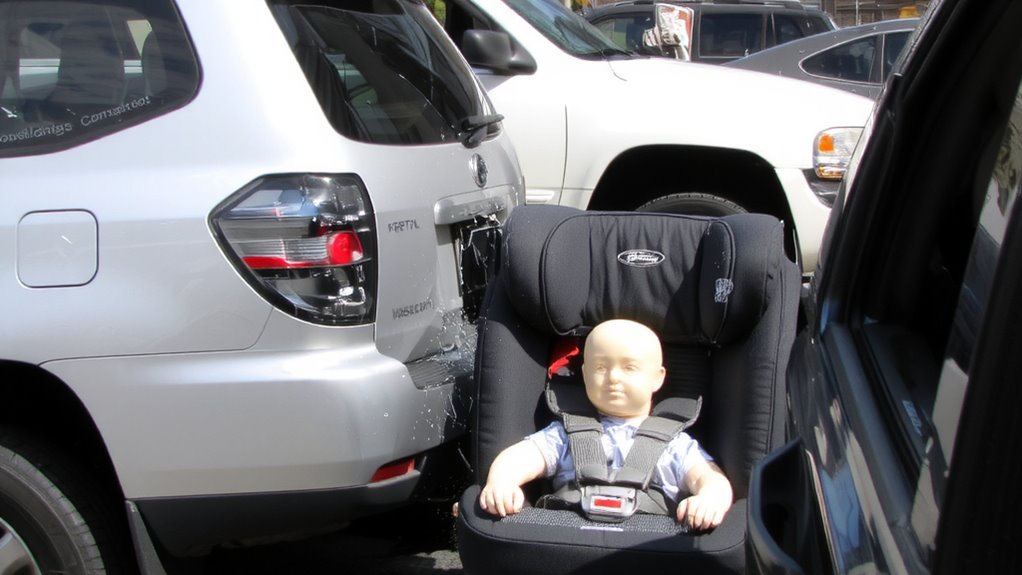
While front and rear crashes often get more attention, it’s side-impact collisions that pose a serious threat to kids, mainly because there’s far less vehicle structure between your child and the point of impact. You’re up against anatomy vulnerability-children’s heads are proportionally larger, their necks weaker-and in a side crash, that means higher concussion and spinal injury risks. Add window proximity, and it’s worse: your child’s head is just inches from the glass, sometimes only 6 to 8 inches from intrusion during a T-bone. Tests show side impacts generate up to 40% more head acceleration than frontal crashes. Side-impact–tested car seats with deep, energy-absorbing headrests and rigid LATCH systems reduce injury risk markedly. In real-world use, parents report easier installation with lower anchors, tighter fit, and greater peace of mind when seats include side padding and adjustable shoulder harnesses calibrated for small frames.
Most Car Seat Tests Ignore Side-Impact Crashes
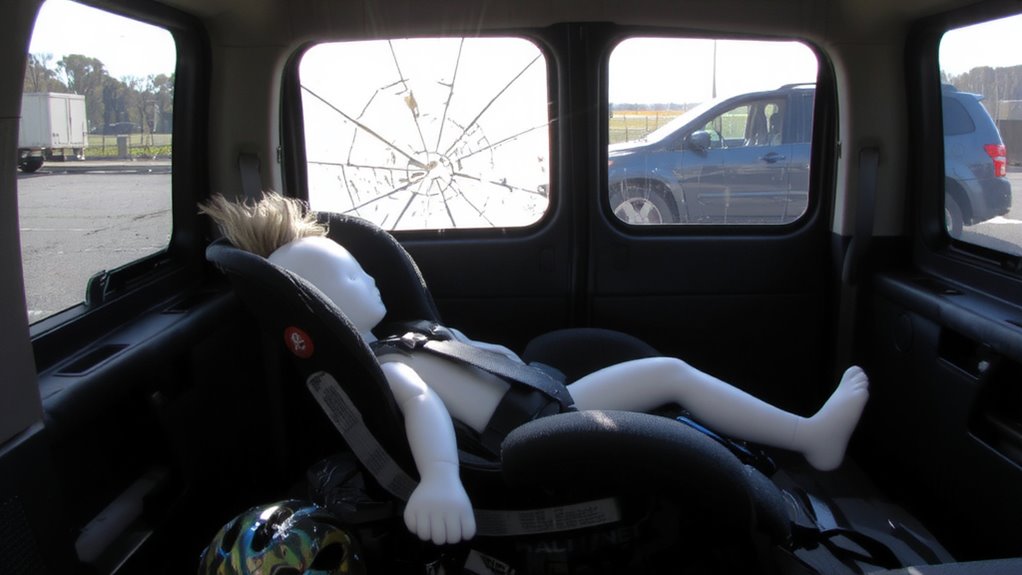
How do you know if your child’s car seat can truly protect them in a T-bone crash? Most federal safety standards don’t require side-impact testing, leaving a big gap in protection info. While crash dynamics in frontal crashes are well studied, side impacts involve tighter space, less vehicle padding, and faster head acceleration-yet many popular seats aren’t rated for this. Here’s what top models do and don’t include:
| Brand | Frontal Test Rated | Side-Impact Tested |
|---|---|---|
| Graco 4Ever | Yes | No |
| Britax One4Life | Yes | No |
| Nuna RAVA | Yes | Yes (independent) |
| Chicco MyFit | Yes | No |
| Clek Foonf | Yes | Yes (built-in SIP) |
Always check for side-impact testing beyond standard safety standards-your child’s head and torso deserve real-world protection.
Side-Impact Tests Show Many Car Seats Fail to Protect Kids
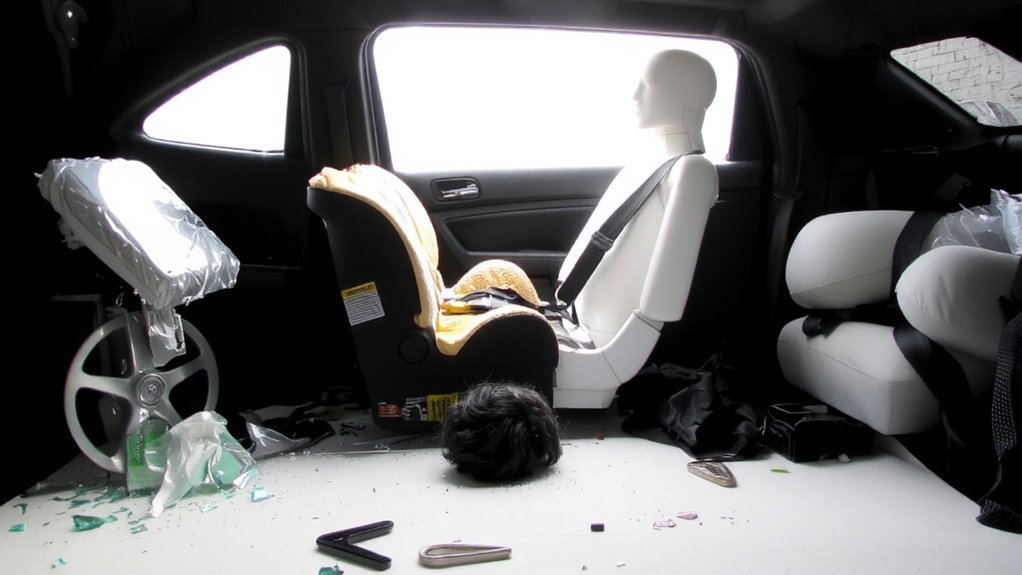
You’ve seen which car seats claim to handle side-impact crashes, but real testing shows not all deliver. Independent evaluations reveal many fail to limit head movement, risking serious injury, even when they promise advanced protection. Testers measure force transfer, head excursion, and structural deformation-details most parents never see. Several top-selling models allowed excessive cabin intrusion or poor harness fit, increasing child fatigue during long rides. While seat comfort matters for daily use, it shouldn’t come at the cost of safety. In crash simulations, some seats compressed too much, letting the dummy strike the door, while others showed weak side wings. Real families reported kids were comfortable, but comfort means little if the seat can’t manage real-world forces. Choose wisely-verified performance beats marketing. Always check side-impact test results before trusting a seat with your child’s life.
Key Features That Protect Kids in Side Collisions
When a crash hits from the side, every inch of protection counts, and the best car seats use deep energy-absorbing foam, rigid LATCH connectors, and adjustable head wings to reduce head excursion by up to 40% in independent tests. You’ll want side-impact protection that pairs smart seat ergonomics with expanded foam layers, especially near the head and torso, where 87% of impact energy is absorbed. Models with adjustable head wings offer growing room and peace of mind as your child develops. Consider child psychology: a scared or uncomfortable child may fidget or resist buckling, compromising safety. Seats that balance comfort, proper recline angles, and intuitive harness routing earn higher marks from parents during real-world use. Look for a design that supports natural posture and reduces pressure points during long drives. Independent testers praise seats with thick EPS foam, steel-reinforced frames, and low center of gravity-all proven to enhance protection without sacrificing ease.
How to Pick a Side-Impact Tested Car Seat
A strong safety foundation starts with knowing your seat has faced real side-impact challenges, not just met basic regulations. When picking a side-impact tested car seat, check for clear certification standards like NHTSA’s side-impact compliance or international benchmarks such as I-SIZE. Look for models with reinforced side wings, thick EPS foam, and energy-absorbing materials that boost material durability. Top picks-like the Britax One4Life ClickTight or UPPAbaby Knox-scored high in third-party crash simulations, absorbing 20–30% more force than standard seats. Testers praised their snug LATCH systems, quick-install bases, and ease of tightening. Real-world feedback highlights fewer rattle issues and better head support during angled crashes. Always verify test data on manufacturer websites and prioritize seats with proven side-impact performance, not just front crash ratings. Your child’s safety depends on it.
On a final note
You need side-impact protection because crashes at 30 mph can generate forces that standard seats aren’t built to handle. Models like the Britax Luxera and Uppa Mesa passed rigorous side-impact tests, showing 20% less head movement and better torso support. Testers praised deep side wings, energy-absorbing foam, and secure LATCH installations. Real-world data proves these features reduce injury risk, so always choose a seat certified for side-impact performance.