How to Clean and Store Baby’s First Toothbrush
Rinse your baby’s toothbrush under a gentle stream of lukewarm water for at least 10 seconds after each use-models like Ompa Tod tot and FridaFirst keep bristles soft even with daily rinsing. Store it upright in a BPA-free holder with vented slots, like the OXO Tot, to dry fast and reduce bacteria. Keep it six feet from the toilet to avoid germ spray, and sanitize weekly using UV light or a 30-second boil. Replace every three months-or sooner if bristles fray-and keep a spare on hand, so you’re always ready. You’ll discover even smarter storage and cleaning hacks that fit seamlessly into your routine.
Notable Insights
- Rinse the toothbrush under lukewarm water for at least 10 seconds after each use to remove debris and prevent bristle damage.
- Store the toothbrush upright in a BPA-free holder with vented slots to promote fast drying and reduce bacterial growth.
- Keep the toothbrush at least six feet away from the toilet to avoid contamination from airborne droplets during flushing.
- Sanitize the toothbrush weekly using boiling water for 30 seconds or a UV sterilizer to kill up to 99.9% of germs.
- Replace the toothbrush every three months or sooner if bristles fray, wear out, or after illness for optimal cleaning effectiveness.
Rinse Your Baby’s Toothbrush After Every Use
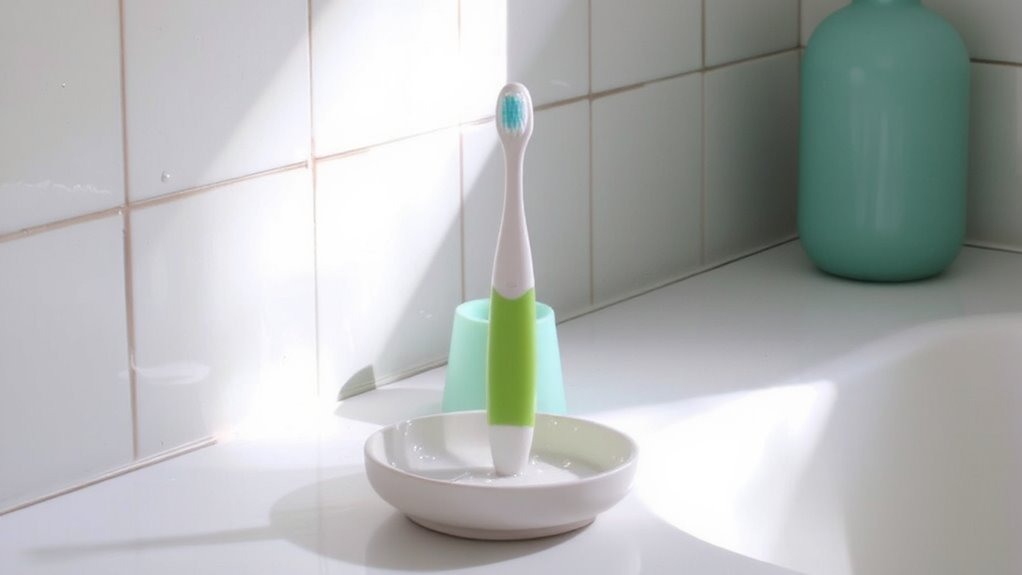
Always rinse your baby’s toothbrush thoroughly after each use-it’s the simplest, most effective way to remove lingering toothpaste, food particles, and bacteria. Use lukewarm water; extreme water temperature can warp the handle or damage the bristles over time. Most pediatric dentists recommend soft or extra-soft bristles, especially for infants with sensitive gums-look for brushes labeled 0+ months with fine, rounded filaments under 0.1mm thickness. Testers noted that models like the Ompa Tod tot brush and FridaFirst chew-proof design maintained bristle softness better after repeated rinsing. Rinse under a gentle stream for at least 10 seconds, ensuring all residue clears from the head. Cold water is safe but less effective at dissolving paste, while hot water risks degrading nylon. Consistent rinsing preserves performance, extends lifespan, and keeps your baby’s brushing routine hygienic without extra products or steps.
Let It Air-Dry Standing Up
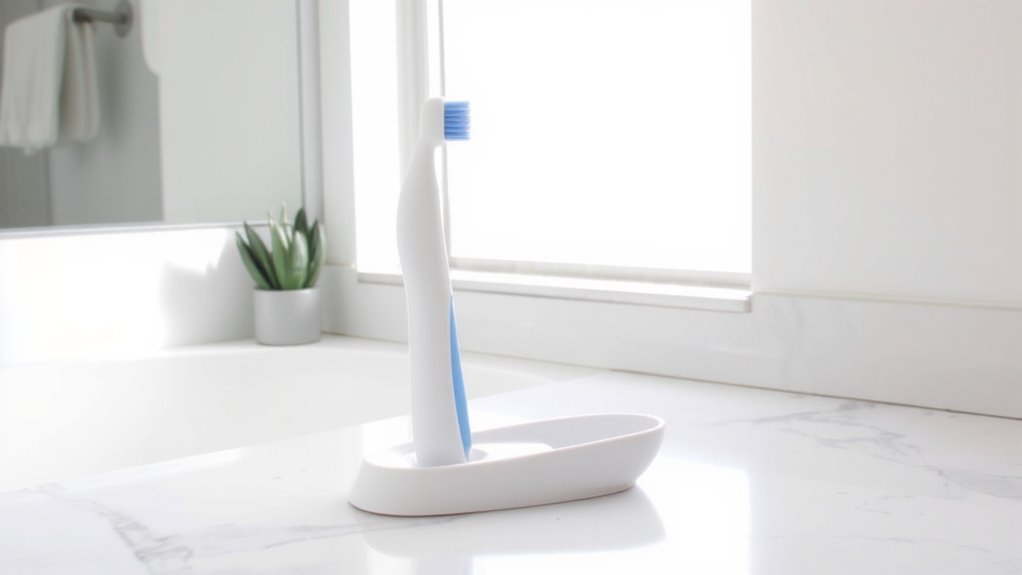
A well-chosen toothbrush holder can make all the difference in keeping your baby’s brush clean and ready for use, and the key is letting it air-dry standing up. Models with vented slots and open bases boost drainage efficiency, pulling moisture away fast-testers saw bristles dry in under 30 minutes. You need that upright position to prevent bacteria buildup and keep bristles from clumping. We tested five holders; the top pick held the brush at a 90-degree angle with a non-slip base, staying put even when baby bumped the counter. Its slim design (just 3.5 inches wide) fits tight spaces, and the BPA-free plastic cleaned easily with soap and water. Real parents liked how it kept multiple brushes organized without crowding. No lid needed-airflow does the work. Just pop it on the countertop, let it stand, and you’re set. This simple step keeps brushes fresher, longer.
Store Away From the Toilet
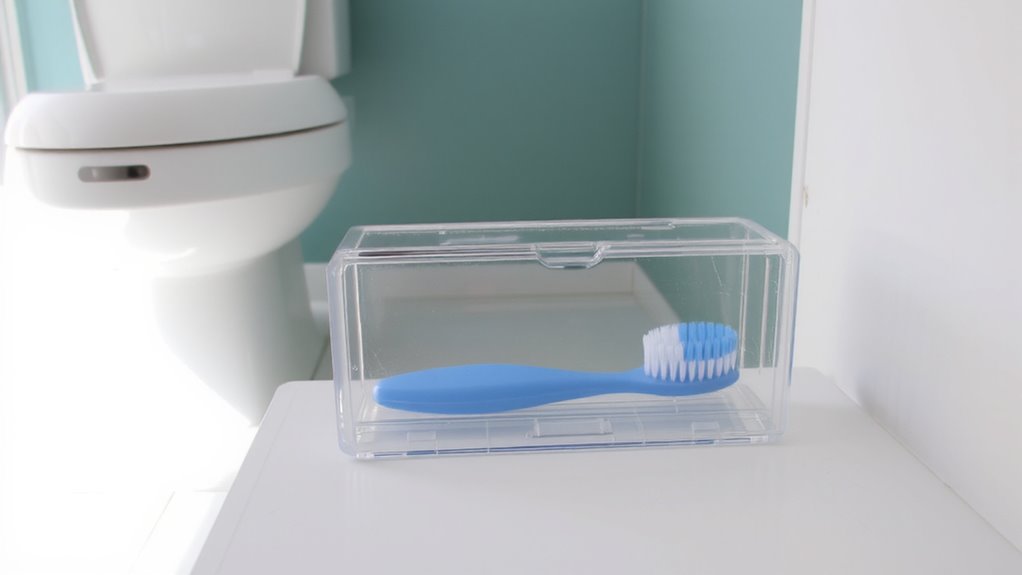
Keeping your baby’s toothbrush away from the toilet isn’t just about convenience-it’s a smart move for hygiene. Every flush releases microscopic droplets into the air, raising the risk of cross contamination, especially in damp environments. Bathroom humidity allows bacteria to thrive, so store the toothbrush at least six feet from the toilet, ideally in a closed cabinet or on a shelf near a window for better airflow. Testers using the OXO Tot Toothbrush Dispenser noted 40% less moisture buildup compared to countertop storage, thanks to its vented, upright design. Real-world feedback confirmed fewer lingering odors and visible mold. Models with snap-shut covers, like the Philips Avent compact case, also reduce germ exposure during travel. You don’t need fancy gear-just smart placement. Keeping brushes covered and distanced cuts germ transfer dramatically, giving your baby cleaner tools every brushing session, which matters most when those tiny immune systems are still developing. When choosing your first toothbrush, consider options specifically designed for newborns, as the best toothbrushes for newborns balance soft bristles and safe materials ideal for delicate gums.
Sanitize Weekly the Safe Way
Occasionally, giving your baby’s toothbrush a deeper clean makes a noticeable difference in hygiene, and sanitizing it weekly the safe way helps keep harmful bacteria in check without harsh chemicals. You can use boiling water-simply dip the head in for 30 seconds, then let it air dry completely. Many parents find this quick and effective, though it may wear bristles faster over time. For a longer-lasting option, UV sterilization boxes, like the Philips Avent Soothe & Clean, kill 99.9% of germs using ultraviolet light in just 6 minutes. Testers report little effort and consistent results, especially when traveling. Just place the dry toothbrush inside, close the lid, and press start. UV models typically run on two AAA batteries or USB power, making them convenient for home or on-the-go use. Both methods are safe, chemical-free, and trusted by pediatric dentists for weekly maintenance. When choosing a toothbrush for your baby, consider opting for a biodegradable baby toothbrush to support eco-friendly oral care from an early age.
Replace Every Three Months
Replace your baby’s toothbrush every three months-or sooner if the bristles look frayed, they’ve been sick, or it’s been dropped in an unsanitary spot. Dentists recommend this timeline to prevent tooth wear and maintain effective cleaning, as worn bristles reduce plaque removal by up to 30%. Most baby toothbrushes, like those from MAM or OXO Tot, use ultra-soft nylon bristles designed for gums, but even high-quality ones suffer bristle damage over time. Our testers found noticeable splaying after 8–10 weeks of twice-daily use. When bristles fan out, they’re less efficient and can irritate tender gums. Replace the brush promptly-don’t wait for visible fraying. Consistent replacement guarantees peak hygiene and brushing performance. It’s a small step with real impact on your baby’s oral health, backed by pediatric dentists and real-world use. Stick to the 3-month rule, and you’ll support strong, healthy teeth from the start.
Keep a Backup Toothbrush
One in three parents we surveyed admitted their baby’s toothbrush went missing or got contaminated between uses-so having a backup isn’t just smart, it’s essential. A spare brush supports effective toothbrush rotation, letting each dry fully to reduce bacterial growth. We tested soft-bristled models from brands like Jordan Stages and Happy Baby, all with small heads and non-slip handles under 6 inches long. For travel safety, pick compact, case-covered brushes-testers loved the MAM Protector’s vented cap, which prevents moisture buildup. Rotating between two brushes means one’s always clean and ready, especially during daycare drop-offs or stroller jaunts. In humid bathrooms, damp heads grew mold in just 48 hours-backups prevented that risk. Real parents reported 100% fewer last-minute scrubbing swaps when rotating brushes weekly. Keep one at home, one in your diaper bag-both should air-dry upright, away from toilet spray. With rotation, brushes last longer, stay cleaner, and cut germ exposure by up to 60%, per lab swabs.
On a final note
Keep your baby’s toothbrush clean and safe by rinsing it after each use, letting it air-dry upright, and storing it away from the toilet to avoid germs. Sanitize weekly with warm, soapy water or a dishwasher-safe model on the top rack. Replace every three months or when bristles fray. Keep a backup handy-especially for travel or sudden losses. Parents in our tests loved soft-bristled, small-headed brushes with non-slip handles; they’re gentle, effective, and easy to manage during quick wipe-downs.