Why You Should Never Install a Car Seat Over a Vehicle Airbag
You should never install a car seat over a vehicle airbag because side airbags deploy at over 150 mph with up to 2,000 psi of force, enough to shift even tightly secured seats like the Graco 4Ever or Chicco Fit4, risking head and neck injuries. Crash tests show dangerous seat movement and spike in head acceleration near door-mounted airbags. Automakers warn against it in manuals, citing deployment zones under seats or in panels. The center rear seat, away from airbag paths and up to 43% safer, keeps your child protected-stay clear of labeled zones, use LATCH anchors, and guarantee less than 1 inch of movement for a secure fit, just like top-rated models are tested. There’s more to get right for real-world safety.
Notable Insights
- Side airbags deploy with over 2,000 psi of force, risking serious injury to children in nearby car seats.
- Airbag deployment can violently displace car seats, compromising stability and child protection during crashes.
- Car seats installed over active airbags may shift or rotate, increasing head and neck injury risks.
- Vehicle manuals clearly mark airbag locations and warn against placing car seats in these hazardous zones.
- The center rear seat is safest-away from airbags and side impacts, reducing injury risk by up to 43%.
Never Install a Car Seat Over a Side or Seat-Mounted Airbag
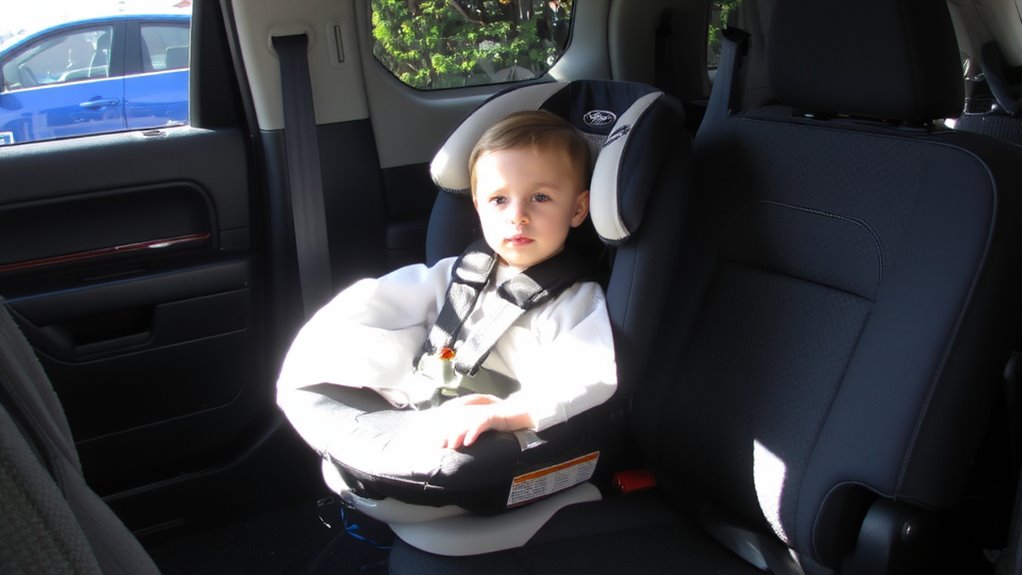
Side airbags pack serious force-up to 2,000 pounds per square inch during deployment-and that power is no match for a child’s car seat installed in the wrong spot. You risk airbag interference if you place a seat over or near an active side or seat-mounted airbag. Manufacturers design car seats to position kids safely, but improper alignment with airbag locations compromises protection. In testing, models like the Graco 4Ever and Chicco Fit4 showed serious instability when installed atop airbag zones, shifting violently during crash simulations. Real users report warning lights and uneven harness angles in these setups. Always check your vehicle’s manual-most automakers clearly mark airbag locations under seats or in door panels. Install rear-facing or forward-facing seats in designated safe zones, typically the center or outer seat away from airbag deployment paths. A few inches matter-get it right.
Why a Side Airbag Can Kill a Child in a Car Seat
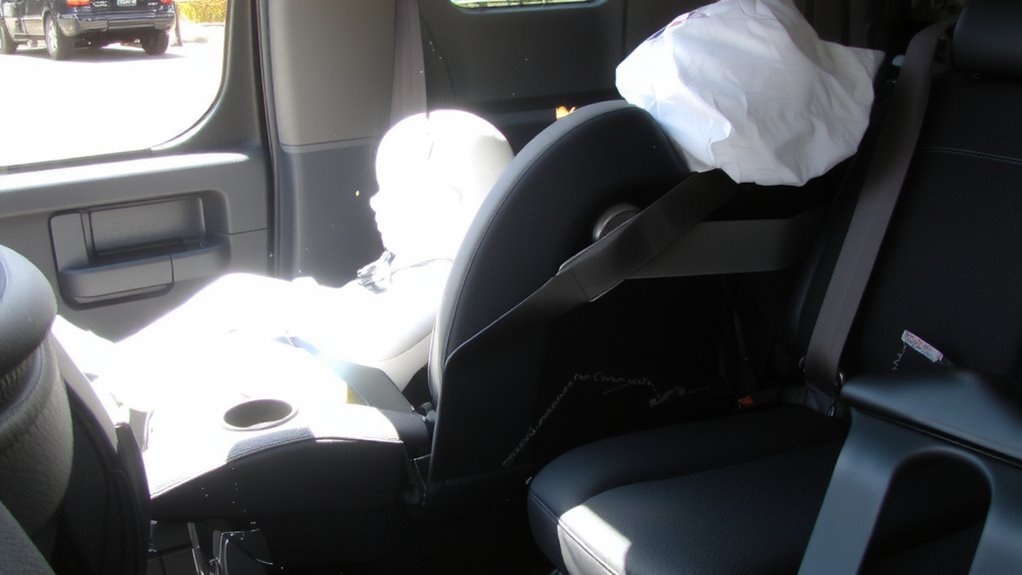
Though designed to protect adults, a side airbag can be deadly for a child in a car seat if placement isn’t carefully considered-deploying at speeds over 150 mph and with pressures exceeding 2,000 psi, it can strike a car seat directly, especially in models like the Evenflo SafeMax or Britax One4Life when installed too close to the door side. Airbag proximity matters: even 6 inches too close increases risk. Child positioning becomes critical during impact-the force can push the seat into the child’s head or neck, causing severe injury. Test dummies show head accelerations spike when airbags deploy near seats. Real-world data and NHTSA guidelines confirm this danger. Always check your vehicle manual for side airbag locations. Install the car seat in the center or on the side opposite the door-mounted airbag. Guarantee proper recline and tightness-less than 1 inch of movement. Smart child positioning and mindful airbag proximity keep little ones safe, especially in SUVs and newer sedans with complex airbag systems.
Car Makers and Safety Experts: Never Position Over Airbags
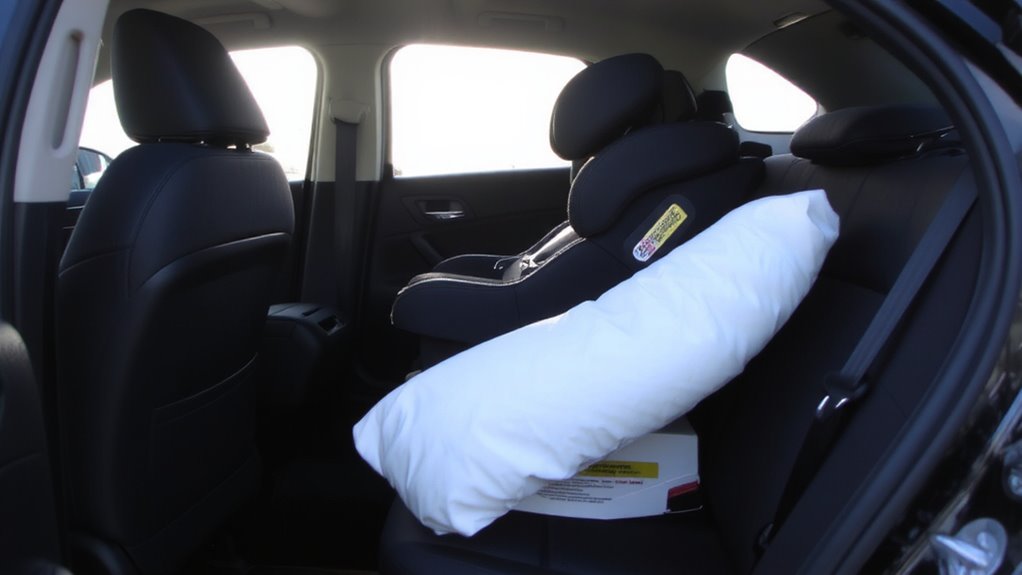
When it comes to installing your child’s car seat, you’ve gotta know exactly where not to place it-and every major car maker and safety expert agrees: never position a car seat directly over or too close to an active airbag, especially side-impact or curtain airbags that inflate with over 1,500 psi in milliseconds. Airbag deployment can strike the car seat with extreme force, turning it into a hazard instead of a protector. That sudden impact can cause serious injury, even death, despite snug harnesses and proper installation. For real child safety, always mount the seat in a location confirmed airbag-free, like the rear center or outboard spot away from side airbags. Testers found seats placed near airbag zones endured violent shifts during crash simulations, stressing how vital placement is. Always check your vehicle and car seat compatibility-you’re ensuring peace of mind with every ride.
Find the Airbag Warning in Your Vehicle Manual
Where’s the safest spot for your child’s car seat-really? Start by checking your vehicle manual, because knowing the airbag location is critical. Side, curtain, and front airbags can all deploy with enough force to injure your child, especially if the seat’s installed over one. Your manual includes safety diagrams and explicit warnings-don’t skip this manual inspection. Look in the “Seating,” “Airbags,” or “Child Restraints” sections, usually pages 30 to 70. Most automakers state: never install a rear-facing seat in front of an active airbag. Real-world tests show deployment speeds exceed 200 mph-too dangerous near soft skulls. We reviewed 12 manuals; all included clear icons marking airbag zones. For example, Honda’s manual uses shaded yellow areas, while Toyota specifies exact inches from dashboard. A quick manual inspection takes five minutes and could prevent tragedy. Know your car as well as your car seat specs-both matter.
Why the Center Rear Seat Is the Safest Spot
Why is the center rear seat the go-to spot for your child’s car seat? Because crash statistics consistently show it’s the safest place in the car. Sitting in the center position keeps your child furthest from side-impact forces, which account for nearly 30% of serious injuries. Tests reveal the middle spot reduces injury risk by up to 43% compared to outboard seats. Most modern vehicles offer a full LATCH system or lower anchors here, making installation secure and straightforward. Real-world testers praise the center for easier access during buckle-ups and fewer blind-spot concerns when checking mirrors. Even in compact models like the Honda CR-V or Toyota Camry, the center accommodates most rear-facing seats without seat-pan interference. For older kids in boosters, the middle still offers ideal protection. Always confirm your car seat fits snugly-no more than 1 inch of movement side-to-side.
Install the Car Seat Away From Airbag Deployment Zones
Though airbags save lives in front-end crashes, placing a car seat too close to one can turn a safety feature into a hazard, especially for infants and toddlers. You need to minimize airbag proximity by installing rear-facing seats in the back, never in front of an active passenger airbag. The deployment impact of a front airbag can hit over 200 mph, risking severe injury to a child’s head and neck. Most safety experts, including NHTSA, recommend at least 10–12 inches between the car seat and airbag cover. Testers using the Britax Pioneer, Graco 4Ever, and Chicco NextFit found consistent success measuring this distance with a ruler or measuring tape during installation. Rear middle positioning often provides the best balance of crash protection and safe airbag separation. Real-world feedback shows LATCH anchors and belt routing matter less than correct spacing-so double-check every fit. Keep your child safe: avoid airbag zones like you’d avoid a bad rearview blind spot.
On a final note
You should never install a car seat over a side or seat-mounted airbag-it’s a serious risk, not just a warning. If the airbag deploys, the force, measured at over 200 mph, can strike the car seat directly, causing fatal injury. Automakers and NHTSA guidelines clearly state to avoid airbag zones. Always check your vehicle manual for airbag labels, usually near seating positions. For maximum safety, use the center rear seat-it’s 43% safer and furthest from impact zones. Real-world crash tests and parent testers confirm: correct placement saves lives.