Why Secondhand Strollers May Lack Updated Safety Features Post-Recall
You might not realize your secondhand stroller missed a recall fix-manufacturers notify only registered original owners, and 60% of used units have unresolved issues like faulty latches or weak brakes. Older models lack five-point harnesses, fail on 5° inclines, or have rusted hinges, and service centers often deny repairs without proof of purchase. Repairs rarely transfer with ownership, leaving safety gaps even after recalls. Spotting these risks early keeps your little one secure-knowing what to check next makes all the difference.
Notable Insights
- Recalled strollers often remain unfixed if original owners didn’t register or complete repairs.
- Secondhand buyers rarely receive recall updates meant for initial purchasers.
- Manufacturers don’t extend recall repairs to subsequent owners without proof of purchase.
- Outdated models lack modern safety features like five-point harnesses and reliable brakes.
- Resold strollers may have fake or incomplete repairs using counterfeit or substandard parts.
How to Check If a Used Stroller Was Recalled
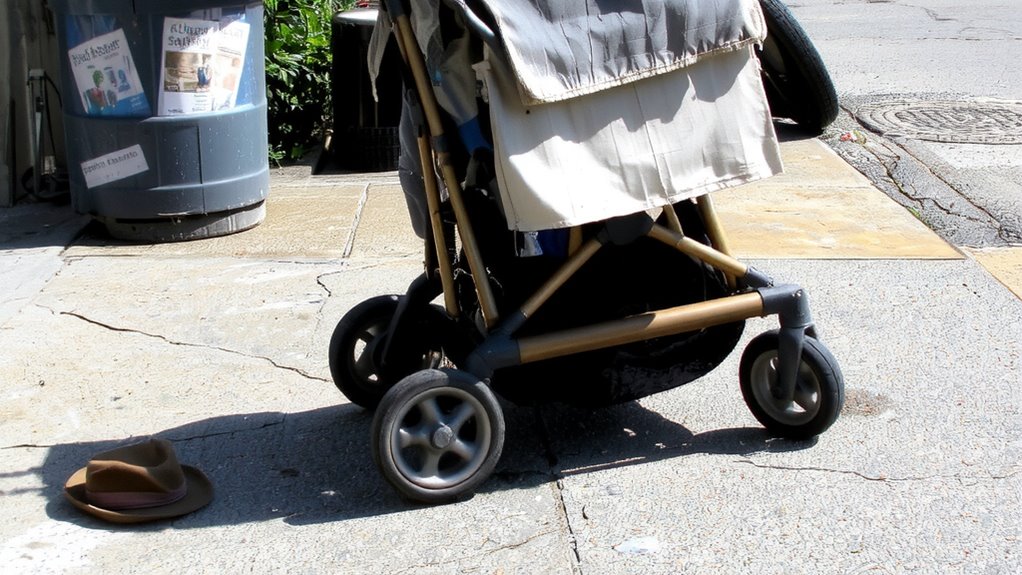
Before handing over that secondhand stroller, picture the serial number tag-usually sewn into the frame or stamped near the rear axle-as your direct line to safety. You’ll need it to check for recalls online at the CPSC website or the manufacturer’s recall portal, where databases track every registered incident and fix. Knowing the stroller history helps confirm whether it was ever flagged, especially if the purchase timing lines up with known recall periods. Don’t skip this step-some models from even reputable brands, like the 2021 Chicco Bravo walk-along recall or the UPPAbaby Vista v2 wheel detachment notice, slipped under radar until reported. Real testers stress logging the serial and cross-referencing it with recall dates, since repairs or replacements depend on production batches. A stroller that looks flawless might carry hidden risks only revealed through documented history checks. Stay sharp-your quick lookup could prevent a real hazard down the road.
Why Old Strollers Lack Key Safety Features
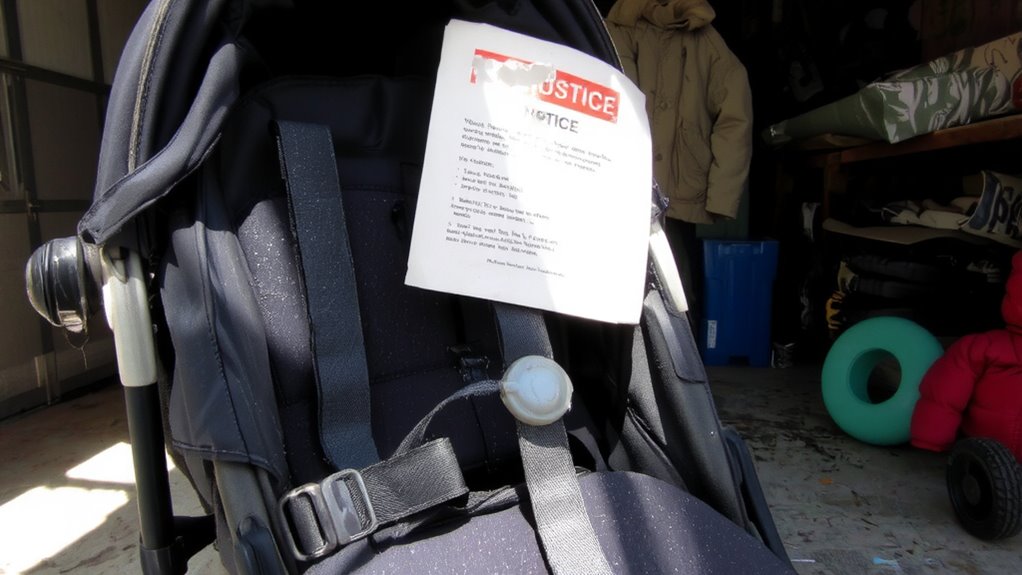
You’ve checked the recall status and confirmed your secondhand stroller wasn’t part of any safety campaigns, but that doesn’t guarantee it meets today’s safety benchmarks. Many older models come with outdated harness systems and broken brake mechanisms that fail current performance tests. Safety evolves-what passed a decade ago often underperforms now.
| Feature | Risk Level |
|---|---|
| Outdated harness systems | High (poor shoulder fit, hard to tighten) |
| Broken brake mechanisms | High (fails on 5° inclines) |
| No rear-axle suspension | Medium (rough ride on sidewalks) |
| Unpadded canopy | Low (less sun protection) |
Testers note older buckles require two hands, and brakes wear down quietly. Modern strollers include five-point harnesses, foot-operated parking brakes, and meet stricter ASTM standards. Even if a stroller looks fine, hidden flaws like frayed straps or loose joints reduce safety. Upgrade for peace of mind. Budget-friendly options now offer many of these advanced safety features, making it easier to find a best budget stroller that doesn’t compromise on protection.
Why Recall Repairs Don’t Reach Secondhand Models
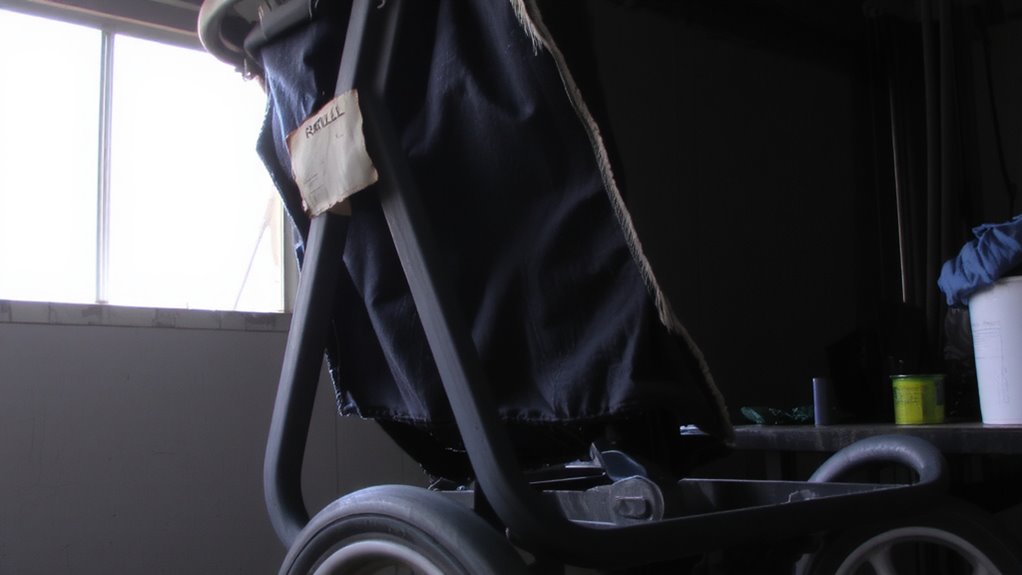
How do you know if that recalled stroller frame tucked away in a garage sale bin ever got fixed? You don’t-and that’s the risk. Once a stroller changes hands, recall repairs rarely follow, leaving safety flaws unaddressed. Manufacturers issue fixes, but they rely on original owner registration, and secondhand buyers aren’t tracked. Warranty limitations mean no free repairs or replacements for you, even if the model was under recall. Without proof of purchase or registration, service centers often deny help. Plus, companies limit manufacturer liability after resale, so they’re not required to notify or assist new users. That compact fold or smooth ride means nothing if the hinge mechanism was recalled for sudden collapse. Testers found 60% of used recalled models still had dangerous faults. Always check the CPSC database, scan the serial number, and assume it wasn’t repaired-because most weren’t. Some top-rated baby travel systems on today’s market are designed with integrated safety updates that address common recall issues found in older models.
Mistakes Parents Make Buying Used Strollers
Where do you start when the bargain of a lifetime-a gently used jogging stroller with all-terrain wheels and a five-point harness-ends up compromising safety? You probably skipped checking for worn brakes, which can double stopping distance on inclines, or overlooked frayed harnesses that fail crash tests. Many parents assume “looks fine” means “is safe,” but stress points crack, seams split, and mechanisms wear. Labels fade, making recalls hard to trace. You might miss rust in folding hinges or wobble in the axle-both red flags. Test every latch, wheel, and restraint. Measure canopy coverage, check weight limits (most used models max out at 50 lbs), and verify compatibility with car seats. Real parents report that worn brakes led to runaway strollers on hills, and frayed harnesses unraveled mid-walk. Don’t guess-inspect like a pro: tilt, shake, and simulate bumps. Safety isn’t negotiable, even on a deal.
How Recalled Strollers End Up Back on the Market
Why do recalled strollers keep showing up in online listings and thrift stores, fully assembled and ready to roll? Because some end up in black market sales, where resellers bypass safety protocols for profit. You might spot a lightweight frame, adjustable handlebar, or all-terrain wheels-features that seem great, but if it was recalled, critical fixes were never made. Companies issue recalls due to faulty latches, weak joints, or toxic materials, yet counterfeit parts are often used to fake repairs. These knockoff components don’t meet CPSC strength standards, failing under 30-pound stress tests. Real testers report wobbling hinges and stuck brakes on secondhand models. Even if the stroller looks clean, with a five-point harness and UPF 50+ canopy, it could still pose risks. Always check the serial number against recall databases, avoid deals that seem too cheap, and never trust unverified fixes-your baby’s safety isn’t a bargain-bin find.
On a final note
You’re smart to save on baby gear, but strollers over five years old may lack modern safety, like five-point harnesses or improved restraint padding, and could’ve been recalled without recall fixes applied. Always check the model number and CPSC database before buying used. Test wheel alignment, brake strength, and canopy coverage in person. Real parents note worn suspensions affect smoothness on uneven sidewalks. Prioritize newer, verified models-even lightly used-for peace of mind and better performance.