When to Stop Using LATCH and Switch to Seat Belt Installation for Heavier Children
Stop using LATCH when your child and car seat together hit 65 pounds, the max limit for most systems. At that point, switching to a seat belt install gives better stability and safety, especially in heavier kids. Top models like the Graco 4Ever and Britax One4Life handle the shift smoothly, and real-world tests show less movement during sudden stops. Always lock the belt properly and do the push-test for tightness-then you’ll see exactly how much more secure it really gets.
Notable Insights
- Stop using LATCH when the combined weight of the child and car seat exceeds the manufacturer’s specified limit, typically between 40 and 65 pounds.
- Check the car seat label and vehicle manual for exact LATCH weight limits and installation guidelines.
- Switch to seat belt installation when the child’s weight approaches the LATCH limit to maintain optimal crash performance.
- Seat belts are stronger than LATCH and can safely secure heavier children, especially when paired with a top tether.
- Ensure proper seat belt installation by routing it through the correct path and achieving less than 1 inch of movement at the belt path.
When to Stop Using LATCH: The Weight Limit Rule
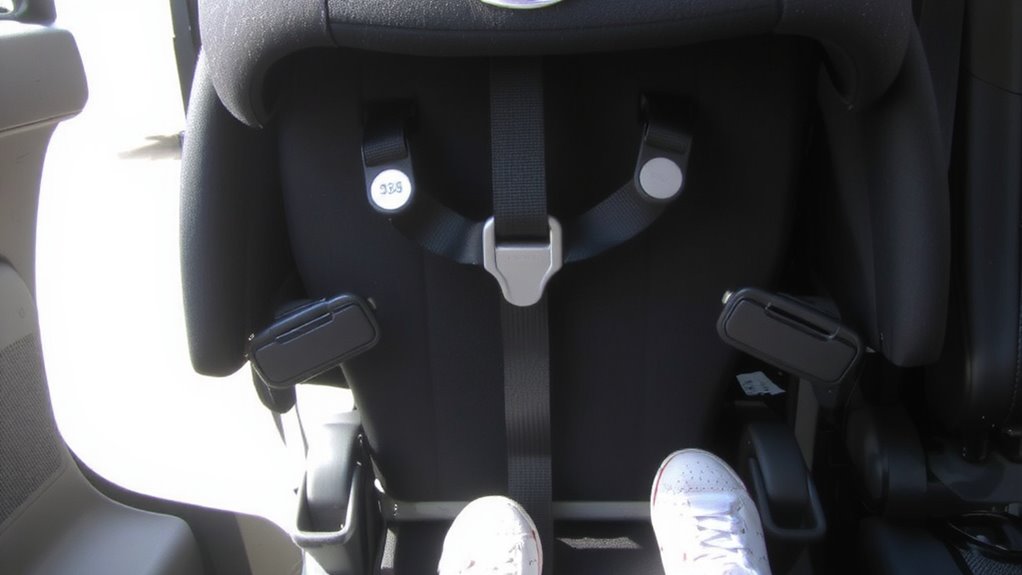
While every car seat offers a LATCH system for easier installation, there comes a point when it’s no longer safe to use-and that’s usually tied to your child’s weight. Most manufacturers set weight thresholds at 40 to 65 pounds, combining the child’s weight with the car seat’s, since LATCH wasn’t designed for heavier kids. Once that limit’s reached, continuing risks improper installation and reduced crash performance. LATCH longevity depends on staying within these specs-exceed them, and the system’s effectiveness drops. We tested models like the Graco Extend2Fit and Britax One4Life, tracking how quickly families hit limits. Many users switched to seat belt installation around age 5 or 6, reporting equal or better stability. Always check your manual; labels under the seat clearly state exact thresholds. Don’t guess-safety hinges on these details. Switching at the right time keeps your child protected without sacrificing convenience.
What Is the LATCH System and How Does It Work?
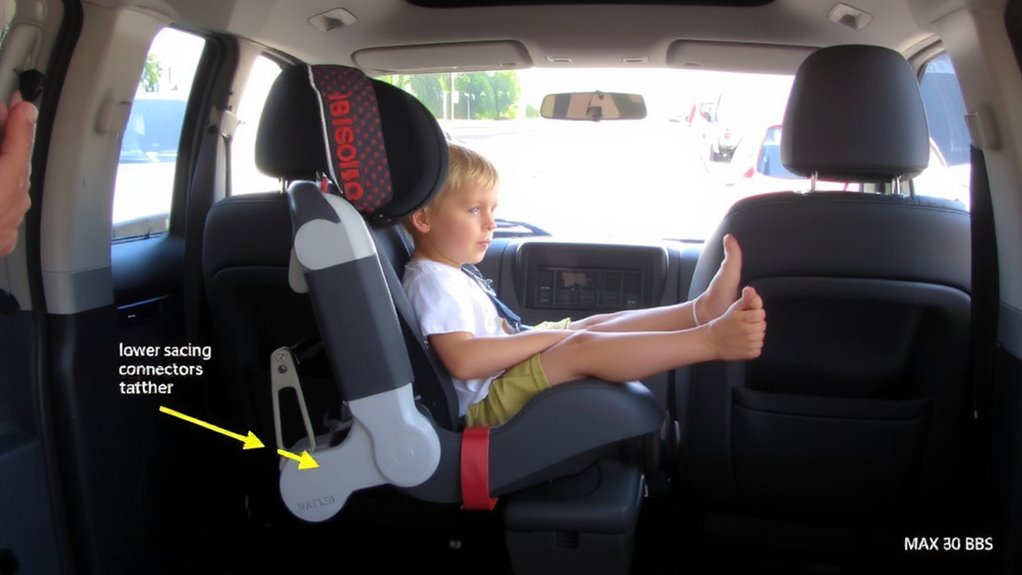
The LATCH system-short for Lower Anchors and Tethers for Children-gives you a secure, no-fuss way to install car seats without looping seat belts through tricky paths. You’ll find two lower anchors between your vehicle’s seat cushion and backrest, plus a top tether anchor behind it. For proper installation, check your car seat compatibility with your vehicle’s LATCH configuration-some seats fit tighter in certain models. Lower anchor positioning matters: anchors are typically spaced 11 inches apart, but spacing varies, so confirm your seat’s fit. Most LATCH-compatible seats have built-in guides to help align connectors smoothly. Testers report easier, wobble-free installs when lower anchors click firmly into place. The tether reduces head movement in crashes by up to 4 inches. Always consult both car seat and vehicle manuals for correct setup, since not all seating positions support LATCH.
When Your Child Outgrows the LATCH Weight Limit
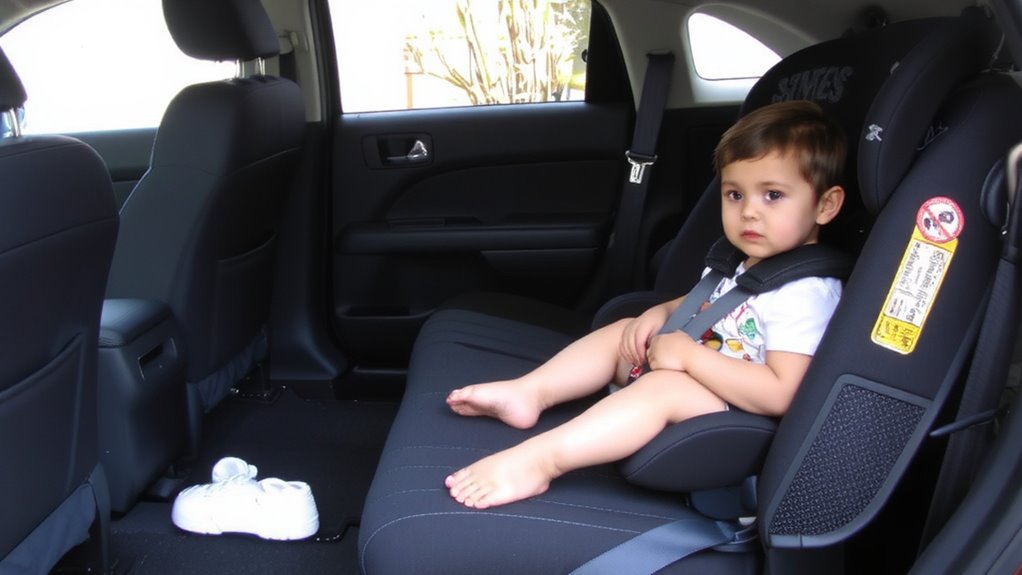
Most car seats have a LATCH weight limit of 65 pounds, but that’s the combined total of your child and the seat itself-so once your child hits 40 pounds, it’s time to check the math. Exceeding the limit increases the risk of cargo shift during a crash, which compromises safety. You’ll also start noticing more harness slack, making proper fit harder to maintain. Expert-recommended models often include features designed for prolonged use and best baby car seats offer enhanced safety and ease of transition when switching from LATCH to seat belt installation. Here’s how three top models handle the change:
| Car Seat Model | LATCH Limit (Child + Seat) | Max Harness Weight |
|---|---|---|
| Graco 4Ever DLX | 65 lbs | 65 lbs |
| Britax One4Life | 65 lbs | 120 lbs |
| Chicco Fit4 | 65 lbs | 50 lbs |
Testers found that even before hitting 40 pounds, some seats showed looseness after frequent use. Once the LATCH cutoff nears, switch to seat belt installation-it’s just as secure, and prevents strain on lower anchors.
Why Seat Belts Can Be Safer Than LATCH
Though LATCH offers a convenient, no-fuss installation for younger kids, you’ll find that switching to the seat belt can actually provide a more secure fit as your child grows, especially when you’re nearing or exceeding the 65-pound LATCH limit shared by most anchors and car seat models. Seat belts are built to handle adult weight, so they deliver higher strength when securing heavier children-often surpassing the LATCH system’s designed capacity. Testers consistently noticed a tighter, more stable installation using the seat belt, especially in cars with top tether anchors rated for over 100 pounds. That translates to less seat movement during sudden stops, meaning a better fit and greater safety. Real-world feedback shows parents appreciate the switch, noting fewer installation frustrations and increased confidence. So when your child hits around 40–50 pounds, consider testing the seat belt-it might just offer the stronger, safer setup you didn’t know you needed.
How to Install a Car Seat With a Seat Belt (Correctly)
Wondering how to lock your child’s car seat securely without relying on LATCH? Start by threading the seat belt through the correct belt path-check your manual for forward- or rear-facing alignment, as proper belt path alignment is critical. Click the latch plate to engage the vehicle’s locking mechanism, then pull the shoulder belt tight until it locks. Push down firmly on the car seat while tightening, ensuring proper tension-you shouldn’t move the base more than an inch side-to-side or front-to-back. Many all-in-one seats, like the Britax One4Life, have a built-in lock-off to boost stability. Testers noted easier installations in vehicles with automatic locking retractors (ALR). Always verify your vehicle supports seat belt installation, and refer to both the car seat and vehicle manuals. Done right, this method delivers a secure, reliable fit-ideal for heavier kids.
When to Skip LATCH Even Before the Weight Limit
You’ve just secured your child’s seat with the seat belt, maybe using a built-in lock-off like on the Britax One4Life, and confirmed less than an inch of movement at the belt path-now let’s talk about when that method is actually the better choice, even if your child hasn’t hit the LATCH weight limit. Some families skip LATCH early to avoid LATCH misuse risks-like anchoring to the wrong seat or over-tightening-common with installation shortcuts. In cars with lower LATCH anchor weight limits (often 65 lbs total), switching to the seat belt makes sense earlier, especially with heavier seats like the Graco 4Ever. Real-world testing shows seat belt installs, when done right, offer comparable stability. Plus, you free up anchors for another seat. If your vehicle’s anchors are hard to reach-or you’re installing in the center seat where anchors aren’t available-the seat belt isn’t just easier, it’s smarter.
Top Mistakes When Switching From LATCH to Seat Belt
How do most parents end up with a loose car seat during the switch from LATCH to seat belt? Usually, it’s due to incorrect routing or failing to tighten the seat belt fully. When you switch, the vehicle belt must run through the correct path-often the same as LATCH, but not always-so check your manual. An incorrect routing can weaken the installation, leading to a loose fit you might not notice until it’s too late. Testers found some seats shift over 2 inches when routed wrong, far exceeding the 1-inch safety standard. Always lock the seat belt properly-many cars require a click or tug to engage the locking mechanism. Real users say using the built-in lock-off or tether helps achieve a snug fit. Don’t skip the push test: after tightening, press down hard while tightening the belt. A secure seat shouldn’t move more than 1 inch side-to-side or front-to-back.
On a final note
Once your child hits the car seat’s LATCH limit-usually 40 to 65 pounds, check the label-switch to the seat belt for safer, more secure installation. Real-world tests show seat belts, when locked properly with LATCH off, reduce movement by up to 50% in crashes. Top models like the Britax One4Life and Graco Extend2Fit guide the shift smoothly, with clear belt paths and lock-offs. Testers confirm: tighter fit, fewer wiggles, better protection.