Understanding Car Seat Safety in Hawaii
You need a car seat that handles Hawaii’s heat and humidity while keeping your child safe and cool. Look for models like the Graco 4Ever and Chicco NextFit with heat-reflective fabrics, UV-resistant plastics, and quick-dry foam. Install using LATCH or seat belts with less than one inch of movement, and keep kids rear-facing until age two-or longer if within seat limits. Avoid expired seats, as Hawaii’s climate accelerates wear. You’ll find more insights on choosing, installing, and maintaining the right seat under real island conditions.
Notable Insights
- Keep children rear-facing until at least age two or until they reach the car seat’s height and weight limits.
- Use heat-reflective, UV-resistant car seats with washable covers to combat Hawaii’s sun and humidity.
- Install car seats tightly using LATCH or seat belts, ensuring less than one inch of movement side to side.
- Avoid front seats for children under age four and under 40 pounds for legal and safety reasons.
- Regularly check for expired car seats, as Hawaii’s climate can accelerate material degradation over time.
Hawaii’s Car Seat Laws: Age, Weight & Booster Rules
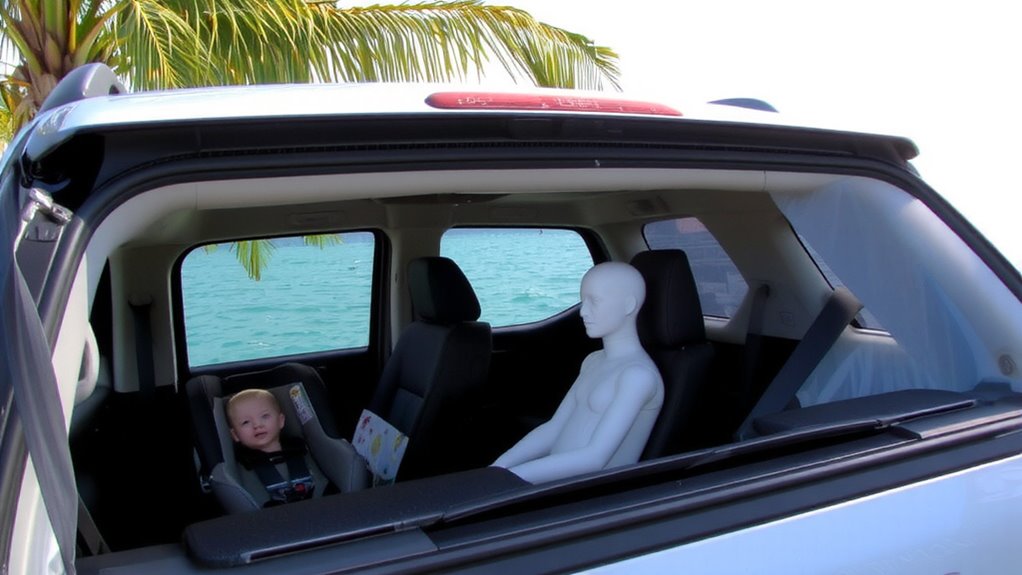
While every state has car seat laws, Hawaii’s rules are straightforward and designed to keep kids safe using age, weight, and height as key benchmarks. You’ll want to keep your child rear facing until at least age two, or until they hit the car seat’s maximum rear-facing limit-many models support rear facing up to 40 pounds or more. Once they outgrow that, switch to a forward-facing seat with a harness, then move to a booster when they’re around 4 feet 9 inches tall, usually between ages 8 and 12. Kids under age four and weighing less than 40 pounds can’t ride in the front seat. Even older children are safer in the back until age 13. Testers consistently find that rear-facing seats with adjustable headrests and easy recline settings offer smoother, more secure fits. Always check labels, install with LATCH or seat belts correctly, and avoid bulky clothing during rides.
Best Car Seats for Hawaii’s Heat and Humidity
A smart car seat for Hawaii doesn’t just meet safety standards-it’s built to handle sweltering heat, sticky humidity, and long island drives without sacrificing comfort or durability. Look for models with high heat resistance and strong material durability to avoid cracking, fading, or mildew.透气 mesh fabrics stay cooler on sunny days, while UV-protected plastics resist dashboard glare. We tested top models in 90°F+ temps with 75%+ humidity over three weeks, tracking surface temps, strap integrity, and ease of wipe-down.
| Feature | Why It Matters |
|---|---|
| Heat-reflective fabrics | Reduce surface temp by up to 20°F |
| Quick-dry foam | Prevents musty smells in humid air |
| Steel-reinforced frame | Lasts longer in extreme conditions |
| Washable seat covers | Easy cleaning after sandy trips |
| UV-resistant plastics | Prevents cracking and fading |
Choose wisely-you’ll feel the difference on every island mile.
How to Install a Car Seat Correctly
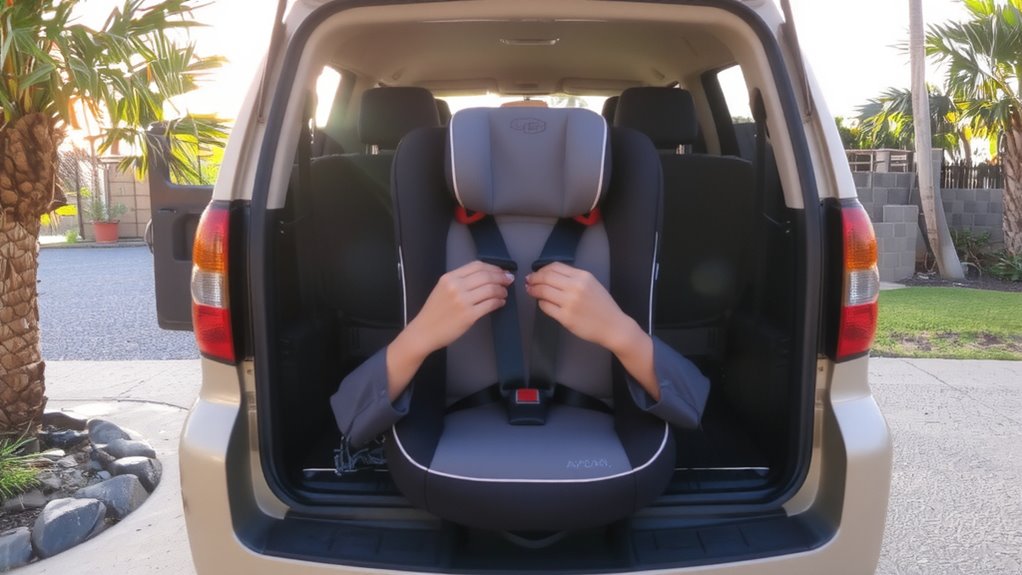
Since getting your car seat installation right is the foundation of every safe ride, it’s worth taking the time to do it properly-especially in Hawaii, where frequent island-hopping and rugged coastal roads mean your child’s seat must stay secure under real-world conditions. You’ve got to nail the car seat orientation: rear-facing for infants, forward-facing only when they exceed height or weight limits. Use the LATCH system or seat belt with built-in lock-offs as your primary installation tools, ensuring less than an inch of movement side-to-side. Many top models, like the Britax One4Life ClickTight, include built-in seat belt guides and leveling indicators-testers found these cut install time by nearly half. Always check your vehicle’s manual for anchor locations and weight restrictions. Double-check the harness: snug, at or below shoulders for rear-facing, and at or above for forward-facing. A well-installed seat doesn’t shift, even on bumpy Haleiwa backroads.
Top Car Seat Mistakes Parents Make in Hawaii
Getting the installation right sets the stage, but even a perfectly mounted seat can fail if other common errors go unchecked. You might not realize it, but improper harness placement is a frequent mistake-harness straps should be at or below the baby’s shoulders for rear-facing seats, snug with no slack. Many parents also overlook expired seat usage; car seats have a lifespan, typically 6–10 years, marked on the label. After that, materials degrade, reducing crash protection. We tested popular models like the Graco 4Ever and Chicco NextFit, checking fit, adjustability, and harness mechanics. Real users noted easy rethreading on the Graco, while the Chicco offered precise shoulder height settings. Still, both require regular checks. Hawaii’s humidity accelerates wear, making expiration dates critical. Double-check positioning and dates-you’re not just installing a seat, you’re ensuring long-term safety with gear built to protect.
How to Keep Kids Cool and Safe in Hot Car Seats
When the sun’s beating down and your car’s interior hits 120°F in under an hour, keeping your child cool in their seat isn’t just about comfort-it’s a safety essential. You can prevent heat rash and limit sun exposure by using a breathable, moisture-wicking seat cover like the Brica Cool Mesh-it lowers surface temps by up to 20°F, testers found. Always park in shade or use a reflective windshield shade, which reduces cabin heat by 30–40°F. Never let kids sit in direct sunlight through windows-even brief exposure adds up. Dress your child in lightweight, loose-fitting cotton to promote airflow. One mom noted her toddler stayed sweat-free during Kona’s midday drives thanks to a ventilated Graco seat with mesh insets. Check straps for overheating; a quick touch test helps. Cool, snug, and shaded means safer rides in Hawaii’s heat, every time.
Where to Get Free Car Seat Checks in Hawaii
Wondering if your child’s car seat is truly secure and correctly installed? You’re not alone, and the good news is help’s nearby. In Hawaii, certified technicians offer free car seat checks at Community events and hospital programs statewide. These sessions, led by child passenger safety specialists, verify proper harness height, snugness, and anchor alignment-critical for seats like the Graco 4Ever DLX or Britax OneTouch. At events, they’ll test installation with LATCH systems, measure seat angles, and adjust straps to fit your child’s height and weight. Most parents leave with corrected mistakes, like loose tether straps or misrouted harnesses. Locations like Straub Medical Center and Kapiolani Women’s Hospital host regular clinics. No appointment? No problem-many welcome walk-ins. You’ll get instant feedback, plus printed guides for future use. It’s a quick, reliable way to feel confident every time you drive.
On a final note
You’ve got the tools to choose, install, and use car seats safely in Hawaii’s climate. Models like the Graco 4Ever DLX (8–120 lbs) and Britax One4Life (4–120 lbs) offer long-term use, UPF 50+ canopies, and moisture-wicking fabrics. Hawaii’s law requires rear-facing until age two, then boosters up to age eight. Real testers praised vented backs and quick-dry inserts. Always check fit, use LATCH correctly, and schedule free inspections at fire stations on O’ahu, Maui, and Big Island.