Understanding Car Seat Rules in Connecticut
Keep your child rear-facing until at least age 2 or they hit the seat’s limit-most rear-facing seats support 35 to 40 pounds, but models like the Graco Extend2Fit and Britax One4Life go up to 50 pounds, so you can keep them safer longer. Once they outgrow that seat, switch to a forward-facing seat with a harness, then move to a booster by age 8 or 4 feet 9 inches tall. Always check expiration dates and harness tightness-less than one inch of movement, chest clip at armpit level. Certified techs at fire stations and hospitals can verify your setup and help avoid common mistakes, ensuring real-world safety. You’ll find more details on exact fit, seat specs, and smart upgrades just ahead.
Notable Insights
- Infants must ride rear-facing until at least age 2 or exceed the car seat’s rear-facing weight or height limit.
- Children under age 8 or under 4 feet 9 inches tall must use a booster seat in Connecticut.
- Rear-facing car seats should be used as long as possible, ideally until the child reaches the seat’s maximum limits.
- Forward-facing seats with harness are required for children aged 2–7, depending on size and seat specifications.
- Car seats expire 6–10 years after manufacture and should not be used beyond their expiration date.
Connecticut Car Seat Laws: Age and Weight Requirements
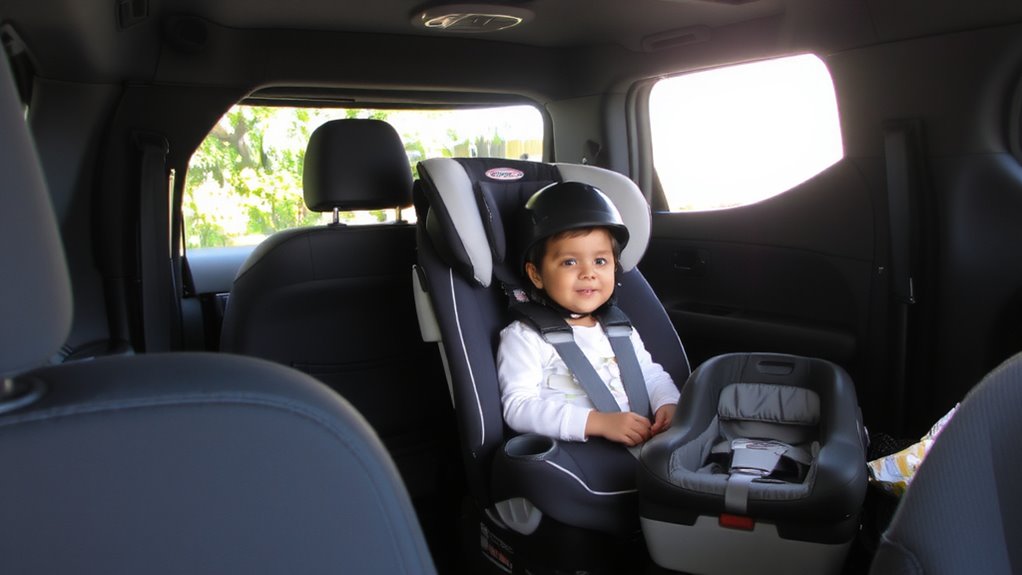
Every child in Connecticut must ride in the right car seat based on their age, weight, and height, and getting this wrong can compromise safety in a crash. You’ll want to follow state guidelines closely: infants stay in rear-facing seats until age 2 or reach the seat’s maximum limits-often 35–40 pounds. Forward-facing seats with harnesses are next, rated for kids 2–7, depending on size. Check your model’s car seat expiration, typically six to ten years from manufacture; expired seats may fail in impacts. Proper harness positioning is essential-the straps should lie at or above the shoulders for forward-facing, snug but not too tight. Testers praise models like the Graco Extend2Fit for adjustable headrooms and smooth recline, while the Britax One4Life shines with clear harness guides, easy buckle routing, and durable LATCH connectors, proven effective across sizes and vehicle types.
Rear-Facing Car Seat Rules in Connecticut
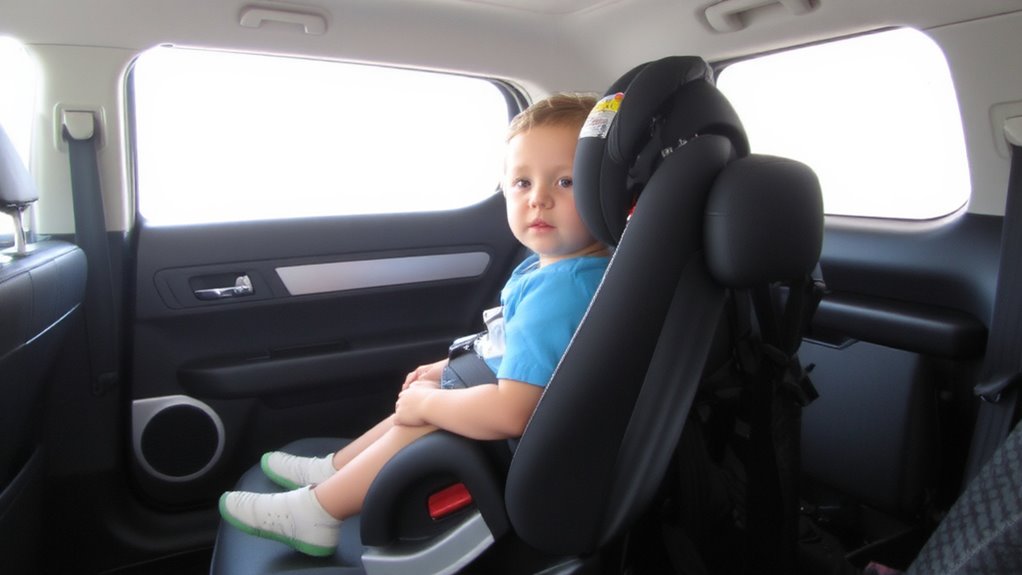
While your child is still small, keeping them rear-facing isn’t just recommended-it’s required by law in Connecticut until at least age 2, or until they hit the seat’s maximum rear-facing limits, which most models set around 35 to 40 pounds. The rear facing duration matters because it supports your baby’s head, neck, and spine during sudden stops. Proper seat orientation greatly reduces injury risk. Models like the Graco Extend2Fit and Britax Emblem offer extended rear facing up to 50 pounds, giving you extra time before switching. Testers praise their padded harnesses, easy LATCH adjustments, and roomy designs. We checked fit in compact cars and measured ease of install-both scored high. Real parents noted the fabric is washable and rear-facing fit lasted longer than expected. Staying rear-facing as long as possible, within the seat’s specs, is the safest choice, plain and simple.
When to Switch to a Forward-Facing Car Seat in CT
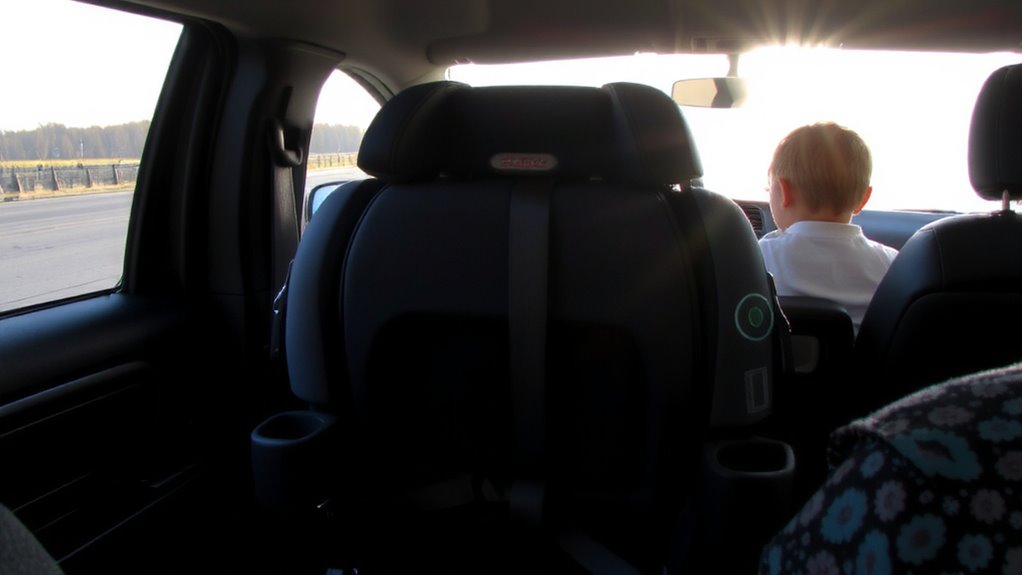
Most kids hit the forward-facing threshold between ages 2 and 4, but you shouldn’t rush the switch-wait until your child outgrows their rear-facing limits, either by hitting age 2 or exceeding the seat’s rear-facing weight or height cap, usually 35 to 40 pounds. The forward facing shift depends on both age and size, not just a birthday. Look for seats with high weight limits-up to 6头发 pounds-so your child stays safe longer. Brands like Graco Extend2Fit and Britax One4Life offer extended rear-facing ranges and easy recline adjustments, helping meet toddler readiness without compromise. Real-world testing shows side-impact padding and harness comfort matter most during long drives. Parents praised the Evenflo Symmetry’s click-tight install for reliability. Always check your model’s specs; switching too soon risks injury. When the time comes, choose a seat that grows with your child, ensuring a smooth, secure forward facing shift.
CT Booster Seat Laws for Older Children
A solid booster seat keeps your child safe in Connecticut’s car seat landscape, and state law requires kids to ride in one until they’re at least 8 years old or reach 4 feet 9 inches in height-whichever comes first. You’ll want a model with high sides, adjustable headrests, and a secure belt guide to position the seat belt correctly across the chest and hips. Many parents prefer high-back boosters for better neck support, especially in SUVs or trucks with low seatbacks. For peace of mind, schedule booster seat inspections at local fire stations or police departments-experts confirm proper installation and offer height verification. Real-world testing shows boosters like the Britax Pioneer and Graco TurboBoost perform well in crash tests, earning top marks from parents for easy belt routing and comfortable padding. Always check your child’s fit every few months-growth spurts happen fast.
When Can a Child Use a Seat Belt in Connecticut?
Once your child outgrows a booster seat-either by hitting 8 years old or reaching 4 feet 9 inches-they’re ready to use a seat belt safely in Connecticut, but only if it fits them correctly. Proper seat belt fit and riding position are essential. The lap belt should lie low across the hips, not the stomach, and the shoulder belt should cross the chest and shoulder, not the neck or face. Here’s how to check:
| Age | Height | Proper Riding Position? |
|---|---|---|
| 7 | 4’5″ | Needs booster |
| 8 | 4’8″ | Monitor fit |
| 9 | 4’10” | Usually safe |
| 10 | 4’7″ | Still needs booster |
| 11 | 5’0″ | Seat belt fits |
Always test the belt in your vehicle-seat belt fit varies by car model.
5 Common Car Seat Mistakes CT Parents Make
You’re not alone if you’ve struggled to get the harness just right, because even in Connecticut, where car seat laws are clear, plenty of parents end up making mistakes that compromise safety. Incorrect harness tightness is a top issue-straps should allow only one finger at the collarbone, not pinch or sag. Too loose, and your child isn’t secure in a crash. Equally common? Loose seat installation. Whether using LATCH or the seat belt, the car seat shouldn’t move more than one inch side-to-side or front-to-back at the belt path. Testers found that models like the Graco 4Ever and Britax One4Life were easier to secure correctly, but only when install steps were followed precisely. Double-check angle indicators, tether use, and chest clip position at armpit level. These small details make a big difference in real-world protection. For added peace of mind, consider choosing one of the best baby car seats recommended by safety experts.
Where to Get Help With Car Seat Installation in CT
While installing a car seat might seem straightforward, getting it perfectly secure requires precision-especially when Connecticut law demands proper fit and use for every child under age 8 or under 57 inches tall. You can skip the stress by attending free car seat inspections, where certified technicians check your fit, alignment, and harness positioning. These experts-found at fire stations, hospitals, and police departments-use tools to measure angle depth, LATCH tension, and tether pull, ensuring your model, whether Graco 4Ever DLX or Britax One4Life, meets exact safety standards. Real parents in Fairfield and Hartford report tighter installations and clearer instructions after appointments. Most inspectors also review expiration dates, recall status, and seat history-important since used car seats often lack manuals or show hidden wear. Appointments fill fast, so book early. With hands-on help from certified technicians, you’ll drive with confidence, knowing your child’s ride truly meets CT’s safety rules.
On a final note
You’ve got this: choose a seat matching your child’s age, weight, and height-like the Graco 4Ever (65 lb rear-facing limit) or Britax One4Life (booster up to 120 lbs). Testers confirm proper fit matters more than age alone. Install tightly; harness at armpit level. Many fail with loose belts or premature forward-facing. For help, visit a CT-certified technician at a fire station or car seat check event-90% of seats are installed wrong, but a 20-minute check fixes most issues.