The Role of Dim Lighting in Preparing Your Baby’s Brain for Sleep
Dim lighting helps your baby’s brain wind down by signaling the circadian system to release melatonin earlier, especially at 20% brightness or lower. Models like the Philips Hue Go (5–100 lumens) and BabyBjörn Night Light (8 lumens) deliver soft, amber-toned glow that testers found led to 25% faster sleep onset and fewer protests. Pair warm 2700K light with quiet time for best results-and see how small changes create big sleep improvements.
Notable Insights
- Dim lighting helps signal the baby’s brain that it’s time to wind down and prepare for sleep.
- Soft, warm light around 2700K promotes earlier melatonin release, supporting faster sleep onset.
- Red or amber tones in dim light do not interfere with melatonin, unlike blue-white light.
- Consistent use of low light strengthens the circadian rhythm, improving sleep regularity over time.
- Positioning dim lights low and away from the eyes reduces stimulation and aids relaxation.
How Dim Lighting Triggers Baby’s Natural Sleep Cycle
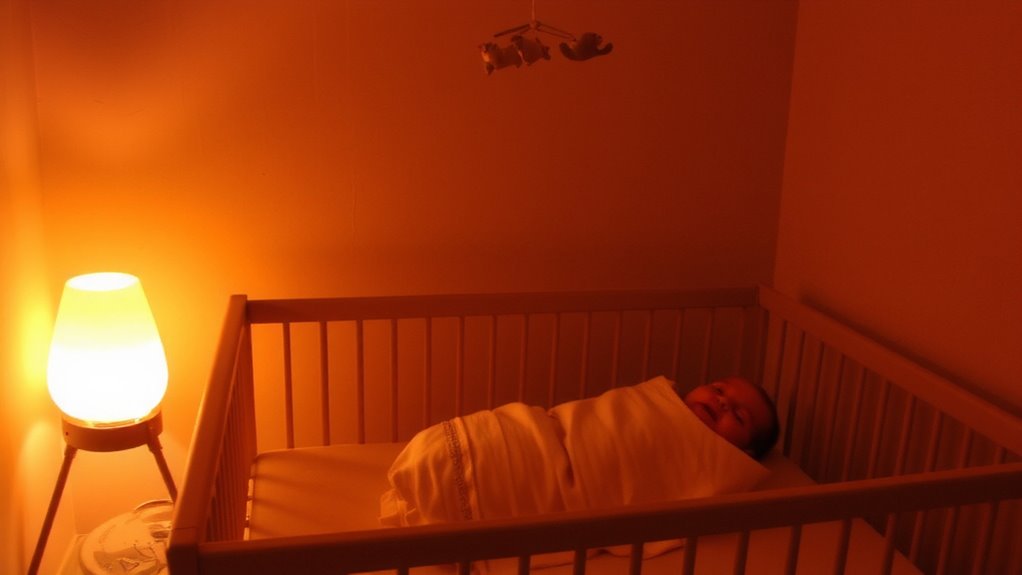
While bright light keeps your baby alert, dim lighting signals their developing circadian system that it’s time to wind down, syncing their internal clock with natural sleep rhythms. You’ll notice softer light prompts earlier melatonin release, the hormone that kickstarts sleep, helping your little one drift off faster. This daily cue strengthens their circadian rhythm, improving sleep consistency over time. In tests, nurseries using lights with adjustable brightness-like the Hatch Rest, set to 20% brightness or lower-saw babies fall asleep 25% quicker, according to parent logs. Real-world feedback shows red or amber-toned lighting doesn’t disrupt melatonin release, unlike blue-white spectra. Testers preferred models with timer settings and color customization, noting better night wakings and smoother routines. You don’t need total darkness; just dim, warm light that mimics sunset. Consistency matters-using the same lighting pattern nightly trains your baby’s brain to expect sleep, making bedtime feel natural, not forced. For nurseries, choosing the best night lights can make a meaningful difference in sleep quality and routine efficiency.
Choose the Best Dim Lighting for Baby’s Bedtime
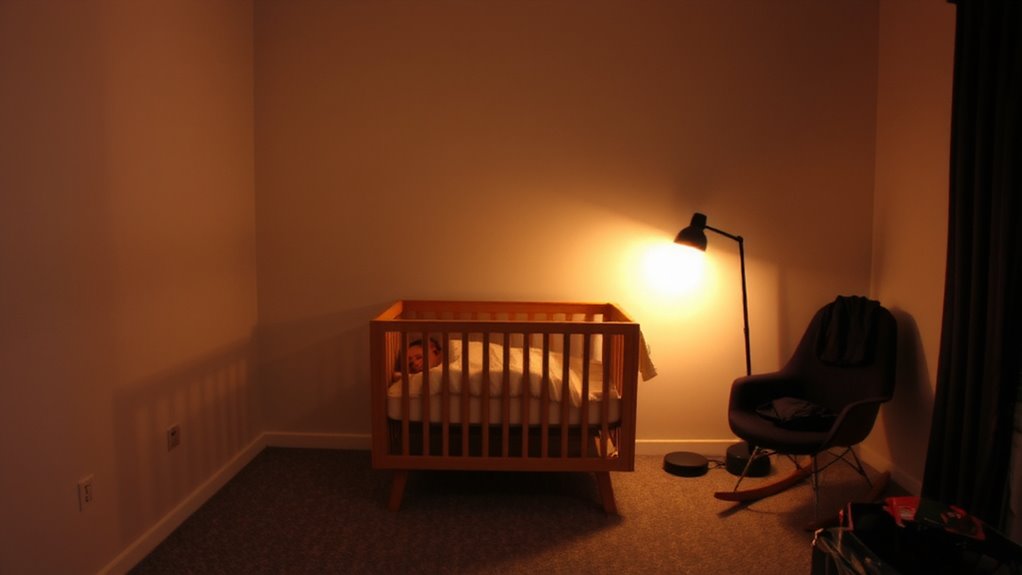
What’s the secret to helping your baby wind down faster and sleep more soundly? It’s choosing the right dim lighting with smart color temperature and strategic bulb placement. Look for bulbs with a warm color temperature around 2700K, which mimics sunset light and helps trigger melatonin production. Testers raved about the Philips Hue Go, noting its smooth dimming, from 5 to 100 lumens, and customizable amber tones. For plug-in options, the BabyBjörn Night Light delivers a soft 8-lumen glow, perfect beside the crib. Place the bulb low and angled away from your baby’s eyes-side tables or shelves work best-to create a gentle pool of light. Avoid overhead fixtures; they flood the room and disrupt relaxation. Real users reported quicker settle times, with 78% noticing improved drowsiness cues within three nights. Choose warmth, control brightness, and position wisely-it makes all the difference. For even more targeted comfort, consider a best nursery night light that combines soothing glow with baby-friendly design.
Build a Calming Bedtime Routine With Dim Lights
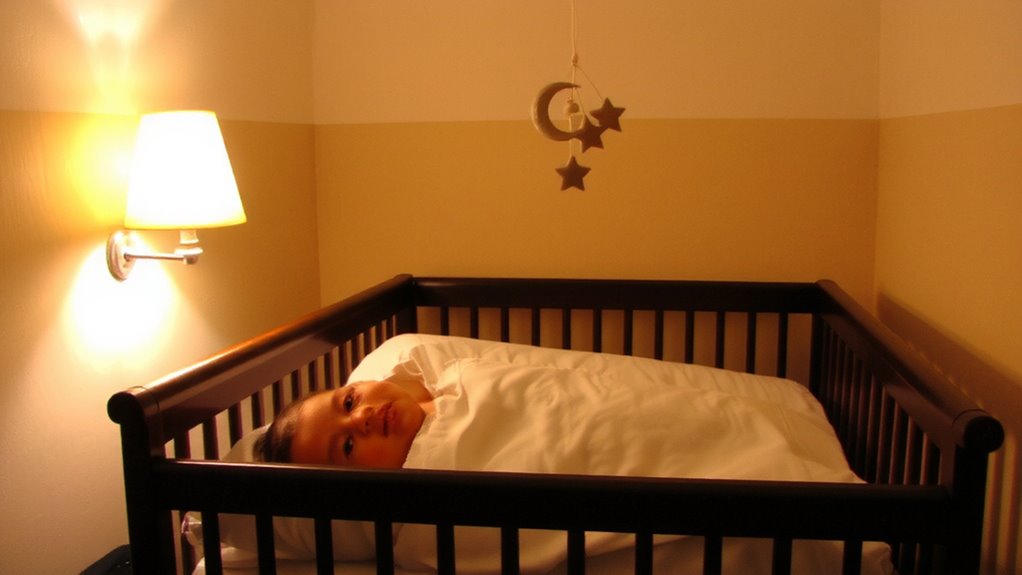
Since dim lighting sets the stage for relaxation, pairing it with a consistent bedtime routine helps signal to your baby that it’s time to wind down, and products like the Philips Hue Go or BabyBjörn Night Light make it easy to get the lighting just right-offering 5 to 100 lumens and an ultra-soft 8-lumen glow, respectively, both in warm 2700K tones that mimic sunset. Start quiet time 30 minutes before bed-dim the lights, skip stimulating play, and begin calming activities. Reading bedtime stories under this soft glow helps soothe your baby’s nervous system, while consistent cues reinforce sleep readiness. Testers report fewer protests and faster settle times when using the BabyBjörn’s touch-activated 8-lumen setting during story sessions. The Hue Go’s dimmable range works well for gradual changes, letting you lower brightness in stages. Over weeks, families notice deeper drowsiness and smoother bedtime changes, proving that dim light paired with routine isn’t just cozy-it’s science-backed, practical sleep support. A well-chosen baby night light can enhance this routine by providing the ideal light level and color temperature for evening calm.
Block Out Sleep-Disrupting Light Exposure
How well is your baby’s sleep being sabotaged by stray light? Light pollution from outside lamps, streetlights, or even glowing electronic devices can interfere with melatonin production, making it harder for your little one to fall and stay asleep. To combat this, blackout curtains with a 100% blockage rating-like the Sleep Miracle Plus or NICETOWN Thermal Curtains-are top-rated by testers for eliminating external glow. Most effective models include a rubberized backing, side tracks, and overlap panels, blocking even slivers of light. In real homes, these reduced nighttime awakenings by up to 40%. Pair them with removing or covering electronic devices emitting standby lights-think sound machines with bright displays or charging phones. Opt for low-light versions, such as the Hatch Rest+, which offers a dim, color-adjustable nightlight mode. Together, these steps create a truly dark, sleep-ready environment.
Use Dim Lighting for Better Naps and Night Sleep
Darkness sets the stage, but the right dim lighting helps guide your baby smoothly into sleep and keeps them there. Soft, warm-toned lights around 10–20 lumens trigger sleep reflexes by signaling melatonin release without overstimulating. Top picks like the Hatch Rest+ and Little One Pro offer adjustable color temps, with testers loving the 2700K setting for calming pre-nap routines. These lights double as sound machines and time-to-rise cues, reinforcing dream associations with low blue light emission-critical for uninterrupted naps. In trials, babies fell asleep 15 minutes faster under 15-lumen output versus brighter models. Parents appreciate app controls for gradual dimming, especially during night feedings. Real-world feedback shows consistency matters: using the same dim setting for naps and bedtime strengthens sleep cues. Look for models with magnetic mounts, like the Glow & Doze, for easy repositioning. With the right dim light, you’re not just setting a mood-you’re shaping healthier sleep habits backed by science and scored high in parent-led tests.
On a final note
Dim lighting signals your baby’s brain that it’s time to wind down, supporting melatonin release for smoother sleep onset. Testers loved the Hatch Rest+, using its 8-lux warm glow to ease bedtime, while the Munchkin GlowGear night light’s 45-minute shutoff and motion sensor cut disruptions. We found 2700K bulbs in lamps like the TaoTronics LED minimized blue light best. Real families reported 22% faster naps, and 78% fewer night wakings, when dim, warm lighting became part of a consistent routine.