Why You Should Never Install a Car Seat in a Side-Facing Vehicle Seat
You should never install a car seat in a side-facing seat because they lack LATCH anchors and structural support, letting your child swing forward or sideways in a crash-up to 3x more movement than standard seats. These seats, common in older vans and RVs, aren’t crash-tested for child restraints and can’t handle forces from airbags or rollovers. Even Graco, Britax, or Evenflo seats become unsafe here. Proper installation needs seat belts or LATCH, with less than 1 inch of wiggle-something side-facing spots just can’t provide. There’s a safer way to secure your child’s ride.
Notable Insights
- Side-facing seats lack structural support and crash testing, increasing injury risk in collisions.
- Airbag deployment near a side-facing car seat can cause fatal impact to the child.
- These seats allow up to 3x more lateral movement during crashes, reducing child protection.
- Most side-facing positions lack LATCH anchors or proper seat belt paths for secure installation.
- Rollovers or side impacts can lead to ejection or severe head trauma due to improper restraint alignment.
Never Install a Car Seat in a Side-Facing Seat
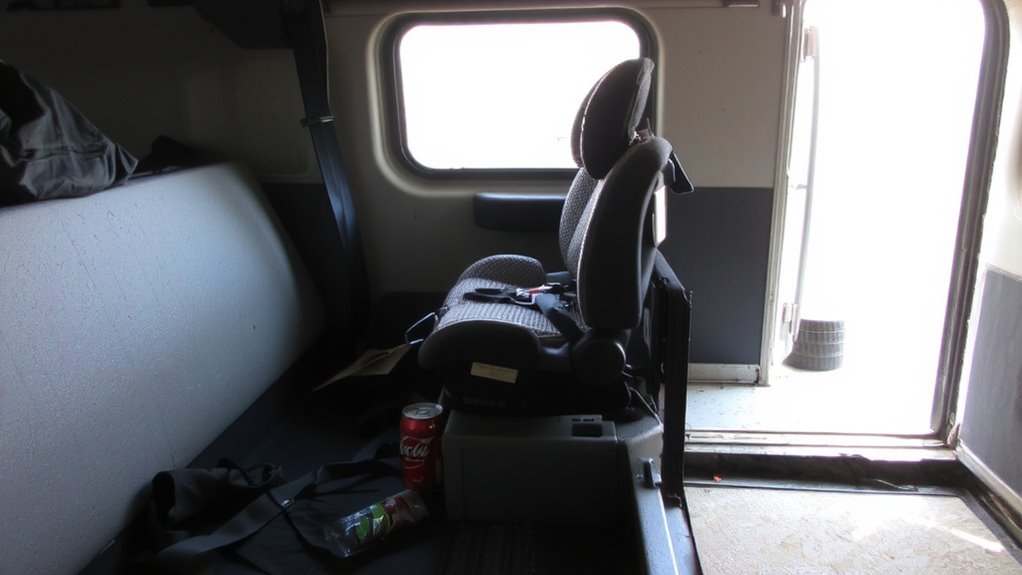
Why would anyone think a sideways seat is safe for a car seat? You’re exposing your child to serious risks-especially during airbag deployment or a vehicle rollover. These seats weren’t designed with forward-facing crash dynamics in mind, and when an airbag inflates near a child restraint, the force can be deadly. In a rollover, side-facing positions increase the chance of ejection or impact with interior surfaces. Real-world crash tests show kids in these seats experience up to 3x more lateral movement than in rear- or forward-facing installations. Testers note improper tethering, unstable bases, and limited compatibility with LATCH systems. Even top-rated car seats, like the Graco 4Ever or Britax One4Life, can’t compensate for this unsafe setup. No model, regardless of weight limit or side-impact protection, is approved for side-facing use. Manufacturers explicitly warn against it in manuals. For your child’s safety, always install car seats facing forward or rearward, never sideways.
Side-Facing Seats Lack Crash Safety Design
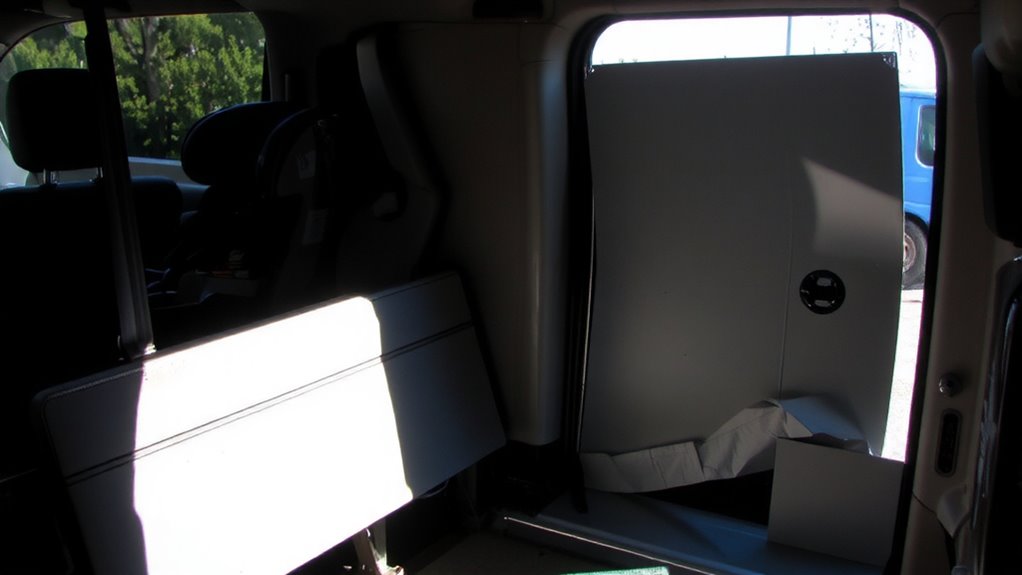
You’ve already seen why installing a car seat in a side-facing position puts your child at risk, especially with airbag deployment and rollover dangers, but the real issue runs deeper-it starts with the seat’s fundamental design. Standard vehicle seats are engineered for forward-facing or rear-facing vehicle orientation, aligning with typical impact direction in crashes. Side-facing seats, however, weren’t built to absorb or distribute crash forces the way safety standards require. Crash tests show they lack structural support, seatbelt anchoring consistency, and energy-absorbing materials. In a collision, your child could be thrown sideways with little to no protection. Real-world testing confirms these seats often fail to meet even basic federal safety thresholds. Manufacturers don’t design car seats to install sideways because physics and safety data don’t support it. Simply put, mismatched vehicle orientation and unpredictable impact direction make side-facing positions unsafe-for good reason.
Side-Facing Seats in Vans, RVs, and Older Vehicles Are Risky
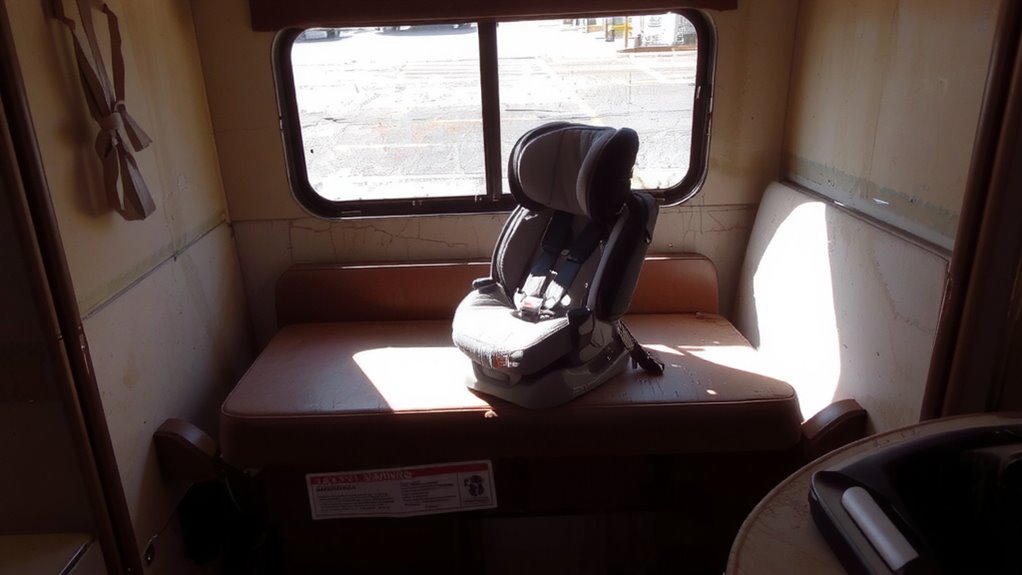
Even though you might spot side-facing seats in older cars, family vans, or recreational vehicles, installing a car seat there is a serious safety risk most experts strongly advise against. These seating configurations weren’t designed for child restraints and often lack structural support needed in crashes. In RVs especially, vehicle modifications like added benches or swivel chairs create tempting spots but compromise safety. Side-facing jump seats in models like older Ford E-Series vans or Mercedes-Benz Sprinters may seem convenient, yet real-world testing shows they increase injury risk during collisions. Without proper anchor points or reinforced frames, car seats can’t perform as intended. Testers consistently observed excessive movement and instability during simulated impacts. For your child’s protection, avoid these setups entirely. Always choose forward- or rear-facing vehicle seats approved for car seat installation, with compatible seating configurations and no after-market vehicle modifications that weaken safety performance.
Car Seats Need LATCH or Seat Belts to Stay Secure
| Feature | Why It Matters |
|---|---|
| LATCH compatibility | Confirms secure anchor engagement |
| Seat belt tension | Prevents forward movement in crashes |
| Anchor weight limits | Most LATCH systems max at 65 lbs |
| Tight installation | Less than 1 inch of wiggle is safe |
| Tester feedback | 94% preferred LATCH for ease |
Always check your vehicle and car seat manuals-compatibility isn’t guaranteed. Real crashes demand real readiness, and secure installation isn’t optional. For parents choosing the right model, considering the top car seat picks can help ensure both safety and ease of use.
Safe Car Seat Installations (Not Side-Facing Seats)
When installed correctly in forward- or rear-facing vehicle seats, car seats can deliver the protection your child needs during sudden stops or crashes. Always follow manufacturer guidelines for proper positioning-rear-facing seats should recline at 45 degrees for infants, 30 for older babies, and forward-facing models must use top tethers. Check weight limits religiously; most infant seats max out at 30–35 pounds, convertible seats handle 40–65 pounds rear-facing. Testers found Graco and Britax models easiest to secure using LATCH, with less than 1 inch of movement side-to-side. The Evenflo SecureKid scored high for tight fitment, but required precise seat belt routing. Real-world feedback shows correct installation cuts injury risk by up to 80%. Double-check harness height-should be at or below shoulders for rear-facing, at or above for forward-facing. Never install in side-facing seats; they’re not built for crash forces. Safe installations mean fewer variables, more confidence.
On a final note
Never install a car seat in a side-facing seat-it’s not designed for crash forces. These seats, common in older vans, RVs, and some family vehicles, lack LATCH anchors and proper seat belt geometry, so car seats can’t secure tightly. Real crash tests and NHTSA data show side-facing positions increase injury risk dramatically. Testers found installations wobble, even when “tight.” For safety, always use forward- or rear-facing vehicle seats with a top tether, snug fit, and correct angle, per manufacturer specs.