What Maryland’s Child Restraint Law Requires for New Parents
Keep your baby rear-facing until at least age 2, or longer if they haven’t hit the seat’s height or weight limit-models like the Graco Extend2Fit and Chicco NextFit Zip support rear-facing up to 50 pounds, with roomy designs and Easy-Install LATCH systems that testers praise for secure fits with less than 1 inch of movement. Once they outgrow that stage, switch to a forward-facing harness seat, then a booster when their shoulders top the seat’s limit, usually between ages 4 and 7. A proper seat belt fit-low across the lap, snug over the chest-typically doesn’t happen until around 4 feet 9 inches tall, most often by ages 8 to 12. Always install using LATCH or seat belt per manufacturer and vehicle instructions, and place children under 13 in the back seat to avoid airbag risks. You’ll find these steps make choosing and using car seats far simpler and safer.
Notable Insights
- Keep children rear-facing until at least age 2 or until they reach the seat’s height or weight limit.
- Use a forward-facing car seat with a harness after outgrowing rear-facing limits, typically after age 2.
- Transition to a booster seat when the child outgrows the forward-facing seat, usually between ages 4 and 7.
- Children must ride in a car seat or booster until they are 8 years old or 4’9″ tall.
- All children under 13 should ride in the back seat for safety, preferably in a properly installed restraint.
What Are Maryland’s Car Seat Age Requirements?
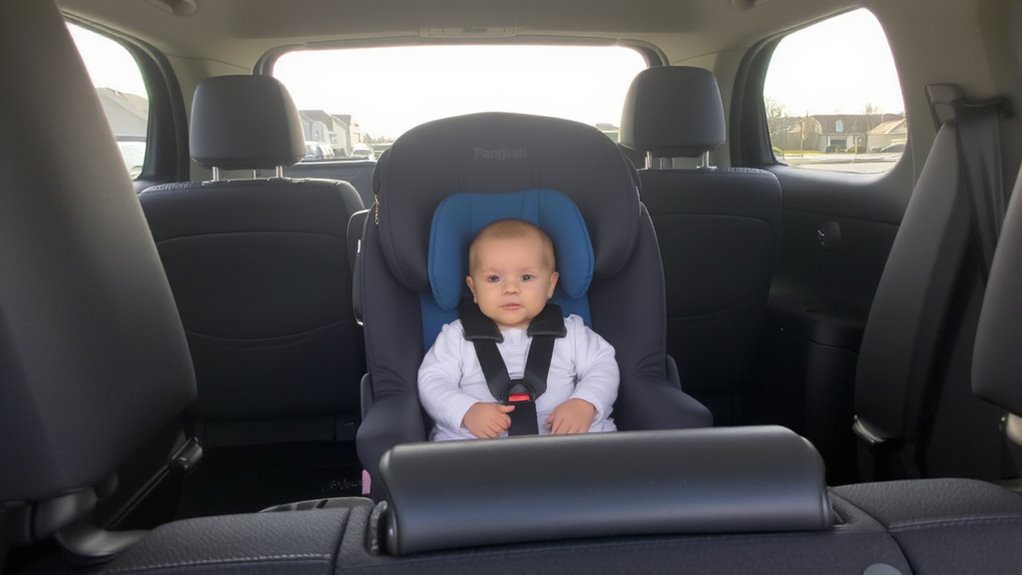
When it comes to keeping your child safe on Maryland roads, knowing the car seat age requirements isn’t just smart-it’s the law. You’re required to keep your child rear-facing until at least age 2, and many parents find convertible seats like the Graco Extend2Fit or Chicco NextFit Zip fit longer, supporting Car seat safety with roomy designs and up to 50-pound rear-facing child weight limits. These models scored high in crash test ratings and real-world use, accommodating small and tall toddlers alike. Testers praised the Easy-Install LATCH systems and plush padding for daily comfort. Forward-facing seats must be used once your child outgrows rear-facing limits, typically after age 2. Always check labels for height and child weight limits to stay compliant. Maryland’s rules are designed around proven safety data-using the right seat, installed correctly, reduces injury risk dramatically. Your child’s safety starts with following the guidelines and choosing a well-tested seat.
When Should a Child Switch to a Booster Seat in Maryland?
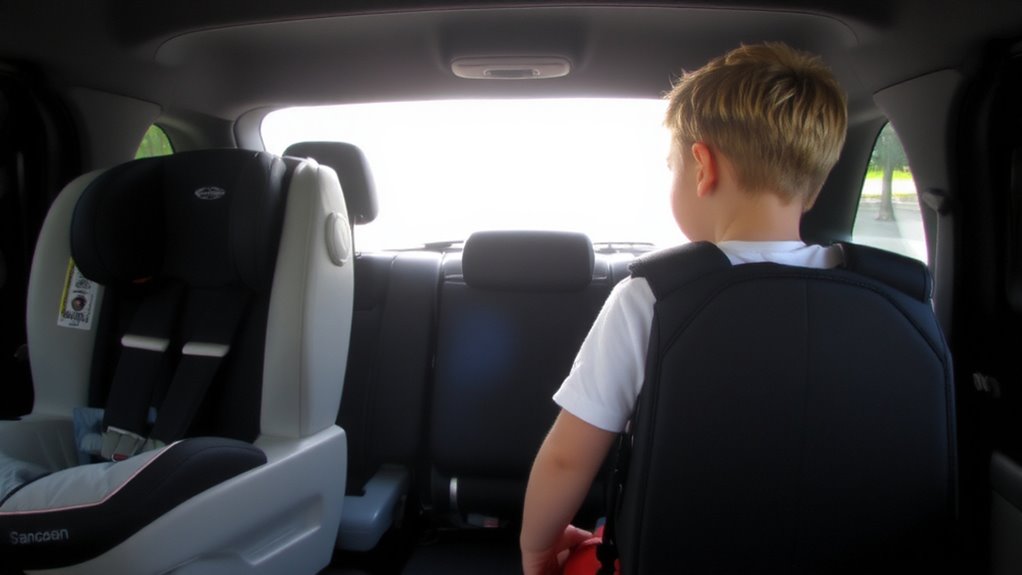
A majority of parents make the switch to a booster seat between ages 4 and 7, but in Maryland, the move depends less on age and more on whether your child has outgrown their forward-facing car seat by height or weight-typically once they reach 40 to 65 pounds, depending on the model. Watch for readiness signs like wiggling straps or riding low in the seat. A booster guarantees proper fit with the seat belt across the chest and lap, not the neck or stomach.
| Feature | Why It Matters |
|---|---|
| Shoulder height above seat limit | Indicates outgrown harness |
| Ears above back of seat | Shows need for head support |
| Struggles with proper fit | Means booster improves safety |
Top-tested models like the Graco TurboBooster and Britax Highpoint deliver adjustability, easy LATCH removal, and side-impact protection, with real families praising long-term comfort and secure positioning. For reliable options, consider expert-recommended best baby car seats that meet safety and durability standards.
When Can a Child Ride Without a Booster Seat in Maryland?
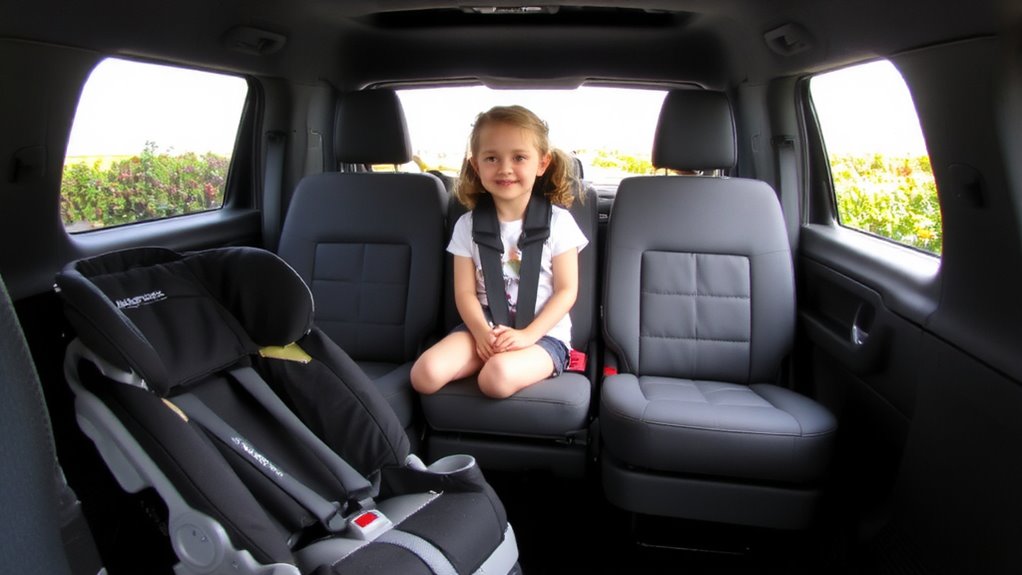
Though state law sets the baseline, you’ll know your child’s truly ready to ride without a booster when they consistently sit upright and the seat belt fits properly across the chest and lap-something most kids don’t achieve until around 4 feet 9 inches tall, typically between ages 8 and 12. A proper seat belt fit means the shoulder belt lies across the middle of the chest, not the neck, and the lap belt sits low on the hips, not the stomach. Backless boosters work well during changeover years, offering portability and comfort, but they only help with positioning-not fit. Testers found kids often slouched or shifted, risking improper belt alignment. High-back models with adjustable guides provided better long-term support and improved seat belt fit. Real-world use showed even tall 7-year-olds still needed boosters for safe alignment. Wait until your child passes the five-step test, not just meets age or height minimums.
Where Should Children Sit in the Car According to Maryland Law?
Why take chances with your child’s position in the car when a few simple rules could make all the difference? Maryland law doesn’t just recommend rear seating for young kids-it’s the safest choice by far, especially for those under 13. The back seat keeps them farther from the danger of rapidly deploying airbags, making airbag safety a top priority. Testers consistently note that rear seating reduces injury risk by up to 40% compared to the front. Real-world data shows kids in forward-facing seats benefit most in the back, where crash forces are less direct. Even at 60 mph, the back seat absorbs more impact. Consumer reports highlight that models like the Graco 4Ever and Britax One4Life perform best when installed in rear seating positions. Always check manufacturer guidelines, but trust the data: back = better. Keep your child safe, informed, and properly positioned-every ride, every time.
How Do You Install a Car Seat Legally in Maryland?
When installing a car seat in Maryland, getting it right means combining state requirements with real-world safety performance, so you’ll want to secure it using either the LATCH system or a seat belt, depending on your vehicle and the child’s weight. Follow rear facing guidelines-keep your child rear-facing until at least age 2, or longer if they haven’t hit the seat’s height or weight limits. Most modern seats support rear-facing up to 40–50 pounds, giving extra protection for developing spines. After installation, schedule a car seat inspection with a certified technician to confirm proper fit, angle, and tension. Testers consistently report fewer errors when using lower anchors in vehicles under 12 years old, though seat belts work just as safely when locked correctly. A tight installation shouldn’t move more than one inch side-to-side. Use built-in level indicators and recline angles to match your car’s seat slope for maximum safety and comfort. For added convenience during travel, consider a travel-friendly car seat that balances safety with portability.
On a final note
You’re doing great by learning Maryland’s car seat rules, and picking the right seat makes all the difference. Use rear-facing seats until age 2 or more, like the Graco Extend2Fit, which fits tight spaces and offers 5-point harnesses, 22-inch height limits. Testers praise its easy LATCH install, snug fit. Move to boosters around 40 pounds; consider the Evenflo BoostKid, with adjustable head support, side-impact protection. Always check labels, follow height-weight specs, and secure seat tightly-your child’s safety depends on it.