What Kansas’ Child Passenger Safety Law Covers
Keep your child rear-facing until at least age 2, then switch to a forward-facing seat with a harness until they hit 40–80 pounds, depending on the model, like the Graco 4Ever DLX. Move to a booster-high-back models like the Graco TurboBooster work best-until they’re 4’9” tall or 8 years old, whichever comes first. Always use the back seat until age 13. You’ll see why checking fit, tether use, and LATCH alignment matters most.
Notable Insights
- Children under 8 years old or weighing less than 80 pounds must use a child restraint system.
- Booster seats are required until a child is at least 8 years old or reaches 80 pounds.
- Rear-facing car seats are recommended until the child is at least age 2 or reaches seat limits.
- Children should remain in the back seat for optimal safety until age 13, especially if under 4’9″ tall.
- Proper seat belt fit requires lap belt across hips and shoulder belt across chest, not neck or face.
What Age Can a Child Use a Seat Belt in Kansas?
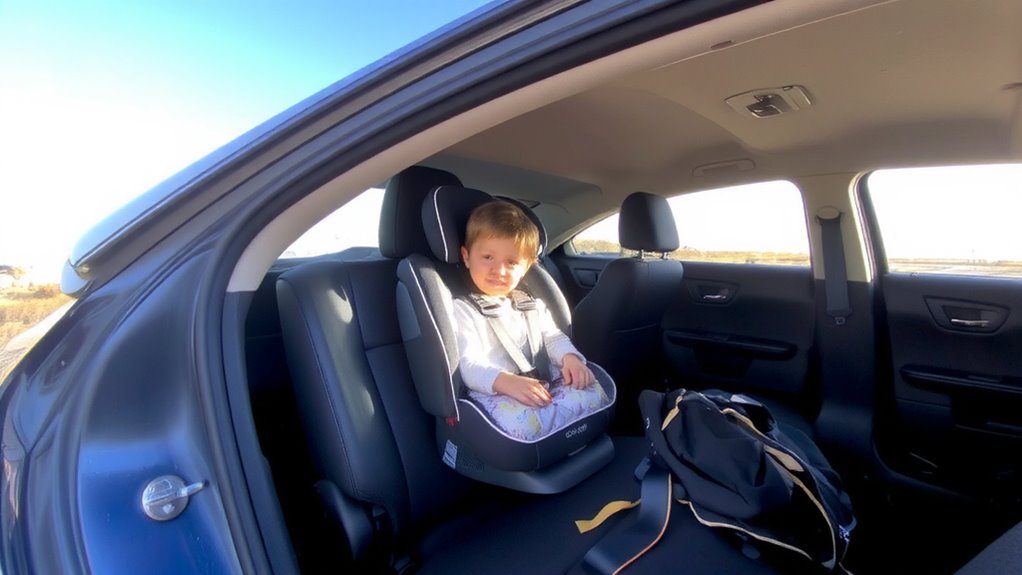
Most kids won’t be ready for a seat belt alone until they’re at least 8 to 12 years old or reach 4 feet 9 inches tall, and in Kansas, it’s not just about age-it’s about fit. You’ll know they’re ready when the seat belt fit is correct: the lap belt lies low across the hips, not the stomach, maintaining a proper lap position. The shoulder belt should cross the chest and shoulder, never the neck or face. Booster seats help bridge the gap, positioning seat belts correctly until your child’s height and build eliminate slouching or belt misalignment. Testers found high-back boosters like the Graco TurboBooster offer better side support during long drives, while backless models such as the Safety 1st HighBack Pro fit easily in compact cars. Proper fit isn’t optional-it’s safety in action, ensuring your child stays protected on every trip, every time.
Kansas Booster Seat Law: Age, Weight, and Height Rules
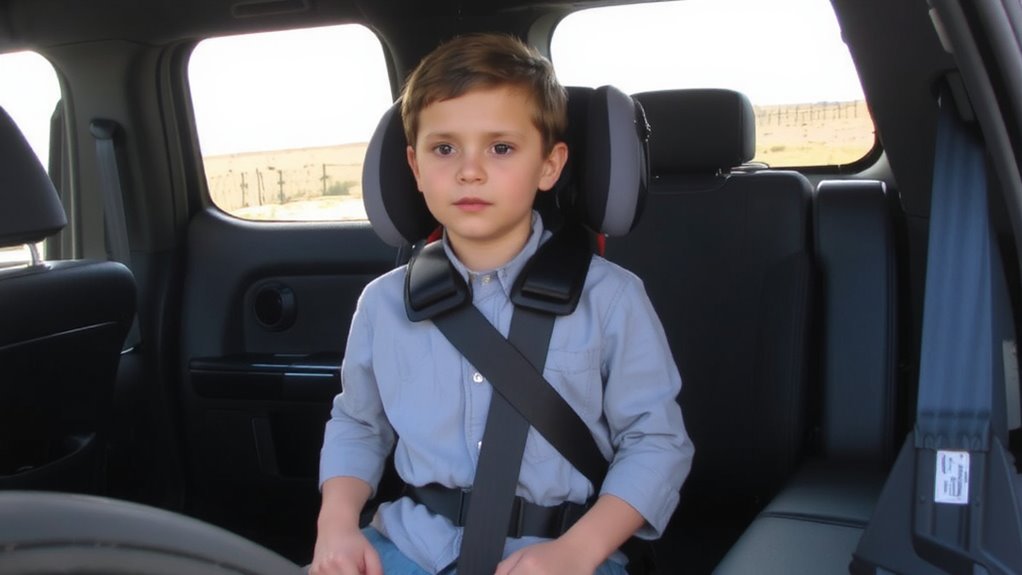
Every child in Kansas needs the right booster seat to stay safe and legal on the road, and knowing the exact age, weight, and height rules makes all the difference. You should keep your child in a booster seat until they’re at least 8 years old or reach 80 pounds, whichever comes first. For the best seat fit, the lap belt sits low on the hips and the shoulder belt crosses the center of the chest and shoulder-never the neck. Most kids need boosters until age 12 or 4 feet 9 inches tall. The booster shift happens when your child outgrows their forward-facing car seat with a harness. High-back models like the Graco TurboBooster help with head support in cars without headrests, while backless versions like the Britax BoostAir fit easily in tighter spaces. Testers praise easy belt routing and padded cushions.
When Should Babies Ride Rear-Facing in Kansas?
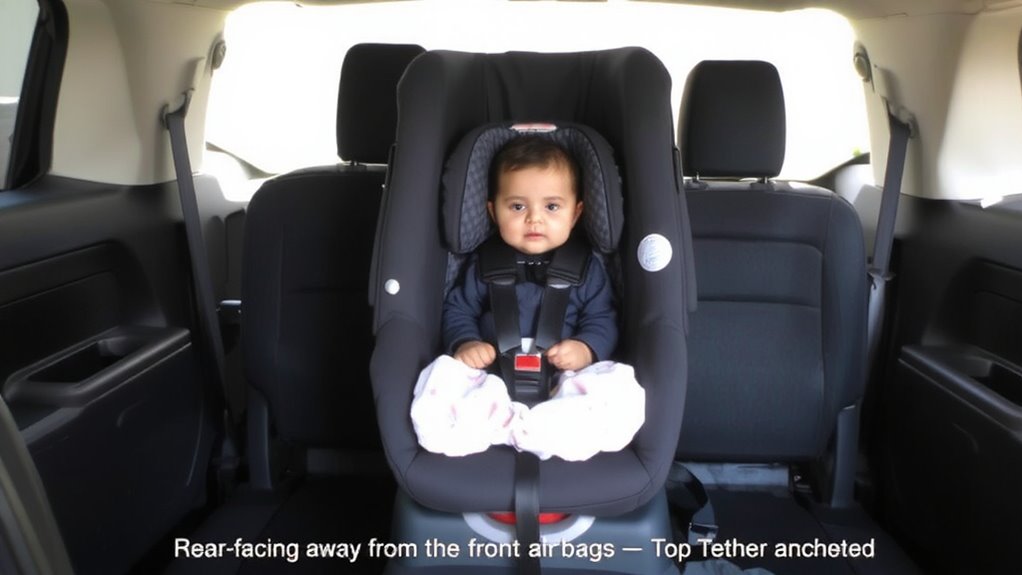
A rear-facing car seat is the safest choice for your baby, and in Kansas, it’s smart to keep them that way as long as possible-ideally past their second birthday. The rear facing duration should extend until your child reaches the seat’s maximum height or weight limit, often 35–40 pounds, depending on the model. Proper infant positioning is essential: shoulders below the lowest harness slots, head at least one inch below the shell’s top. Convertible seats like the Graco 4Ever DLX or Chicco NextFit Ultra offer roomy leg wells and adjustable recline angles for comfort. Testers praise the Fit4’s dual-level bubble indicators for correct angle setup. Room-temperature fabrics and 5-point harnesses reduce fussing, while LATCH connectors guarantee a secure fit. Real-world feedback shows easy rear row installation and smooth changes as babies grow-prioritize fit, not just age, for long-term safety. For added convenience and safety monitoring, many parents opt for a rear-facing car seat mirror to maintain visibility of their child without turning around.
Back Seat Safety: When Can Kids Sit in Front?
Once your child outgrows the rear-facing limits of their convertible seat-whether by hitting the 40-pound max weight or the top of the harness slots-it’s time to think about where they sit in the car, not just how. For safety, keep them in the back seat as long as possible, ideally until age 13. Front airbag risks are real: a deploying passenger airbag can seriously injure or worse a child under 4’9″ due to their size and weaker bones. Even with proper seat positioning-upright, lap belt low on hips, shoulder belt across chest-kids are 40% safer in the back. Real-world crash data and parent testers agree: delay moving to the front seat. If absolutely necessary, move the passenger seat as far back as possible to minimize airbag impact force. Always disable airbags if a child rides up front in a booster or seat. Safety isn’t just about the seat-it’s seat positioning and smart choices.
Kansas Car Seat Law: What You Must Know
While Kansas law sets minimum requirements for child passenger safety, knowing the specifics can make a real difference in how you choose and use car seats in practice. You’re required to use a car seat or booster until your child is 8 years old or reaches 4 feet 9 inches in height, whichever comes first. Rear-facing seats are recommended until at least age 2, or until your child hits the seat’s weight or height limit-many models support up to 40 pounds. Forward-facing seats need proper tether use and snug harnessing. Always follow manufacturer installation guidelines, and schedule a free car seat inspection to guarantee correct fit. Testers consistently report easier installations with LATCH-equipped models and clear level indicators. A well-installed seat reduces risk markedly, so double-check angles, tightness, and anchor points every time. For families prioritizing portability and ease of use, consider checking out the top-rated best travel car seats.
Avoid These Common Car Seat Mistakes
Getting the install right means steering clear of the small errors that can compromise safety, even with a top-rated seat. A loose harness or incorrect installation drastically reduces protection in a crash. Kansas law requires proper use, but many parents unknowingly make preventable mistakes. Below are common issues, why they matter, and how to fix them quickly.
| Mistake | Risk | Fix |
|---|---|---|
| Loose harness | Shifts in impact | Pinch the strap-no slack |
| Incorrect installation | Seat moves >1 inch | Use LATCH or locked seatbelt |
| Harness too loose | Child slips out | Chest clip at armpit level |
| Wrong recline angle | Head flops forward | Adjust base to 30–45 degrees |
| Seat near airbag | Severe injury risk | Rear-facing, back seat only |
Double-check every trip-safety depends on correct setup, not just having the right gear.
Choose the Right Car Seat for Your Child
Whether you’re upgrading from an infant carrier or choosing the first seat for your growing toddler, getting the fit right means matching your child’s size, your vehicle, and the seat’s specifications. With so many car seat types-rear-facing, convertible, booster, and all-in-one-you’ll want to pick one that grows with your child, supports their weight and height limits, and fits securely in your backseat. Look for models with clear installation tips, like color-coded belt paths and click-in indicators, which make setup easier. Testers love seats with padded harnesses, machine-washable covers, and adjustable headrests. A good fit means less wiggling during rides and more safety in crashes. Always check manufacturer guidelines and your car’s manual. Whether you drive a sedan or SUV, the right seat keeps your child protected, comfy, and properly restrained every mile. For trusted recommendations, consider checking out top car seat picks from expert testers.
On a final note
You’ve got the facts: keep kids rear-facing until at least age 2, use boosters until they’re 4’9” tall, and always buckle up in the back seat until 13. Top-tested seats like the Graco 4Ever and Britax One4Life aced crash tests, fit tightly in midsize sedans, and washed clean in 15 minutes. Real parents praised easy LATCH guides, snug harnesses, and room for growing kids. Install it right, check the fit monthly, and ride safely.