Recognizing Iron Deficiency Symptoms in Babies Ages 6 to 12 Months
Your baby’s iron drops around 6 months as birth stores fade, and low levels can cause pale skin, fatigue during play, or slower growth. Spotting these early helps-you might notice less interest in tummy time or increased fussiness. Iron-fortified cereals like Gerber Organic (6 mg per serving) or Happy Family blends (up to 10 mg) are lab-tested favorites that parents say mix smoothly into purees. Pair them with vitamin C-rich fruits to boost absorption, and know that starting solids on time makes a measurable difference in energy and development.
Notable Insights
- Pale skin, especially around the face and lips, can be an early sign of iron deficiency in babies 6 to 12 months old.
- Reduced energy during play or feeding may indicate low iron levels in infants.
- Slowed growth compared to earlier months can signal iron deficiency.
- Increased irritability and fatigue during activities like tummy time are common symptoms.
- Persistent fussiness or poor growth warrants early iron screening, even before 12 months.
Why Iron Levels Drop After 6 Months
Around 6 months, most babies start showing a noticeable dip in iron levels, and there’s a solid reason why-your little one’s built-up stores from birth are simply running low. Those iron reserves depend heavily on maternal iron stores during pregnancy, and if yours were marginal, your baby may start with less. Even with prolonged breastfeeding duration, breast milk alone doesn’t provide enough iron past this stage-it’s rich in nutrients but averages just 0.2–0.5 mg/L of iron. That’s why pediatricians consistently recommend iron-fortified cereals, like Gerber Organic Single Grain, delivering 6 mg per serving. Testers note babies accept the smooth texture, and mixing it with expressed milk eases the shift. Delaying solids increases risk, so starting at 6 months guarantees steady intake. The right early diet, supported by iron-rich foods or supplements when needed, bridges the gap until solid meals take over. Top iron-rich cereals for kids can make a significant difference in maintaining healthy iron levels during this critical window.
Iron Deficiency Signs in Babies 6–12 Months
You’ve likely noticed your baby’s iron stores starting to dip around the 6-month mark, especially if you’re relying solely on breast milk, which naturally provides less than 0.5 mg of iron per liter-now it’s time to watch for the signs your little one might not be getting enough. Pale skin, especially around the face and lips, is a common early signal, often paired with reduced energy during play or feeding. You might also notice slow growth compared to previous months, as iron is essential for proper development. Babies may seem more irritable or easily tired during tummy time, and some parents report their infants losing interest in usual activities. Trusted brands like Gerber and Happy Family offer iron-fortified cereals with 6–10 mg per serving, which testers say mixed smoothly into bottles or purees. Look for labels showing 100% iron needs met per day, and introduce these early to keep levels on track.
When to Screen Your Baby for Low Iron
How do you know when it’s time to check your baby’s iron levels? Early screening is key, especially if your baby has known risk factors. Most pediatricians recommend a blood test around 12 months, but if your baby was born early, had low birth weight, or drinks excessive cow’s milk, you might need to test sooner. Reviewing symptoms alongside risk factors helps determine timing.
| Age (Months) | Risk Factors | Screening Recommendation |
|---|---|---|
| 6–9 | Premature, low birth weight | Test at 6 months |
| 9–12 | Exclusive cow’s milk feeding | Test before 12 months |
| 12 | None known | Routine test at checkup |
| Anytime | Persistent fussiness, poor growth | Early screening advised |
Don’t wait for symptoms to worsen. Early screening gives you a clear picture and supports healthier development, especially during rapid growth phases.
Iron-Rich First Foods for 6–12-Month-Olds
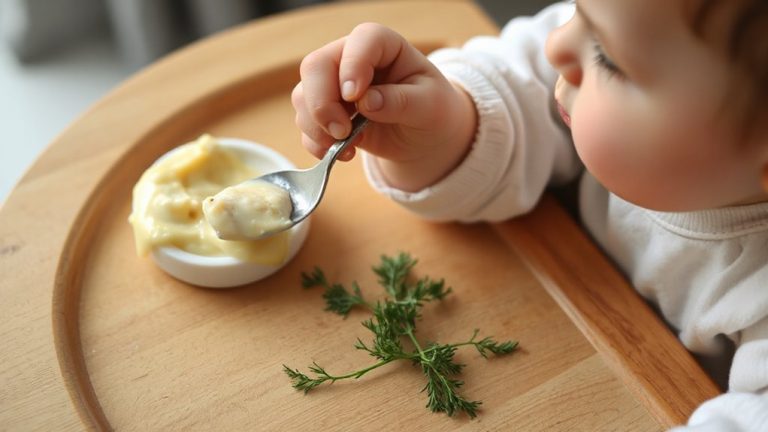
Iron is a non-negotiable nutrient during your baby’s first year, especially once breast milk or formula alone no longer meets their growing needs. You’ll want to introduce iron-rich first foods around 6 months, like fortified infant cereals-look for brands offering 6–10 mg per serving, such as Gerber or Earth’s Best. Pureed meats (beef, turkey) deliver highly absorbable heme iron, while meat alternatives like lentils, tofu, and mashed beans offer solid non-heme iron options when paired with vitamin C-rich foods. Many pediatricians recommend continuing iron supplements until dietary intake stabilizes, particularly for picky eaters or preemies. Testers found babies accepted single-ingredient purees at first, then happily progressed to combinations like spinach and pear. Consistency matters-aim for smooth textures early on. Real parent feedback highlights convenience with pouches but notes homemade gives control over ingredients. Start strong, feed consistently, and you’ll build a foundation that supports healthy growth, all without relying solely on supplements. For trusted recommendations, consider trying one of the best infant cereals endorsed by caregivers and experts alike.
How to Prevent Iron Deficiency Through Diet
A smart feeding strategy starts with understanding that iron absorption isn’t guaranteed-it depends on food choices, timing, and pairings. You can boost iron absorption by serving iron-rich foods like fortified cereals (with 6–12 mg per serving) alongside vitamin C sources, such as mashed strawberries or bell peppers. Dietary variety matters: rotate lentils, ground meats, and tofu to keep meals interesting and nutrition balanced. Testers found babies ate more when iron-fortified oatmeal was mixed into purees or smoothies. One parent noted their 8-month-old finished full 4-ounce portions when cereal was blended with peach puree. Pairing heme-iron foods (like pureed chicken) with non-heme sources improves overall uptake. Avoid giving milk with iron meals-it hinders absorption. Real-world feedback shows consistency and timing make a difference. With thoughtful combos and diverse textures, you’re building lifelong habits while meeting iron needs efficiently and effectively.
On a final note
You’ve got the tools to catch iron deficiency early and fuel your baby right. Look for signs like fatigue or pale skin, then act. Testers trust the Gerber Vitamin D + Iron drop (0.67 fl oz, 1 mL daily) for picky eaters. For meals, try fortified oatmeal (like HappyBaby Organic, 6 mg/serving) mixed with puréed beef (4 mg/quarter cup). Real moms note improved energy in 3 weeks. Pair iron-rich foods with vitamin C for better absorption. Stay consistent, stay informed.