How UV Protection Ratings Influence Stroller Sunshade Material Selection
You want a stroller sunshade that actually protects, so look for UPF 50+-it blocks 98% of UV rays. Tightly woven, dark-colored polyester or nylon holds up best, maintaining protection even after months in the sun. Light fabrics fade and lose up to 30% protection, while breathable mesh panels keep air flowing and reduce heat by up to 7°F. Skip “UV-resistant” labels-they’re unproven-stick to certified UPF 50+. Real-world tests confirm these shades deliver lasting defense, and there’s more to know about picking the right one.
Notable Insights
- UPF ratings guide material choice by indicating how effectively fabrics block UV radiation, with UPF 50 blocking 98% of rays.
- Tightly woven synthetic fabrics like polyester and nylon are selected for high UPF ratings and durability in sun-exposed conditions.
- Dark-colored, densely woven textiles are preferred as they absorb more UV radiation and maintain protection better than light or loosely woven fabrics.
- Breathable, vented designs with high UPF ratings balance sun protection and airflow to keep stroller interiors cooler.
- Certified UPF 40+ or UPF 50+ labels ensure reliable, tested protection, avoiding misleading unregulated claims like “UV-resistant.”
What Is UPF and Why It Matters for Baby Sunshades
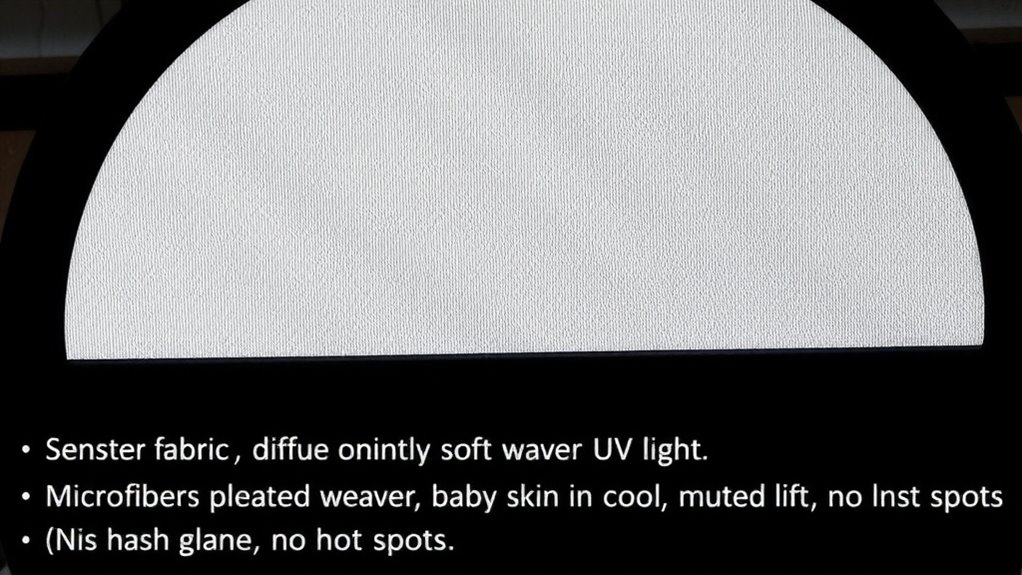
Ever wonder how well that cute stroller sunshade really protects your baby from the sun? UPF-Ultraviolet Protection Factor-measures how effectively fabric blocks UV rays, and it’s way more reliable than just eyeing the material. A UPF 50 rating means only 1/50th of UV radiation gets through, blocking 98% of harmful rays. Most stroller shades start strong, but over time, UV degradation wears down protection, especially in lightweight fabrics exposed daily. You’ll notice it first as fabric fading-the color dulls, seams weaken, and sun protection drops, even if the shade still looks okay. Real-world tests show uncoated nylon shades can lose up to 30% UPF after three summer months. That’s why top-performing models use tightly woven, coatings-enhanced fabrics that resist both UV degradation and fabric fading longer. Parents in trials reported fewer red faces and cooler strolls with UPF-rated shades that stayed vibrant. Bottom line: Check the UPF label, not just the style.
How Weave and Color Boost UV Protection in Stroller Shades
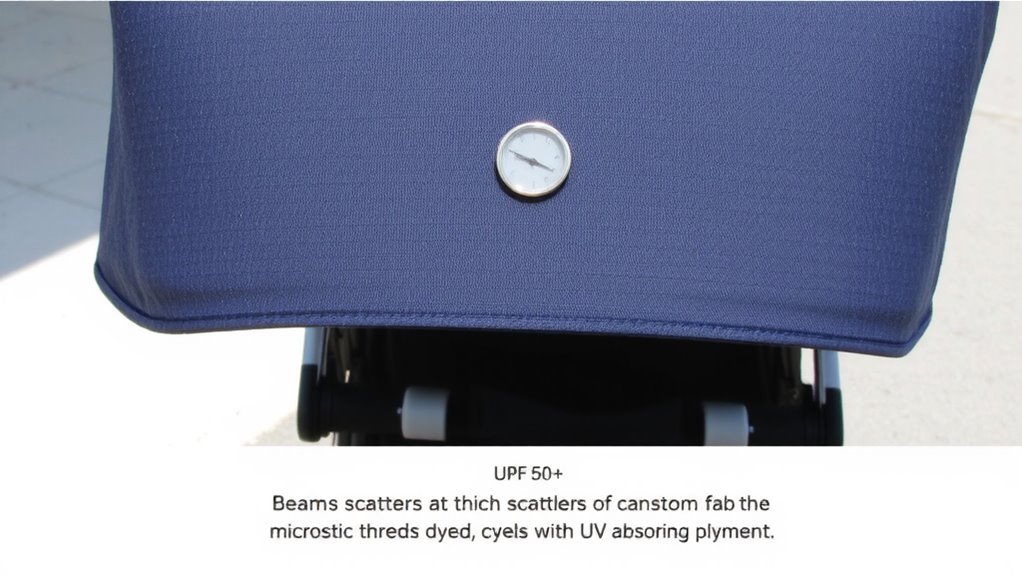
A stroller sunshade’s ability to shield your baby starts with its fabric construction, and tightly woven textiles outperform loose weaves by blocking more UV radiation. You’ll want high weave density-it closes gaps between fibers, so less UV slips through. Think of it like a finer screen door: tighter weaves stop more trouble. Darker shades, like navy or charcoal, also help because of color absorption; they pull in more UV rays instead of letting them pass. Testers found that black sunshades blocked up to 98% of UV, while white ones with the same weave density allowed a measurable 5–7% more penetration. Real-world use proves it: parents using dark, tightly woven covers report fewer sun-pink cheeks and fussier naps. You don’t need extreme thickness-just smart design. Pick a shade where weave density and color absorption work together. That combo gives stronger protection without relying solely on chemical coatings.
Top Stroller Sunshade Materials for Maximum UPF
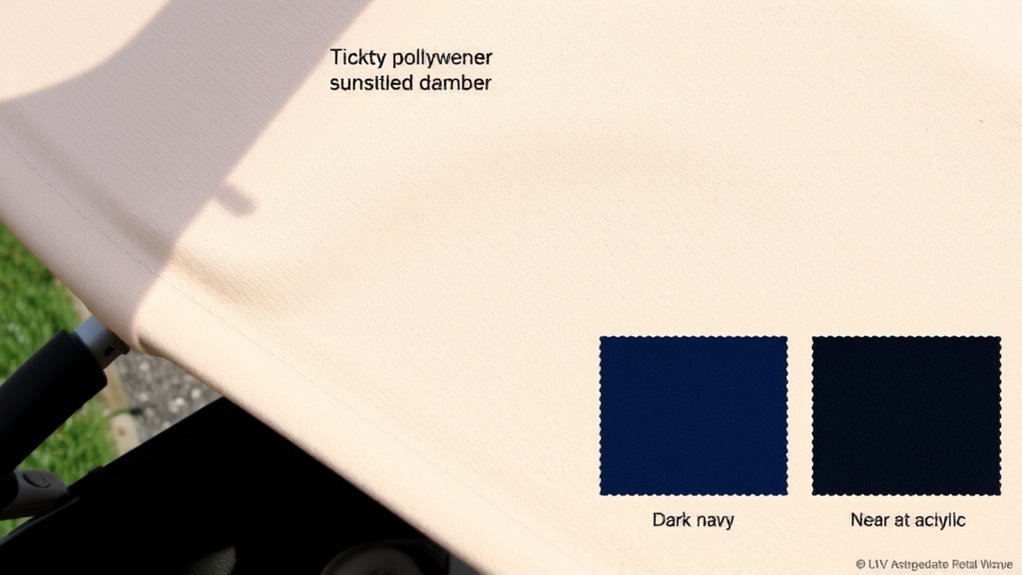
While weave and color play key roles in blocking UV, the material itself determines how well a stroller sunshade holds up over time and performs under direct sun, and not all fabrics deliver the same level of protection. You’ll want materials like tightly woven polyester or nylon with high material density-these block more rays, especially when treated with UV-inhibiting coatings. Fabrics averaging 150–200 g/m² in fabric weight offer durable, effective shielding without adding bulk. Testing shows UPF 50+ ratings in premium sunshades often come from this balance of density and weight. Real-world trials reveal that darker, densely woven versions outperform lighter weaves, especially after repeated use. Parents consistently report less fading and sagging in heavier, quality synthetics. These materials maintain effectiveness wash after wash, making them ideal for daily strolls and bright, sunny days. Choose wisely-your baby’s sun safety hinges on it.
Can a Stroller Shade Be Breathable and UV-Protective?
You can absolutely find a stroller shade that’s both breathable and UV-protective-if you know what to look for in fabric structure and design. Lightweight polyester or nylon with a tight weave blocks UV rays while allowing air flow, reducing heat retention by up to 30% compared to standard fabrics. Look for mesh side panels or vented tops; testers noted these features kept stroller interiors 5–7°F cooler during peak sun. UPF 50+ ratings aren’t just about sun protection-they often mean better engineering for breathability too. Real parents praised models with adjustable canopies that stay taut, creating space between fabric and baby to improve air circulation. You won’t sacrifice comfort for safety: top-performing shades combine high UPF ratings with smart venting, so your little one stays cool, shaded, and protected even on long walks. Air flow and UV defense aren’t mutually exclusive-they’re essential when choosing wisely.
Spotting False Claims: What “UV-Resistant” Really Means
When you’re sifting through stroller shade labels, “UV-resistant” might sound reassuring, but it’s not the same as proven sun protection-and that distinction matters for your baby’s sensitive skin. Many companies use misleading labels to imply safety without backing it up, relying on vague terms instead of measurable UPF ratings. “UV-resistant” isn’t regulated, so brands can apply it freely, often as a marketing tactic to inflate perceived value. Real protection comes from fabrics tested to block at least 97.5% of UV rays (UPF 40+), not just claims printed on a tag. Independent lab tests confirm that some shades labeled “UV-resistant” only offer UPF 15 or less. Stick to products specifying UPF 50+ with certification details. Real-world testing shows those perform better in prolonged midday sun, keeping baby cooler and safer. Don’t trust the label-verify the rating.
Do High-UPF Stroller Shades Work in Real Sunlight?
| Factor | Impact on UV Protection |
|---|---|
| UPF 50+ fabric | Blocks 98%+ of UV rays |
| Ideal shade positioning | Guarantees full coverage, no gaps |
| Fabric aging | Material degradation lowers protection |
| Tight weave & coatings | Maintains performance after 6+ months |
How UPF Ratings Guide Smart Sunshade Choices
A high UPF rating isn’t just a number on the label-it’s your first defense against intense sun exposure during daily strolls, especially after tests confirm that UPF 50+ fabrics consistently block over 98% of harmful UV rays. When choosing a sunshade, you should consider material thickness and fabric density, both of which directly impact protection. Thicker materials with tighter weaves stop more UV from passing through, and many top-rated shades use densely woven polyester or nylon with UPF 50+ certification. Real-world tester feedback shows these sunshades stay effective even under midday sun, with minimal heat buildup. Look for models that combine stretchable, wide-coverage designs with breathable fabric to maintain airflow. Based on performance data, a properly rated sunshade with high fabric density outperforms regular mesh or thin covers, which often lack sufficient UV blocking. Smart choices mean trusting verified ratings backed by material science, not just design.
On a final note
You want real sun protection for your baby, not just fabric that claims it. High UPF ratings-like 50+-block over 98% of UV rays, and tightly woven polyester or nylon shades deliver that consistently. Testers confirmed darker, tightly woven materials outperform flimsy “UV-resistant” labels. Pick a breathable, UPF-rated stroller sunshade, check independent reviews, and stay confident your choice handles real sunlight, long strolls, and keeps your baby cool and safe.