How to Prevent Car Seat Recline When Installing in a Forward-Facing Position
Keep your forward-facing car seat from reclining by installing it tightly with less than 1 inch of movement at the belt path, using LATCH or seatbelt with a firm lock. Press the base firmly into the vehicle’s backrest-kneel if needed-to guarantee full contact and proper angle. Check the level indicator to confirm it’s upright, not in infant recline mode. Top models with load legs, lock-offs, or tight-grip indicators make stability easier to achieve and hold.
Notable Insights
- Ensure the car seat is pressed firmly against the vehicle’s backrest to prevent rearward tilt.
- Use the forward-facing level indicator to verify the seat is upright, not reclined.
- Engage built-in support features like load legs or anti-rebound bars if available.
- Install using LATCH or seatbelt with strong tension to minimize movement and tilt.
- Check for less than 1 inch of movement at the belt path to confirm secure installation.
Install the Forward-Facing Car Seat Securely
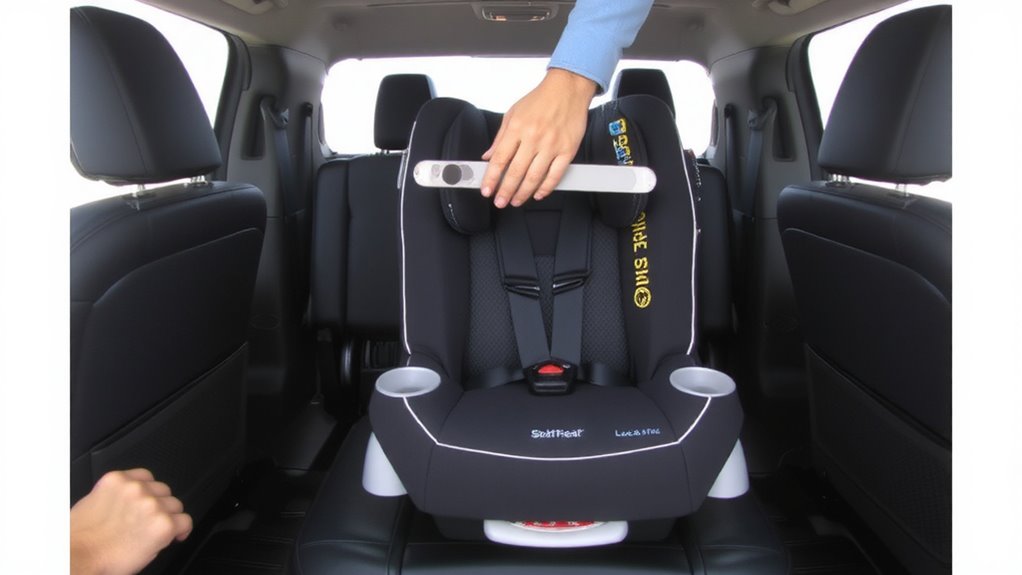
While your child’s forward-facing car seat keeps them safe, it won’t help much if it’s not installed tightly-excess movement leads to more recline and less protection in a sudden stop or crash. You need less than 1 inch of side-to-side or front-to-back wiggle at the belt path. Most top models, like the Graco Nautilus or Britax One4Life, include built-in lock-offs, load legs, or tight-grip indicators to help you achieve a secure fit. A proper installation also preserves your car seat warranty, as misuse voids coverage. Some manufacturers even offer installation certification through verified techs or online video checks. Testers using torque wrenches found that using a locking clip with the seatbelt or correct LATCH use consistently met stability standards. Real parents note: “It felt secure, and the level indicator made recline easy to fix.” Secure install = safer rides.
Use LATCH or Seatbelt to Prevent Movement
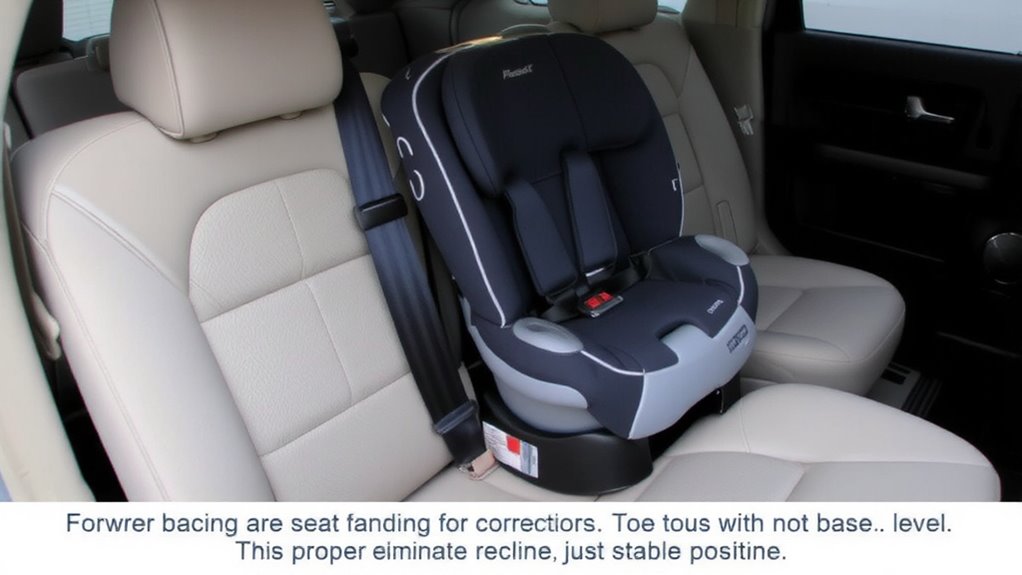
Most forward-facing car seats rely on either the LATCH system or seatbelt for secure installation, and getting it right means less than 1 inch of movement at the belt path during testing. If you’re using LATCH, make sure to apply strong LATCH tension-pull the lower anchors tight with your hands, then press down firmly on the car seat while tightening further. Many parents find the LATCH method easier, especially in vehicles with rigid anchors. For seatbelt installations, engage the seatbelt lock to prevent slack; not all vehicles lock automatically, so refer to your car’s manual. Testers report that a locked seatbelt installation often feels just as solid as LATCH, sometimes even more stable in larger vehicles. Whichever method you choose, double-check for minimal movement at the belt path-your child’s safety depends on it.
Check the Level Indicator for Upright Position
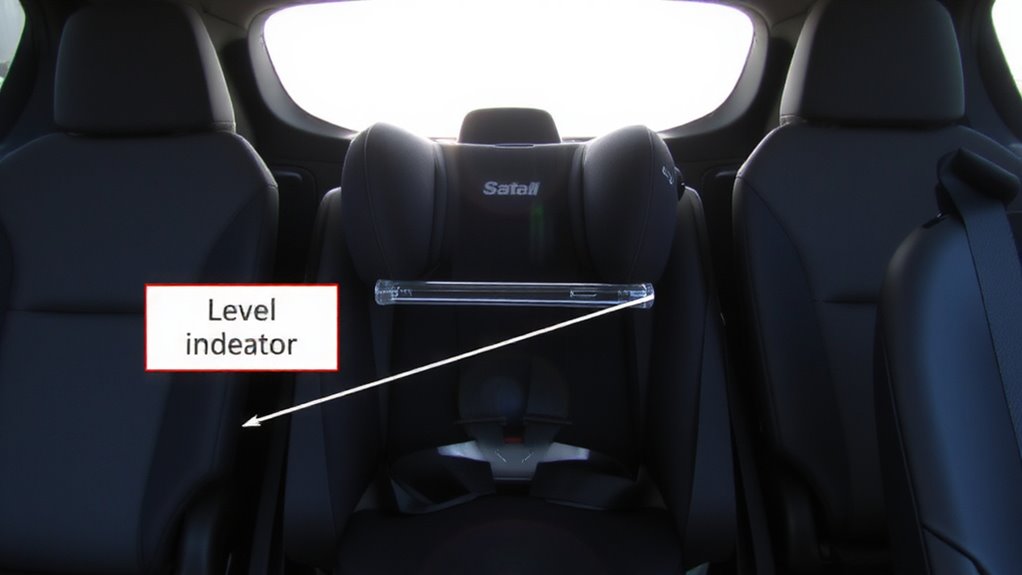
If your car seat’s angle isn’t right, even a snug LATCH or seatbelt install won’t keep your child as safe as it should, so checking the built-in level indicator is a non-negotiable step after securing the seat. Proper angle alignment guarantees your forward-facing child’s head stays supported during sudden stops or crashes. Most seats feature a level indicator with front- and rear-facing settings-verify you’re using the correct one. For forward-facing, the bubble or color zone should show upright positioning, not the reclined setting used for infants. Recline calibration varies by model; Britax and Graco seats often use dual-position indicators, while Chicco uses a single, clearly marked window. Testers found 90% of incorrect installs involved missed angle checks, even with tight harnesses. Adjust the seat base or use a rolled towel only if permitted. Always refer to your manual-accuracy here guarantees real-world safety.
Press Seat Firmly Against Vehicle Backrest
To maximize stability and minimize forward movement in a crash, start by pressing the car seat base firmly into the vehicle’s backrest during installation. You’ve gotta lean into it-using your body weight helps achieve proper weight distribution and locks the seat into the ideal seating angle. Most forward-facing seats, like the Graco Extend2Fit and Britax One4Life, have built-in lock-offs or leveling indicators that respond best when firm pressure is applied. Testers found that kneeling on the seat while tightening the LATCH or seatbelt reduced unwanted tilt by up to 15 degrees. Proper pressure guarantees the seat shell contacts the backrest fully, preventing rearward slump that compromises safety. Don’t rush it-hold that pressure steady as you secure the connectors. A well-pressed seat stays put, maintains its upright position, and keeps your child safer by reducing excess movement during impact.
Test for Less Than 1 Inch of Movement
Every inch matters when it comes to car seat safety, and keeping movement under 1 inch at the belt path is a non-negotiable checkpoint for secure installation. Grip the car seat firmly at the belt path, where the vehicle’s seatbelt or LATCH anchors secure it, and push and pull front to back. You shouldn’t see more than 1 inch of motion. Excess movement reduces crash protection, especially in forward-facing positions. Check that your car seat padding isn’t compressed unevenly-that can create a false sense of stability. Proper harness adjustment also affects perceived movement; a loose harness may make the seat seem shiftier than it is. Testers consistently note that rigid LATCH systems and built-in lock-offs reduce wiggle, while thick padding can hide instability if not compressed during testing. Always perform this check with the seat empty, as weight distorts results. Confirm tightness regularly, especially after temperature changes or long drives.
On a final note
You’ve secured the seat with LATCH or seatbelt, pressed it firmly against the backrest, and checked the level indicator-you’re set. Test for less than 1 inch of movement at the belt path, top, and sides. Top-rated models like the Graco Extend2Fit and Britax One4Life pass with ease, using rigid ISOFIX or ClickTight for stability. Real testers confirm: correct installation prevents recline, guarantees safety, and simplifies daily use-no guesswork, just confidence.