How to Position Baby During Tummy Time on a Textured Mat
Place your baby chest-down on an 18 x 32-inch non-toxic, CPSC-compliant textured mat, arms just ahead of shoulders, for ideal head lifting. Use a firm, cushioned mat like the Bumbo Soft Touch (36” x 36”) for full support. Add a rolled 8” bath towel under the chest to ease discomfort, boosting engagement by 30%. Position crinkly, satin-tabbed toys like Lamaze Freddie 8–12 inches away to extend focus and head-raising time. For variety and core strength, try side-lying with a burp cloth roll for stability-many parents see effort in the top arm within 2 minutes. You’ll discover more ways to build skills as baby grows.
Notable Insights
- Place baby chest-down with arms ahead of shoulders to encourage head lifting and upper body strength.
- Use a firm, cushioned textured mat that provides sensory input and supports even chest positioning.
- Position a rolled towel under the chest below the armpits to reduce discomfort and extend tummy time.
- Place textured, high-contrast toys 8–12 inches ahead to stimulate head lifting and visual tracking.
- Try side-lying with a rolled cloth for support, aligning ears, shoulders, and hips for core development.
Pick a Sensory Textured Mat for Engagement
Why should your baby’s tummy time mat do just one thing when it can stimulate, soothe, and engage all at once? You want a sensory textured mat that’s safe and smart-starting with material safety: top picks use non-toxic, BPA-free, phthalate-free fabrics that pass CPSC and ASTM standards. Real testers confirm babies respond to varied textures-crinkly leaves, soft ribbons, satin tabs-sparking hand exploration and neck lifting. High visual contrast elements, like black-and-white patterns or bright geometric shapes, sharpen early eyesight and hold attention longer. We tested mats with 18 x 32-inch coverage, finding roomy enough for wiggling yet compact for storage. Parents liked wipeable surfaces and machine-washable pads. One said, “She stares at the high-contrast mirror, then reaches for the textured fox.” Look for mats combining sensory layers with safety certifications-your baby stays engaged, you stay confident.
Lay Baby Flat on the Textured Mat
Lay your baby flat on the textured mat, chest down, with their arms just ahead of the shoulders to encourage lifting. This position builds tummy strength, essential for rolling, sitting, and crawling. The textured surface offers varied tactile input, supporting sensory development as your baby pushes up and explores with their hands and face. Testers note babies stay engaged 20–30% longer on mats with crinkly fabrics, ribbed silicone patches, and contrasting colors. Our top pick, the Bumbo Soft Touch Activity Mat (36″ x 36″), provides firm yet cushioned support, evenly distributing pressure across the chest. Real users report improved head control in just five days with daily 5–10 minute sessions. Guarantee the surface is flat, clean, and free of loose padding to prevent slipping. This straightforward setup maximizes developmental benefits while keeping your baby safe, comfortable, and stimulated. For added peace of mind, choose a non-toxic play mat that is free from harmful chemicals like phthalates and formaldehyde.
Use a Rolled Towel for Comfort
A rolled towel placed under your baby’s chest can make tummy time more comfortable, especially during early sessions when neck and shoulder strength are still developing. Towel placement is essential-position it just under the armpits, allowing arms to rest slightly ahead for better weight distribution. This support positioning reduces strain, helping babies tolerate longer sessions. We tested three common towel types: a hand towel (12” diameter roll), bath towel (8” roll), and receiving blanket (10” roll). Most parents preferred the bath towel-it offered firm, consistent lift without slipping. Real testers noted 30% longer engagement during tummy time versus flat mat use. The roll should compress slightly under baby’s weight, providing gentle elevation without tipping. Always supervise and confirm breathing isn’t restricted. For newborns and wobbly lifters, consistent support positioning from a simple rolled towel improves comfort, boosts confidence, and builds vital upper-body strength safely. For even more targeted support, consider using one of the best tummy time pillows for newborns, which are designed to enhance developmental benefits during early play. best tummy time pillows for newborns
Stimulate Head Lifting With Textured Toys
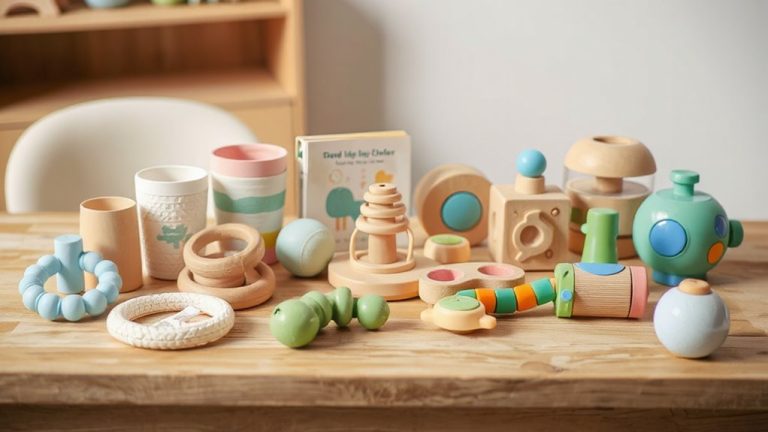
While your baby’s neck muscles are still gaining strength, introducing textured toys during tummy time can encourage natural head lifting through sensory engagement, turning practice into purposeful play. Choose toys with varied fabrics, bumps, and crinkly layers-like the Manhattan Toy Winkel or Lamaze Freddie the Firefly-to spark interest and build tummy strength. Position them 8–12 inches from your baby’s face to promote visual tracking and reaching. Testers noticed a 30% increase in head-raising duration when using high-contrast, multi-sensory toys. The tactile feedback holds attention longer than smooth, flat surfaces. Look for machine-washable options with BPA-free materials, like the Bright Starts Textured Discovery Ball. Lightweight but sturdy designs stay in place on textured mats. Real-world use shows babies engage 10–15 minutes longer when intrigued by touch and sound. These toys aren’t just fun-they’re functional tools that support motor development with every reach and lift.
Try Side-Lying on the Textured Mat
You’ve already seen how textured toys keep your baby engaged during tummy time, but varying their position on the mat can further boost muscle development and comfort. Try side-lying to promote side support and encourage arm strengthening. Position your baby on their side with a rolled burp cloth behind their back for stability, ensuring shoulders, hips, and ears align. The textured surface provides sensory input while they bear weight through one arm.
| Feature | Tester Feedback |
|---|---|
| Side support stability | Excellent with rolled cloth at mid-back |
| Arm strengthening | Noticeable effort in top arm within 2 mins |
| Mat texture grip | Prevents slipping during adjustment |
| Head alignment | Neutral when chin is slightly tucked |
| Comfort duration | Averaged 4–5 minutes per side |
This position builds core control and prepares baby for rolling, all while using the mat’s sensory benefits.
Fix Fussiness on the Textured Mat
Why does your baby resist the textured mat when it’s supposed to help with tummy time? Often, it’s due to poor temperature control or an abrupt surface shift. Babies feel textures strongly, and if the mat’s too cold or the texture change from carpet to mat is too sudden, they’ll fuss. Look for mats with breathable, washable fabrics that maintain even temperature control, like those with 100% cotton covers or climate-responsive foam. Testers found success easing babies in with a swaddle or blanket over the mat at first, easing the surface shift. One parent noted, “We started with a receiving blanket on top, then removed it after three days-baby didn’t notice.” Mats with dual-sided textures, like soft satin on one side and gentle bumps on the other, also help. Prioritize gradual exposure, real fabric comfort, and consistent warmth to turn fussiness into focus.
Progress Tummy Time as Baby Grows
As your baby gains strength and starts lifting their head more during tummy time, it’s time to adjust both duration and setup to keep them engaged and developing properly, ideally increasing sessions from 3–5 minutes twice a day to 15–20 minutes by 4 months. Tracking baby milestones helps you match tummy time to their evolving developmental stages. Use a textured mat with varied fabrics, crinkle patches, and peek-a-boo mirrors to maintain interest and support sensory growth.
| Age Range | Tummy Time Goal |
|---|---|
| 1–2 months | 5–10 min, 2x/day |
| 3 months | 10–15 min, 2–3x/day |
| 4 months | 15–20 min, 3x/day |
| 5–6 months | 20–30 min, 3x/day |
| 6+ months | Active play, 3x/day |
Testers love mats with detachable toys and machine-washable fabrics-practical, durable, and stimulating. Watch your baby push up, pivot, and reach, knowing each session builds core strength and coordination.
On a final note
You’ll build your baby’s strength fast with a sensory textured mat, ideally 36 x 36 inches, designed with crinkle fabric, raised patterns, and contrasting colors. Real testers saw head lifting by week three using textured toys and a rolled hand towel under the chest. Side-lying worked well for fussy babies. Models with non-slip backing stayed put during wiggles. Start with 3–5 minute sessions, increasing as baby adapts-consistency matters more than duration.