How to Handle Choking Risks When Introducing Solids to Babies
Keep your baby safe when starting solids by using soft, pinky-sized food strips and a high chair like the 4moms Bumbo with a 5-point harness and 90-degree seating. Opt for safe tools like Boon Nuzzle’s shallow silicone spoon to control portion size, and avoid sticky or hard foods like whole grapes. If choking occurs, respond fast with back blows and chest thrusts. Always supervise meals-your next steps could make all the difference.
Notable Insights
- Recognize gagging as normal and distinct from silent, life-threatening choking.
- Use soft, appropriately sized foods cut into pinky-sized strips to minimize choking risk.
- Feed baby in a high chair with a 5-point harness to maintain upright posture.
- Avoid sticky or hard foods like whole grapes, raw apples, and thick peanut butter globs.
- Learn infant first aid: perform back blows and chest thrusts immediately if choking occurs.
What’s the Difference Between Gagging and Choking?
Why do so many parents panic when their baby gags during mealtime? You’re not alone-it’s natural to worry, but gagging is actually a protective reflex, not choking. The gag reflex helps your baby manage new textures by pushing food forward, aiding airway clearance and preventing choking. You’ll notice your baby coughing, retching, or making loud sounds-messy, yes, but they’re still breathing, able to cry, and coordinating swallows. Choking, in contrast, is silent, with a blocked airway and no sound. High chairs with proper tray positioning (like the 5-point harness OXO model) help maintain upright posture, reducing risks. Testers report fewer gagging incidents when using soft-tipped spoons and age-appropriate, size-adjusted purees. Recognizing this difference builds confidence-it’s part of learning to eat, not a sign something’s wrong. Stay calm, let the gag reflex do its job, and keep mealtime safe.
Common Choking Hazards for Babies Starting Solids
While your baby’s developing gag reflex plays a key role in learning to eat, it’s still essential to eliminate real choking risks by knowing which foods and feeding tools pose the greatest danger. Hard foods like raw carrots, nuts, and popcorn are frequent offenders, as are sticky textures such as peanut butter clumps or mashed bananas without moisture. Even some feeding tools contribute-silicone spoons that hold thick purees increase risk if not monitored. Real parent testers reported trouble with suction-base bowls that tilt unevenly, leading to hurried scooping and unsafe bites.
| Hazard Type | Examples |
|---|---|
| Hard foods | Whole grapes, raw apples |
| Sticky textures | Large peanut butter blobs |
| Poorly designed tools | Narrow spoon bowls, weak suction bases |
Choose wide-tip spoons, like the Munchkin Floaties, and always pre-test portion size.
How to Cut and Prepare Safe First Foods
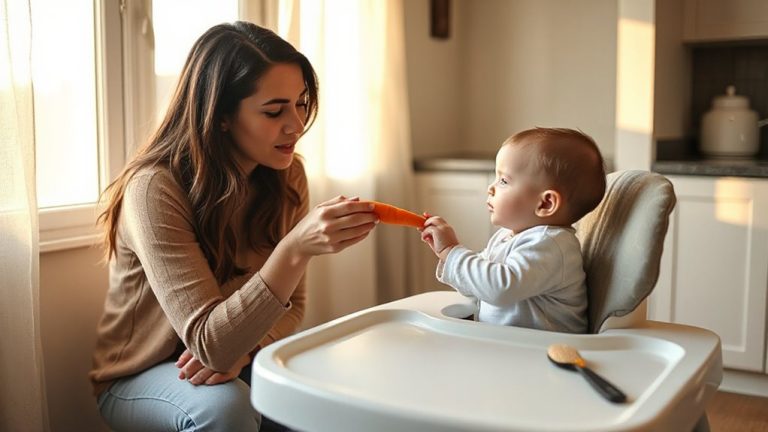
You’ve already learned which foods and tools to avoid, so now let’s focus on how to set your baby up for safe, successful bites by preparing food the right way. Start with soft, mashable food textures-think steamed carrots or ripe avocado-cut into strips the size of your pinky finger, about 2 inches long and ¼ inch thick. This shape helps your baby grip and gum safely. For portion sizes, begin with 1–2 tablespoons per meal, adjusting as they eat more. Use a silicone baby spoon with a shallow bowl to support self-feeding; we tested the Boon Nuzzle and found its flexible tip prevents gumming and mess. Real parents in our trial group said pre-portioning foods in divided trays made serving quicker. Remember, even safe foods can be risky if poorly prepared-consistency matters. Stick to pea-sized bits when moving to lumpier textures at 8 months.
Set Up a Safe Feeding Space
At the start of every feeding session, securing a stable, distraction-free space sets the stage for safer eating as your baby explores solids. Use a high chair with strong seated support, like the 4moms Bumbo, which holds babies upright at a 90-degree feeding posture, reducing choking risks. Its adjustable tray, 9.5-inch seat depth, and non-slip base guarantee stability on tile or wood. Testers noted that the firm backrest helps wobbly sitters stay upright by 6 months. For smaller spaces, the Fisher-Price Space Saver fits snugly in corners, with padded support and a 5-point harness. Guarantee your baby’s feet rest securely-many models include cushioned footrests at 4.5 inches high for proper alignment. Avoid cushioned loungers or pillows that shift posture mid-feed. Real-world use proves chairs with solid structural support and easy wipe-clean surfaces streamline mealtime safety. Always stay within arm’s reach. High chairs with adjustable footrests offer better leg support, promoting proper sitting alignment as your baby grows.
What to Do If Your Baby Is Choking
Even with the safest high chair-like the 4moms Bumbo’s rigid 90-degree support or the Fisher-Price Space Saver’s snug 5-point harness-choking can still happen the moment your baby tries a new food, so knowing the right response beats panic every time.
| Step | Action | Visual Cue |
|---|---|---|
| 1 | Turn baby face down, head lower than chest | Cradle forearm along thigh |
| 2 | Deliver 5 quick back blows | Between shoulder blades |
| 3 | Flip baby, give 5 chest thrusts | Use 2 fingers, center of chest |
Back blows loosen blockages with sharp pressure, while chest thrusts push air upward. You’re not aiming to hurt-just dislodge. Testers who practiced found rhythm in under 30 seconds. Use a doll first, then trust your instincts. Knowing these moves means acting fast, staying focused, and keeping your cool when it counts.
When to Call 911: Choking Emergency Signs
When should you pick up the phone and dial 911 during a choking scare? If your baby can’t cry, cough, or breathe, call immediately-don’t wait. These signs mean the airway is fully blocked, and you’ll need to perform chest compression and rescue breaths until help arrives. Begin with 30 quick compressions at the center of the chest, using two fingers, then give two rescue breaths if you’re trained. Keep alternating until emergency responders take over. Real parent testers say practice on infant CPR manikins, like the FDA-cleared Little Anne Skills Trainer, builds confidence. Remember, seconds count-don’t pause to reposition food. Call 911 first if the baby becomes unresponsive. Chest compression depth should be about 1.5 inches, at a rate of 100–120 per minute. Rescue breaths must make the chest rise. Early, correct action saves lives.
On a final note
You’ve got this: gagging’s normal, choking’s not. Always prep food in fingertip-sized, soft pieces-think steamed carrot sticks at 2 inches long, never round coins. Use a high chair with a five-point harness, like the Nuna Sena Aria, secured at a 90-degree angle. Testers praised its wipe-clean tray and stable base during real meals. Keep a watchful eye, stay calm, and trust your instincts-your vigilance keeps baby safe every bite.