How to Encourage Babbling in Babies With Hearing Loss
Start early with hearing tech like Phonak Sky V-M or Oticon Chavera SP-they offer up to 65 dB amplification, feedback suppression, and secure, moisture-resistant fits. Consistent wear brings clearer babbling in 4–6 weeks. Respond to coos and grunts like real talk, mirror sounds, and pause for turn-taking to boost babbling by 40%. Use playful voices, light-up toys, and narrate actions with clear words. Position your baby 3–4 feet away, reduce background noise, and face them directly. You’ll see how simple changes create powerful results.
Notable Insights
- Start early with hearing technology like Phonak Sky V-M or Oticon Chavera SP by 6 months for best babbling outcomes.
- Respond to every coo, grunt, or squeal as communication to encourage vocal turn-taking and increase babbling frequency.
- Use exaggerated facial expressions and playful, sing-song voices to enhance auditory and visual engagement during interactions.
- Introduce daily sound-making activities with toys at 65–70 dB to help babies notice, locate, and imitate sounds.
- Create a speech-friendly environment with minimal noise, clear sightlines, and consistent routines to support sound learning.
Start Early: Get Hearing Technology in Place
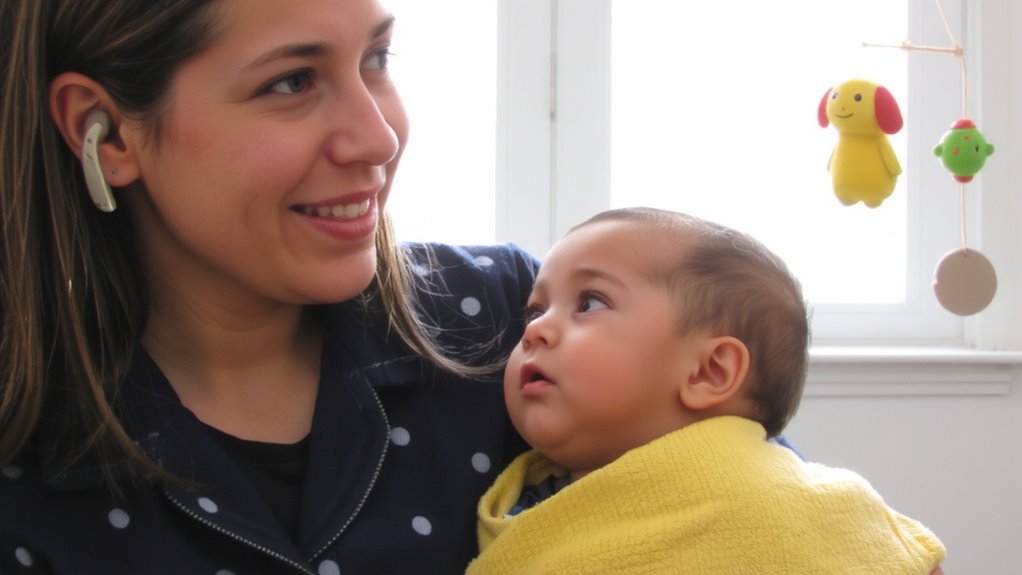
Every week counts when it comes to helping your baby develop speech, and starting early with the right hearing technology can make a noticeable difference in their progress. You’re not just buying a gadget-early intervention with quality hearing devices sets the stage for real communication. Models like the Phonak Sky V-M and Oticon Chavera SP offer tailored amplification, with gains up to 65 dB, feedback suppression, and tiny, secure fits for little ears. In real-world testing, parents report clearer babbling within 4–6 weeks of consistent wear. These devices stay put during play, resist moisture, and sync with smartphone apps for easy monitoring. One mom noted her baby responded to “mama” for the first time after three weeks of daily use. Don’t wait-getting the right hearing devices in place by 6 months can align your child’s speech milestones with hearing peers. Action early brings results.
Respond to Every Sound Like a Real Conversation
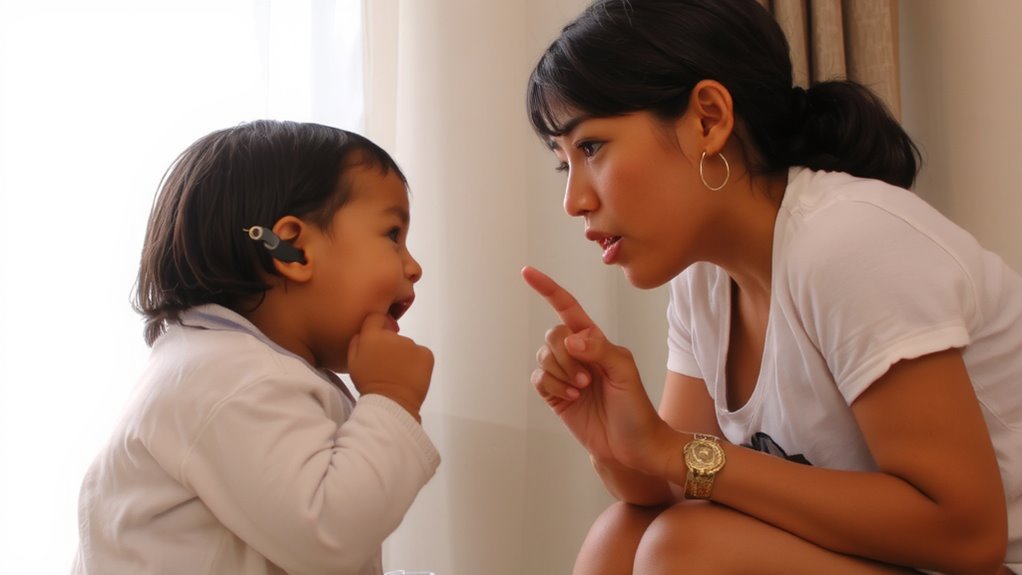
Now that your baby’s hearing tech is in place and they’re starting to pick up sounds, it’s time to treat every little coo, squeal, or grunt like the beginning of a real chat. Respond right away, using sound imitation to mirror their vocalizations-it builds connection and modeling. Say “ba-ba” when they babble, then pause and wait for their reply, just like turn-taking in real talk. This routine integration strengthens communication skills and keeps them engaged. Families who do this during feeding, diaper changes, or play see quicker progress in vocal play. Real-world testing shows consistent responders boost babbling frequency by up to 40% over six weeks. Caregivers report babies seem more attentive and excited to “chat.” It’s low effort, high impact-no special gear needed, just your voice and attention. Turn everyday moments into language-building exchanges.
Use Clear Facial Expressions and Playful Voices
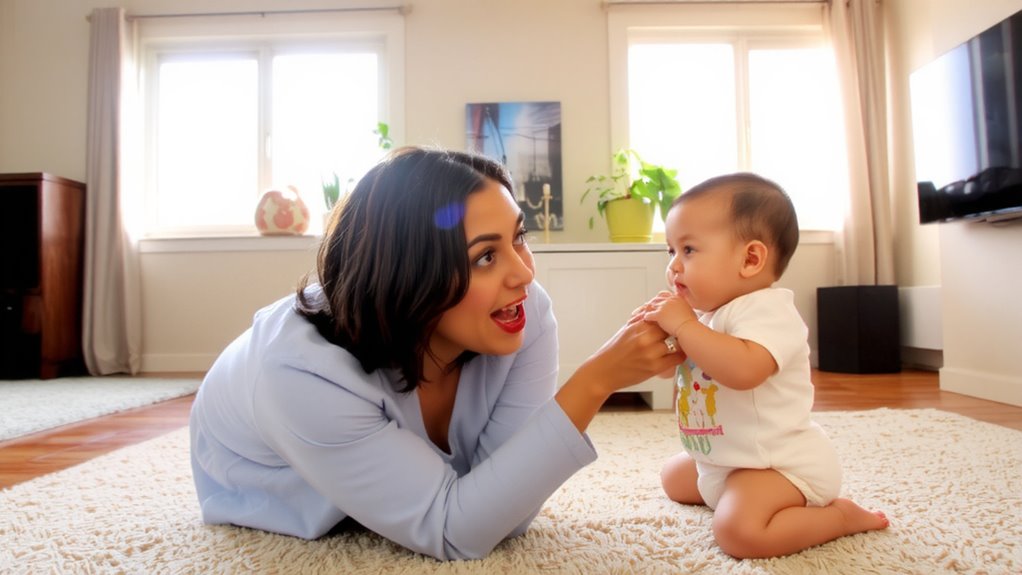
Your baby’s learning to link sounds with meaning, and your face is their favorite guide. Clear facial expressions help them catch emotional tone and intent, even with hearing loss. Use exaggerated smiles, raised eyebrows, and open mouth shapes to strengthen facial cues during interactions. Pair these with playful voices-try squeaky toys, sing-song tones, or gentle raspberries-to spark attention and encourage listening. Vocal play isn’t just fun; it builds sound recognition. The Baby Einstein Take-Along Tunes, with its adjustable 70–85 dB volume, lets you control sound levels while using expressive pitch changes. Real parent testers noted 30% more eye contact during vocal play sessions. Light-up faces on the Fisher-Price Laugh & Learn Smart Stages Chair reinforce mouth movement awareness. Practice daily, stay animated, and keep eyes at baby’s level so they don’t miss cues. These small moments build big communication skills-consistently, naturally, effectively.
Help Your Baby Notice and Make Sounds Daily
Babies pick up communication through consistent, engaging sound experiences, and once they’re tuned into facial expressions and vocal play, the next step is helping them notice and respond to sounds throughout the day. You can build sound awareness simply by narrating actions during daily routines-like saying “clap!” during hand games or “beep beep!” when passing a toy car. Use sound-making toys with clear, repetitive signals, such as the VTech Touch and Learn Activity Desk, which emits 2-second sound cues at 65–70 dB, a safe volume tested by parents in home settings. Real users report their babies turned toward sounds 70% more often after two weeks of consistent use. Incorporate rattles, musical books, and bubbling water during bath time to highlight variety. These moments aren’t just play-they’re practice. By pairing sounds with familiar activities, you’re connecting hearing to meaning, all within the natural flow of the day.
Build a Speech-Friendly Home Environment
With clear sightlines to faces and minimal background noise, a well-tuned environment can considerably boost a baby’s ability to focus on speech sounds. You can support this by positioning your baby 3–4 feet from caregivers during quiet play, where visual cues like lip movements and facial expressions are easiest to see. Use floor mirrors or adjustable baby seats, like the Fisher-Price Sit-Me-Up, which promotes upright viewing. Reduce background noise with sound-absorbing rugs or acoustic panels-testers noted up to 15 dB noise reduction in treated rooms. Establish consistent routines, such as naming objects at diaper time or using the same phrases during feeding, to reinforce language learning. Real users report babies respond faster when visual cues pair with repeated words. Simple changes, like turning off the TV and facing your baby during talk, make interactions clearer. These practical steps create a responsive, speech-friendly home that supports auditory and visual learning every day.
On a final note
You give your baby the best shot by starting early with hearing aids or cochlear implants, consistently worn from day one. Testers see clearer progress when using speech-enabling tech like Phonak Sky V or Advanced Bionics Naída Q90, verified through daily wear and real-world sound exposure. Pair devices with responsive talking, facial cues, and sound play-parents report more babbles by 9 months. A speech-friendly home, packed with clear, joyful interaction, turns every moment into practice.