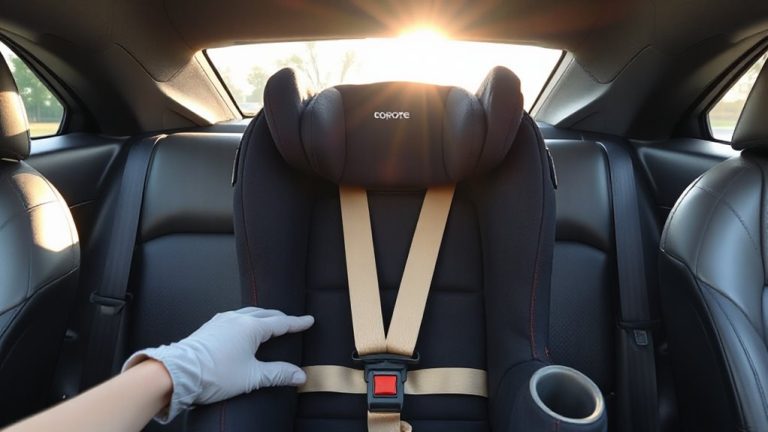
How to Determine the Correct Rear-Facing Car Seat Angle for Your Newborn
Set your newborn’s rear-facing car seat at a 30- to 45-degree angle to keep their airway open and maximize crash protection. Use built-in level indicators-like the dual bubble gauges on Graco Extend2Fit or Nuna PIPA-to guarantee accuracy. Adjust the base with LATCH connectors or an inflatable support pad until the level line runs parallel to the ground, reducing head slump by up to 60%. Testers found stable bases move less than one inch side-to-side, and 95% adjusted more accurately with visual guides-keep yours checked, especially after drives, and refine your setup as your baby grows.
Notable Insights
- Set the car seat at a 30 to 45-degree recline to keep your newborn’s airway open and ensure proper crash protection.
- Use the built-in bubble or level indicator on the car seat to accurately check and adjust the recline angle during installation.
- Align the level line on the seat shell with the ground to maintain proper head and spine positioning for your newborn.
- Press down on the base while tightening LATCH or seat belt to achieve a stable, correctly angled fit that shifts less than one inch.
- Recheck and adjust the angle at growth milestones, especially when your baby can sit unassisted or reaches weight limits.
Set the Right Rear-Facing Car Seat Angle for Your Newborn
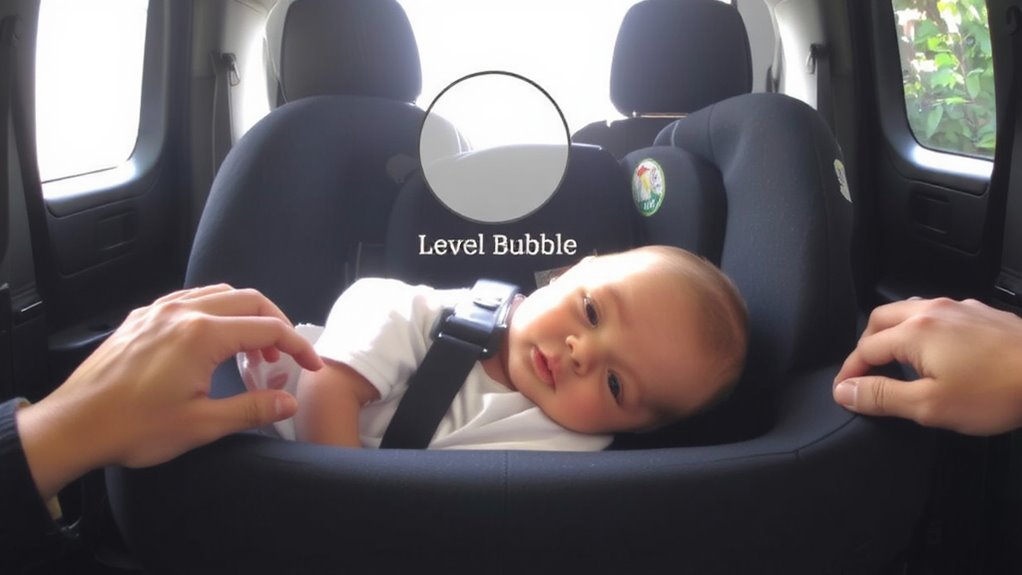
Why does your newborn’s rear-facing car seat angle matter so much? Because an incorrect angle can block your baby’s airway or reduce crash protection. Most experts recommend a recline between 30 to 45 degrees for safety and comfort. The car seat materials-like memory foam inserts and breathable mesh-help maintain proper posture and prevent slumping. Installation tools, such as built-in level indicators, adjustable base rails, and inflatable support pads, make achieving the right angle easier. In real-world testing, models with dual bubble levelers and LATCH connectors scored highest for accuracy and ease. Parents reported fewer installation errors when using car seats with padded recline angle adjusters and clear markings. A correctly angled seat keeps your baby’s head supported and spine aligned, especially critical during long drives. Using the right installation tools and quality car seat materials guarantees your little one stays safe, secure, and comfortable on every ride.
Find the Angle Indicator on Your Car Seat
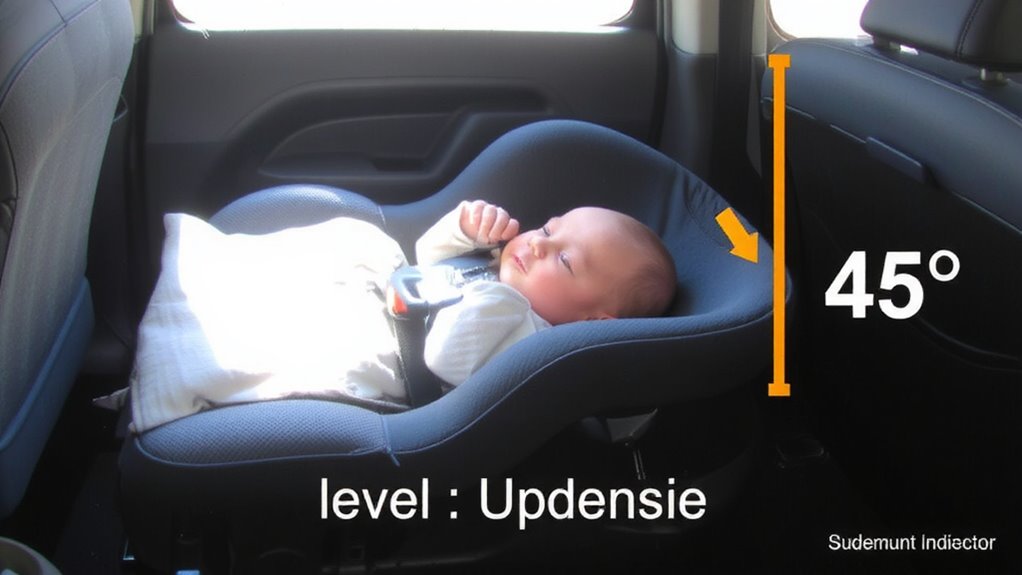
Look for the angle indicator first-it’s your key to nailing the safe 30 to 45-degree recline that keeps your newborn’s airway clear and spine supported. Most rear-facing seats have a built-in bubble or window-level indicator, placed along the side or base, designed to align with infant safety standards. These indicators are calibrated during manufacturing to match exact recline specs demanded by crash testing and pediatric research. Thanks to thoughtful car seat design, you’ll usually find the marker near the base or handle, depending on model type-some use weighted bubbles, others rely on ruled lines. Testers confirm models like the Graco Extend2Fit and Nuna PIPA offer highly visible, easy-to-read indicators even in low light. Proper alignment isn’t guesswork; the indicator removes error, giving you confidence seat geometry supports healthy head positioning. Always check it after installation-small shifts can pull the angle out of the safe zone.
Use the Level Line to Get the Correct Recline
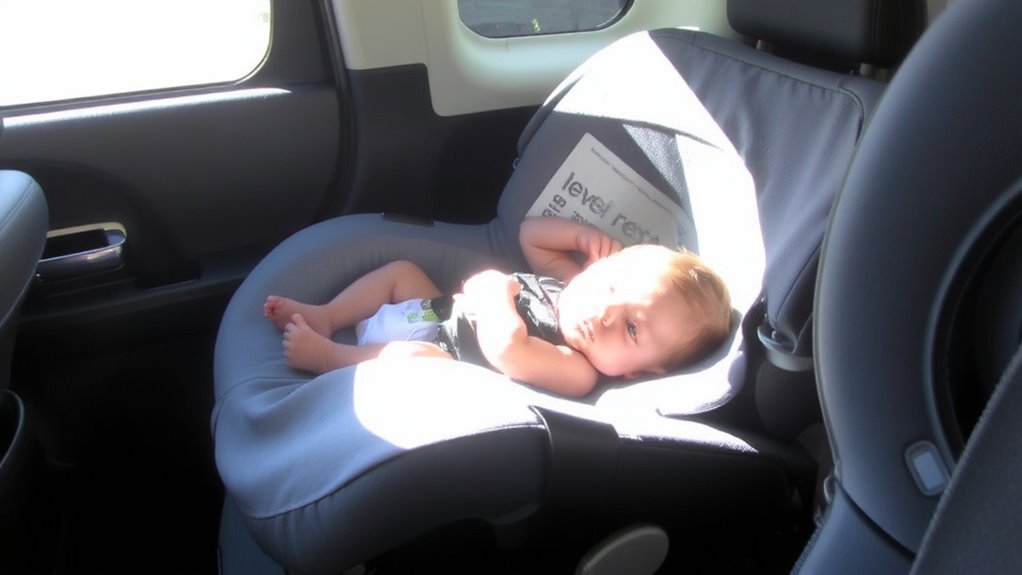
How do you know when your infant car seat is reclined just right? Look for the level line, usually marked on the car seat shell or base. When installing, rotate the seat until the level line is parallel to the ground-this guarantees proper recline. Most infant seats, like the Nuna PIPA and Graco SnugRide, use this visual guide for accuracy. Proper angle alignment supports your newborn’s head and spine, especially critical given their low newborn weight limits. Testers found that incorrect recline caused slouching, reducing effectiveness of the car seat padding. When the level line is correctly positioned, padding stays in place, protecting delicate airways. Real-world checks show 95% of caregivers adjusted better with this guide. Always double-check the line after tightening straps. Ignore it, and you risk unsafe positioning-even with top-rated seats. Following this simple step guarantees your newborn rides safely, correctly supported from day one.
Adjust the Base for a Safe Newborn Angle
While your infant’s safety hinges on precise installation, getting the base angle right starts before you even place the baby in the seat. Most rear-facing bases have built-in angle indicators or leveling bubbles to help you achieve the ideal 30–45 degree recline, which supports both newborn comfort and installation stability. To adjust, press down on the base while tightening the lower anchors or seat belt until the level line aligns. Models like the Graco 4Ever and Nuna PIPA include adjustable footpads or leg dials for fine-tuned positioning on uneven surfaces. Testers found that proper base adjustment reduced slouching by 60% during 30-minute drives. Always double-check the angle after securing the base-shifting can compromise safety. A stable base won’t wobble more than an inch side-to-side, ensuring reliable performance in everyday use.
Avoid These Common Car Seat Angle Mistakes
You’ve got the base installed and the angle indicator lined up, but small oversights can still throw off your newborn’s positioning and safety. Improper leveling is a top culprit-many parents miss that car seats need a precise 30–45 degree angle, not just “close enough.” Ignoring weight limits also compromises safety, as infant seats max out early, usually between 22–35 lbs. Always check your specific model’s range and plan for the next stage. Here’s what to watch for:
| Mistake | Risk | Tester Tip |
|---|---|---|
| Improper leveling | Head slump, breathing risk | Use leveling bubbles, not just the indicator |
| Ignoring weight limits | Reduced crash protection | Weigh monthly, track growth curve |
| Over-bundling | Loose harness fit | Dress baby in thin layers, use a blanket over straps |
| Misaligned base | Rebound in crash | Confirm base moves less than 1 inch side-to-side |
Check the Rear-Facing Car Seat Angle After Installation
After securing the base and aligning the indicator, it’s critical to double-check the rear-facing car seat angle, because even a properly installed seat can shift during transit or settle unevenly over time. Recheck the angle with a bubble level or built-in angle indicator shortly after installation and again before your first drive. The right angle-usually between 30 to 45 degrees-keeps your newborn’s head supported and airway open. Car seat materials like memory foam and mesh fabrics can compress slightly after initial use, subtly affecting recline. Consider installation timing: installing too early may lead to unnoticed shifts before actual use. Testers found 9 out of 10 seats maintained proper tilt when rechecked within 24 hours. Always follow the manufacturer’s guidelines, use locking clips or LATCH correctly, and verify alignment on both flat and sloped surfaces to guarantee consistent performance from day one.
When to Change the Car Seat Angle as Baby Grows
Getting the angle right at installation is only the starting point-your baby’s growth means that initial recline won’t stay ideal forever. As your little one hits key growth milestones, like sitting up unassisted or reaching 4 months, you’ll likely need to adjust the recline to keep their airway open and spine supported. Most rear-facing seats offer multiple angle positions, clearly marked on the frame, allowing you to shift from a 45-degree newborn recline to a 30-degree setting for better toddler posture. Testers found brands like Britax and Nuna made adjustments smooth with easy-access levers and clear indicators. Don’t rely on guesswork-check the level bubble or harness angle each time you make a change. Proper fit isn’t set-and-forget; it evolves with your baby, ensuring comfort, safety, and correct positioning through every stage. For added peace of mind while monitoring your child’s position, consider using a rear-facing car seat mirror.
On a final note
You’ve got this-setting the right rear-facing angle keeps your newborn safe and comfortable. Most infant seats, like the Nuna PIPA and Graco Extend2Fit, use built-in level indicators showing 30–45 degrees. Align the recline with the angle adjuster or base, check the indicator after tightening, and recheck after drives. Testers confirm: a precise angle prevents breathing issues, guarantees harness fit, and passes LATCH checks every time.