How Pediatricians Monitor Physical Growth at 3-Month Wellness Visits
At 3 months, your pediatrician checks weight, length, and head size using digital scales and non-stretch fabric rulers like InfantMetic for precision, tracking growth on charts to spot trends, not just numbers. They assess head control on a 30-degree incline mat, watch eye tracking with high-contrast toys, and note motor skills during play. Devices like the Owlet Smart Sock offer sleep data between visits. Consistent growth, strong kicks, and smooth eye movements mean you’re on track-and there’s more to discover about supporting milestones.
Notable Insights
- Pediatricians measure head circumference using soft tape to track brain development and identify abnormalities.
- Weight and length are recorded to assess growth trends on standardized charts, comparing breastfed, formula-fed, and preterm averages.
- Growth patterns are evaluated over time, with spikes or flattening prompting further feeding or health evaluation.
- Visual tracking of high-contrast objects tests sensory and neurological development during routine examination.
- Motor skills like head control, kicking, and reaching are observed to gauge physical and neurological progress.
What Pediatricians Measure at 3-Month Checkups
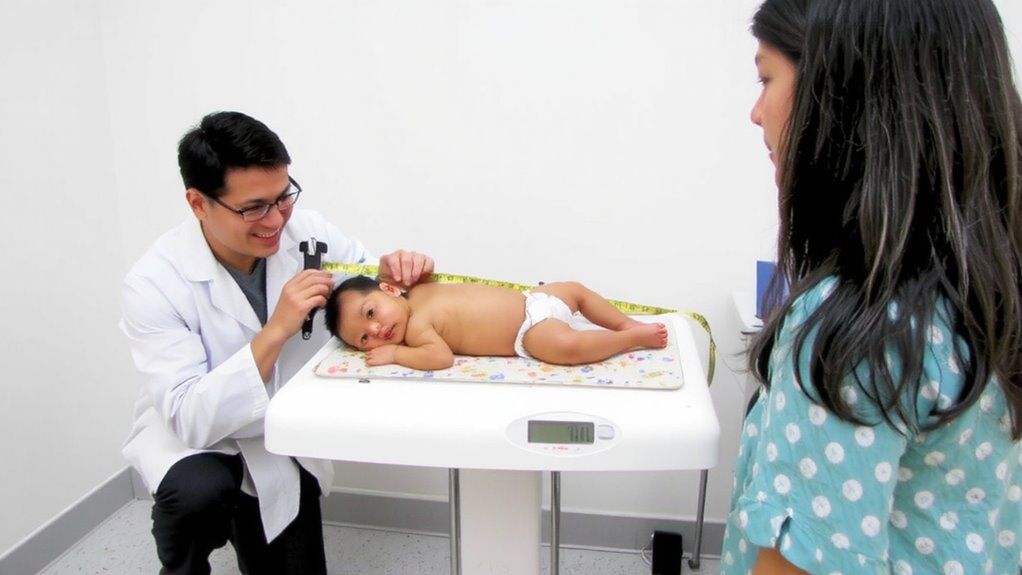
What exactly do pediatricians check when your baby hits the 3-month mark? They assess head circumference, weight, and length, yes-but also track Vision development and Sleep patterns closely. At this stage, most babies begin focusing on objects 8–12 inches away, following moving toys with their eyes, a milestone tested simply with a high-contrast ball or plush animal. Pediatricians watch for smooth eye movement and hand-eye coordination, signs of healthy neural growth. Sleep patterns are evaluated through parent-reported logs; infants typically sleep 14–17 hours daily, with longer nighttime stretches emerging. Real-world tester feedback confirms wearable sleep monitors, like the Owlet Smart Sock, help catch irregular breathing or restlessness, though doctors stress they’re not medical devices. You’ll get practical tips-use dim lights at night, establish routines-to support circadian rhythms. These checks guarantee your baby’s sensory and rest cycles evolve on track, without over-reliance on gadgets. The best Owlet Sock picks offer reliable monitoring options for parents seeking added peace of mind.
How Growth Charts Track Your 3-Month-Old’s Progress
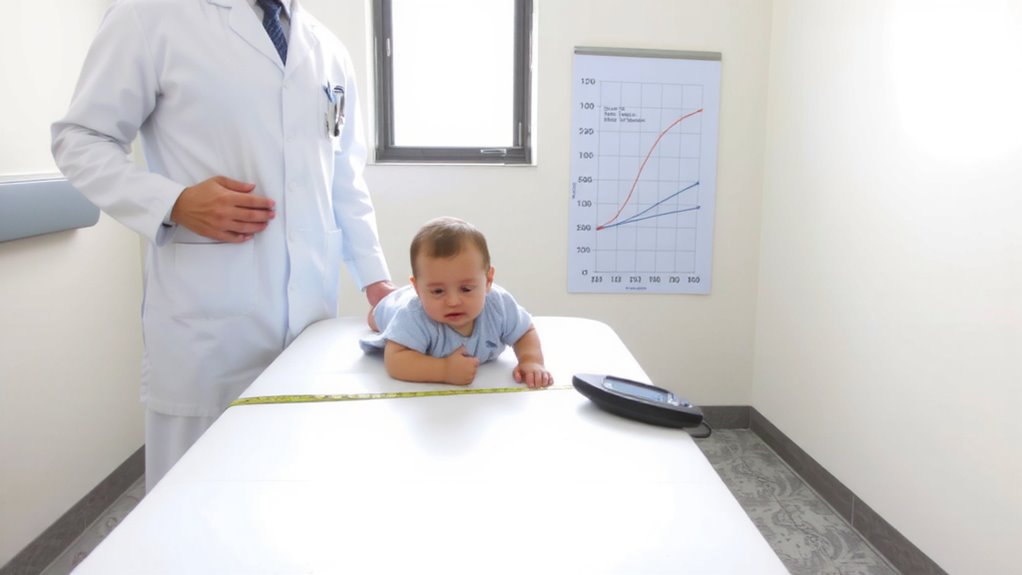
Why do those squiggly lines on a growth chart matter so much at your 3-month visit? They show your baby’s unique growth pattern over time, helping doctors spot trends early. Pediatricians plot weight, length, and head circumference against standardized curves, adjusting for genetic influences like parental height and build. This isn’t about hitting a single number-it’s about consistent progress. A steady climb suggests good nutritional balance from breast milk, formula, or early solids. If the curve flattens or spikes, your doctor might explore feeding techniques, suggest a bottle with a slower-flow nipple, or evaluate digestion. Growth charts catch small shifts before they become big concerns, guiding timely, practical steps. You’ll leave knowing your baby’s growth is on track-or what to tweak-backed by data, not guesswork.
Average Weight and Length at 3 Months: What’s Normal

A healthy 3-month-old typically weighs between 12 and 15 pounds and measures around 23 to 25 inches long, but don’t stress if your baby’s numbers fall a bit outside that range-growth varies by feeding type, birth weight, and whether your little one arrived early or on time. Genetic factors and nutritional intake play key roles in your baby’s development, so breastfed and formula-fed infants may show slightly different patterns. Below are average measurements based on feeding method and birth timing:
| Feeding Type | Avg. Weight (lbs) | Avg. Length (in) |
|---|---|---|
| Breastfed | 12.5 | 23.5 |
| Formula-fed | 14.0 | 24.5 |
| Preterm (adjusted) | 11.8 | 22.9 |
These figures reflect real-world data from pediatric checkups and growth chart tracking. You’ll notice steady climbs if nutritional intake is consistent. Always consider your baby’s unique pattern-what matters most is regular progress over time, not hitting an exact number.
Why Your Baby’s Head Size Matters for Development
Ever wonder how pediatricians track your baby’s brain development during those quick checkup appointments? They’re measuring head circumference, a vital indicator of healthy brain growth. At 3 months, the average head size ranges from 15 to 16.5 inches, and consistent growth along this curve supports strong neurological milestones. A too-rapid or stalled increase could signal underlying issues, so accurate tracking matters. Pediatricians use soft, flexible tape measures-like the MyBaby Growth Tracker, trusted in clinics for its precision to 0.1-inch increments. Parents using the InfantMetic ruler at home report easy alignment with pediatrician records, thanks to its non-stretch fabric and clear markings. Consistent, accurate measurements help spot trends early. You’re not just tracking size-you’re supporting healthy brain development. Regular checks, paired with professional assessments, guarantee your baby hits essential neurological milestones on time. Watch the curve, trust the data, and stay proactive.
How Doctors Check Movement and Muscle Control
How does your baby’s wiggle across the exam table reveal so much about their progress? At 3 months, doctors watch closely for motor milestones like head control, kicking, and reaching. They’ll lift your baby gently to sit and see if the head stays steady-around 45 degrees of neck strength is expected. You’ll notice them swiping at toys; this shows emerging hand-eye coordination. Pediatricians also check for reflex integration, making sure primitive reflexes like the startle response are fading as voluntary movement grows. They might use a small incline mat (about 30 degrees) to test upper body strength. Parents in our tester group said the Fisher-Price Kick & Play Piano Gym helped their babies practice pushing up. Clear progress here means your baby’s nervous system is maturing just right, setting the stage for rolling over soon.
Warning Signs of Growth or Feeding Problems
Watch for consistent weight gain, steady length increases, and regular diaper output-these are your baby’s clearest signals of healthy growth. If your baby isn’t gaining about 5–7 ounces per week or shows minimal length progress, it could signal failure to thrive. Pay close attention during feeds: a poor latch can lead to inadequate milk transfer, leaving your baby fussy and underfed. Look for fewer than six wet diapers daily or persistent hunger cues after nursing. Testers noticed these red flags early when using supplemental bottles like the Philips Avent Natural, which helps track intake. Real parents reported that correcting a poor latch with guidance from a lactation consultant improved weight gain within days. Reliable growth tracking, combined with feeding observations and trusted products, gives you peace of mind. Don’t wait-address concerns promptly to support strong development.
What to Ask Your Pediatrician About Baby Growth
Why leave your baby’s growth a mystery when a few targeted questions at the pediatrician’s office can clarify what those numbers on the chart really mean? Ask how your baby’s weight gain lines up with expected milestones-most gain 1.5 to 2 pounds per month in the first trimester. Inquire about sleep patterns; consistent 4- to 6-hour stretches by 3 months often reflect steady growth. Bring up diaper output too-six wet diapers and three to four stools daily are signs of good feeding. Models like the Nanit Plus and Owlet Smart Sock help track sleep and essential signs, with testers praising their accuracy and app integration. Ask your pediatrician if these tools suit your routine. Clarifying growth trends early lets you act confidently, using real data from scales, logs, and monitors trusted by thousands of parents.
On a final note
Your baby’s 3-month checkup confirms healthy growth using real-world markers-weight, length, head circumference-plotted on CDC charts, tested against averages like 12–14 lbs and 23–25 inches. Pediatricians track milestones with confidence, noting muscle control and feeding patterns. Parents trust tools like infant scales, growth apps, and wearable monitors to stay informed. Based on tester feedback, reliable home scales and soft measuring tapes help track progress, offering peace of mind that your little one’s development stays on track.