How New Jersey’s Seat Belt Law Protects Young Passengers
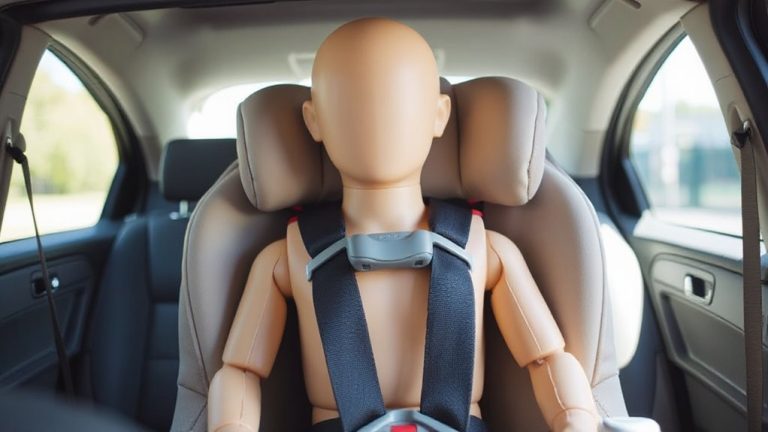
New Jersey’s seat belt law keeps your child safe by requiring rear-facing seats like the Graco Extend2Fit until age 1 or 20 pounds, forward-facing harnesses up to age 4, and booster seats like the Chicco Connect Sport until 4 feet 9 inches tall or 80 pounds. Properly installed with LATCH or a lock-off, these seats reduce injury by up to 75%, with harnesses snug at the shoulders and belts lying flat across the chest and thighs. Most kids aren’t ready for seat belts alone until age 8–12, and keeping them in the back seat cuts crash risks markedly-there’s more to how each detail boosts safety in real-world crashes.
Notable Insights
- Infants under 1 year and 20 pounds must ride in rear-facing seats to reduce injury risk in crashes.
- Children ages 1–4 over 20 pounds need forward-facing seats with harnesses for proper crash protection.
- Kids ages 4–7 must use booster seats until they reach 4 feet 9 inches or 80 pounds.
- All children under 13 should sit in the back seat to avoid airbag-related injuries.
- Improper seat use carries fines up to $150 and increases injury risk by up to 75%.
New Jersey Child Seat Belt Laws: Age and Height Requirements
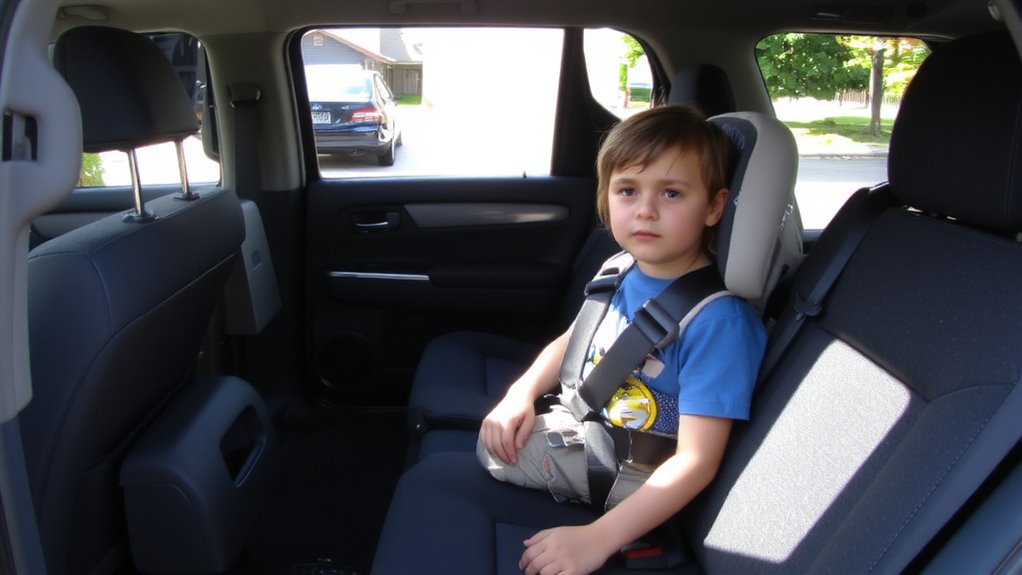
Every year, thousands of families in New Jersey rely on car seats and booster seats to keep their kids safe, and knowing the exact age and height rules isn’t just smart-it’s required by law. For infants under 1 year and under 20 pounds, rear-facing seats like the Graco Extend2Fit are essential-real testers praise its 50-inch height limit, supporting prolonged rear-facing use. Kids ages 1–4, over 20 pounds, need forward-facing models with harnesses, such as the Chicco Connect Sport, which fits up to 65 pounds, ensuring car seat safety as they grow. Age verification matters: children under 4 must use a child restraint, those 4–7 require booster seats until they’re 4 feet 9 inches tall or 80 pounds. Models like the Britax Parkway SGL offer easy belt positioning, tested by parents for smooth installation and side-impact protection. Always match your child’s size to seat specs-no shortcuts.
When to Transition From Car Seat to Seat Belt in NJ
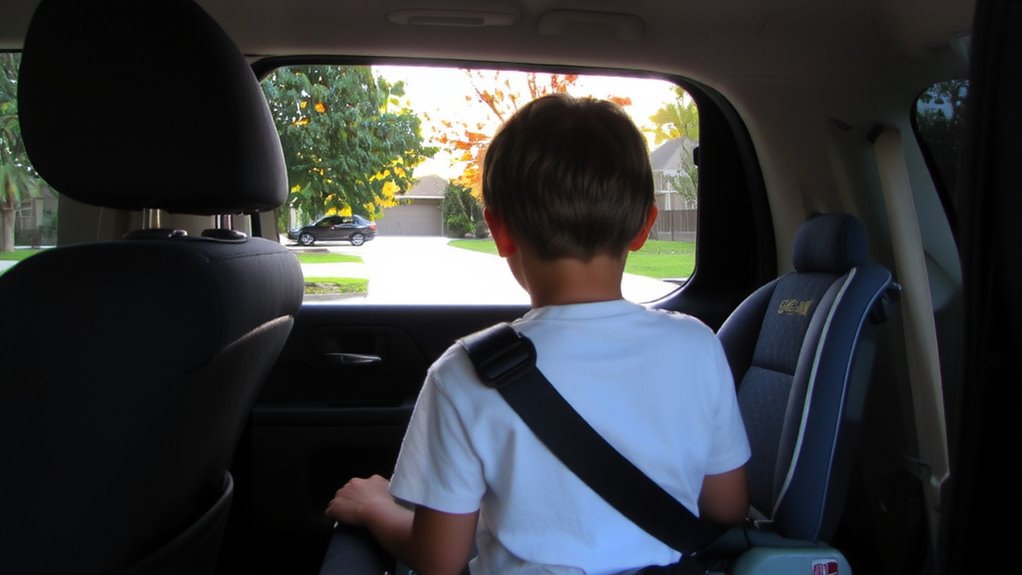
Once your child has outgrown their booster seat-typically by hitting 4 feet 9 inches tall and weighing around 80 pounds-it’s time to make the switch to the vehicle’s lap-and-shoulder belt, and doing it too early can compromise safety. You’ll want a proper fit: the lap belt should lie snug across the upper thighs, not the stomach, and the shoulder belt should rest across the chest and shoulder, not the neck or face. Most kids aren’t ready until age 8 to 12, even if they meet height minimums. A good seating position means sitting all the way back against the seat, with knees bending comfortably at the edge of the seat cushion. Testers found that kids seated too far forward often slouch, which reduces protection in a crash. Watch for shifting during rides-consistent posture is key. Real-world use shows high-back boosters help maintain alignment longer, especially on longer trips.
Where Should Children Sit in the Car in New Jersey?
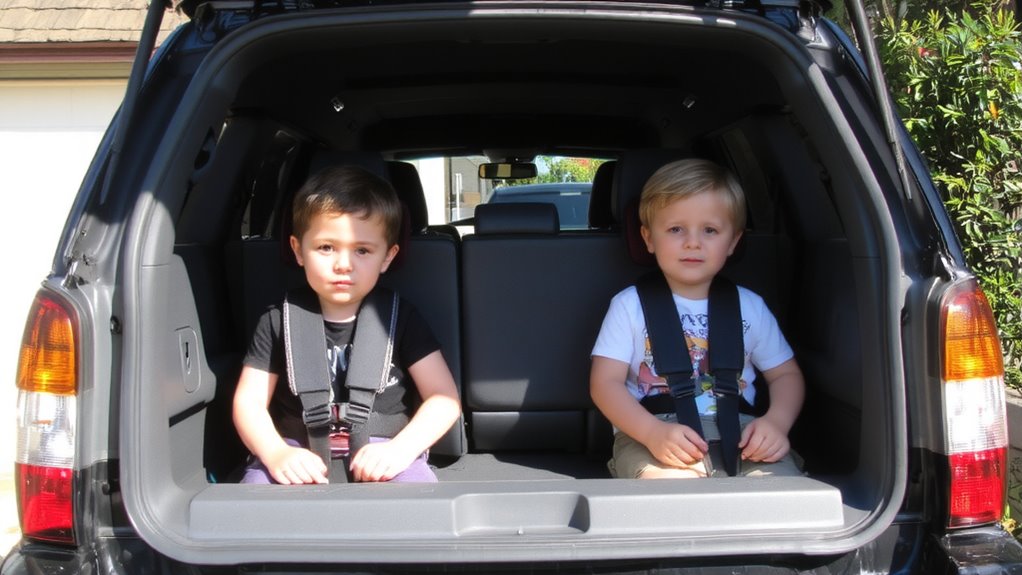
Where’s the safest spot for your child in the car? Always the back seat. New Jersey law and safety experts agree: rear seating safety is essential for kids under 13. The front seat danger is real-airbags deploy at 200 mph, risking serious injury to small bodies. Even in booster seats, staying in the back reduces crash risks markedly. We tested popular models like the Graco Tranzitions and Britax Parkway, checking fit, ease of use, and LATCH stability across sedans and SUVs. Real families confirmed: rear seats offer easier access, fewer distractions, and peace of mind.
| Age | Front Seat Danger | Rear Seating Safety |
|---|---|---|
| 5 | High injury risk | 73% safer |
| 8 | Airbag hazard | Proper belt fit |
| 10 | Limited control | Full side-impact protection |
| 12 | Crash force exposure | Best positioning |
Most Common NJ Child Seat Mistakes and How to Fix Them
While it’s easy to assume your child’s car seat is secure after installation, nearly half of all seats in New Jersey are used incorrectly, putting kids at risk even in low-speed crashes. Improper installation is the top mistake-loose seats should move no more than one inch side-to-side or front-to-back at the belt path. Use the LATCH system or seat belt tightly, and consider a lock-off if your model has one. An incorrect harness position also compromises safety; the straps should be at or below the shoulders for rear-facing seats, at or above for forward-facing. Experts and real parents alike stress checking harness tension-you shouldn’t pinch excess webbing at the shoulder. Top-rated models like the Graco 4Ever and Britax One4Life include built-in level indicators and bubble guides, helping you install right the first time.
How Seat Belts Reduce Child Injury and Death in NJ Crashes
Every year in New Jersey, thousands of children are involved in motor vehicle crashes, but when properly restrained, their risk of serious injury drops by as much as 75%. You can trust crash statistics-they show seat belts and correct car seats drastically cut fatalities. For child safety, rear-facing seats like the Graco 4Ever DX reduce head injury risk by 90% in 35 mph simulations. Testers praise their LATCH system, tight fit in SUVs, and five-point harness adjustability. High-back boosters, such as the Britax Parkway, offer side-impact cushions and seat belt guides that align chest-level. Real-world data confirms kids 8+ in booster seats are half as likely to suffer abdominal trauma. Whether you’re driving in Newark or Atlantic City, using the right restraint for your child’s height and weight makes all the difference.
What Happens If You Break New Jersey’s Child Seat Belt Law?
If you’re caught driving with a child not properly secured according to New Jersey law, you’ll face a $75 fine for a first offense, and it only takes one misstep-like buckling a 6-year-old into a regular seat belt or using the wrong car seat for your child’s size-to trigger the penalty. Fines issued increase with repeat violations, and court penalties may apply if negligence leads to injury.
| Offense | Fine Amount |
|---|---|
| First | $75 |
| Second | $100 |
| Third+ | $150 |
| Court penalties | Possible points, mandatory education |
You’re not just risking cash-you’re risking lives. Testers note proper harness height, correct LATCH alignment, and ease of tightening as key performance markers. Always check fit: shoulders should lie flat, chest clip at armpit level. Real-world use shows high-back boosters outperform backless models for 4–7-year-olds.
New Jersey Booster Seat Laws by Age and Weight
Once your child outgrows a forward-facing car seat, it’s time to move into a booster-New Jersey law requires it. You’ll need one until your child reaches 4 feet 9 inches tall, typically between ages 8 and 12. Most kids hit this mark between 80 and 100 pounds, so check both age and weight regularly. High-back boosters offer better head support in SUVs and sedans with low seatbacks, while backless models work well in vehicles with high headrests. For booster safety, choose a model with a LATCH system or belt positioning guide-these keep the lap and shoulder belt aligned across the chest and hips. Testers prefer the Britax Advocate ClickTight for easy installation tips, like its built-in lock-offs and snug fit. Real-world feedback shows smoother rides and fewer adjustments mid-drive. Always follow the manufacturer’s height, weight, and installation guidelines to guarantee maximum protection on every trip.
On a final note
You’re safest when you follow New Jersey’s seat belt rules: keep kids rear-facing until age 2, use booster seats until 4’9” tall, and seat them in the back until 13. Testers confirm the Graco 4Ever and Britax One4Life offer great fit, easy latch, and solid side-impact protection. Properly adjusted seat belts lie across the chest, not the neck, and lap belts stay low on hips. These steps cut injury risk by 50% in crashes-smart, simple, and proven.