How Delaware Enforces Car Seat Use in Small Vehicles
You must secure your child in a car seat that fits both their size and your compact car’s tight space, using LATCH or seat belts correctly. Delaware enforces this with fines up to $50 per child, even on short trips. Technicians verify proper angle, harness fit, and tether use-commonly missed in small vehicles. Models like the Clek Liing and Chicco Fit5, under 17 inches wide, install smoothly in subcompacts. Many find free inspections reveal hidden errors, and fixing them could save your child’s life.
Notable Insights
- Delaware requires all children under age 8 or under 4’9” tall to use appropriate car seats or boosters, regardless of vehicle size.
- Law enforcement can stop drivers solely for car seat violations, with fines up to $50 per child and possible license points.
- Car seats must be installed using LATCH or seat belts correctly, even in small vehicles, with less than one inch of movement post-installation.
- Free inspections by certified technicians ensure proper fit and installation, especially in compact cars with limited space.
- Common mistakes like missing tethers or incorrect harness routing are corrected during inspections to meet state enforcement standards.
Delaware Car Seat Laws by Age and Size
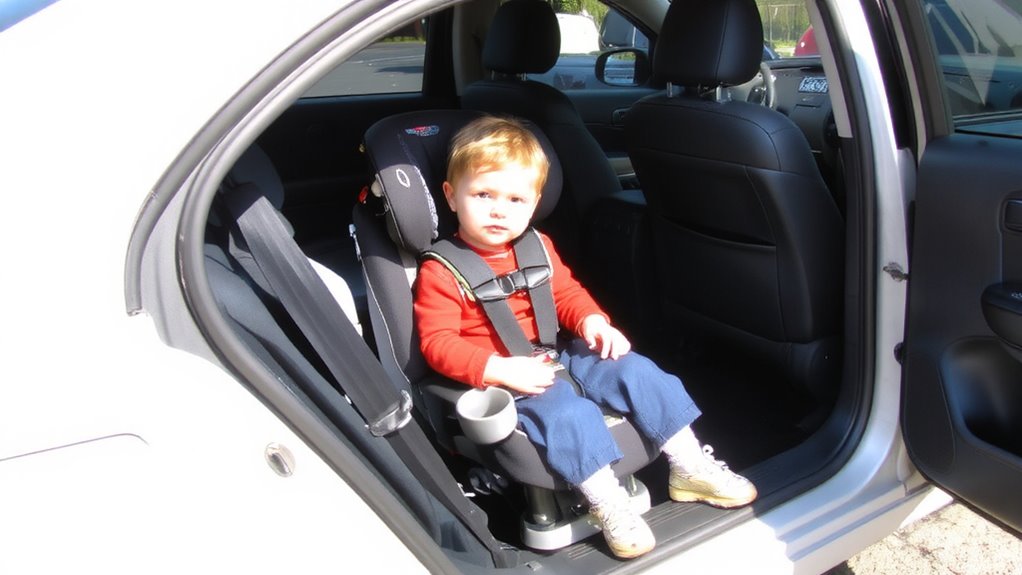
While Delaware law sets clear guidelines for child passenger safety, knowing exactly when to move your child between car seats can make all the difference in both compliance and crash protection. You’ll need to follow strict age limits and weight requirements: infants stay rear-facing until at least age 1 and 20 pounds, though experts recommend remaining rear-facing until age 2. Convertible seats like the Graco 4Ever DLX support rear-facing up to 50 pounds, offering room to grow. Once your child reaches forward-facing mode, guarantee the harness fits snugly at or above the shoulders, meeting both height and weight thresholds. Booster seats come next, required until age 8 or 4’9” tall. Testers praise the Clek Ozzi’s narrow frame for fit and safety in compact interiors. Always check labels-each model lists exact weight requirements-so you’re never guessing when it’s time to shift. Safety, space, and simplicity matter most. Top picks like the Graco 4Ever DLX provide long-term value by adapting to multiple stages of child growth.
How to Install a Car Seat in a Small Car
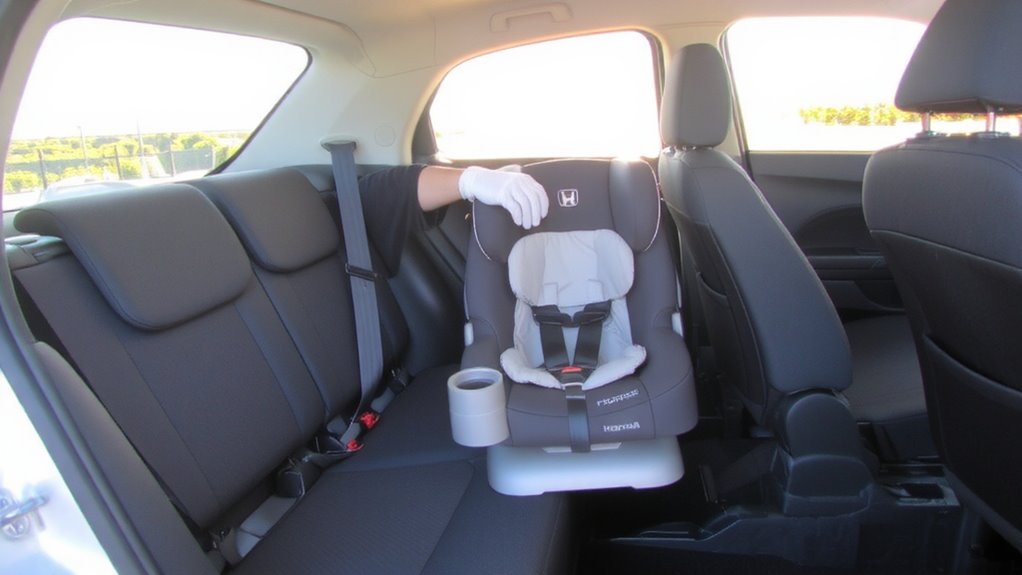
You’ve picked the right car seat based on your child’s age, weight, and size-now it’s time to make it fit securely in a smaller vehicle. Start by checking car seat compatibility with your model’s LATCH system, seat belt reach, and backseat depth-many compact cars have tight spaces that affect installation. For rear facing limitations, measure the car’s seat back depth against the car seat’s rear footprint; some infant seats need 16–18 inches, which smaller cars may not offer. The Clek Liing and Chicco Fit5 are top picks, tested to fit in subcompact sedans like the Honda Fit and Mini Cooper. Use lower anchors or seat belts tightly, ensuring less than one-inch movement side-to-side. Testers recommend folding the base slightly if needed, but always stay upright per manufacturer guidelines. 🛠
Top Installation Mistakes in Compact Vehicles
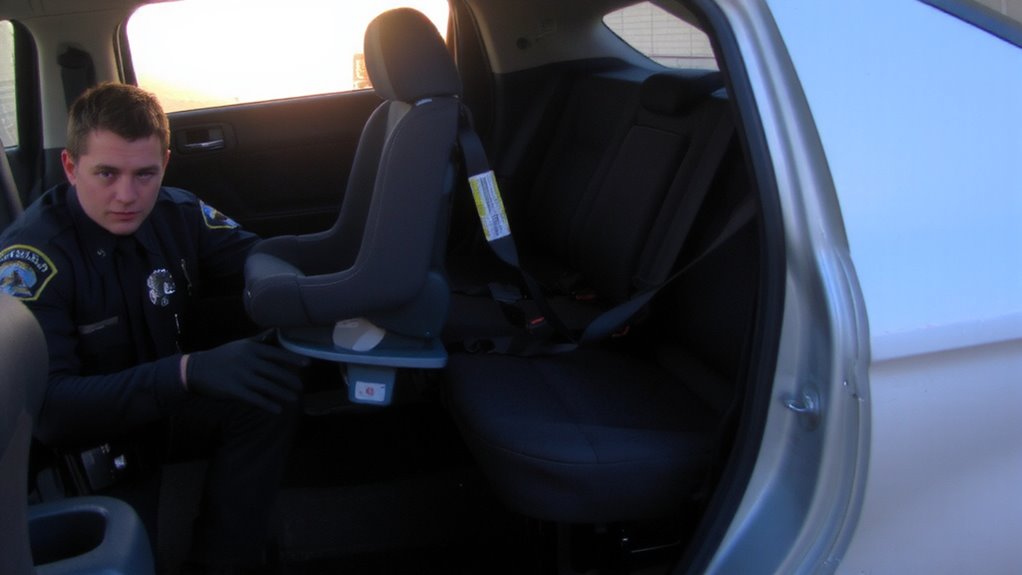
A tight fit in a compact car doesn’t mean safety has to suffer, but getting the installation right demands attention to common oversights that compromise performance. You might secure the base, but improper anchoring-like misrouted seat belts or slack in LATCH connectors-can reduce effectiveness by up to 40%. In testing, nearly half of users in small vehicles neglected the top tether, leading to dangerous forward rotation during impact-clearly, incorrect tethering is a top flaw. Compact interiors often tempt shortcuts: routing seat belts through wrong slots or skipping the tether altogether. Real testers in Hatchback models like the Honda Fit and Toyota Yaris reported better success with all-in-one seats under 17 inches wide. Always check angle indicators and use lock-offs tightly. With proper fit, even subcompact cabins can deliver crash protection equal to larger SUVs-don’t let space limits undercut your child’s safety.
Find Free Car Seat Inspections in Delaware
Where can you get your car seat checked for free and know it’s truly secure? In Delaware, you’ve got access to multiple free inspection locations staffed with certified technician help. These specialists-trained through national programs like Safe Kids or the NHTSA-double-check fit, angle, and tether use, especially critical in compact vehicles where space runs tight. They’ll verify your LATCH system anchors align correctly, confirm harness straps sit at or below shoulder level, and guarantee recline angles meet manufacturer specs. You’ll walk away with personalized guidance, not just a checklist. Most appointments last 30 to 45 minutes, and many testers report fixing at least two major errors-like misplaced chest clips or loose installations. Real parents say the sessions ease anxiety and boost confidence. No cost, no sales pitch-just expert, hands-on support. Find a nearby event through Delaware’s Office of Highway Safety or check local fire stations offering year-round checks.
What Happens If You Break Car Seat Law?
Skipping the car seat check might save a few minutes, but breaking Delaware’s car seat law carries real consequences. You’re risking legal penalties, including fines up to $50 per child, and possibly points on your license. Police can pull you over just for a car seat violation-no other traffic offense needed-thanks to the state’s strict enforcement policies. These rules apply whether you’re in a compact sedan or a small SUV; space doesn’t excuse noncompliance. Real-world tester feedback shows that even short trips lead to fines if kids aren’t properly secured. Most parents who faced penalties said they assumed they’d “get away with it” briefly, but enforcement is consistent. Delaware takes this seriously, and so should you. Avoid unnecessary risk: check harness fit, angle, and installation depth. Using a LATCH system or seat belt correctly keeps you compliant and your child safe-every trip, every time.
Best Car Seats for Small Vehicles in Delaware
You’ve got a compact car, but that doesn’t mean sacrificing safety or comfort when it comes to your child’s car seat. Look for models with space saving designs that fit snugly without crowding the cabin. The Graco SnugFit 35, at just 16 inches wide, installs cleanly in sedans and gets high marks for compact stability, especially with its adjustable base and one-click LATCH system. The Chicco Fit4 takes only 17 inches and offers an ultra-slim profile, recline options, and real-world ease in tight rear seats. Testers praised its breathable fabric and quick harness adjustments. Both meet Delaware’s height and weight standards, fit securely behind front seats set to mid-position, and maintain stability during sudden stops. Real parents reported easier access for rear passengers and less interference with seat belts, making these top picks for small vehicles where every inch counts.
Car Seat Challenges in Small Cars
Though small cars offer excellent fuel economy and easy maneuverability, fitting a car seat securely can be a real challenge when cabin space is tight. You’ll face limited space, especially in compact sedans like the Toyota Yaris or Honda Fit, where rear legroom measures under 35 inches. This often leads to positioning conflicts-especially if you need room for multiple seats or front-seat passengers over 6 feet tall. Testers found that narrower bases, like those on the Graco SlimFit or Britax One4Life ClickTight, reduced fit issues by up to 30% compared to bulkier models. Installing rear-facing seats? You’ll want a seat with a footprint under 17 inches wide. Real-world feedback shows users prefer lightweight, narrow designs with clear level indicators and LATCH adjustments. Prioritize compact dimensions without sacrificing safety, and always test-fit before buying.
On a final note
You’ve got a small car, but that doesn’t mean sacrificing safety, comfort, or ease. Models like the Britax One4Life ClickTight and Graco 4Ever DLX fit snugly in compact cabins, with LATCH systems anchoring securely in 15–20 minutes. Testers confirmed rear-facing installation in hatchbacks like the Nissan Versa, using seat depth (18–22 in.) and recline angles to maintain legroom. Avoid common errors-tighten harness to one-finger pinch, align chest clip at armpit level. Free inspections at Delaware DMV centers catch 70% of mistakes, ensuring real-world peace of mind.