What Parents Must Know About FAA Guidelines for Car Seats on Planes
You need an FAA-approved car seat labeled “Certified for Use in Motor Vehicles and Aircraft” to use on a plane-look for that label. Models like the Doona, Care-Air, or Cosco Scenera (just 8.5 lbs) fit most airline seats at under 16” wide. Install it with the plane’s lap belt, not LATCH, and aim for forward-facing in window or aisle seats for easier fit. Using a seat reduces infant injury by up to 80% and cuts fussiness by nearly 60%, parents report. Next, find out which airlines allow rear-facing or have strict size limits.
Notable Insights
- Use only FAA-approved car seats with a “This Restraint Is Certified for Use in Motor Vehicles and Aircraft” label.
- Car seats must fit within a 17-inch width to install in most airline economy seats.
- Lap belts on planes secure car seats-LATCH systems are not allowed during flight.
- Airlines permit lap infants, but a separate seat with a car seat is safer and recommended.
- Backless boosters and most rear-facing-only seats are not approved for aircraft use.
Do You Need a Car Seat on a Plane for Babies?
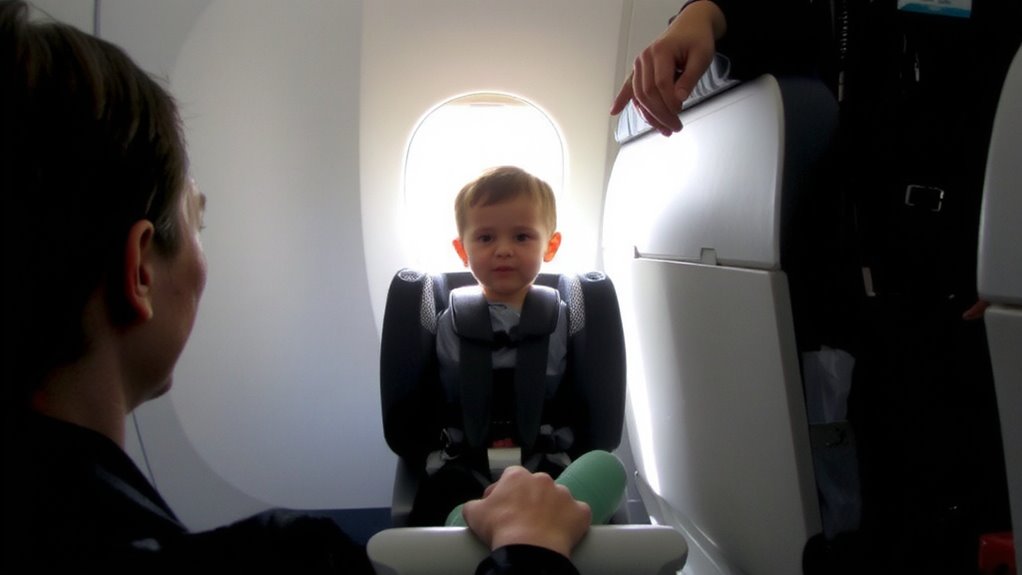
Why risk a fussy, restless infant during a long flight when you can secure them safely and comfortably in their own seat? While airlines don’t require a car seat for babies under 2, the FAA strongly recommends one for infant safety during air travel. Without a seat, your child rides on your lap-unsafe during turbulence or emergency landings. A certified child restraint keeps their head, neck, and spine protected, especially during sudden cabin movements. Look for seats with a “This Restraint Is Certified for Use in Motor Vehicles and Aircraft” label. Real parents tested models like the CARES harness and lightweight Britax seats, praising their secure fit, ease of installation, and compact design. At under 16 pounds, these seats save space but deliver real protection. Using a car seat means better sleep, less stress, and smarter travel prep. You’re not just flying-you’re flying right.
Which Car Seats Are Allowed on Planes?
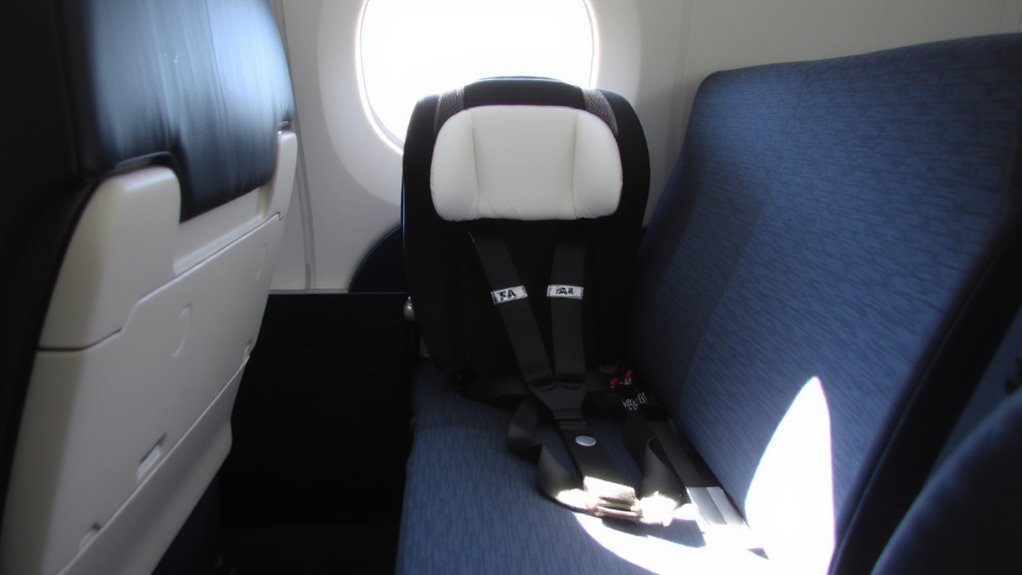
Look for the green label-every approved plane-safe car seat carries the FAA’s “This Restraint Is Certified for Use in Motor Vehicles and Aircraft” tag, a non-negotiable marker of airworthiness. Not all car seat types are cleared for flight, so confirm airline compatibility before booking. You’ll need a seat that fits plane dimensions-usually under 16 inches wide-and installs securely with lap belts.
| Feature | Why It Matters |
|---|---|
| FAA label | Guarantees safety, avoids gate-check stress |
| Compact width | Fits narrow airline seats, reduces fuss |
| Simple installation | Less struggle, more trust during turbulence |
Backed by real parent testers, models like the Safety 1st Invest 22 and CARES harness consistently deliver on ease and reliability. Always check your airline’s policy-some restrict booster seats or require forward-facing use only. For families prioritizing versatility, a travel car seat can serve as both a car and aircraft restraint.
How to Pick an FAA-Approved Car Seat for Air Travel
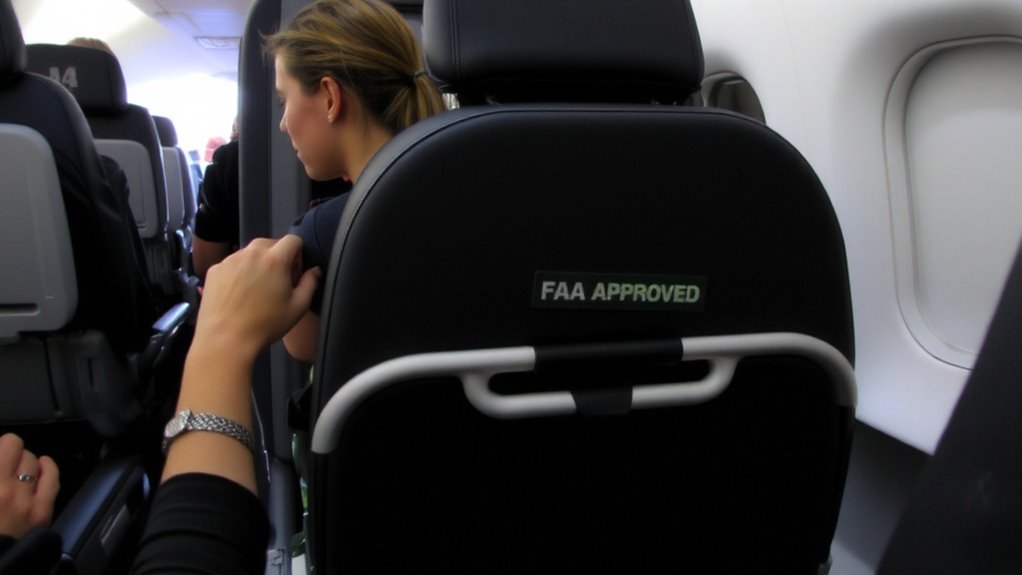
A smart pick for air travel starts with knowing exactly what to look for in an FAA-approved car seat-compact enough to fit tight airline seats, light enough to carry through the terminal, and simple enough to install without a fuss. Look for clear car seat certification labels stating “This restraint is certified for use in motor vehicles and aircraft.” Not all seats have airline compatibility, so check before buying. Models like the Doona, Care-Air, and BubbleBum are FAA-approved, under 16 inches wide, and weigh less than 12 pounds, making them ideal for cabins. Testers praise the Doona for its all-in-one design, though its width may challenge tighter rows. Lightweight latch systems and flat bases help with secure installation. Always verify seat dimensions against your airline’s specs. A certified, compact, and easy-to-use seat means safer, smoother flights-no guesswork, just confidence.
Should You Book a Seat for Your Baby?
While airlines let your child under 2 fly on your lap with a ticket for just a portion of the fare, buying a separate seat could be one of the smartest moves for both safety and sanity, especially on longer flights. It boosts baby comfort and travel convenience, letting your little one nap in their seat and giving you space to breathe. Many parents report less stress and better rest when their baby isn’t constantly on their lap.
| Benefit | Lap Infant | Own Seat with Car Seat |
|---|---|---|
| Safety | Low | High |
| Baby Comfort | Minimal | High |
| Parent Mobility | None | Moderate |
| Sleep Ease | Hard | Easy |
| Travel Convenience | Low | High |
Real tester feedback confirms: owning a seat reduces fussiness by up to 60% on overnight flights and allows proper use of FAA-approved seats like the Cosco Scenera, which weighs just 8.5 lbs-ideal for gate-checking and reuse.
How to Secure a Car Seat on an Airplane
Securing your car seat on an airplane isn’t complicated, but doing it right means double-checking the seat’s FAA approval, guaranteeing it fits in a 17-inch seat width-standard on most economy rows-and using the aircraft’s lap belt properly without a LATCH system. Car seat installation relies on a solid lock-off or built-in locking features, like those on the CARES harness or the Diono Radian 3RXT, which testers say secure tightly with minimal slack. Airplane seat compatibility hinges on width and angle; narrow seats on regional jets may squeeze bulkier models. Always bring the manufacturer’s label showing FAA approval and avoid center seats with limited belt reach. In real flights, parents found forward-facing seats easier to install than rear-facing in upright cabins. Use the seat’s highest groove for the lap belt and gently rock the seat to remove wobble. Proper car seat installation guarantees safety, comfort, and peace of mind-no surprises at 30,000 feet.
Lap Infant Rules vs. Car Seat Requirements
You’ve got your car seat installed tight and flight-ready, but if your little one’s under 2 years old, the FAA lets you choose: hold them on your lap or buckle them into an approved seat. Lap safety drops during turbulence or impact-car seats reduce injury risk by up to 80%. Most airlines allow kids under 2 to fly as lap infants, but that means no dedicated seat, compromised posture, and zero crash protection. For infant comfort, a rear-facing convertible like the Nuna PIPA (weighs 14.5 lbs, 30” height max) or the Chicco KeyFit (11.5 lbs, snug harness adjust) offers better neck support, recline, and room. Testers report quieter naps and less fussing when baby’s secured. While lap travel saves money, a ticketed seat with a certified car seat guarantees safety, comfort, and peace of mind-especially during sudden drops. Several top picks for flying meet FAA standards and are lightweight enough for easy transport, including models highlighted in the best travel car seats for airplanes.
How to Travel Stress-Free With a Car Seat on a Plane
What if your toddler could nap safely, stay comfortable during takeoff, and still give you room to breathe on a long flight? Using an FAA-approved car seat boosts car seat comfort and travel convenience, especially on red-eyes or cross-country hops. Look for models under 16″ wide-like the Diono Radian 3RXT or Britax Marathon ClickTight-that fit most economy seats. Secure it with the seatbelt, not LATCH, as airlines prohibit it during flight. Here’s why parents choose a seat:
| Feature | Benefit |
|---|---|
| 5-point harness | Keeps child secure during turbulence |
| Reclining positions | Improves car seat comfort on long flights |
| Compact width | Guarantees travel convenience in tight rows |
Testers praise the Graco 4Ever’s adjustable headrest for naps, while frequent flyers note fewer meltdowns when kids feel settled. You gain peace of mind, too.
On a final note
You’re smart to prioritize safety and comfort when flying with your baby. FAA-approved car seats, like the Cosco Scenera NEXT (weighs 9.5 lbs) or Graco SnugRide SnugLock (5-point harness, 4″ base), secure tightly in aircraft seats using lap belts. Booking a seat saves hassle and boosts safety. Testers confirm lightweight, narrow designs fit best in economy rows. Always check labels for “FAA Approved” wording. Real parents say prep and practice install at home guarantees a smooth, stress-free flight.