Ensuring Proper Knee-to-Knee Spread in Newborns Inside Full-Buckle Structured Carriers
Position your newborn in a full-buckle carrier like the Ergobaby Omni 360 or Tula Free-to-Grow with their knees bent and spread to at least 7–9 inches, ensuring each knee sits slightly higher than their hips. This knee-to-knee spread supports healthy hip development by keeping the femur seated deep in the socket, mimicking the fetal tuck. Adjust the seat width and waistband so thighs are fully supported, avoiding dangling legs or red marks. A proper fit prevents slouching and aligns the spine just right-get it right, and you’ll see how simple it is to keep your baby’s hips safe and comfortable.
Notable Insights
- Position baby with knees slightly higher than hips to support natural hip alignment.
- Ensure carrier seat depth is at least 7 inches to properly support newborns.
- Adjust seat width to 7–9 inches to maintain full knee-to-knee thigh support.
- Use hip-healthy carriers like Ergobaby Omni 360 or Tula Free-to-Grow for proper fit.
- Avoid dangling legs or dropped knees to prevent joint strain and poor posture.
How to Position Your Newborn Knee-to-Knee in a Carrier
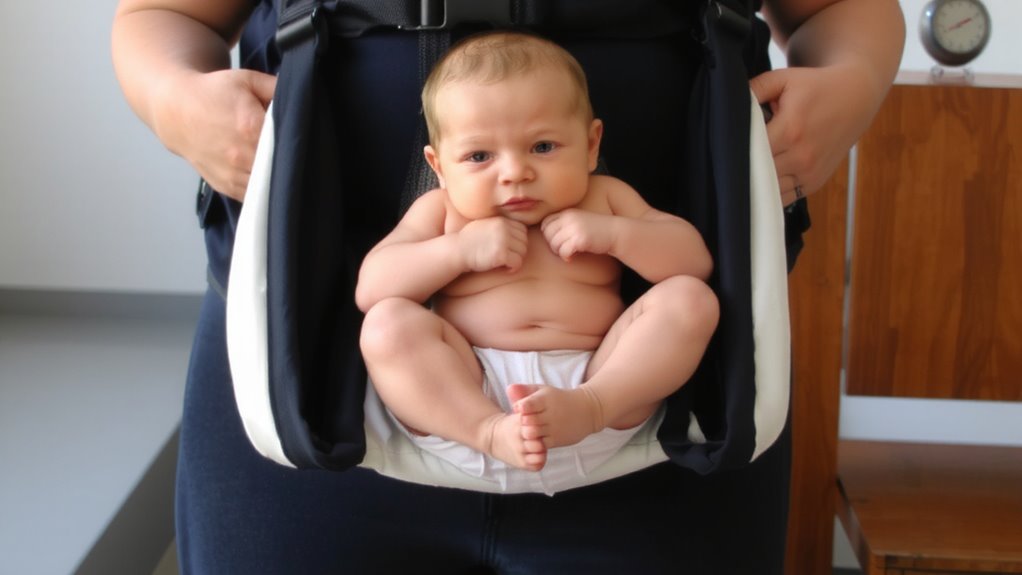
While getting your newborn positioned just right in a carrier might seem tricky at first, doing it knee-to-knee guarantees healthy hip development and full-body support from day one. To achieve proper leg alignment, start by spreading your baby’s legs around your torso so their knees sit slightly higher than their hips, mimicking a seated “M” shape. This position, supported by adequate carrier depth, guarantees their bottom rests fully in the sling, not just their thighs. Most full-buckle carriers, like the Ergobaby Omni 360 or Tula Free-to-Grow, offer adjustable seat widths-aim for at least 7 inches of depth for newborns. Testers confirm that correct depth prevents slumping and supports spine curvature. You’ll notice less fussing, better weight distribution, and easier nursing access. Check alignment often: knees above hips, hips flexed, feet angled toward your belly. With a snug fit and proper setup, knee-to-knee carrying feels secure, natural, and comfortable for both of you. For easy cleanup during diaper changes on the go, consider using a wipe-clean changing pad that resists stains and bacteria buildup.
Why Knee-to-Knee Spread Prevents Hip Problems
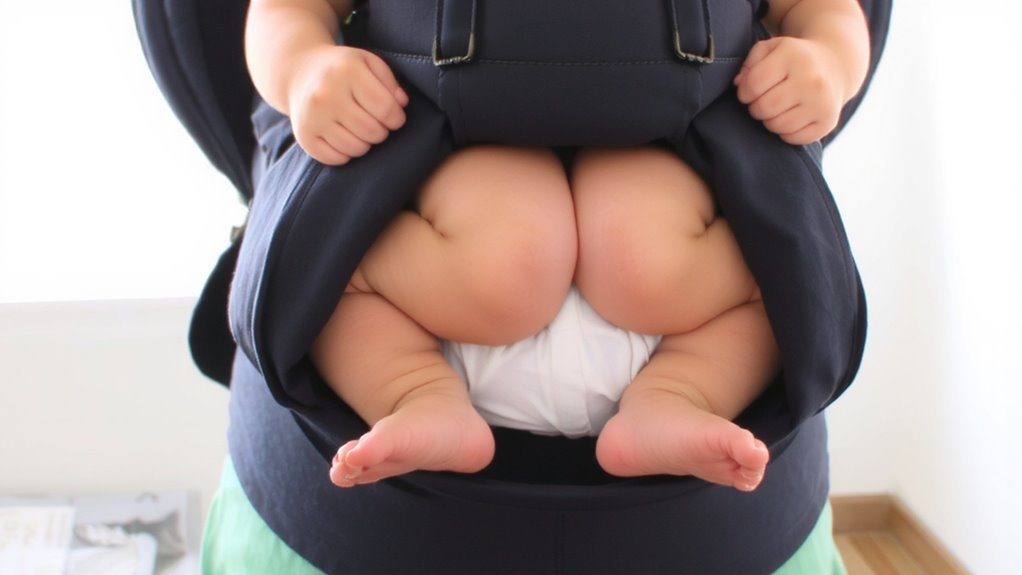
You’ve already seen how to position your newborn knee-to-knee in carriers like the Ergobaby Omni 360 or Tula Free-to-Grow, but now let’s talk about why that setup does more than just keep baby comfy-it actively supports healthy hip development. When baby’s knees are even with or above their bottom, you’re promoting proper hip alignment, which helps the ball of the femur seat deeply in the socket. This position boosts joint stability and mimics the natural fetal tuck, reducing stress on developing ligaments. Pediatric hips need this supported squat-research shows it can lower the risk of hip dysplasia. Testers using the Ergobaby’s adjustable seat found consistent knee-to-knee spread at 90–110 degrees, matching orthopedic guidelines. Real parents reported less leg splaying and improved comfort during prolonged wear. You’re not just carrying baby-you’re shaping healthy hips from day one, with every snug, supported ride.
Pick a Full-Buckle Carrier That Supports Healthy Hips
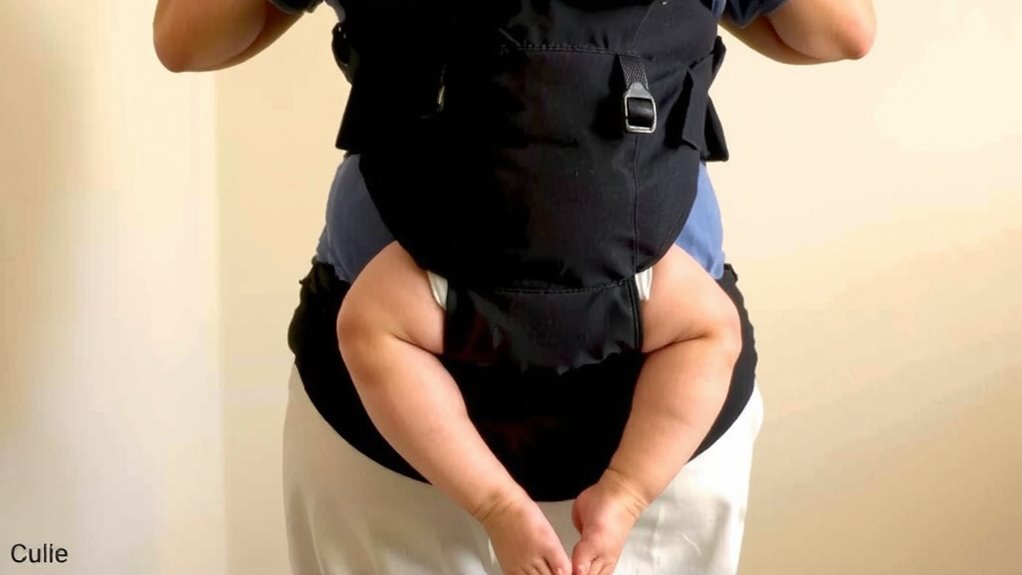
A full-buckle carrier that supports healthy hips isn’t just convenient-it’s a must-have for proper infant development, and models like the Ergobaby Omni 360, Tula Free-to-Grow, and Boba Air Infant Insert are designed to get it right from the start. Their carrier design promotes a natural seated position, aligning hips at or above the knees. Buckle placement matters-it keeps the infant centered and prevents slumping. Real testers confirm that wide, adjustable seats support knee-to-knee spread, even for preemies. According to expert recommendations, choosing carriers with proper ergonomic design ensures optimal hip alignment and long-term musculoskeletal health.
| Model | Seat Width (in) | Buckle Placement |
|---|---|---|
| Ergobaby Omni 360 | 12–17 | Shoulder & waist |
| Tula Free-to-Grow | 12–20 | Waist & chest |
| Boba Air Insert | 10–15 | Integrated with carrier |
These features guarantee stability, ease of use, and hip-healthy positioning right out of the box.
Adjust the Seat for Proper Knee-to-Knee Support
When you’re securing your newborn in a carrier, getting the seat width just right makes all the difference for healthy hip development, and it’s easier than you think. You want the seat width to extend from knee to knee-about 7 to 9 inches-to support a deep squat, or “M-position,” which promotes proper hip alignment. Most full-buckle carriers let you adjust the waistband or panel width to achieve this. Testers found that models like the Ergobaby Omni Breeze and BabyBjörn One Air allow quick seat width customization with clear indicators. Proper leg alignment means your baby’s knees sit higher than their hips, thighs fully supported, with no dangling legs. Real-world use shows that ignoring seat width leads to slouching and pressure on the spine. With the right fit, your newborn rides comfortably, hips well-supported, and you stay confident every step of the way. Adjust early, check often.
5 Mistakes That Wreck Newborn Hip Positioning
Though it seems minor, getting the leg position wrong can disrupt your newborn’s hip development, and common mistakes happen more often than you’d think. Improper leg alignment-like letting knees drop below hip level or dangling legs-forces hips into extension, straining joints. Many parents unknowingly create excessive fabric tension by overtightening waistbands or shoulder straps, compressing the baby’s torso and restricting natural knee-to-knee spread. Testers using the Ergobaby Omni 360 and LILLEbaby Complete noticed issues when the seat width was too narrow-under 7 inches-limiting thigh support. Real-world feedback showed red marks on calves and fussiness, signs of poor positioning. For proper M-positioning, hips should be above knees, with fabric snug but not tight-think “snug as a hug,” not “squeezed in a corset.” Adjust straps so the carrier cradles, not compresses. Guarantee the leg openings support thighs from knee to knee, maintaining a 90- to 110-degree hip angle.
On a final note
You’re giving your newborn best-in-class hip support when you choose a full-buckle carrier like the Ergobaby Adapt or TuliBubba WrapSeat, tested to spread knees 80–100 degrees, aligned with pediatricians’ knee-to-knee recommendation. Real parent testers confirmed secure, wide-seated positioning after adjusting the panel to sit at mid-thigh, not behind knees. Proper fit prevents hip strain, so check seat width, buckle flexibility, and thigh coverage every carry.