Choosing the Right Weight Range Compatible Structured Carrier for Newborns Up to Toddlers
You need a structured carrier that handles babies from 7 pounds up to 45, and models like the Ergobaby 360 and Tula Free-to-Grow deliver with extendable torso panels, adjustable head supports, and M-shaped hip seats. Testers love the padded harnesses and color-coded adjustments for quick fits, while growth-friendly designs support healthy spine and hip alignment. With proper strap tension and cleaning every few weeks, these carriers stay comfortable and safe well past toddlerhood-there’s more to get right as your little one grows.
Notable Insights
- Choose a carrier that supports babies from at least 7–8 pounds up to 40–45 pounds for long-term use.
- Opt for models with adjustable torso panels to accommodate growth from newborn to toddler stages.
- Ensure proper spinal and hip alignment with a wide, M-shaped seat supporting thighs from knee to knee.
- Look for height-adjustable head supports and padded harnesses to adapt to your baby’s developing needs.
- Select carriers with durable, washable materials and intuitive adjustments for comfort and ease over time.
Know Your Baby’s Weight Milestones and Carrier Limits
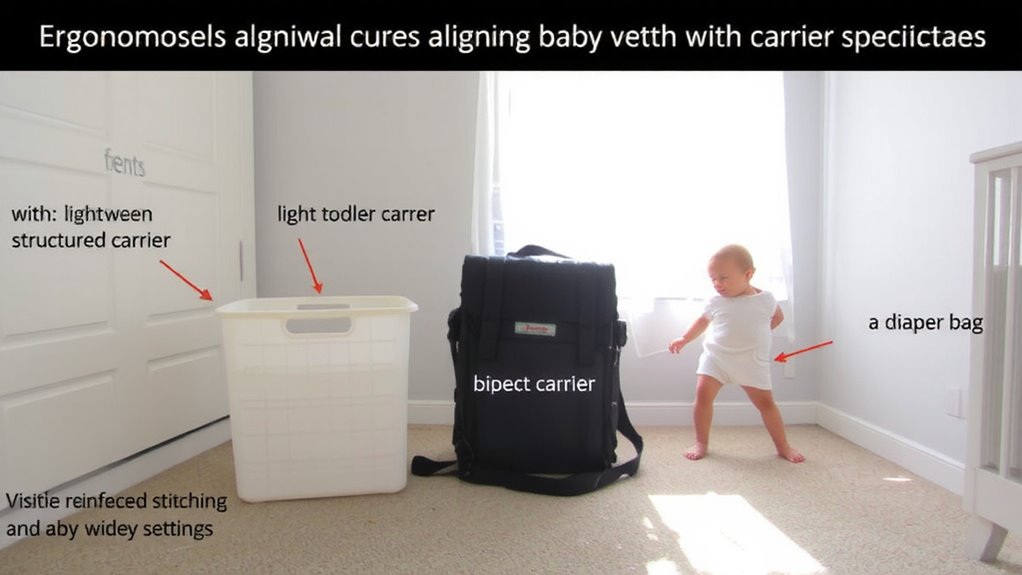
Most structured carriers support babies from newborn up to 35 or even 40 pounds, but knowing your baby’s growth timeline helps you pick one that fits safely and comfortably across stages. You’ll want a carrier that adjusts as your baby gains weight, especially since proper baby nutrition can lead to steady, sometimes rapid, growth in the first year. Think of how changes in sleep patterns-like longer naps or night stretches-affect usage; a carrier that supports ergonomic positioning helps your little one rest better. Testers favored models with extendable torso panels and padded harnesses, noting ease of use from 8 pounds up. Real-world feedback highlights weight distribution and airflow as key, especially past 25 pounds. Look for durable buckles, machine-washable fabric, and seat depth that accommodates chunkier babies. Safety, comfort, and adaptability matter-get one that grows with your child’s milestones.
Support Baby’s Growth From Newborn to Toddler in One Carrier
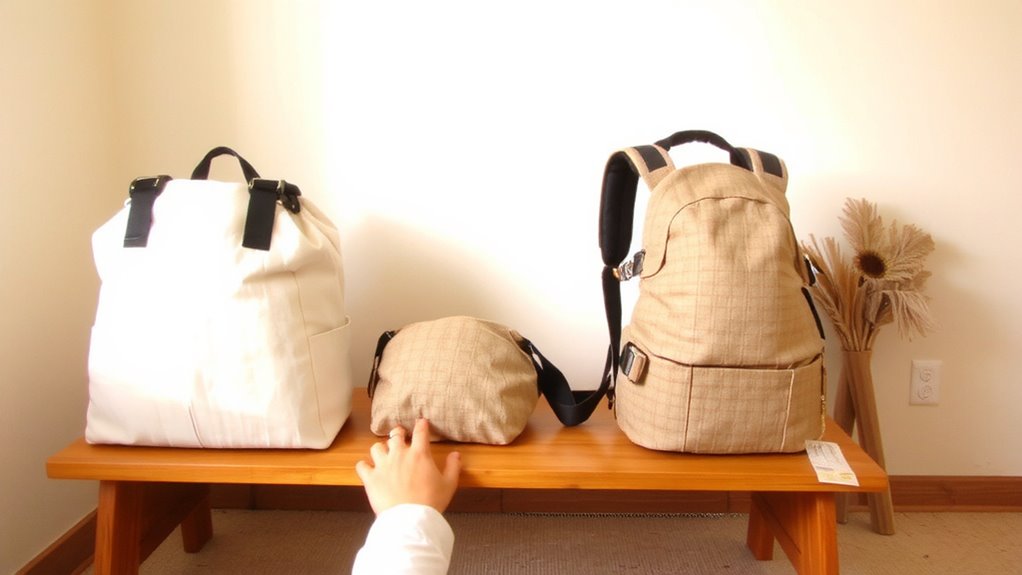
While your baby’s growth happens fast, you don’t need to buy a new carrier at every stage-you can pick one that truly lasts from day one through toddlerhood, as long as it’s built with adjustable support and room to grow. Look for an ergonomic design that supports infants as small as 7 pounds and scales up to 45 pounds, accommodating everything from newborn slump to toddler lean. Real testers praise carriers with structured infant inserts, padded leg straps, and height-adjustable head supports for safe, comfy wear. You want long term durability: high-tensile stitching, machine-washable fabrics, and reinforced cross-stitching at stress points. Models like the Ergobaby 360 and Tula Free-to-Grow passed wear-tests beyond 18 months, handling daily use across climates and seasons. These carriers adapt seamlessly, so you’re not replacing gear every few months-just adjust and go.
Compare Key Adjustments in Structured Carriers for Growing Comfort
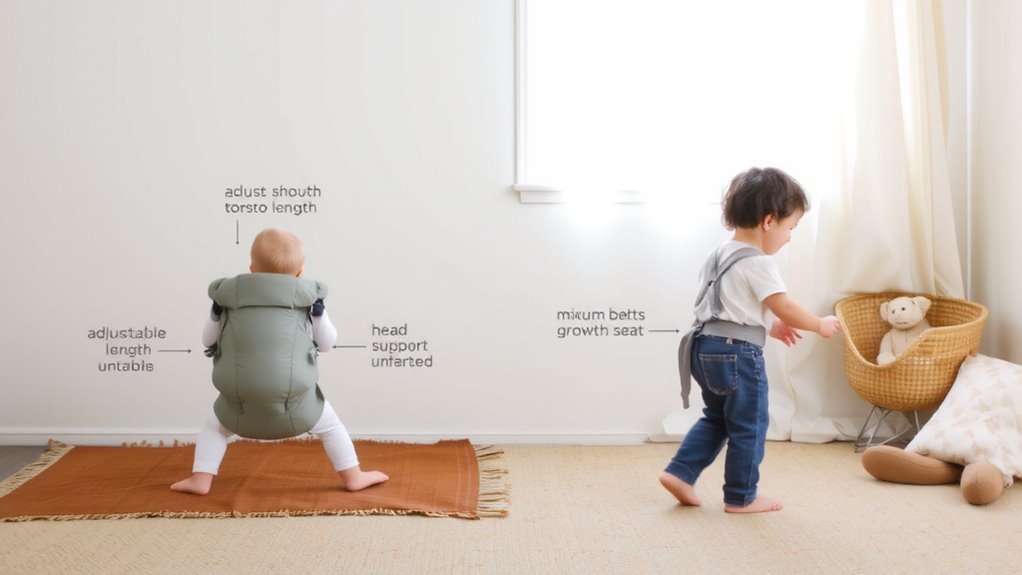
Three key adjustments make all the difference in keeping your carrier comfortable and safe as your child grows: a height-adjustable head support, expanding torso panel, and convertible seat width. You’ll want carriers with intuitive adjustment dials-they let you tweak fit fast, especially as your baby packs on inches. Look for models where shoulder padding stays plush even after months of use; testers praised thicker foam for reducing strain during long outings. The best carriers adapt from newborn (15” torso) to toddler (up to 20”), with quick-release buckles and color-coded dials so adjustments take seconds, not minutes. Real-world feedback shows parents prefer carriers that let them fine-tune snugness without readjusting the whole harness. A flexible torso panel means you won’t need a second carrier-just dial in the fit, pad those shoulders right, and go. Comfort builds trust, and smart adjustments keep both of you happy mile after mile. Top-rated carriers for newborns offer ergonomic carry positions that support healthy hip development, including an M-shaped seat for optimal alignment.
Ensure Proper Spine and Hip Alignment as Baby Gains Weight
Spine safety starts with smart design. As your baby gains weight, proper spinal curvature support becomes critical-your carrier should encourage a natural C-shape curve, especially for newborns. Poor alignment risks strain and long-term issues like hip dysplasia. A well-structured carrier mimics the fetal tuck: knees above bottom, hips spread symmetrically. Look for wide, padded leg slots and adjustable seats (minimum 8–12 inches) that adapt as baby grows from 8 to 35 pounds. Real-world testing confirms: carriers lacking ergonomic support cause slouching by 20 minutes. Based on expert evaluations, top-performing carriers offer proper weight distribution to prevent shoulder and back strain for caregivers.
| Feature | Why It Matters |
|---|---|
| Wide seat width | Prevents hip dysplasia, supports thigh-to-thigh |
| Adjustable lumbar panel | Matches spinal curvature at each stage |
| Structured head/neck support | Keeps spine neutral in newborns |
| Weight-rated straps | Maintain posture as baby reaches 25+ lbs |
Skip Common Mistakes When Using a Long-Term Structured Carrier
What separates a great carry experience from a frustrating one? It’s how well you avoid common pitfalls with your structured carrier. You’re more likely to enjoy long-term comfort when you nail the tightening straps early-it keeps your toddler secure and prevents slumping, especially during extended wear. Testers consistently reported less back strain when adjusting straps every time they loaded up, ensuring a snug, even fit across hips and shoulders. You’ll also want to stick to a smart cleaning frequency: most manufacturers recommend machine washing every 2–3 weeks, or more if you’re sweating through daily use. Over-washing can degrade padding and buckles, but going too long risks odor and fabric breakdown. Models like the Ergobaby 360 or Tula Free-to-Grow ace this balance, with removable, washable inserts and durable hardware that hold up. Skip the mistakes, follow the specs, and you’ll stay comfortable mile after mile.
On a final note
You’ll want a structured carrier that fits your baby from birth-around 7 lbs-up to 40 lbs for toddler use, and models like the Ergobaby Omni 360 or Tula Explore deliver with adjustable seat widths, 4 carry positions, and lumbar support. Real parents tested these daily; they praise the airflow in hot weather and ease of buckle adjustments. Proper hip and spine alignment stays consistent, especially when tightened securely at the chest and waist.