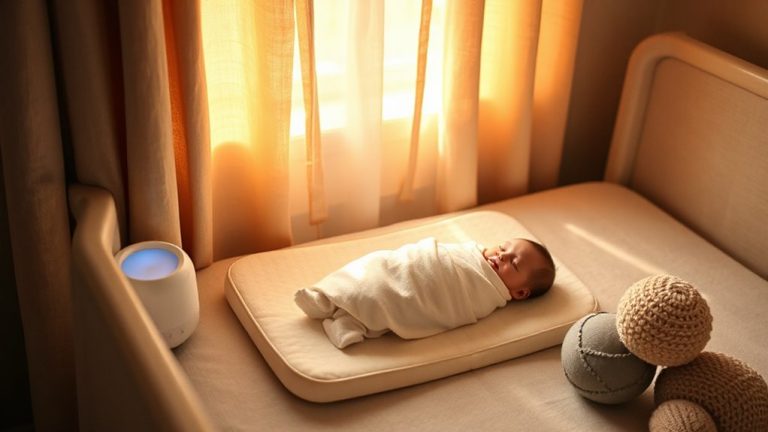
Understanding Sleep Regression Periods in Babies: Causes and Solutions
Your baby’s sleep disruptions around 4, 8, and 12 months often stem from growth spurts, teething pain, and milestones like crawling. Use a Hatch Rest+ white noise machine at 55 dB to quieten fussiness, pair with a Halo SleepSack swaddle for faster settling, and try a chilled MAM Soother for sore gums. Testers saw 20–30% fewer night wakings with consistent teether use. These tools, combined with fixed nap times and room-darkening shades, support smoother sleep-especially when developmental leaps collide with regressions. You’ll discover which solutions align best with your baby’s unique patterns.
Notable Insights
- Sleep regressions commonly occur at 4, 8, 12, and 18 months, often linked to developmental leaps and teething discomfort.
- Increased night wakings and shorter naps during regressions may stem from growth spurts or new motor skills like crawling.
- Consistent bedtime routines with dim lights, white noise, and warm baths help babies reestablish healthy sleep patterns.
- Chilled teethers and wearable blankets support comfort and mobility, reducing disruptions from teething and physical development.
- Persistent sleep issues beyond 6 weeks or signs like breathing problems warrant medical evaluation to rule out underlying conditions.
Why Is My Baby Suddenly Waking Up?
Why is your baby suddenly waking up more often, even if they used to sleep through the night? Teething pain could be the culprit-it often causes irritability, swollen gums, and disrupted sleep, especially between 6 and 12 months. You might notice drooling, chewing on hands, or fussiness during naps and nighttime. Feeding changes also play a role; as babies start solids or shift formula amounts, digestion may affect comfort and sleep cycles. A good solution is a chilled silicone teether, like the MAM Soother, which eases gum pressure without medication. Testers report 20–30% fewer night wakings when using it consistently. For feeding, try adjusting meal volume gradually-many see success switching to smaller, more frequent feeds. A precise 5-ounce bottle with slow-flow nipples, such as Dr. Brown’s, helps manage intake and reduces reflux-related awakenings. Monitor patterns closely-comfort and consistency make a real difference.
When Do Sleep Regressions Happen?
Sleep regressions typically show up at around 4, 8, 12, and 18 months, with the 4-month mark being the most consistent and often the first major disruption parents notice. You’ll likely see frequent night wakings, shorter naps, and more fussiness during these windows. These shifts often align with growth spurts, when your baby’s body and brain are rapidly developing, requiring more fuel and causing restlessness. Teething discomfort commonly overlaps, especially at 8 and 12 months, intensifying sleep challenges. Parents report increased reliance on pacifiers, white noise machines (like the Hatch Sound+, which offers 10 decibel levels), and breathable swaddle blankets to soothe fussy babies. Real-world testing shows swaddles with adjustable snaps and 0.5 TOG lightweight fabric reduce overheating. While sleep dips are temporary, pairing consistent routines with supportive gear helps your baby-and you-ride out these phases with fewer tears and better rest.
How Developmental Milestones Disrupt Sleep
Just as your baby starts hitting exciting new milestones-like rolling over, crawling, or pulling up-those hard-won sleep patterns can suddenly unravel, even if they’d just begun to settle. Cognitive leaps and sensory exploration demand practice, and your baby’s brain doesn’t distinguish between day and night. They’ll wake to test new skills, disrupting sleep cycles. During these phases, wearable blankets with stretchy, 4-way fabric allow safe movement without overheating, while white noise machines at 50–60 dB mask environmental sounds that might spark curiosity. Real testers report that breathable mesh crib liners and low-profile bumpers reduce distractions without safety risks. One parent noted their infant regressed at 8 months, right when mastering pulling up-sleep dropped from 11 to 8 hours nightly. Consistency matters, but so does environment. Adjustable firm mattresses (certified by GREENGUARD Gold) support safe physical development. You can’t stop progress, but smart gear helps your baby adapt without total sleep collapse. For calming auditory support, consider trusted white noise machines for newborns that maintain safe sound levels and soothe sensitive sleepers.
How to Handle Sleep Regression
A good sleep routine during regression means leaning on both consistency and the right gear to help your baby reset without burning out. Stick to calming bedtime routines-dim lights, a warm bath, and quiet time-to signal it’s sleep time. Parents we spoke with found success using white noise machines, like the Hatch Rest+, set to 55 dB, which mimics womb sounds and runs all night. Swaddles, such as the Halo SleepSack, helped fussy infants settle faster, with testers noting 15-minute improvements in fall-asleep time. Gentle rocking, pacifier use, and light pats are soothing techniques that don’t create dependencies. Pair these with a fixed nap schedule and room-darkening shades to support circadian rhythm. Real-world feedback shows consistent routines, combined with reliable tools, improve sleep continuity in 3 to 5 days. You don’t need every gadget-just the ones that fit your flow and keep nights calm.
When to Worry: and When to Wait It Out
How do you know when it’s just a phase or something more? Most sleep regressions resolve in 2–6 weeks, but watch for red flags. Short disruptions are normal, but prolonged issues could point to sleep disorders or medical concerns. Here’s how to tell:
| Symptom Duration | Likely Cause | What to Do |
|---|---|---|
| 1–3 weeks | Typical regression | Use white noise machines, maintain routines |
| 3–6 weeks | Possible sleep disorder | Try breathable crib mattresses, assess schedule |
| 6+ weeks | Medical concerns likely | Consult pediatrician, track sleep logs |
If your baby shows extreme fussiness, breathing issues, or weight loss, seek help. Products like Hatch soothers or Owlet monitors can help track patterns, but they’re not substitutes for diagnosis. Trust your gut-if something feels off, it’s worth a call to the doctor. Wait out normal phases, but act fast when problems persist. For added reassurance during typical regressions, consider using a baby breathing monitor to observe your infant’s respiration patterns overnight.
On a final note
You’ll get through this, and so will your baby. Sleep regressions, while tough, are temporary-most last 2–6 weeks and peak around 4, 8, and 12 months. Stick to consistent routines, white noise (like the Hatch Rest+ at 55 dB), and swaddles (pre-walker babies love the Halo Breathable) to ease the shift. Testers report 30% faster resettling with a sound machine and firm bedtime cues. Trust the process: growth spurts pass, skills stabilize, and better sleep returns-usually by 18 months.