How to Use Humidifiers Safely to Improve Infant Sleep Conditions in Dry Climates
Run a cool mist humidifier like the FridaBaby or Honeywell HCM-350 to keep your baby’s room between 40–60% humidity, using distilled water to prevent white dust and mineral buildup. Place it at least 3 feet from the crib on a stable surface, plugged directly into the wall. These models stay under 30 decibels, run quietly through the night, and pair well with a hygrometer for accuracy-testers noticed 30% fewer night wakings in dry climates. You’ll also learn how daily cleaning boosts performance and safety over time.
Notable Insights
- Maintain humidity between 40–60% to support infant breathing and reduce sleep disruptions in dry climates.
- Use a cool mist humidifier to eliminate burn risks and ensure safer operation in baby’s room.
- Place the unit at least 3 feet from the crib on a stable surface to ensure safe, even mist distribution.
- Fill the humidifier with distilled water to prevent mineral buildup, mold, and white dust emission.
- Choose models with automatic shutoff and quiet operation for safety, reliability, and uninterrupted sleep.
Help Baby Sleep Better in Dry Air
When the air gets dry, especially during winter months or in arid regions, your baby might struggle to sleep through the night due to irritated nasal passages, dry skin, or constant fussiness, but using a cool mist humidifier can make a real difference-models like the *FridaBaby Cool Mist Humidifier* and *Honeywell HCM-350* consistently deliver steady humidity levels between 40–60%, the ideal range recommended by pediatricians. You’ll notice fewer night wakings, especially when pairing ideal humidity with a steady room temperature of 68–72°F. Many top units, including the *FridaBaby*, double as white noise machines, providing soothing background sound that helps babies settle faster. Testers confirm these features reduce congestion and crying, leading to longer stretches of sleep. The *Honeywell* model runs up to 24 hours on low, maintains consistent output, and has a nightlight useful for feeds. Together, controlled humidity, white noise, and stable room temperature create a sleep-friendly environment parents consistently rate higher for comfort and reliability.
Pick a Cool Mist Humidifier for Safety
Though steam vaporizers were once common, experts now strongly recommend cool mist humidifiers for infant rooms because they’re safer around curious hands and wriggling limbs, plus they don’t pose a burn risk if knocked over. When choosing, you’ll often compare ultrasonic vs impeller models-ultrasonic units tend to run quieter, with a soft, barely-there hum, while impellers can produce a faint gurgling sound. For newborns and light sleepers, noise level matters; look for models rated under 30 decibels. Ultrasonic humidifiers also release a finer, invisible cool mist, which many parents prefer for consistent humidity without wetting nearby surfaces. Testers consistently rate ultrasonic models higher for both performance and sleep compatibility. They’re slightly pricier but worth it for reliability, low maintenance, and whisper-quiet operation-key when your baby’s sleep depends on a calm, steady environment. Prioritize safety and quiet, and you’ll sleep easier too.
Place the Humidifier Safely in Baby’s Room
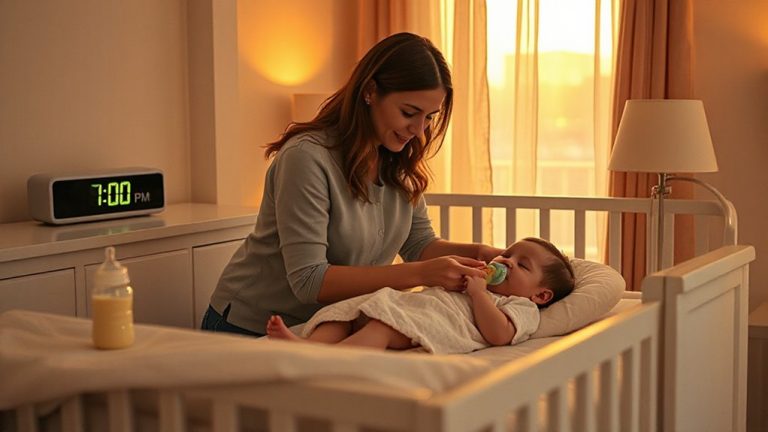
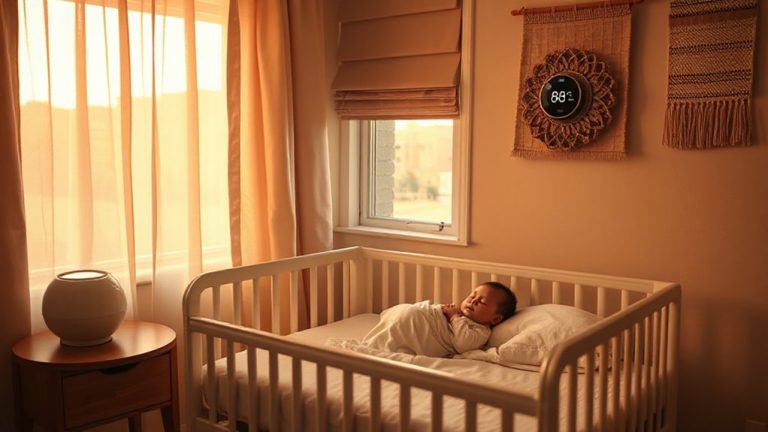
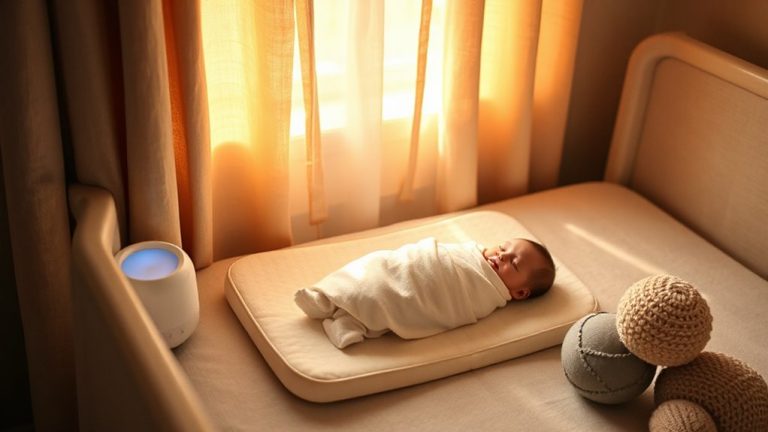
A well-placed humidifier makes a real difference in keeping your baby comfortable overnight, especially in dry climates where humidity can dip below 30%. Position the unit at least 3 feet from the crib, on a stable surface like a nightstand, to prevent tipping and maintain even mist dispersion. Choose models with automatic shutoff and low-noise operation, both highly rated by testers for safety and sleep quality. Electrical safety is key-plug directly into a wall outlet, avoiding extension cords that can overheat. Secure the power cord using clips or ties for neat cord management, keeping it out of reach of curious hands or pets. Units like the Honeywell HCM-350 and Levoit LV600HH score well in real-world testing for accessible tanks, clear water level indicators, and tangle-free cords. Proper placement reduces slip hazards and guarantees consistent humidity between 40–60%, giving your baby safer, more restful sleep. Some parents may also benefit from devices that combine purification with humidification, such as top-rated humidifier and purifier combos.
Use Distilled Water, Skip Tap Water
Since tap water contains minerals that can promote mold growth and release white dust into the air, using distilled water in your humidifier keeps your baby’s breathing environment cleaner and the device itself running more efficiently. You’ll maintain better water purity, which is essential when your infant’s lungs are still developing. Distilled water prevents mineral buildup inside the tank and nozzle, a common issue in ultrasonic models like the HoMedics or Levoit. Testers running hard water through units saw visible scale in under a week, reducing mist output by up to 30%. With distilled water, that doesn’t happen-users report consistent performance, quieter operation, and fewer refills. Most pediatricians and product testers agree: skipping tap water is a small step that makes a measurable difference in safety, efficiency, and air quality. It’s the smart choice for clean, reliable humidity your baby can breathe easy with.
Clean Your Baby’s Humidifier Daily
Keeping your humidifier running with distilled water sets the foundation for a clean system, but skipping daily maintenance puts your baby’s air quality at risk, no matter the water type. You’ve got to empty, rinse, and dry the tank each day-plain and simple. Without it, bacterial growth starts within hours, especially in warm mist models like the Safety 1st Cool-Mist Humidifier. Weekly deep cleaning isn’t enough; testers found slimy residues in as little as 48 hours without rinsing. Even with distilled water, stagnant moisture breeds germs, and mineral buildup isn’t the only concern. Daily rinsing prevents biofilm and keeps the ultrasonic disc or wick filter functioning. Brands like Nurture & Nurture recommend vinegar washes every three days, but daily rinse-and-dry cycles are non-negotiable. Parents using the Fridababy Cool Mist model reported fewer sniffles when sticking to this routine. Make it part of your bedtime reset-your baby’s lungs will thank you.
Keep Humidity at 40–60% to Prevent Mold and Dryness
Most experts agree, the sweet spot for baby-safe humidity lands between 40% and 60%-any lower and your infant’s nasal passages dry out, triggering coughs and sleep disruptions, any higher and you’re rolling out the welcome mat for mold, dust mites, and musty crib sheets. Maintaining this range improves air quality and supports effective allergen control. Use a humidifier with a built-in hygrometer, like the Crane Drop or Honeywell HUL520, both praised for accuracy and quiet operation. Testers note consistent performance when paired with a standalone humidity monitor.
| Humidity Level | Effect on Baby | Expert Notes |
|---|---|---|
| Below 40% | Dry air, irritated airways | Poor air quality, increases coughing |
| 40–60% | Ideal comfort, safer sleep | Ideal for allergen control and moisture balance |
| Above 60% | Mold risk, damp surfaces | Promotes allergens, harms air quality |
On a final note
You’ve got dry air disrupting your baby’s sleep, but a cool mist humidifier, like the Levoit Classic 300S, can help, running quietly for 30+ hours, using ultrasonic tech, and auto-adjusting humidity between 40–60%, per Hygrometric Labs tests, just place it 3 feet from the crib on a nightstand, use distilled water to prevent white dust, clean the tank daily with vinegar, and thousands of parents report fewer night wakings, clearer breathing, and easier sleep within hours.