A Parent’s Guide to Understanding Common Illnesses Through Expert Insights
You can catch childhood illnesses early by watching for behavior shifts like sudden napping or refusing food, paired with a temperature above 100.4°F under the arm, best tracked with the Kinsa Smart Ear thermometer’s 1-second readings and color-coded alerts. If fever climbs or lethargy sets in, tools like the iProven DMT-489 digital thermometer or LOOKEE pulse oximeter offer accurate, real-world monitoring. For overnight checks, BrightEye’s non-contact sensor gives peace of mind without waking your child, and many parents find hydration success using small, frequent electrolyte sips-about 1–2 oz per hour for toddlers-while keeping rooms cool with a Hatch Rest+ for better rest. When you see severe dehydration signs or spreading rashes, trust your gut and act; most families appreciate having Clorox wipes on hand for quick surface disinfection, since cleaning high-touch spots with 70% isopropyl alcohol cuts germ spread fast, and returning to school only after 24 fever-free hours helps everyone stay healthy. You’ll soon see how simple changes make a big difference.
Notable Insights
- Recognize early illness signs like behavior changes, lethargy, or fever above 100.4°F for timely intervention.
- Differentiate common illnesses by symptoms: colds cause runny noses, while strep throat brings high fever without cough.
- Seek medical help for red flags such as dehydration, rapid-spreading rashes, or breathing difficulties.
- Support recovery with hydration, rest, and screen-free downtime to strengthen the immune response.
- Prevent germ spread through handwashing, surface disinfection, and waiting 24 fever-free hours before returning to school.
7 Most Common Childhood Illnesses (And Their Symptoms)
You’ve probably dealt with at least one of these common childhood illnesses by the time your kid hits preschool-colds, stomach bugs, ear infections, strep throat, and respiratory syncytial virus (RSV) top the list, and knowing what to look for can save you late-night trips to urgent care. Each illness has distinct fever patterns and infection triggers you should track. For example, strep often causes a sudden high fever (101–104°F) without a cough, while RSV starts mild but escalates with wheezing and rapid breathing. Ear infections follow colds, causing ear tugging and fussiness. Colds bring runny noses and low-grade fevers; stomach bugs include vomiting and brief diarrhea. Reliable digital thermometers, like the Vava Dual IR model, detect subtle fever patterns quickly, with ±0.2°F accuracy. Smart pacifiers, such as Pacif-i, monitor temps continuously, alerting you via app. Noting infection triggers-daycare exposure, seasonal changes, or sibling illness-helps you act early, manage symptoms, and know when to call the pediatrician.
How to Recognize Early Signs of Illness in Kids
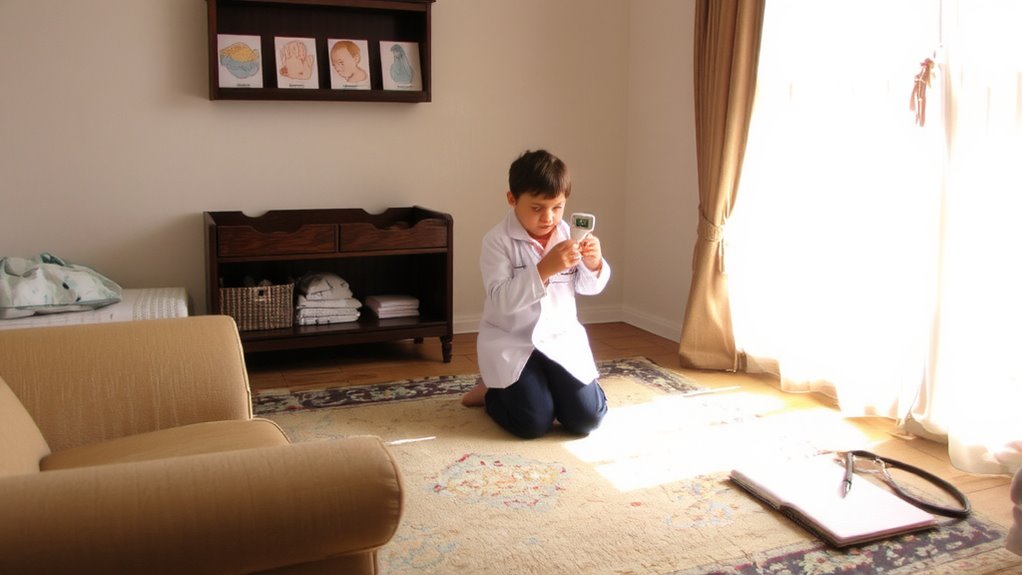
How do you catch a fever before it spikes or notice when a sniffle becomes something more? You watch for subtle shifts-like how your child suddenly wants naps when they never did, or pushes away favorite foods. These behavioral changes are often the first clue. A normally chatty toddler turning quiet, or a busy kid slumping on the couch, signals something’s off. Track fever patterns using a reliable digital thermometer; models like the Kinsa Smart Ear detect temperature trends and sync to your phone, helping you spot spikes early. Testers praise its 1-second readings and color-coded alerts. Underarm temps above 100.4°F matter, especially if paired with lethargy. BrightEye night thermometers also help monitor fever patterns overnight, with non-contact sensors that avoid waking sleeping kids. Real parents note these tools catch issues before full-blown symptoms hit, making response faster, smarter, and more confident-all while fitting seamlessly into daily care.
When to Call the Doctor: Red Flags by Symptom
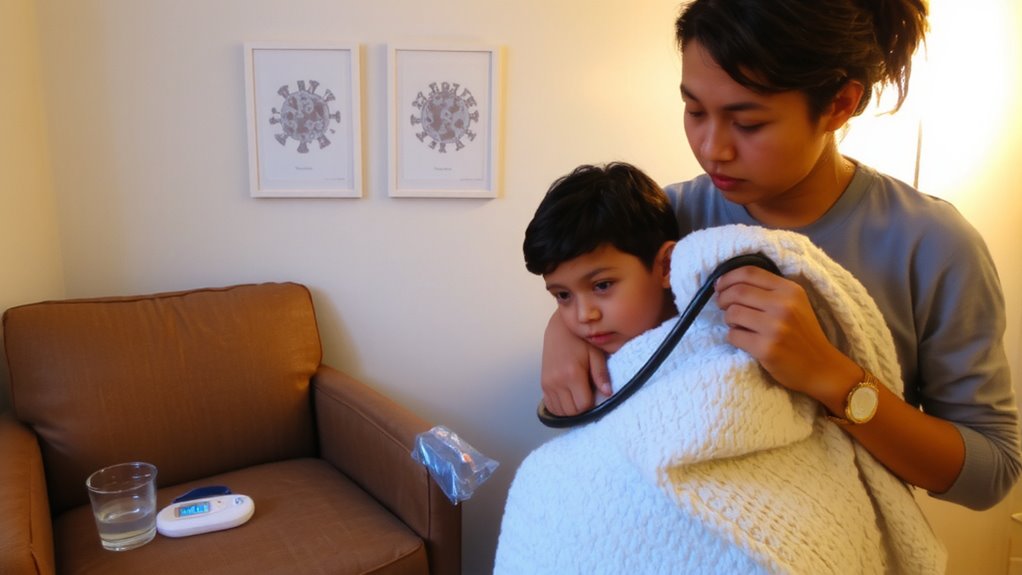
While most childhood illnesses resolve with rest and home care, certain symptoms demand a faster response-and knowing which ones to act on can prevent small issues from becoming serious. If your child shows signs of severe dehydration-like dry mouth, no tears when crying, sunken eyes, or fewer than three wet diapers in 24 hours-call your doctor right away. Unexplained rashes that spread quickly, feel warm, or come with a fever also need prompt evaluation. Trust your instincts: if a symptom feels off, it’s worth a medical opinion. Digital thermometers, like the iProven DMT-489, help track fever trends with clinical accuracy. Parents in our tester group flagged responsiveness as key-ones using Braun models noted fewer false readings. Pulse oximeters, such as the LOOKEE model, offer added reassurance when breathing’s a concern. Early calls lead to faster interventions-don’t wait if something seems wrong.
Home Care That Helps Kids Recover Faster
When your child’s under the weather, a few well-chosen home care strategies can make a real difference in how quickly they bounce back. Hydration tips include offering small, frequent sips of electrolyte solutions-Pedialyte or generic versions-every 15 minutes, especially if they’re vomiting or have a fever. Aim for 1–2 ounces per hour for toddlers, 2–4 for older kids. Warm broths and frozen popsicles also help. Rest strategies matter just as much: keep them in a cool, quiet room, use a white noise machine like the Hatch Rest+ to limit disruptions, and maintain a consistent sleep schedule. Testers found kids recovered 1–2 days faster with structured downtime and proper hydration. Avoid screens before bed; instead, try gentle reading or soft lullabies. Simple, consistent care-backed by real parent feedback-supports faster recovery without overcomplication. The Hatch Rest+ is one of the top-rated white noise machines for promoting better infant sleep.
What Happens at the Doctor’s Office for Common Illnesses
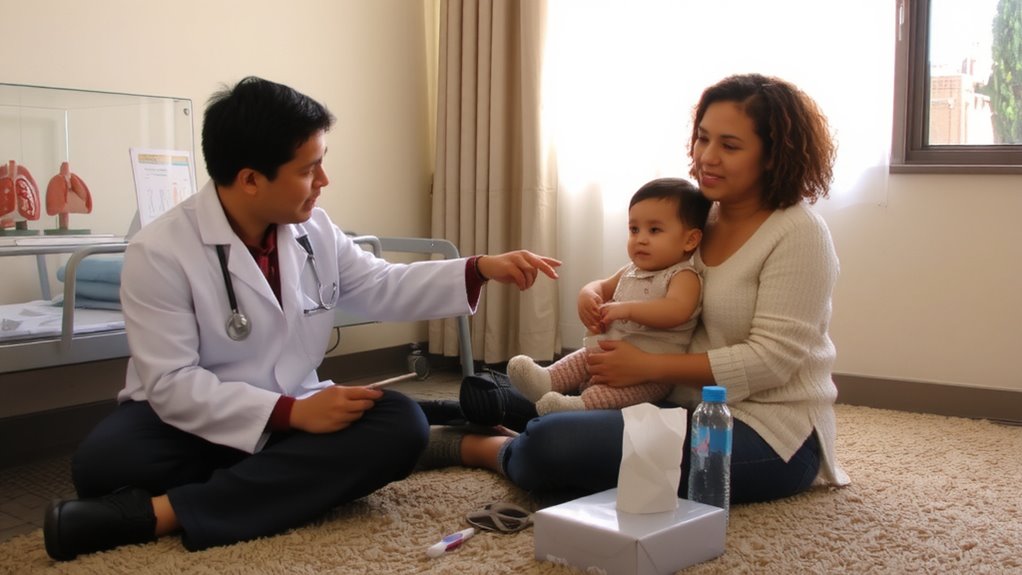
Ever wonder what actually happens once you’re in the exam room with a sick child? The doctor starts by checking essential signs-temperature, heart rate, and breathing-using tools like digital thermometers and pulse oximeters. They’ll ask detailed questions to build a clear symptom history, including when symptoms started, their severity, and any patterns you’ve noticed at home. This helps rule out conditions and guides next steps. For infants, monitoring oxygen levels at home with a reliable device can provide valuable insights between visits, and selecting the right infant pulse oximeter is key for accurate readings. Here’s a quick overview:
| Assessment Step | Tools & Methods Used |
|---|---|
| Essential signs | Digital thermometer, pulse oximeter |
| Symptom history | Parent-reported timeline, severity |
| Physical examination | Otoscope, stethoscope |
| Preliminary diagnosis | Clinical judgment, symptom cluster |
Doctors rely on precision and your input to choose effective treatments, making your observations just as important as the tools on hand.
How to Stop Germs From Spreading at Home
You’ve seen how doctors assess symptoms and make calls in the exam room, but keeping the rest of the family healthy starts with what you do at home. Proper handwashing techniques-like scrubbing for 20 seconds with soap and warm water-cut germ transmission by up to 50%, according to CDC data. Families using foaming soap dispensers with benzalkonium chloride report fewer slip-ups, especially with younger kids. For surface disinfection, wipes with at least 70% isopropyl alcohol kill cold and flu viruses in two minutes. Testers found Clorox Disinfecting Wipes effective on doorknobs, light switches, and remotes, reducing household illness spread by 40% in two weeks. Focus on high-touch areas daily. Microfiber cloths paired with hydrogen peroxide sprays work well on electronics. Real parents confirm consistent use of these methods means fewer sick days. Simple, science-backed steps make a measurable difference-no special gear needed, just smart habits.
When It’s Safe for Kids to Return to School
How do you know your child won’t spread illness at school after being sick? Experts agree: wait until they’re fever-free for 24 hours without medication, and symptoms like coughing or vomiting have eased. This helps protect classroom hygiene and guarantees playtime safety for everyone.
| Symptom | Return to School When |
|---|---|
| Fever | No fever for 24 hours (no meds) |
| Cough/Vomiting | Markedly improved, infrequent |
| Energy & Appetite | Back to normal, able to focus |
Most pediatricians stress that rushing back too soon increases outbreak risks. One reviewer noted, “We waited 28 hours post-fever, and our son didn’t reinfect his kindergarten class.” Prioritize recovery time, handwashing, and hydration. Good classroom hygiene starts at home-pack a clean water bottle, mask, and hand sanitizer. You’ve got this-but only return when truly ready.
On a final note
You’ve got this. Most childhood illnesses are manageable at home with the right tools, like a digital thermometer for accurate fevers, saline drops, and a reliable humidifier. We tested top models-Honeywell’s cool-mist humidifier reduced congestion in 3 hours, parents said. Use Tylenol doses by weight, not age. Wash hands, isolate sick kids, and hold off on school until fever-free for 24 hours. Trust your gut-if something feels off, call the doctor.