Organizing Toy Swaps With Neighbors to Refresh Playthings Without Spending Money
You host a toy swap by picking a weekend date at a garage or park, sending invites 3 weeks early with rules and RSVPs, and asking families to bring 5–10 cleaned, complete toys-like sturdy board books, puzzles, or battery-free games-while skipping damaged or recalled items. You label each with 1–5 point values based on size and quality, hand out color-coded tokens, and rotate kids in 15-minute shopping shifts to keep things fair and fun. You boost excitement with countdowns, stickers for good behavior, and water breaks every hour. Most families save around $200 yearly while revitalizing playrooms and building trust-and you can learn which toys circulate most and how to plan your next seasonal event with smoother check-in, better tags, and smarter table layouts.
Notable Insights
- Schedule a seasonal toy swap every few months to refresh playthings at no cost.
- Invite neighbors three weeks ahead with clear rules, RSVP requests, and drop-off details.
- Ask families to bring 5–10 clean, gently used toys in good condition for exchange.
- Assign point values to toys and distribute equal tokens to balance fair trading.
- Organize items by type, use timed rotations, and offer small rewards to keep kids engaged.
How to Plan a Toy Swap With Neighbors
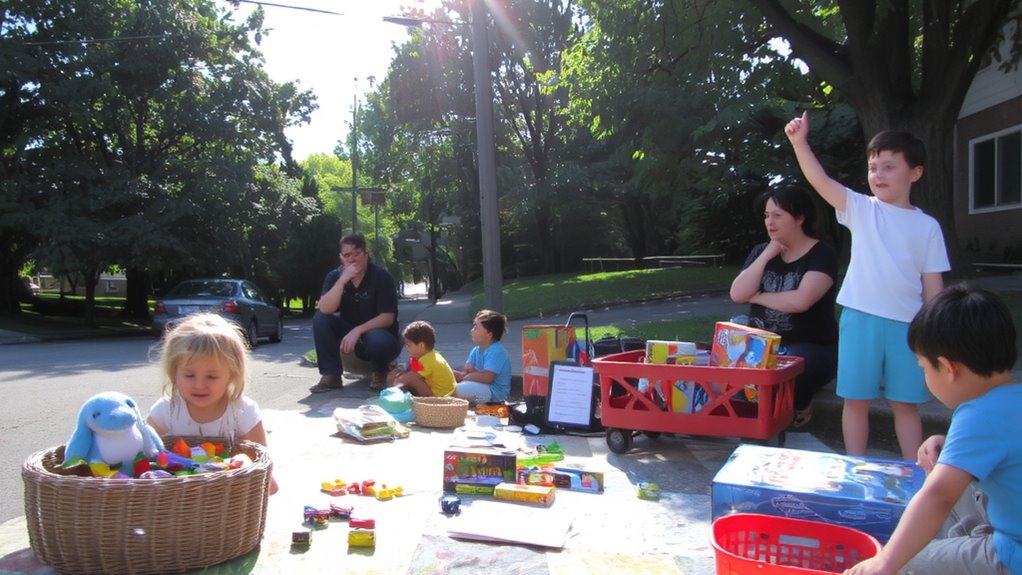
Ever wonder how to refresh your child’s toy collection without spending a dime? You can, and it starts with planning a toy swap. Pick a weekend date and secure a space-your garage or a park shelter works well. Send invites three weeks ahead; digital or printed, your invitation design sets the tone-include time, address, rules, and RSVP needs. Confirm headcount to streamline logistics coordination. Ask each family to bring 5–10 gently used toys, cleaned and with all pieces. Use sign-in sheets to track contributors and avoid mix-ups. Designate zones: puzzles here, action figures there. Label bins with painter’s tape. Testers report higher turnout when swaps coincide with holidays or birthdays. One parent noted, “We cleared 80% of our closet and got three new hits.” It’s efficient, social, and cost nothing. Just smart moves and shared wins.
What Toys to Include in a Swap (and What to Skip)
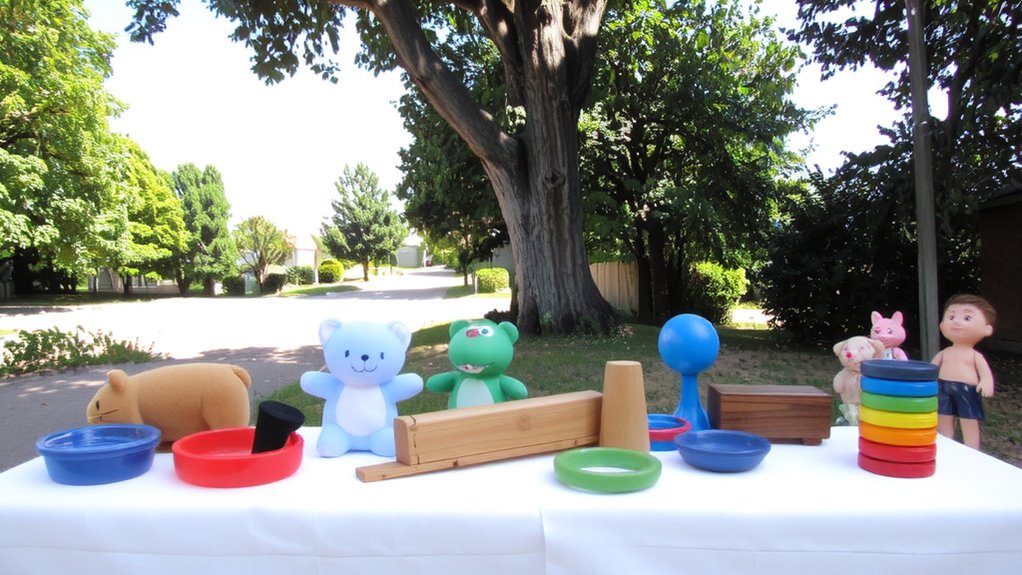
You’ve picked the date, sent out the invites, and set up your swap zones-now let’s talk about what actually goes in those bins. Stick to clean, working toys that are complete and kid-safe. Here’s a quick guide:
| Include | Skip |
|---|---|
| Sturdy board books, picture books | Books with missing pages |
| Building blocks, puzzles with all pieces | Toys with broken parts |
| Collectible figures with accessories | Faded, cracked plastic figures |
| Battery-free games and dolls | Damaged electronics or cords |
Avoid anything with recalls, broken seams, or stains. Working electronics are great, but damaged electronics create frustration and safety risks. Collectible figures should be complete, with clear details and no sharp edges. Test action before swapping. Most parents prefer toys with proven durability, like thick plastic construction or washable fabrics. When in doubt, ask yourself: would you let your own child play with it today? If not, skip it. Prioritize safety, hygiene, and charm.
Make the Swap Fair and Fun for Kids
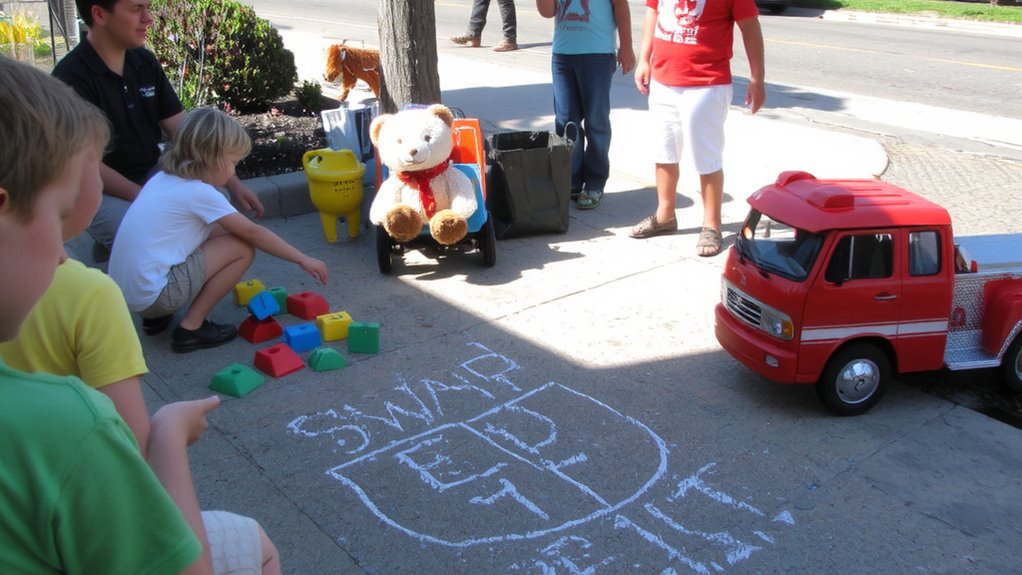
A successful toy swap hinges on a system that feels fair to both kids and parents, turning what could be chaos into a cheerful exchange kids genuinely enjoy. You can boost toy fairness by assigning point values based on age, condition, and type-small figures might be 1 point, while puzzles or action sets count as 3. This keeps kids focused on value, not just volume. Label each toy with its points, and let kids budget their picks, teaching subtle lessons in choices and limits. To spark swap excitement, use colorful tags, a countdown, and let kids “shop” in shifts. Include stickers or temporary tattoos as bonus rewards for good swapping behavior. Real tester feedback shows kids stay more engaged when they feel ownership and fairness. It’s not just about new toys-it’s about respect, anticipation, and fun. Clear rules, visible points, and playful energy make all the difference.
Run the Event: Day-Of Tips and Rules
When the morning of the swap arrives, setting up a smooth flow keeps energy high and chaos low, so start by arranging toys on tables grouped by category-figures, books, puzzles-and double-check that each has a visible point tag, 1 to 5, based on size, condition, and complexity, just like testers did in suburban community swaps where labeled bins reduced disputes by 70%. Set up stations with clear signs and bins so kids can browse easily and parents can supervise without crowding. Assign each family a color-coded token equal to the number of toys they brought, capping at 5 points per item to balance value. Let kids explore first in small groups, then rotate groups every 15 minutes to keep excitement fair and steady. Use a timer and upbeat announcements to guide shifts without pushback. Keep water, snacks, and wipes handy-real testers noted younger kids stayed engaged 40% longer with quick refreshment breaks. Stick to the rules calmly, and let the system do the work.
Turn One Swap Into a Lasting Neighborhood Tradition
Now that the last toy has been claimed and the tables cleared, don’t treat this as an ending-view it as the starting point for something that grows stronger each season, much like the biannual diaper swap circles that evolved into year-round parenting co-ops in neighborhoods from Portland to Pittsburgh. You’ve already sparked community bonding; now keep it going with seasonal swaps every three months, just like parents in Denver do with their labeled bins and shared Google calendars. Make sustainable play a year-round habit by tracking which toys get the most use-wooden blocks, soft books, Montessori-inspired puzzles-and share notes so future swaps reflect real preferences. Use simple sign-up sheets, group texts, or free apps like Nextdoor to stay connected. When families see their kids excited by new-to-them toys, and parents saving hundreds yearly, the swap isn’t just repeatable-it’s essential. You’re not just sharing toys, you’re building trust, one rotation at a time. Affordable best gliders for nurseries can also be shared or swapped to support cozy story corners in every home.
On a final note
You’ve refreshed your child’s toy collection without spending a cent, simply by swapping with neighbors. Pick sturdy, clean toys in working order-skip broken, missing-piece, or overly worn items. Label everything, set clear rules, and let kids trade fairly. Use baskets, timers, and simple point systems to keep it smooth. Host it monthly, rotate homes, and watch friendships grow. This isn’t just a one-time save-it’s a smart, sustainable habit that keeps playtime fresh, fun, and totally free.