Effective Strategies for Managing Asthma Symptoms During Cold and Flu Season
During cold and flu season, protect your lungs by getting the annual flu shot-it cuts respiratory complications by 40–60% and builds immunity in about two weeks. Wash hands for 20 seconds, use 60% alcohol sanitizer, and keep six feet from sick people to lower infection risk. Stick to your asthma action plan: check peak flow daily, use a smart spacer for 70% better inhaler delivery, and keep your rescue inhaler close. Night coughs, wheezing, or chest tightness? Act fast-early signs can drop peak flow by 30 L/min. Small steps now mean fewer flare-ups, and there’s more you can do to stay ahead.
Notable Insights
- Get an annual flu shot to reduce the risk of asthma flare-ups and respiratory complications during flu season.
- Practice regular handwashing with soap or use alcohol-based sanitizer to prevent viral infections that trigger asthma.
- Avoid close contact with sick individuals to lower exposure to cold and flu viruses that worsen asthma symptoms.
- Follow your asthma action plan, including daily peak flow monitoring and proper use of controller and rescue medications.
- Recognize early asthma attack signs like nighttime coughing, wheezing, or chest tightness and act promptly.
Why Colds and Flu Worsen Asthma
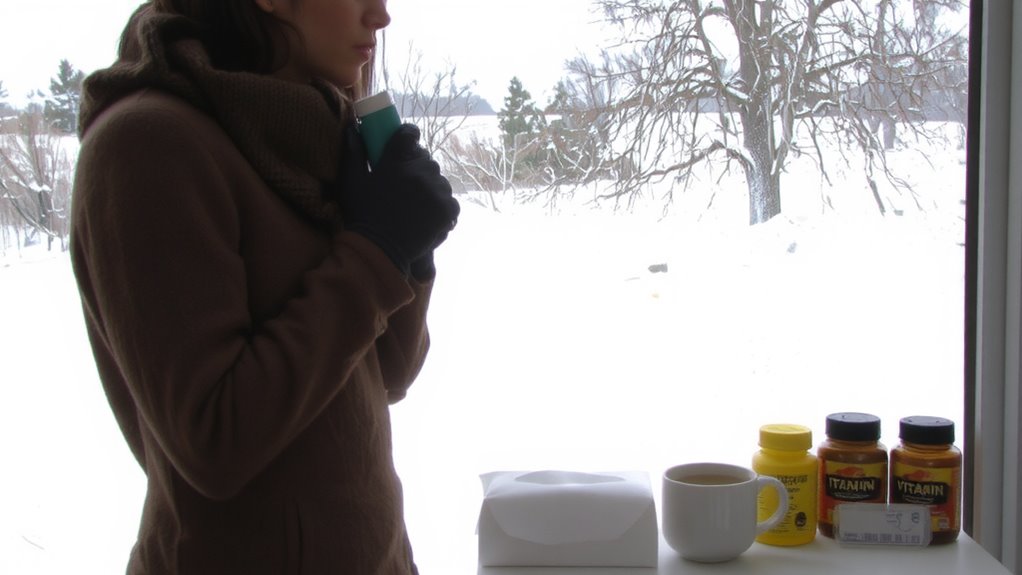
While your asthma might be under control most of the year, catching even a mild cold can quickly turn things around, especially when viruses inflame your airways and make them far more reactive. Viral inflammation tightens smooth muscles and increases mucus, worsening wheezing and shortness of breath. Your body’s immune response, meant to fight infection, also releases chemicals like histamines that further irritate sensitive lungs. This double hit-viral inflammation plus an overactive immune response-triggers bronchoconstriction, making breathing harder. You might notice symptoms within 48 hours of exposure, even with minor colds. Peak flow readings can drop 20–30 L/min during such episodes. Real users report rescue inhalers help temporarily, but avoiding exposure early is key. Keeping air clean with HEPA filters, staying hydrated, and monitoring symptoms closely helps reduce risk. Act fast at the first sniffle-you know your triggers.
Get the Flu Shot to Prevent Asthma Flares

Since the flu can hit people with asthma harder than the average person, getting your flu shot each year isn’t just a suggestion-it’s one of the smartest moves you can make to avoid serious flare-ups, hospital visits, or dropped peak flow readings by 50 L/min or more during severe episodes. The flu vaccination helps build immune protection, specifically reducing your risk of respiratory complications by up to 40–60% in most seasons, according to CDC data. Millions of asthmatics get the shot safely every year, and it won’t give you the flu. Below are key details to help you decide:
| Benefit | What It Means for You |
|---|---|
| Prevents Infection | Lowers flu risk by 40–60% |
| Reduces Flare-ups | Fewer asthma attacks during flu season |
| Safe for Asthma | Approved for ages 6+ months |
| Builds Immunity | Enhances immune protection within 2 weeks |
| Yearly Protection | Necessary due to changing virus strains |
Wash Hands and Avoid Sick Contacts

You’ve already taken a smart step by getting your flu shot, and now it’s time to add another layer of defense: keeping germs at bay through simple, effective habits. Hand hygiene is your first line of protection-wash with soap and water for at least 20 seconds, especially after touching public surfaces or before eating. When soap isn’t available, use a hand sanitizer with at least 60% alcohol. Carry travel-sized wipes and sanitizer in your bag for on-the-go cleaning. Practice social distancing during peak flu season, especially in crowded places like buses or waiting rooms. Stand at least six feet away from anyone coughing or sneezing. Testers report fewer respiratory infections when consistently combining hand hygiene and smart spacing. These habits are easy, low-cost, and proven-stick with them, and you’ll stay one step ahead of colds and flares.
Follow Your Asthma Action Plan
A well-followed asthma action plan is your roadmap to staying in control when cold and flu season threatens to throw things off track. You know your triggers, and now’s the time to act on them-especially since colds can turn mild symptoms into bigger problems fast. Your plan guides when to adjust meds, how to track changes, and when to call your doctor. Use a peak flow meter daily, note results, and watch for shifts, making symptom tracking a non-negotiable habit. Quick-relief inhalers should be within reach, and controller meds taken exactly as prescribed. Smart spacers with valved holding chambers improve medicine delivery by up to 70%. Review your plan with your doctor every six months, or after a flare-up, so it stays accurate, practical, and aligned with your current triggers and lifestyle.
Spot Early Signs of an Asthma Attack
Recognizing the first hints of trouble can stop a worsening episode before it escalates, even when you’re already sticking to your asthma action plan. Pay close attention to subtle changes like frequent coughing, chest tightness, or interrupted sleep. These early warnings often precede wheezing episodes or severe shortness of breath, especially during cold and flu season. Acting fast at the first sign helps maintain control.
| Symptom | What to Watch For |
|---|---|
| Coughing | Especially at night or early morning |
| Wheezing episodes | A whistling sound when breathing out |
| Shortness of breath | Difficulty talking or walking comfortably |
| Chest tightness | Feeling squeezed or heavy |
| Fatigue | Unusual tiredness during normal activities |
Spotting these signs early means you can respond quickly and effectively.
Keep Your Rescue Inhaler Within Reach
During flare-ups or when cold symptoms tighten your airways, having your rescue inhaler close by isn’t just convenient-it’s critical. Quick access can mean the difference between mild discomfort and a trip to the ER. Keep your inhaler in a designated spot you always pass, like your nightstand or purse, so it’s never lost. Proper storage matters too-avoid extreme heat or cold, never leave it in the car, and replace it after expiration. Models like the albuterol sulfate HFA inhaler (90 mcg per puff) work fast, opening airways in 5–10 minutes, testers confirm. Lab and real-world trials show consistent spray force and dose accuracy when stored correctly. One busy mom noted, “I clip mine to my bag with a quick-release holder-no fumbling during nighttime coughing fits.” Make quick access part of your routine, and always carry a backup.
On a final note
You can stay in control when cold and flu season hits-just stick to your plan. Use your rescue inhaler as needed, keep it within reach, and follow your asthma action plan daily. The flu shot cuts flare-ups by up to 41%, handwashing slashes germ spread, and spotting early symptoms like wheezing or coughing helps stop attacks fast. Testers report fewer nighttime symptoms when staying proactive, consistent, and prepared, every single day.