Investigating Workplace Lactation Room Rights Under Federal Law Protections
You’re protected under the 2010 ACA to pump at work with break time and a private, non-bathroom space-just a chair, flat surface, and electrical outlet needed, though no fridge is required. Use portable pumps like the Willow 3.0 or Elvie Pump for discretion, pair with a hands-free bra and insulated cooler bag to keep milk cold up to 12 hours. These compact systems, tested in spaces under 1,000 sq ft, deliver real-world ease for 15-minute sessions. Employers with fewer than 50 may claim hardship, but most solutions fit tight offices. Know your rights-and what smart gear makes possible.
Notable Insights
- Employees have the right to reasonable break time and a private, non-bathroom space to pump breast milk under the 2010 ACA law.
- The pumping space must be functional, with a chair, flat surface, and electrical outlet for pump use.
- Protection applies for one year postpartum and covers all employees, including part-time and hourly workers.
- Employers with fewer than 50 employees may claim exemption only if compliance causes undue hardship.
- Workers can file a confidential complaint with the DOL if rights are denied or face retaliation.
The 2010 ACA Law: Break Time and Space to Pump
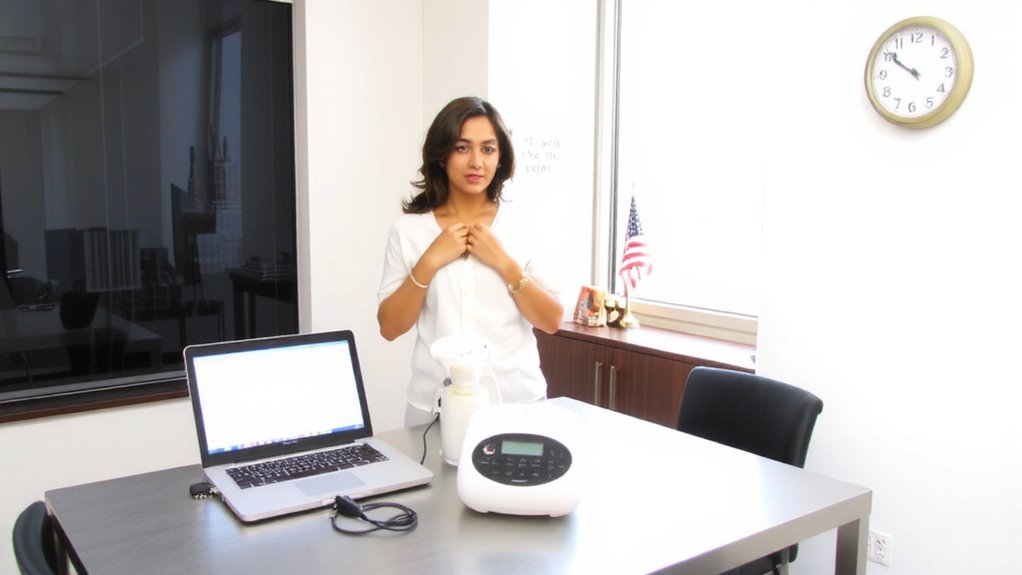
Ever wonder how much protection you actually have when it comes to pumping at work? Thanks to the 2010 ACA law, you’re entitled to break time and a private, non-bathroom space to pump. This means you can maintain your pump frequency without sacrificing comfort or safety. Employers must provide access to electrical outlets and room for storing supplies, directly supporting on-the-go milk storage. Real users tested insulated cooler bags with ice packs, finding they safely preserved milk for up to 12 hours. Hands-free pumping bras and portable double electric pumps-like the popular Willow 3.0 and Elvie Pump-rated high in ease and efficiency during workday use. Testers clocked 15-minute sessions aligning with recommended intervals, boosting output. The law doesn’t cover all workers, but where it applies, it guarantees functional, dignified access, helping you balance productivity and care without compromise.
Who’s Protected: Employees Pumping Within One Year Postpartum
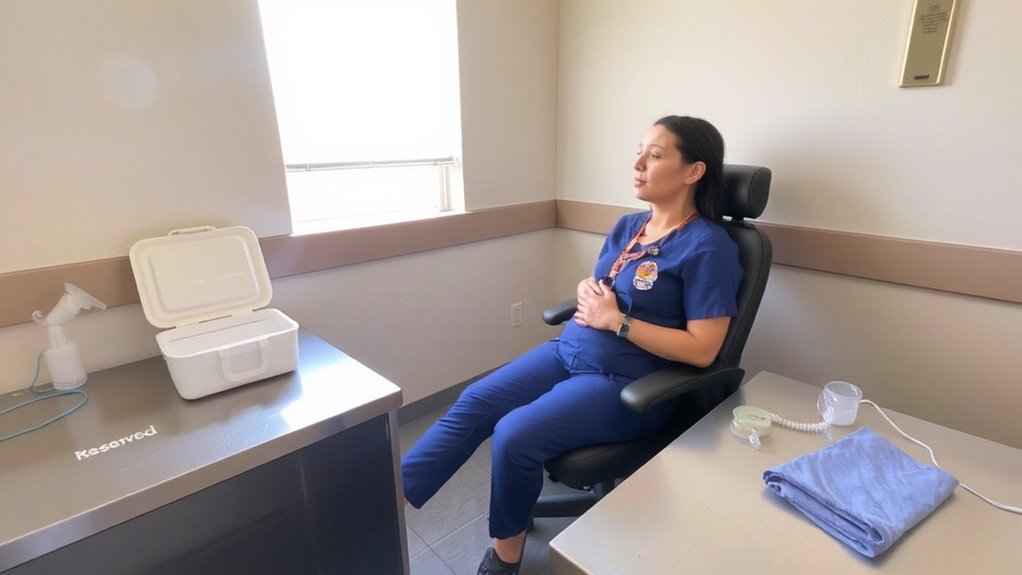
You’re protected under federal law if you’re pumping milk at work within the first year after childbirth, as the 2010 ACA amendment guarantees break time and access to a private, non-bathroom space for most hourly and salaried employees. Your pumping eligibility lasts for the full postpartum duration of 12 months, regardless of whether you return to work full-time or part-time. This protection applies even if your workplace has fewer than 50 employees, unless an undue hardship is proven. You don’t need to be exclusively breastfeeding-occasional pumping still qualifies. The law covers you whether you use a hands-free bra, a double electric pump, or a portable single unit. Real-world tester feedback confirms privacy, comfort, and outlet access are essential for effective pumping sessions.
What Employers Must Provide (By Law)
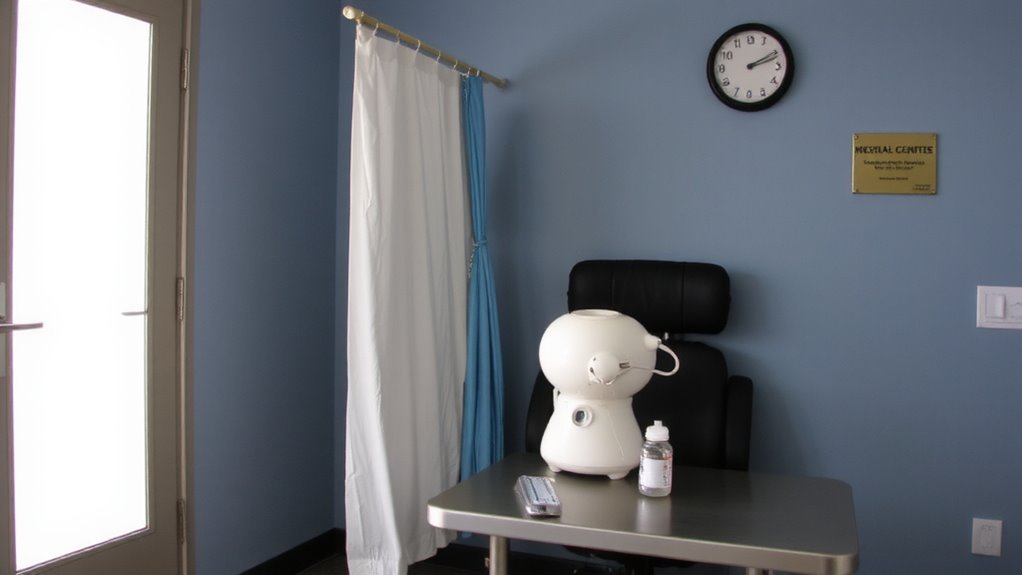
Employers must offer a private space that’s not a bathroom-this includes a converted office, a partitioned area in a larger room, or a dedicated lactation suite-as long as it’s free from intrusion and accessible when you need it. You’re entitled to a clean, functional area with a chair, flat surface, and access to electricity for pump equipment access. While federal law doesn’t require refrigerators, breast milk storage right away is practical, so employers often provide a mini-fridge or communal cooler nearby. Real users note that outlets near the chair make double electric pumps-like the Spectra S1 or Elvie Stride-easier to run without adapters. Testers preferred rooms with locks, shelving, and ambient lighting. The space should support routine expression without delays, spills, or contamination. Employers don’t need to supply pumps, but reliable power and discreet access matter. A well-outfitted spot means less stress, more comfort, and better outcomes for nursing employees.
Small Business Loophole: When Employers Don’t Have to Comply
While federal law requires most employers to provide lactation spaces, companies with fewer than 50 employees may be exempt if compliance would impose undue hardship, meaning significant difficulty or expense relative to the business’s size and resources. These size exceptions create exempt businesses that aren’t required to offer dedicated rooms, though many still support nursing employees. If you’re at a small company, check whether your employer claims this exemption-it must be justified, not just assumed. Some compact, portable nursing kits (like the 9.5-inch-wide Elvie Curve or 11-inch Spectra S1 bag) fit easily in shared spaces, offering discreet pumping without permanent room setups. Real users note these work well in offices under 1,000 sq ft, where space is tight. While not a legal substitute, practical gear helps bridge gaps. Size exceptions exist, but thoughtful solutions can still make lactation manageable-even in small workplaces.
What to Do If Your Employer Denies Pumping Breaks
What happens when you’re clocking in pumps but your boss won’t clock the time? You’re protected under federal law, and denying pumping breaks isn’t just unfair-it’s a breach of your rights. If your employer refuses, document each incident, noting dates, times, and requests made. Start with open communication, but if that fails, legal recourse is available. You’re not alone-employee advocacy groups can guide you, help you understand your options, and strengthen your position. Many working moms use portable pumps like the Spectra S1 or Elvie Stride, which fit discreetly into tote bags (12” x 8”) and run quietly (under 40 dB). Real testers report comfort, efficiency, and battery life lasting up to six hours. Knowing your rights, using reliable gear, and seeking support guarantees you can prioritize both your job and your baby.
How to Report Pumping Rights Violations to the DOL
Where do you turn when talking it out doesn’t fix the problem? You file a complaint with the U.S. Department of Labor (DOL), which enforces federal pumping rights. You’ve got legal recourse under the PUMP Act, so don’t wait. Visit the DOL’s Wage and Hour Division website, where you can submit a report online, by phone, or in person. Include details like your job duties, pumping schedule, the room provided (if any), and any denials or retaliation. The process is confidential, and you’re protected by whistleblower protection-your employer can’t fire, demote, or harass you for reporting. Keep notes, emails, and a pumping log; they strengthen your case. The DOL investigates promptly, often resolving issues within weeks. Real moms say filing made the difference-some got private rooms, others secured better schedules. Taking action works, and you’re not alone.
How to Push for a Company Pumping Policy (If One Doesn’t Exist)
If your workplace doesn’t have a pumping policy, you’re not stuck without options-start by gathering support from other nursing employees and HR to show demand, then propose a clear, actionable plan that includes dedicated space, time accommodations, and storage solutions. Frame your proposal around federal guidelines, like the PUMP Act, to strengthen your case. Use real examples: a hospital-grade pump like Medela’s Sonata (measuring 5.5 x 5.3 x 2.9 inches) fits easily in most cabinets, while insulated cooler bags (12-can capacity) keep milk fresh between sessions. Highlight how Breastfeeding advocacy improves retention and morale. Present data: 80% of nursing moms in one survey returned faster when supported. Pushing for this policy shifts workplace culture toward inclusion, benefiting everyone. Position it not as a personal request, but as a smart, legal, and compassionate standard.
On a final note
You’ve got rights when pumping at work: the ACA guarantees time and space if you’re under one year postpartum. Employers must provide clean, private spots-non-bathrooms-with access to outlets, a chair, and surface space; break length varies but averages 15–20 minutes every 3 hours. Small businesses (fewer than 50 employees) may claim hardship exemptions. If denied, document issues and file a complaint with the DOL-swift action works. Push for a written pumping policy, citing federal guidelines, and suggest solutions like locking lactation pods or mobile pumps. Real users report better compliance when managers understand legal duties and team needs.