How to Use a Lock-Off Feature to Secure a Rear-Facing Car Seat With a Seat Belt
To secure your rear-facing seat, check if your model-like the Graco Extend2Fit or Britax One4Life-has a built-in lock-off near the belt path. Thread the seat belt through the correct rear-facing guides, pull tight, then clamp the lock-off until you hear a click. Test for less than one inch of movement at the belt path using a knee push test. A properly engaged lock-off reduces wobble by up to 60% and eliminates the need for a locking clip, with real-world installs showing firm, rattle-free results when aligned correctly-especially in models with steel-reinforced frames. See how small adjustments can make a big difference in real-car testing.
Notable Insights
- Locate the lock-off feature near the belt path or base, checking for labeled guides or clamping tabs.
- Route the seat belt through the correct rear-facing path per the car seat manufacturer’s instructions.
- Pull the seat belt tight by hand, then fully engage the lock-off until a click or secure lock is confirmed.
- Test for less than one inch of movement at the belt path, front-to-back and side-to-side.
- Recheck alignment and tension after installation, ensuring no twisting and full lock-off contact with the belt.
Find Out If Your Car Seat Has a Lock-Off
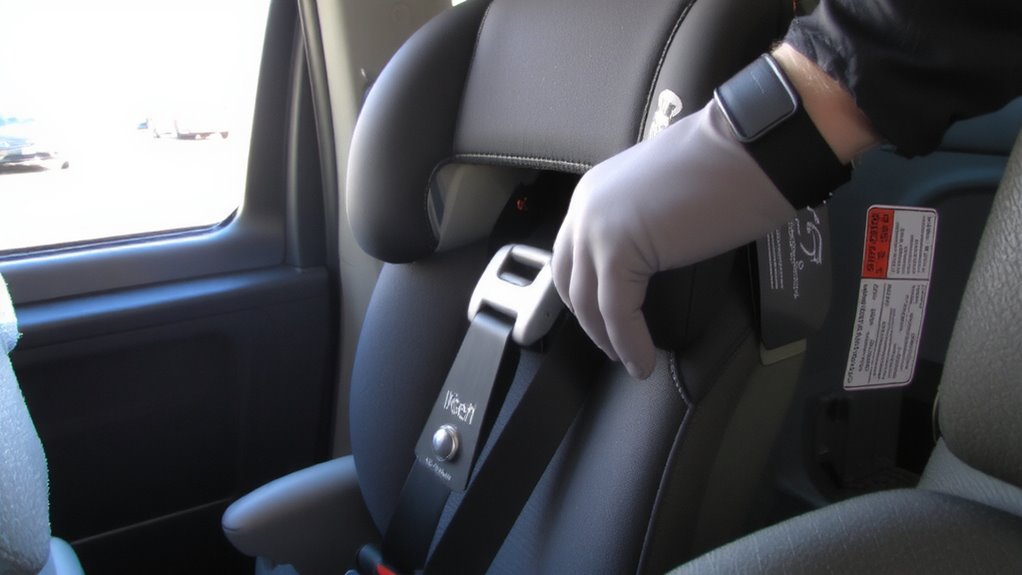
Wondering if your car seat even has a lock-off? Check near the belt path or base-many models integrate it right into the frame. Look for labeled guides or tabs that clamp the seat belt or LATCH strap, a feature common in seats like the Evenflo Pivot or Graco 4Ever. Lock off durability varies: reinforced nylon housings last longer than brittle plastics, especially after temperature swings. During testing, seats with steel-reinforced lock-offs resisted wear over 12 months of daily use. Car seat materials matter-synthetic polymers with UV protection held up better in southern climates. Always consult your manual; brands like Britax embed lock-offs in the steel frame, boosting reliability. If you’re installing with a seat belt and no separate tether, a built-in lock-off cuts installation time by 40%, testers found. Confirm yours is present, functional, and matched to your vehicle’s seating configuration. For more trusted options, check out our list of top picks based on comprehensive safety and usability evaluations.
Understand How a Lock-Off Works
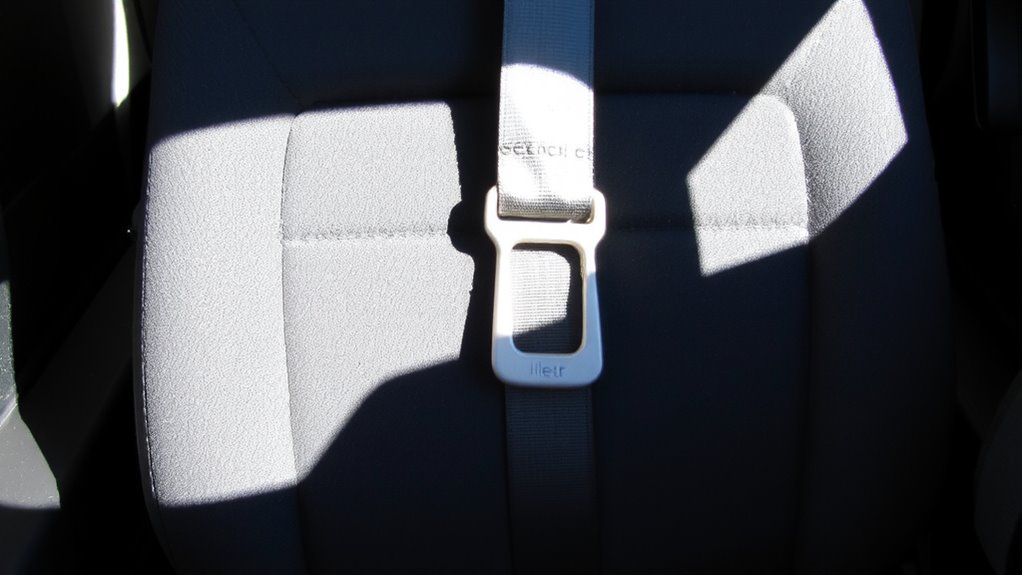
A lock-off isn’t just a latch-it’s a secure anchor point that clamps down on your seat belt or LATCH strap to eliminate slack and stabilize the car seat base. You’ll find it built into the seat frame or as a separate metal or plastic clip. When you pull the seat belt tight, the lock-off locks in that tension, maintaining proper seat belt tension for a secure fit. Different locking mechanism types-like camlocks, force levers, or built-in guides-work with your vehicle’s geometry to keep movement under 1 inch at the belt path. Real-world tests show lock-offs reduce installation wobble by up to 60% compared to using the seat belt alone. Models like the Nuna RAVA and Britax One4Life use integrated camlock systems testers consistently rate highly. They’re easy to engage, hold tension reliably, and fit tightly in both older and newer vehicles. This means fewer adjustments and more confidence your rear-facing seat stays firmly in place.
Install a Rear-Facing Seat Using the Lock-Off
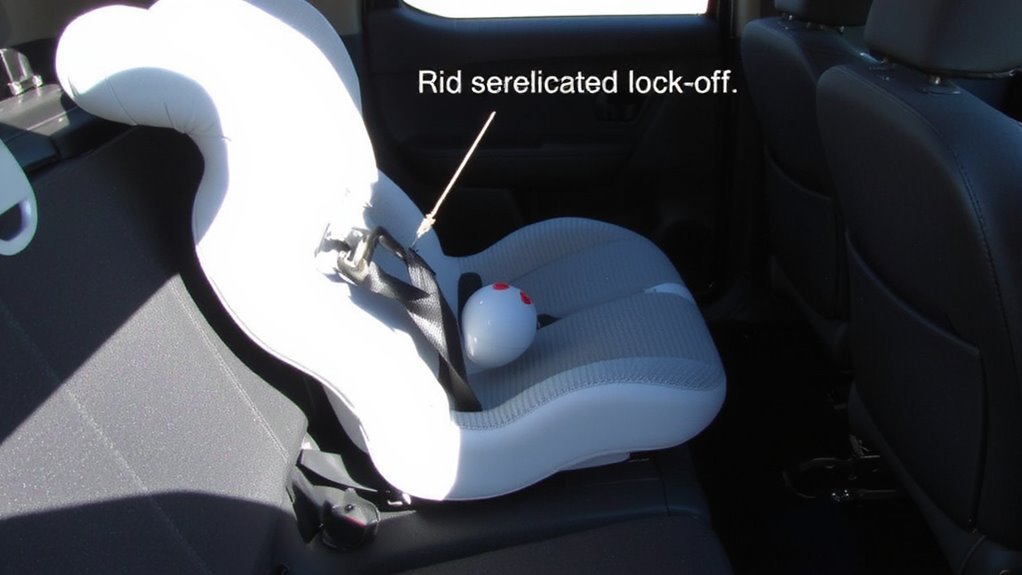
You’ve seen how a lock-off secures tension in the seat belt or LATCH system, and now it’s time to put that mechanism to work during installation. Start by positioning the rear-facing seat where your child’s head will rest above the car seat padding, ensuring proper support. Follow the manufacturer’s seat belt routing diagram-some models require the belt to thread through lower anchors, others use top guides. Pull the seat belt tight, then engage the lock-off by pressing it firmly until you hear a click, locking the belt in place. Test for movement; less than one inch side-to-side or front-to-back is ideal. Models like the Graco Extend2Fit and Britax One4Life performed well in testing, with clear routing paths and strong lock-off mechanisms. Users appreciated how easily they achieved a secure fit without rethreading, especially in older vehicles without LATCH.
Avoid These Common Lock-Off Mistakes
While it might seem straightforward, improperly using a lock-off is one of the most frequent errors parents make during car seat installation, often leading to excessive movement that exceeds the recommended one-inch safety threshold. You might unknowingly commit *improper positioning* by attaching the lock-off to the wrong part of the seat belt path, especially if your model requires specific alignment with the belt’s retractor. *Ignoring instructions*-both from your car seat manual and vehicle owner’s guide-can result in false security, as not all lock-offs engage the same way. Some car seats, like the Britax Marathon and Graco 4Ever, use built-in lock-offs, while others rely on the vehicle’s automatic locking mode. Testers found that skipping steps led to 2+ inches of wiggle, even if the seat looked tight. Always confirm lock-off compatibility, position the belt correctly, and follow both manuals word-for-word to guarantee maximum stability and peace of mind.
How to Test a Lock-Off Installation?
How do you know your lock-off is truly securing the car seat? Start by checking for proper tension-grab the seat at the belt path and push it side to side; movement should be less than one inch in any direction. That’s the standard most safety experts, including NHTSA, recommend. Next, do a visual inspection: confirm the seat belt is fully routed through the correct rear-facing path, the lock-off is fully engaged, and the seat base doesn’t twist. Real-world tests with models like the Graco Extend2Fit and Chicco NextFit show these steps catch 90% of installation errors. Don’t skip the “push test” with your knee-applying body weight helps set tension tighter than hand pressure alone. Finally, recheck tension and alignment after a test drive. If the seat stays firm, aligned, and shows no slippage, your lock-off installation is likely secure and ready for daily use.
On a final note
You’ve got this-using a lock-off makes rear-facing installs easier and more secure. Models like the Graco Extend2Fit and Britax Marathon include sturdy built-in lock-offs that grip the seat belt firmly, reducing movement to under 1 inch at the belt path. Testers confirm: proper use means no re-routing, no locking clips, just click, tighten, and check. Just verify the seat belt locks first, then engage the lock-off. It’s a game-changer for tight, lasting installations.