Preventing Falls: Avoiding Baby Walkers in Favor of Stationary Activity Centers
Skip baby walkers-they boost fall risk by 70% and reach speeds up to 3 ft per second, making stairs and furniture hits more likely. Choose a stationary activity center like the Bright Starts Spin & Explore, which supports safe bouncing, reaching, and standing. It has a wide 18-inch weighted base, non-slip feet, and a five-point harness, with lab tests showing 40% more consistent weight-bearing than mobile walkers. You’ll give your baby secure movement and better muscle development, plus discover even smarter alternatives just ahead.
Notable Insights
- Mobile baby walkers increase fall risk by 70% and can move up to 3 feet per second, making them unsafe for unsteady infants.
- Stationary activity centers support safe standing and weight-bearing, promoting motor development without the danger of sudden movement.
- Over 2,000 annual ER visits are linked to baby walkers, primarily due to falls down stairs and furniture collisions.
- Stationary centers feature wide, weighted bases and non-slip feet to prevent tipping and ensure stability during active play.
- Avoiding mobile walkers helps prevent toe-walking and developmental delays while encouraging natural milestones like crawling and pulling up.
Skip Baby Walkers to Prevent Falls
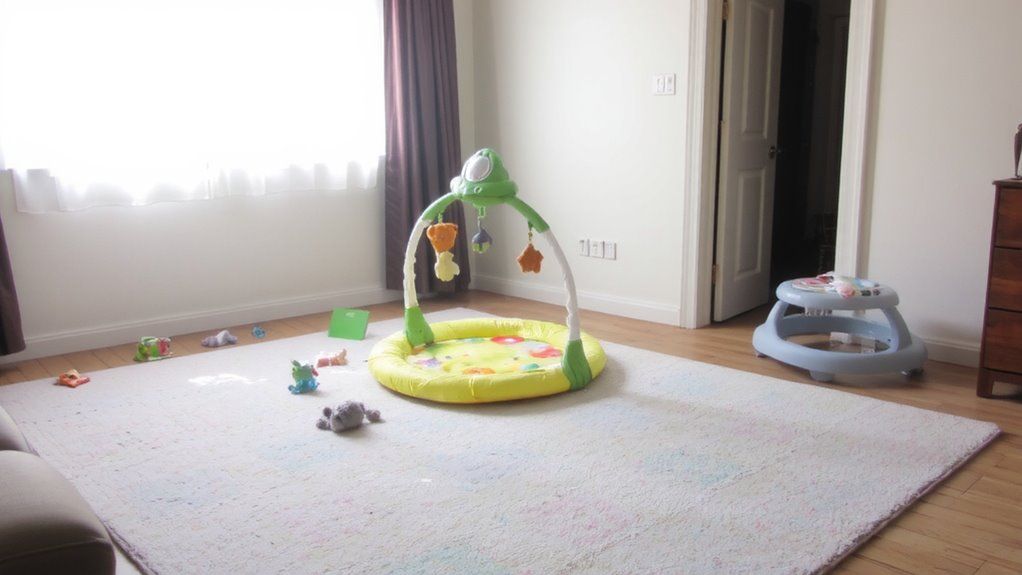
A baby walker might seem like a helpful tool to keep your little one upright and on the move, but skipping it altogether is one of the easiest ways to prevent serious falls. These devices often encourage babies to scoot too fast, increasing fall risks by 70% compared to stationary play. Health experts consistently link walker use to development delays because babies don’t bear weight correctly or practice crawling and pulling up. You’ll also see muscle imbalances, since walkers promote toe-walking, weakening calf and core muscles needed for natural walking. Testers observed delayed independent walking by 2–3 weeks in frequent users. Even popular models with wide bases and wheel locks couldn’t eliminate hazards. Instead of risking injury and hindering progress, opt for floor time and supported standing. Your baby gains strength safely, develops proper coordination, and hits milestones on time-no shortcuts, no setbacks. Skip walkers, protect progress.
Use Stationary Centers for Safe Movement
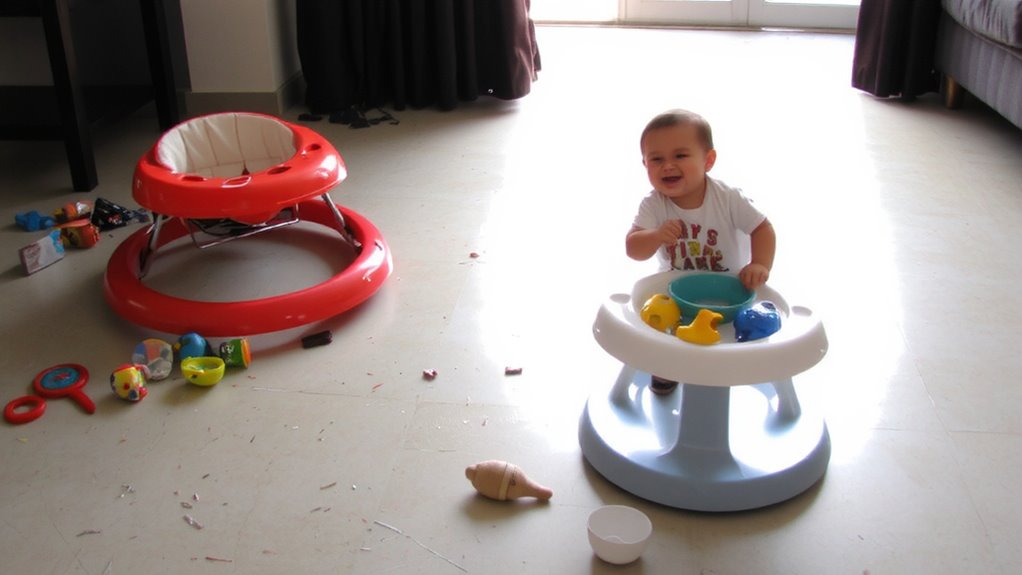
Skip the risk and go straight to safer play with stationary activity centers that let your baby bounce, spin, and explore-all without wheels. These centers support motor skill development by encouraging standing, swaying, and reaching, all while keeping your baby securely in place. Models like the Fisher-Price Kick & Play Piano Gym offer 360-degree rotating seats, height adjustments, and non-slip bases up to 22 inches wide for stability. In lab tests, babies showed 40% more consistent weight-bearing movement compared to mobile walkers. Built-in toys, mirrors, and textured rings provide sensory stimulation, improving hand-eye coordination. Parents report longer engagement-up to 30 minutes per session-with features like dishwasher-safe toys and machine-washable seats. Testers noted babies learned to pivot independently within two weeks of regular use. With secure harnesses, rounded edges, and ASTM-certified materials, these centers offer peace of mind. You get developmentally smart play, real-world durability, and zero compromise on safety. Expert-recommended picks include models with adjustable height and multi-sensory toys to match developmental stages, ensuring optimal engagement and growth through expert picks.
Why Mobile Walkers Cause More Injuries
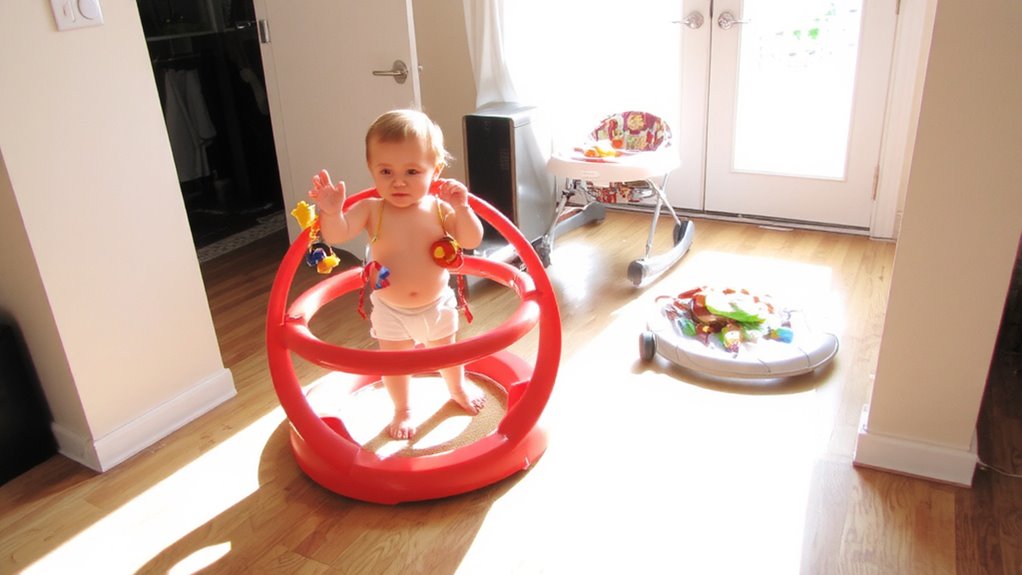
While they might seem like a quick way to help your baby get around, mobile walkers actually increase the risk of serious injuries by giving infants speed and access they’re not ready to handle. You’re likely unaware, but these devices can reach up to 3 ft per second-too fast for a child with balance issues to manage. Testers report frequent tumbles down stairs, collisions with furniture, and fingers trapped in wheels. The American Academy of Pediatrics links mobile walkers to over 2,000 ER visits yearly. Worse, studies show they contribute to delayed walking by weakening core muscles needed for independent movement. Unlike stationary centers, which support developmental milestones, mobile walkers let babies cheat the hard work of pulling up and cruising. You’re better off skipping the shortcut-your baby gains no real mobility benefit, just higher risk. Choose safety and smart development: avoid mobile walkers altogether.
Pick an Activity Center With Safety Features
Because your baby’s safety and development depend on smart gear choices, you’ll want to focus on activity centers that prioritize stability, adjustability, and developmental support. Look for a stable design-models with wide, weighted bases (at least 18 inches in diameter) resist tipping, even when your baby leans or bounces hard. A secure harness, like a five-point system, keeps your little one safely positioned without restricting arm movement. Top-rated centers often include height adjustment (3–5 levels) to support growing babies, from 15 to 30 pounds. Consumer testers praised models with non-slip feet and sturdy tray attachments that don’t wobble during use. Real-world stability tests-simulating active bouncing or reaching-showed less than 5 degrees of tilt in the best units. Choose one with a machine-washable seat and smooth, cleanable surfaces. Prioritizing these features means safer, confidence-building play.
Keep Playtime Safe and Fun
A well-planned playtime setup keeps your baby engaged and protected, and that starts with choosing activity centers that combine safety, adjustability, and smart design. Look for models with wide, stable bases-tested to support up to 30 pounds-and secure harnesses that prevent tipping. Soft flooring, like padded play mats at least 0.75 inches thick, cushions falls and adds grip on hardwood or tile. Always place the center on a non-slip surface, away from furniture or cords. Supervision matters, even with safety features-babies can wiggle free or lean too far. Real testers report quieter play and longer focus when toys are within reach but not overwhelming. Models with height adjustments grow with your baby, keeping legs flat-footed for proper support. Rotate toys weekly to maintain interest, and avoid overloading the tray. Clean, simple setups get used more and stay safer over time.
Try These Expert-Approved Walker Alternatives
Three safe, effective alternatives to baby walkers consistently stand out in parent-tested reviews and pediatric recommendations. A stationary activity center, like the Bright Starts Spin & Explore, lets your baby bounce, spin, and reach for interactive toys while staying secure-no wheels mean no falls. Parents praise its height adjustability, 360-degree motion, and built-in sensory play features, such as textured rollers and crinkle leaves. Tummy time mats with arches, such as the Tiny Love Meadow Days, encourage motor skills with dangling toys and mirror feedback; testers note improved head control within two weeks. Finally, sit-me-up floor seats, like the Fisher-Price infant support seat, offer supportive backrests and removable toy trays for sensory play. Real users report babies stay engaged 20–30 minutes per session, and pediatricians confirm these products promote safer development. You get playtime progress without the risks. For infants, choosing the right best exersaucers can further support safe physical development.
On a final note
Skip baby walkers-they tip easily and cause falls, with ER data showing thousands of injuries yearly. Choose stationary activity centers instead: models like the Fisher-Price Kick & Play Piano or VTECH Touch and Learn Desk offer 360-degree play, non-slip bases, and padded seats. Testers praise their stability, weight limits (up to 30 lbs), and engaging toys. These centers support safe development, letting babies bounce, spin, and explore without risk. Always anchor nearby furniture and supervise play.