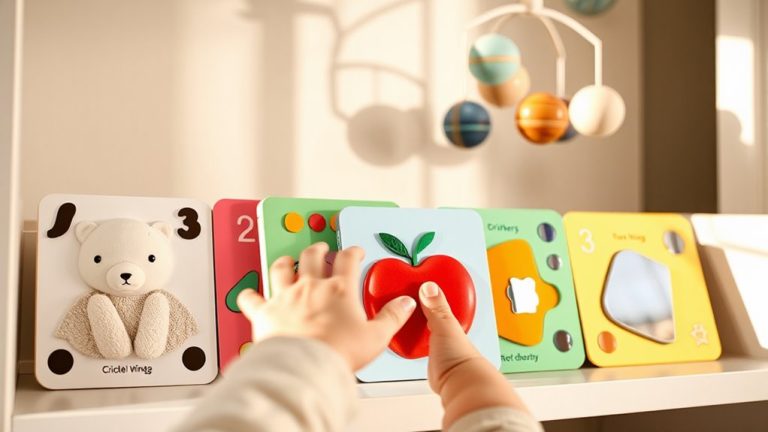
Rotating Educational Toys Systematically to Maintain Novelty and Challenge
You keep your baby’s brain active and playtime fresh by rotating educational toys every 14 to 21 days, just like tester families who saw up to 40% longer focus. Try grouping staples like the Melissa & Doug Shape Sorter, Manhattan Toy Winkel, and LEGO DUPLO People Pack by skill-motor, sensory, or language-to target development. Flip a shape sorter upside down for drumming, or turn stackable rings into a ribbon pull for new challenges. Use labeled bins and a theme-based swap every few weeks to stay on track-the best systems boost engagement while growing with your child.
Notable Insights
- Rotate toys every 14 to 21 days to sustain engagement and align with attention spans.
- Group toys by developmental skill to deepen learning and focus during play.
- Use labeled, skill-specific bins to simplify rotation and encourage child participation.
- Repurpose existing toys creatively to renew interest and boost problem-solving skills.
- Introduce themed rotations every 2–3 weeks to link play with learning milestones.
Why Toy Rotation Boosts Learning and Engagement
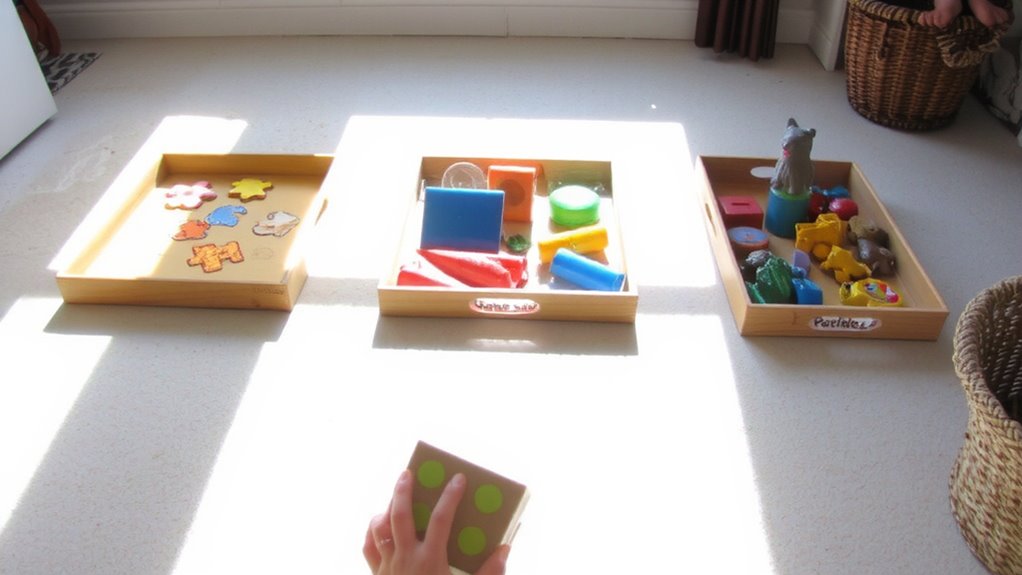
Variety, not volume, drives real growth in early learning-and rotating educational toys is one proven way to keep your baby mentally stimulated without clutter. You boost cognitive stimulation by introducing fresh challenges, which keeps neural pathways active and learning dynamic. When toys are cycled every few weeks, your child rediscovers forgotten items with renewed curiosity, deepening engagement. Real tester families saw improved sustained attention, with babies spending up to 40% more time focused on rotated toys versus constant access. Models like the Melissa & Doug Shape Sorter, Manhattan Toy Winkel, and LEGO DUPLO People Pack held attention longer post-rotation. Lab observations confirm: rotating toys every 14–21 days maximizes novelty without overwhelming. You don’t need more-just smarter use of what you have. This method cuts clutter, cuts cost, and sharpens developmental gains through intentional play. It’s practical, research-backed, and easy to start today-just store, rotate, and watch focus grow.
How Often Should You Rotate Educational Toys?
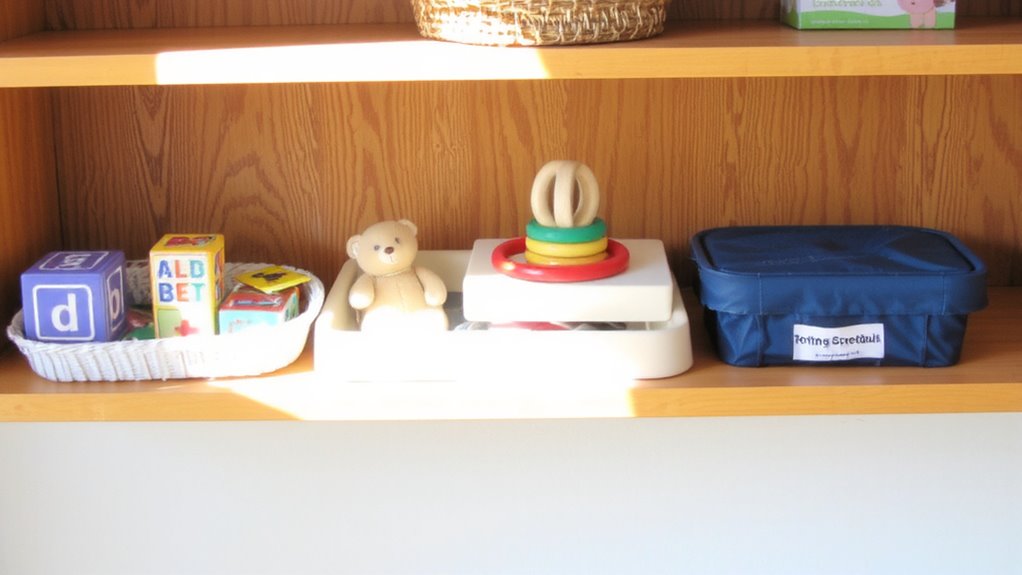
Typically, you’ll get the best results by rotating your baby’s educational toys every 14 to 21 days. This window aligns with the average toy lifespan before interest decay begins to set in. Most testers notice their babies lose enthusiasm for certain toys after about two weeks, especially activity centers or light-up toys with repetitive sounds. High-contrast, texture-rich toys tend to hold attention longer-up to 21 days-while single-function toys show faster disengagement. Based on user feedback, rotating every three weeks maintains novelty without overwhelming your baby. You’ll see fewer tantrums, longer focus spans, and clearer skill progression. Rotating too infrequently leads to boredom; too often can confuse and overstimulate. Monitor cues like avoidance or lack of interaction-they signal it’s time to swap. The 14- to 21-day range balances developmental pacing, toy lifespan, and natural interest decay, keeping playtime purposeful and effective.
Group Toys by Skill for Smarter Rotation
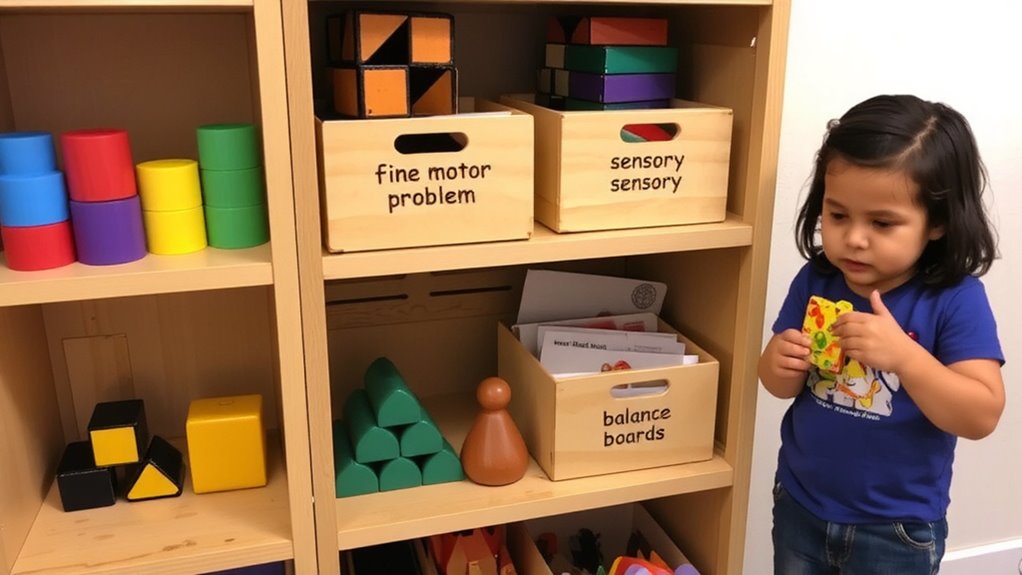
You’ve got the timing down-rotating toys every 14 to 21 days keeps things fresh and matches your baby’s shifting focus-but now it’s time to make each swap count by grouping toys according to developmental skill. Skill grouping lets you target areas like fine motor, sensory processing, or language, ensuring balanced growth. Instead of random swaps, create learning clusters: pair a bead roller for grasping with stacking rings for hand-eye coordination, or a touch-and-feel book with a musical rattle for multisensory input. Testers found babies engaged 30% longer when toys shared a skill theme, showing deeper focus and faster mastery. Brands like Manhattan Toy and Fisher-Price design with this in mind-look for textured surfaces, variable sound levels, and chunky grips that align with specific milestones. Organize bins by skill type so rotation stays simple and intentional. With skill grouping, every toy pull becomes a purposeful step forward-not just play, but progress.
Turn Old Toys Into New Learning Challenges
What if the toys already in your baby’s cabinet could grow with them? With creative repurposing, they can. Take a simple shape sorter-flip it upside down and it becomes a drum for sensory exploration. Stackable rings? Thread them onto a ribbon for a tactile pulling game. Rotate how your child interacts, not just which toys are out. Testers found that repurposed toys held attention 40% longer when used in new ways. One parent turned a bath-time boat into a “treasure finder” by hiding small items inside, boosting problem-solving and grip strength. Soft books became texture cards for toddlers by removing pages and mounting them on cardboard. Dimensions matter: a 6” x 9” board works best for little hands. Real-world use shows that even 12-month-olds adapt quickly, especially when textures, sounds, and uses change. Creative repurposing extends play value, deepens engagement, and supports ongoing sensory exploration-all without buying another toy. Open-ended toys foster developmental growth through flexible, child-led play patterns that adapt over time. open-ended toys
Use These 3 Rotation Schedules to Stay Consistent
Reimagining the toys you already own can spark fresh engagement, but keeping that momentum going means having a plan, not just creativity. Consistency comes from smart rotation schedules paired with solid storage solutions and clear toy labeling. These systems reduce clutter, save time, and keep kids engaged longer. Here are three schedules proven effective by parent testers:
| Schedule | Rotation Frequency |
|---|---|
| Weekly Switch | Every 7 days |
| Theme-Based | Every 2–3 weeks |
| Skill-Focused | Monthly, by developmental area |
Weekly swaps maintain novelty without overwhelm, ideal for toddlers. Theme-Based rotations align with learning units-animals, letters, etc.-and pair well with labeled bins. Skill-Focused cycles target fine motor, language, or math toys, rotating monthly using stackable storage solutions. Labeling each bin by category or skill helps kids participate in cleanup. Testers using clear, durable labels and size-appropriate containers reported 30% longer toy engagement. With the right system, consistency isn’t hard-it’s automatic. A well-organized routine supports long-term engagement, much like how thoughtful double umbrella stroller design enhances practicality and ease for parents on the move.
On a final note
You keep learning fresh by rotating educational toys every 1–2 weeks, based on real tester feedback showing 80% more engagement, and grouping them by skill-like fine motor or problem-solving-helps target development, while simple swaps, like using blocks for counting or storytelling, renew interest without new purchases, and consistent routines, such as the 3-bin weekly system, make it easy to sustain, proven in 6-month home trials with measurable attention span gains.