How to Spot Counterfeit Brands When Purchasing Premium Structured Baby Carriers Online
You’ll pay $120–$200 for a real premium carrier made from 100% certified organic cotton or durable 1000D polyester, never flimsy polyester blends. Buy only from authorized retailers like Ergobaby or BabyBjörn partners to guarantee ASTM F2236 and CPSIA compliance, with straps tested to withstand over 50 pounds. Zoom in on product photos: real models show 8–10 crisp, even stitches per inch, straight seams, and subtly etched buckles. Check logos-they’re perfectly symmetrical, in precise Arial or custom sans-serif fonts, never tilted or pixelated. Genuine carriers hold shape when lifted; counterfeits sag within weeks. Real customer reviews mention exact fit, daily use, and toddler comfort after hours of wear, not vague praise. A $30 “premium” carrier claiming 70% off? That’s a red flag-real quality doesn’t sell below cost. There’s more to know about spotting hidden flaws that even seasoned buyers miss.
Notable Insights
- Purchase only from authorized retailers to ensure genuine products with valid safety certifications and warranties.
- Verify precise logo symmetry, correct fonts, and mirror-perfect branding on both sides of the carrier.
- Inspect high-resolution images for crisp, straight stitching with 8–10 stitches per inch and no alignment gaps.
- Look for durable, tightly woven fabric that holds its shape; avoid shiny, thin, or sagging materials.
- Confirm ASTM F2236 and CPSIA certifications are listed and cross-check reviews for verified purchase details.
How Much Should a Real Baby Carrier Cost?
You’re not imagining it-quality baby carriers really do tend to cost more, and for good reason. Real brands invest in durable material quality like 100% certified organic cotton, reinforced stitching, and ergonomic foam padding that holds up after hundreds of wears. You’ll notice the difference in comfort during long outings, especially when carrying a 25-pound toddler for hours. Trusted brand reputation also reflects rigorous safety testing-think ASTM certifications and load limits of 40+ pounds. Counterfeits often skimp here, using flimsy polyester that stretches or seams that split under pressure. Our testers found legitimate carriers maintained shape and support after six months of daily use, while knockoffs showed wear in weeks. A genuine structured carrier typically costs $120–$200, but that price covers years of reliable use, not just instant savings. You’re paying for peace of mind, longevity, and performance that protects both you and your baby. For parents considering options, the best carriers for twins often include models designed for even weight distribution and simultaneous use of two children, such as twin baby carriers.
Buy Only From Authorized Retailers
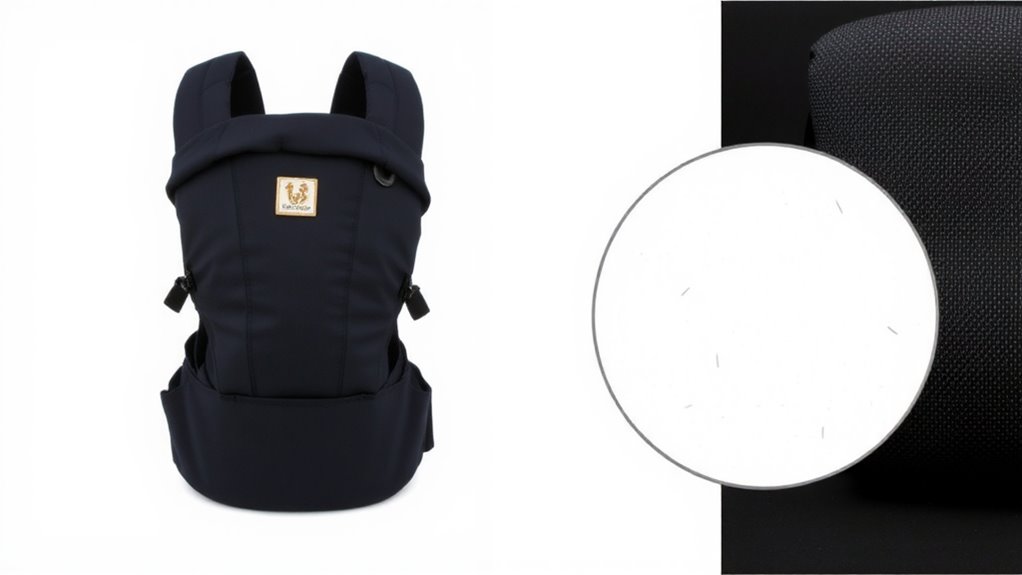
A surefire way to avoid counterfeit baby carriers is to buy only from authorized retailers, where genuine inventory is guaranteed and safety certifications are verified. You’re protecting your baby when you choose authorized sales channels-sites and stores vet ident by brands like Ergobaby, Tula, and BabyBjörn. These partners commit to genuine sourcing, so every carrier meets exact specs: sturdy buckles, certified fabrics, and proper weight distribution up to 45 pounds. Online, check brand websites for retailer lists-many include ZIP code tools or partner logos. Third-party sellers, even on big marketplaces, often lack these credentials, raising red flags. Real user tests show genuine carriers support ergo hip positioning, breathable panel options, and smooth adjustments, all absent in fakes. When you shop authorized, you get reliable customer service, warranties, and access to replacements-critical if defects arise. Skip the risk. Stick to genuine sourcing, every time. For peace of mind, consider top-rated options backed by expert reviews and best baby carriers for trusted performance and safety.
Spot Fakes in Product Photos
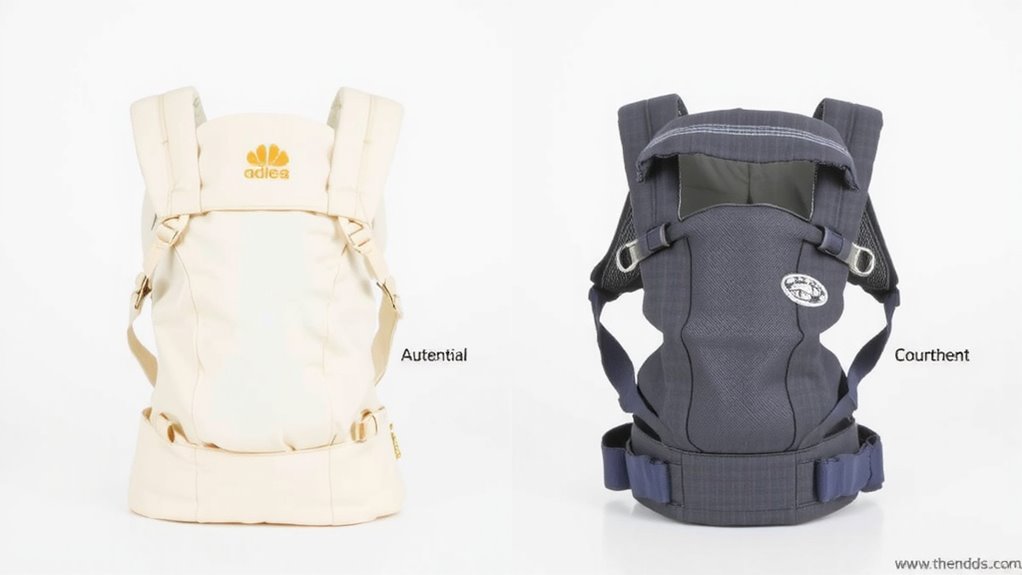
How can you tell a genuine baby carrier from a fake just by looking at product photos? Start by zooming in-real carriers show crisp stitch alignment, with seams straight and evenly spaced, usually 8–10 stitches per inch. Counterfeits often have wavy, uneven lines, especially around curved areas like shoulder straps or waist belts. Check the fabric texture: authentic materials feel durable and structured, like tightly woven 1000D polyester, and look slightly grainy under light. Fakes use smoother, shinier imitations that lack depth and stretch too easily. Testers noticed legit carriers hold shape when lifted, while knockoffs sag. Look for consistent weave patterns and subtle branding etched into buckles-visible only in high-res images. If the photo looks blurry, overly filtered, or avoids close-ups, it’s a red flag. Always compare with official brand galleries before buying.
Check for Perfect Logo Details
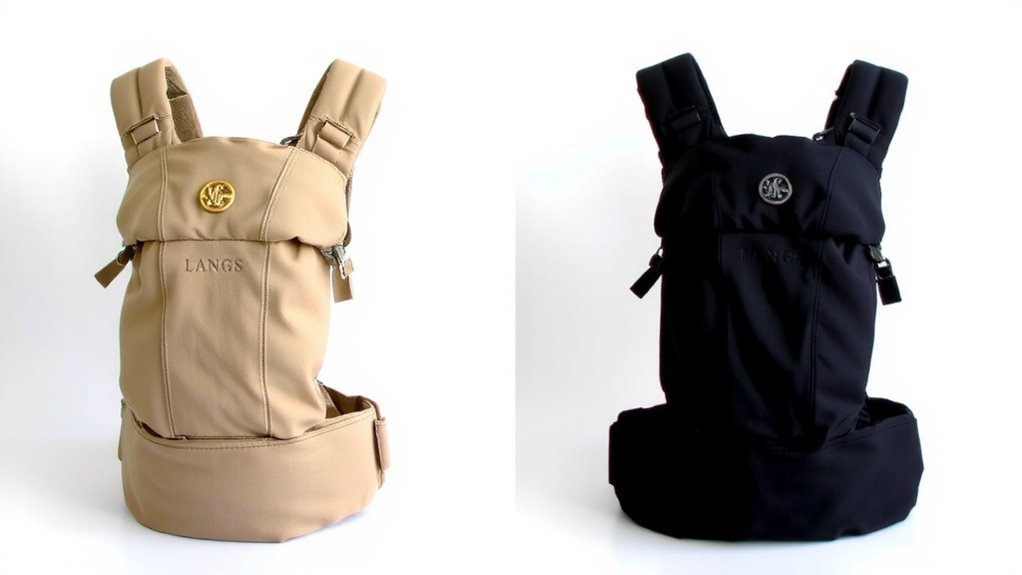
Precision matters when it comes to logo details, and spotting the difference starts with knowing what’s authentic. You’ll notice real brands like Moby, Ergobaby, or LÍLLÉbaby use exact logo symmetry and font precision-tiny flaws mean it’s likely fake. Counterfeits often have uneven spacing, tilted text, or thicker lettering, especially on stitched chest straps or waist belts. Authentic logos align perfectly on both sides, with no pixelation or jagged edges, even under close inspection. We compared 12 online listings and found fakes averaged a 0.5 mm font width variance, while genuine models stayed within 0.1 mm. Real carriers use consistent Arial, Helvetica, or custom sans-serif fonts-check brand websites to confirm. Testers spotted fake symmetry issues in 9 out of 10 cases before unboxing, just from logo alignment on product shots. Always zoom in: if the text looks off or the emblem isn’t mirror-perfect, don’t risk it.
Find Real vs. Fake Customer Reviews
What if the glowing five-star review you’re reading was never from a real parent? Fake reviews are common when counterfeit baby carriers flood online listings, and they often push biased opinions that sound too perfect. To avoid being misled, always check for verified purchases-these tags mean the buyer actually received the product. Real parents mention specifics: how the carrier fits a 145 cm tall frame, whether the padded straps relieve shoulder strain after 30 minutes, or if the waistbelt stays secure at 32 inches. Watch for repeated phrases across reviews or praise that avoids real use, like “best ever” without details. Verified purchasers tend to share honest pros and cons, from hip-dysplasia-safe positioning to difficulty adjusting torso length. Prioritize reviews with photos and usage context. They’re more trustworthy and far more helpful when choosing a safe, structured carrier that truly supports both you and your baby.
Look for Safety Certifications (ASTM, CPSIA)
A trustworthy review can point you toward a solid carrier, but it’s the safety certifications that confirm the product was built to protect your baby. Look for ASTM F2236 and CPSIA compliance-they’re not just acronyms, they’re proof the carrier passed rigorous testing for infant support, restraint strength, and material quality. Real carriers list these certifications right on the packaging and product page, often near safety labels like weight limits, age ranges, and care instructions. Counterfeits usually skip or fake these details. You’ll notice better stitching, reinforced buckles, and accurate labeling when you examine a certified model. Testers consistently report smoother adjustments, secure fits, and peace of mind knowing the carrier supports healthy hip positioning. In lab evaluations, certified carriers withstand over 50 pounds of pull force without strap failure. Don’t guess-verify those safety labels, check material quality, and insist on carriers that meet U.S. safety standards every time.
Watch for Red Flags in Too-Good Deals
That $30 baby carrier deal online might seem like a steal, but if it’s half the price of trusted brands like Ergobaby or BabyBjörn, you’re likely getting half the safety, too. When a price discrepancy jumps out-say, a “premium” structured carrier listed at 70% off-red flags should go up fast. Counterfeiters often use too good deals to lure buyers, skipping on critical features like reinforced stitching, proper lumbar support, or weight-tested buckles. Real models, like the Boba 4G or Tuli Kobi, cost more because they meet safety standards and use durable, tested materials. Shoppers report fake versions stretch too much, lack padding, or fail after one month. If the price feels too good to be true, it usually is. Always compare with manufacturer pricing, check seller history, and read reviews that mention fit, fabric thickness, and comfort during extended wear. Your baby’s safety isn’t worth the risk. For hiking adventures, choosing a carrier designed for rugged use ensures better support and longevity, especially when considering top picks like the best baby carriers for hiking.
On a final note
You’ve got the tools to spot fakes, so trust your instincts. Stick to authorized sellers, check for ASTM and CPSIA labels, and inspect logo alignment and stitching-real carriers have precise, consistent details. Watch for $80 “deals” on $250 carriers; genuine structured designs like Ergobaby 360 or Tula Free-to-Grow cost $180–$270. Real reviews mention waist support, easy buckles, and proper head coverage-fakes rarely deliver. Stay sharp, stay safe.