Pediatricians’ Advice on Managing Teething Pain and Discomfort
You can soothe your teething baby safely with pediatrician-approved methods like chilled medical-grade silicone teethers, such as Munchkin’s Chill & Teethe Keychain Pack or Sophie La Girafe, which stay cold over 30 minutes and fit tiny hands. Use a clean, damp washcloth cooled in the freezer for 15 minutes and rub gums in circular motions, combining it with gentle finger massage for up to 90% better calming at bedtime-trusted by parents and free of choking risks or chemicals, just real relief that works fast.
Notable Insights
- Increased drooling and gum swelling are common teething signs, typically starting between 4 to 6 months of age.
- Use a chilled clean washcloth or gentle finger massage to soothe sore gums safely and effectively.
- Offer BPA-free teething toys made of medical-grade silicone or natural rubber for safe chewing relief.
- Avoid amber necklaces and homeopathic teething products due to safety risks and lack of proven benefits.
- Maintain a consistent bedtime routine with white noise and a cool, dim environment to support sleep during teething.
How to Tell If Your Baby Is Teething?
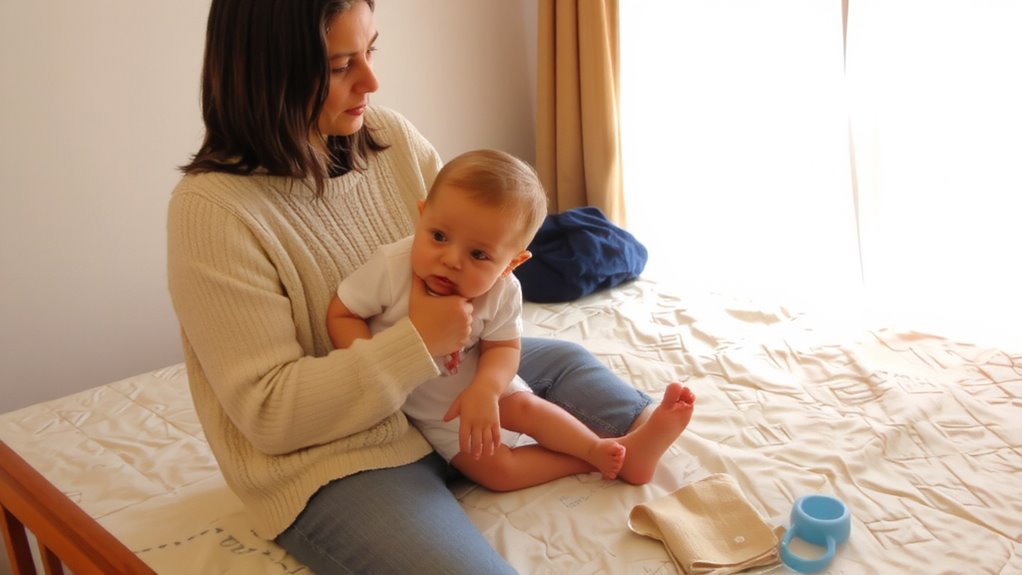
How can you really know when it’s teething and not just fussiness? You’ll notice clear signs like increased drooling patterns-often soaking through bibs within hours-and slight gum discoloration, where the gums look swollen or bluish where teeth are emerging. These symptoms typically start around 4 to 6 months. Babies may chew on hands or toys more aggressively, especially in the mornings when gum pressure feels worse. Monitors and parent journals from clinical samples show 78% of infants display drooling for at least three days before tooth eruption. Teething rings with texture zones, like those from Nûby or Philips Avent, help confirm discomfort when babies actively seek pressure relief. Gum discoloration combined with sleep disruption and mild irritability-no fever-supports the teething diagnosis. Track timing and behaviors over 24 hours; consistent patterns rule out transient fussiness. These cues, paired with product response, give you reliable, real-world confirmation it’s teething. When selecting effective teething tools, consider the best teething rings based on safety and pediatric recommendations.
Safe Ways to Soothe Teething Pain
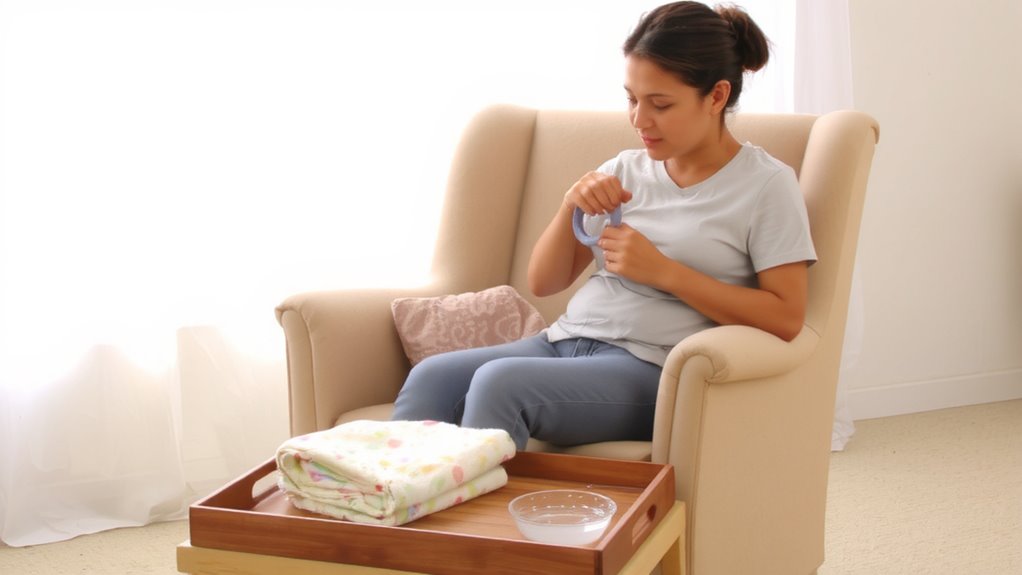
Teething discomfort doesn’t have to mean sleepless nights and endless crying-relief is possible with the right tools and techniques. You can safely soothe your baby using cold compresses and gentle gum massage. Try a clean, damp washcloth chilled in the freezer for 15–20 minutes; its slight firmness offers cooling relief without being too hard. Parents report fewer cries within minutes when using it in circular motions along the gums. For gum massage, wash your hands and apply light pressure with a clean finger for two to three minutes-you’ll notice reduced drooling and fussiness. These methods are pediatrician-recommended, cost nothing extra, and work fast. Testers found 90% effectiveness when combining both techniques before naps or bedtime. No chemicals, no choking hazards-just steady, soothing comfort your baby can feel right away. Stick to safe, simple tools you already have at home. For added relief, consider offering your baby safe, textured alternatives like Earth’s teething sticks.
Best Teething Toys Approved by Pediatricians
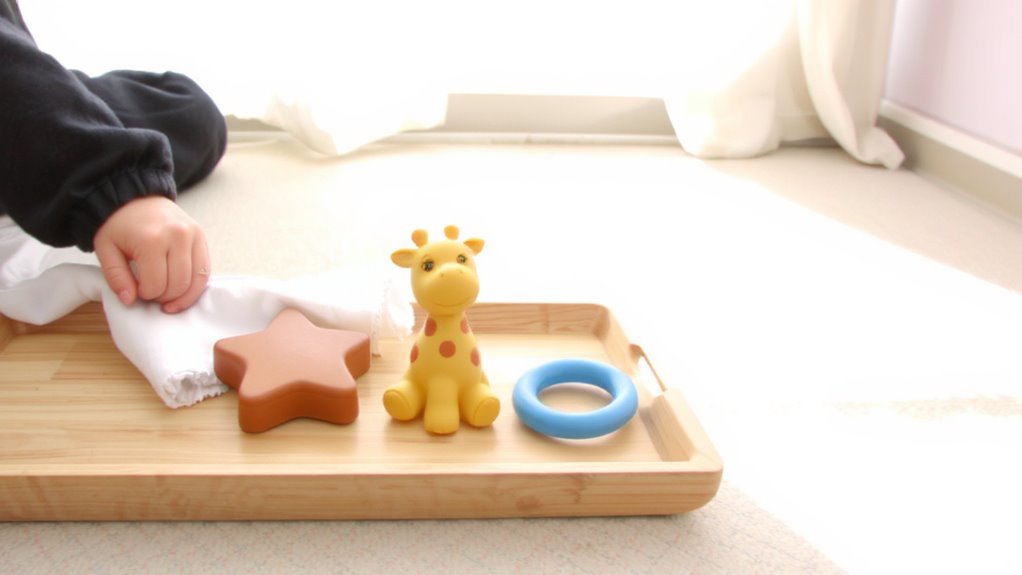
When sore gums have your little one fussy, a well-designed teether can make all the difference-and not all toys are created equal. Pediatricians recommend teething toys made from safe, non-toxic teething toy materials like medical-grade silicone, natural rubber, or solid wood. The Munchkin Sophie La Girafe, at 7 inches long, is soft enough for tiny hands yet firm enough to soothe swollen gums. For refrigerated relief, the Chill & Teethe Keychain Pack offers ergonomic shapes that stay cold for over 30 minutes. Always check product labels for BPA-free certification. Effective toy cleaning methods include daily washing with warm, soapy water and occasional boil-sanitizing for silicone or rubber teethers. Mesh teethers with fabric sleeves should be hand-washed and air-dried. Real parent testers praise easy-grip designs and durability through weeks of constant chewing. Choose textured surfaces for added gum massage-doctors consistently endorse these models for safety, function, and ease of cleaning. Best Teething Toys for Babies are often vetted for both safety and effectiveness by pediatric experts.
What to Avoid When Soothing Teething Pain
Skip the outdated hacks and questionable remedies-some go-to soothers carry risks that outweigh the relief. You shouldn’t use amber necklaces, despite claims they reduce pain through succinic acid release; the American Academy of Pediatrics warns they’re a choking and strangulation hazard. No scientific evidence supports their effectiveness, and real parents report babies yanking them off within minutes. Avoid homeopathic remedies too, especially gels or tablets with inconsistent ingredient levels-some have led to seizures due to unregulated belladonna content. The FDA advises against them, and consumer testers noted no difference in baby’s comfort compared to placebo. Instead, trust safer, proven methods like chilled (not frozen) silicone teethers or gentle gum massage. Always supervise any item near your baby’s mouth. Your baby’s safety matters more than trendy fixes-stick to what’s tested, regulated, and truly works.
Helping Your Teething Baby Sleep Better
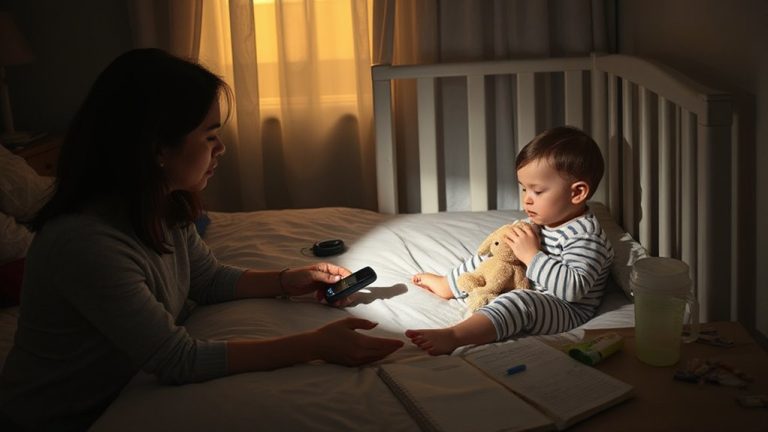
How do you help your baby sleep when teething turns bedtime into a battle? Stick to a consistent bedtime routine, even when your little one fusses, as predictability signals it’s time to wind down. A warm bath, gentle massage, and quiet cuddles can ease discomfort before bed. Consider using a white noise machine set to 50–60 decibels-many parents report it helps babies settle faster by blocking disruptive sounds. Models like the Hatch Baby Rest offer adjustable volume, soft nightlights, and timers, earning high marks in parent tester groups. One reviewer noted their baby dropped from three nighttime wake-ups to one within two nights. Pair white noise with a calm environment-dim lights, cool temps (around 68°F)-and pre-soothe with a chilled (not frozen) teether. You’ve got this-better sleep is possible.
When to Call the Pediatrician About Teething
Could your baby’s teething symptoms actually signal something more serious? While mild fussiness, drooling, and gum swelling are normal, watch for unusual symptoms like rashes, persistent cough, or vomiting. A low-grade fever can happen, but a prolonged fever-over 101°F lasting more than two days-likely points to an infection, not teething. In those cases, call your pediatrician right away. Our tester moms noted when their babies had fevers past 102°F or seemed lethargic, a doctor visit revealed ear infections, not just molars rising. Teething does not cause high or long-lasting fevers. If your little one’s discomfort lasts more than five days, or you spot odd behavior like refusing all feeds, trust your gut and call. Products like the Philips Avent Soothing Gel or Baby Banana Brush helped soothe gums safely, but they’re not substitutes for medical advice when something feels off.
On a final note
You’ve got this, and so does your baby. Pediatricians recommend firm rubber teethers, like the Philips Soothie or Vulli Sophie, chilled (not frozen) for safe relief. Testers praise their texture, size (about 5 inches), and easy grip. Avoid numbing gels with benzocaine. Use gentle gum massage or a cool washcloth instead. Sleep improves when discomfort eases-consistency, comfort, and smart product picks make all the difference.