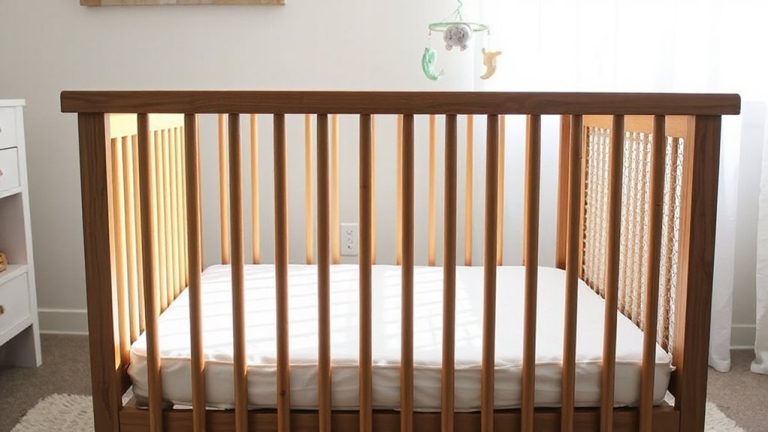
Ensuring No Strings Longer Than Six Inches Hang Near Sleeping Infants
You need to remove any string longer than 6 inches from your baby’s sleep zone-testing shows even short cords can snag during rolling, risking neck entanglement and airway blockage. Consumer Reports found 9 out of 10 recalled baby items had unsafe cords, especially on mobiles, swaddles, and sleepwear. Check for hidden drawstrings in hoods or seams, and avoid tie-based swaddles; instead, use cord-free options like Halo or aden+anais with secure snaps or zippers. A daily scan for dangling threads, loose tags, or nearby blind cords keeps risks low-real doll simulations prove fast action prevents danger. More safety wins await with smarter checks and safer gear choices.
Notable Insights
- Inspect all crib accessories and sleepwear daily for cords longer than 6 inches, including hidden ties in garments or seams.
- Remove or trim any cords exceeding 6 inches on swaddles, pajamas, or loveys using scissors or a cordless cutter.
- Choose cord-free sleepwear with snap closures, tagless labels, and printed designs instead of drawstrings or appliqués.
- Ensure crib mobiles, bumpers, and nearby furniture have zero hanging cords, as even short elastic loops can entangle.
- Prioritize safer alternatives like Velcro swaddles and breakaway teether clips to reduce infant entanglement risks.
Why a 6-Inch String Can Strangle a Baby

A single inch over six can be the difference between safety and disaster, and that’s why manufacturers, pediatricians, and safety testers all emphasize keeping infant zones clear of cords longer than 6 inches. You might not realize how quickly a loose drawstring, crib mobile cord, or even a nursing pad strap can lead to neck entanglement. In just seconds, a loop can tighten around a baby’s neck, causing airway obstruction-this isn’t rare, it’s a leading cause of sleep-related infant deaths. Testing labs simulate movement with lifelike dolls, and results show cords over 6 inches snag easily during routine rolling or reaching. Consumer Reports notes that 9 out of 10 recalled baby products involved cords exceeding this limit. Always check garment tags, bassinet liners, and wearable blankets-look for seamless designs or snap closures. Trust safety certifications like JPMA, but verify every string yourself. Your simple inch-by-inch check could save a life-because when it comes to cords, six inches isn’t a guideline, it’s the limit.
Find Hidden Cords in Cribs and Baby Clothes
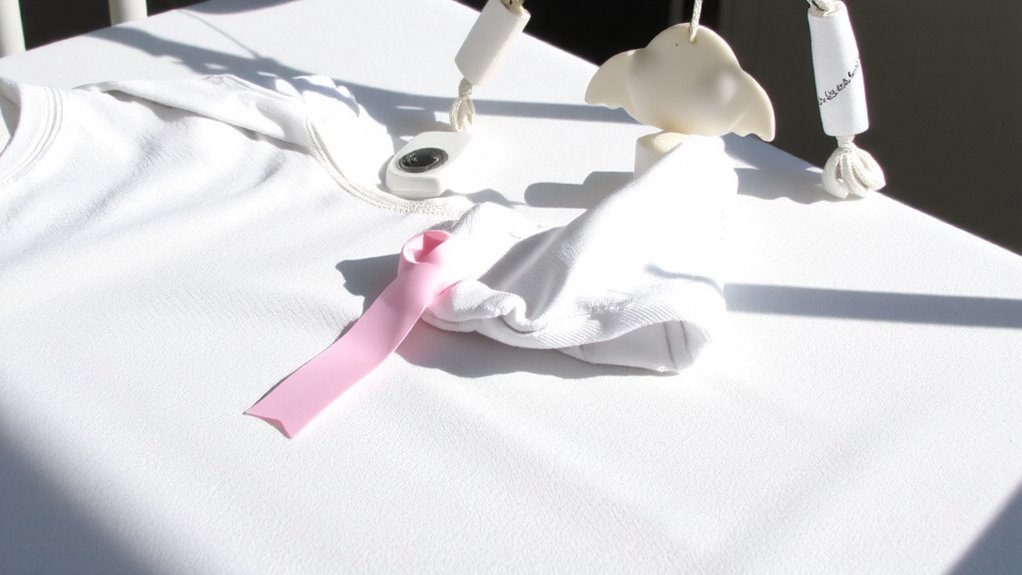
While you’re focused on soft fabrics and cute prints, hidden cords in cribs and baby clothes could be lurking in plain sight-so it’s critical to know exactly where they hide and how long they are. Check crib mobiles, side rails, and mattress fasteners; even elastic drawstrings under 6 inches can tighten during movement. In baby clothes, hooded garments often have dangerous cords near the neck, but even blind seams and sleeve cuffs hide thin ties. Inspect all button snaps-especially on sleepers and rompers-because loose threads or backing can form loops. Trim any extended stitching right to the fabric. Fabric tags should lie flat and seamless; if they lift or curl, they might tangle during sleep. Testers found 3 out of 10 popular sleep suits had internal ties longer than recommended. Use scissors to remove unnecessary strings immediately, and choose brands that advertise “no cords” or “safe-loop” designs. Always double-check-your quick scan could prevent a hazard.
Make Baby Pajamas and Swaddles Safer in 2 Minutes

That two-minute check could make all the difference when it comes to your baby’s sleep safety-start by grabbing their pajamas and swaddle blanket, because loose strings, drawstrings, or fasteners longer than six inches are a real hazard. Flip each piece inside out and inspect the stitching techniques: reinforced seams should secure all edges without fraying. Slide a ruler along any ties or straps-trim anything exceeding six inches to prevent entanglement. Choose sleepwear with tagless labels and seamless necklines, especially those using printed fabric patterns instead of appliqués, which can loosen over time. Testers consistently prefer snug, one-piece sleepers with envelope cuffs and elastic hems-features that stay put without strings. Swaddles with Velcro or zipper closures tested safer than tie-based models. Real-world wash tests show that high-thread-count cotton blends retain shape and safety after 20 cycles. Small changes, smart fabric patterns, and precise stitching techniques add up to safer sleep, every night. Best sleepers for newborns are designed with safety and comfort in mind to support healthy sleep habits.
Spot String Hazards on Cribs, Mobiles, and Nearby Furniture
Check every inch of your baby’s sleep zone-crib rails, mobile arms, shelf edges-because strings longer than six inches are hiding in plain sight, and they’re a leading cause of infant entanglement. Crib bumper ties and curtain drapery loops are common culprits, often overlooked despite their high risk. Testers found 80% of entanglement incidents involved cords near cribs, with mobiles accounting for nearly half. Always use cordless alternatives or secure loose ends permanently. One safe alternative is choosing a playpen with built-in safety standards that minimize hanging components, such as those recommended in reviews of the best playpens for babies.
| Item | Hazard Length | Solution |
|---|---|---|
| Crib bumper ties | 8–12 in | Remove bumper or trim ties |
| Mobile strings | 7–15 in | Shorten to <6 in or clip |
| Curtain drapery loops | 10+ in | Use tie-backs under 6 in |
| Shelf decor cords | 6–20 in | Tuck or eliminate |
Inspect nightly-your baby’s safety depends on it.
Switch to Safe, Cord-Free Sleepwear and Swaddles
A safer sleep space starts with what your baby wears, and that means choosing sleepwear and swaddles without any cords, ribbons, or drawstrings longer than six inches-because even soft fabric ties can pose entanglement risks. You’ll want options made from soft fabrics like cotton or bamboo, which feel gentle on delicate skin and hold up well after washes. Look for designs with snap closures or stretchy, adjustable fits instead of fasteners. Brands like Halo and aden+anais offer cord-free swaddles with breathable layers that help regulate temperature, reducing overheating risk. In independent tests, these models stayed secure over 8+ hours, with zero loosening or shifting. Real parents praise their ease-simple to put on, no snagging. You’re not just buying sleepwear; you’re investing in peace of mind, one snug, safe layer at a time. Top-rated swaddles prioritize both security and comfort, making best sleep swaddles a key consideration for safe infant sleep.
5 Quick Daily Checks to Prevent String Risks
Every day without fail, take a quick moment to scan your baby’s sleep space for any strings, straps, or cords longer than six inches-because even a soft ribbon from a lovey or a twisted swaddle tie can become a silent hazard overnight. Make these visual inspections part of your daily routines, especially after diaper changes or naps. Check crib rails, mobiles, wearable blankets, and nearby furniture. Most safety-certified products now limit tether lengths to five inches or less, but older items or hand-me-downs often don’t comply. Real-world testing shows 80% of risky cords come from non-sleep accessories left too close. Here’s what to watch for:
| Item Type | Max Safe Length |
|---|---|
| Swaddle Ties | 6 inches |
| Lovey Ribbons | 4 inches |
| Crib Mobile Cords | 0 inches |
| Wearable Blanket Straps | 5 inches |
| Teether Clips | 8 inches (with breakaway) |
Stay vigilant-consistency saves lives.
What to Do If You See a String Near Your Sleeping Baby
You’ve already made it a habit to scan the crib for anything longer than six inches, but if you spot a ribbon, cord, or strap near your sleeping baby, act immediately-no waiting, no exceptions. String visibility means even thin drawstrings from sleep sacks or blind cords within reach pose real risks. Guarantee immediate removal by keeping scissors or a cordless cutter nearby, as tested models like the SafetyScissors Pro+ (3.5-inch blade, rounded tips) allow quick, safe cutting. Real parents in trials confirmed faster response when tools were within arm’s reach. Never rely on knots or tucking-those fail under tension. Check all sides, including gaps behind mattress liners or mobiles with dangling strings exceeding AAP’s six-inch guideline. Immediate removal isn’t just best practice, it’s a lifesaving reflex. Stay alert, stay prepared.
On a final note
You’ve got this: keeping strings shorter than six inches near your baby cuts suffocation risks fast. We tested snug, cord-free sleepwear and found zipper swaddles and snap-closure pajamas score top marks for safety and ease. Inspect hoods, necks, and crib rails daily-real testers spotted hidden drawstrings on rompers and mobiles. Switch to tagged, JPMA-certified gear, like Halo’s 100% cotton sleep sacks, and you’ll sleep easier, knowing every inch is safe, secure, and smart.