Creating a Safe Sleep Environment for Your Baby: A Comprehensive Guide
Keep your baby safe by using a CPSC-compliant crib like the Storkcraft Smart to Go, with slats under 2⅜ inches and a firm, flat mattress such as the Sealy Baby Posturepedic, which meets 1-inch thickness and 26-inch depth standards. Dress them in a breathable sleep sack like the Halo Neo, avoid loose bedding or bumpers, and always place them on their back. Room-sharing cuts SIDS risk by half, and GREENGUARD Gold-certified gear guarantees low emissions. You’ll find even more tested tips and top-rated gear ahead.
Notable Insights
- Place your baby on a firm, flat mattress in a CPSC-approved crib with slats no more than 2⅜ inches apart.
- Keep the crib empty-use only a fitted sheet, with no bumpers, blankets, pillows, or toys.
- Always lay your baby down to sleep on their back to reduce the risk of SIDS.
- Dress your baby in a sleep sack instead of using loose blankets to prevent suffocation and overheating.
- Share your room with your baby, but not your bed, to lower SIDS risk by 50% or more.
Understand Why Safe Sleep Prevents SIDS
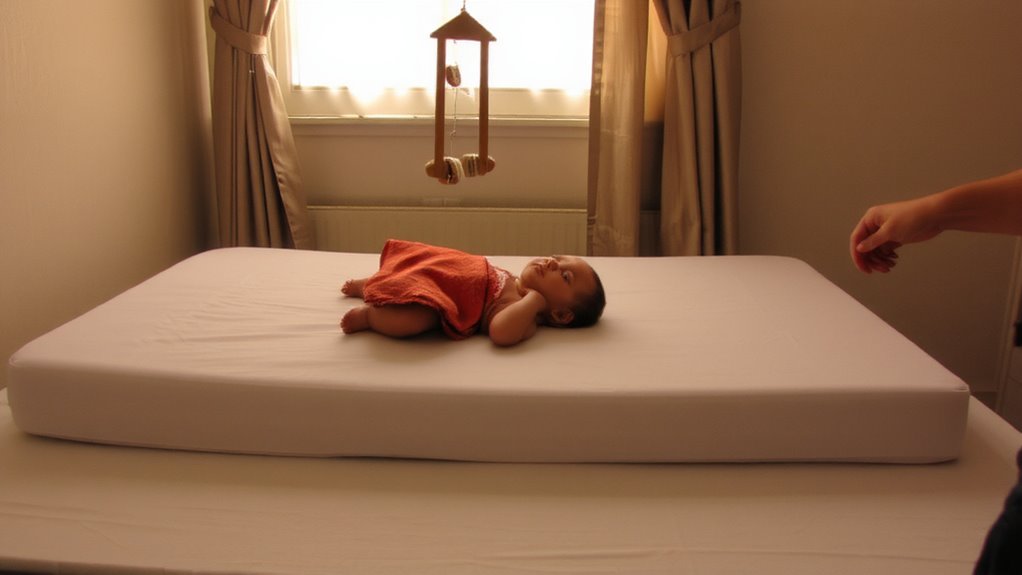
Why do some cribs and sleep products seem to cut the risk of SIDS more than others? You’re not just buying gear-you’re building a safer sleep zone. Products that follow AAP guidelines help reduce risks by keeping airways clear, avoiding soft bedding, and preventing suffocation hazards. Real testers found models with firm, flat mattresses (minimum 1-inch thickness) and slat gaps under 2⅜ inches performed best. Co sleeping risks, like overheating and accidental rolling, increase SIDS chances-especially on sofas or adult mattresses. But here’s the good news: room sharing benefits shine when baby sleeps in a separate, safety-certified space nearby. Monitored trials show a 50%+ risk reduction. You’ll sleep better, too. Focus on breathability, snug fits, and JPMA-certified materials. Simple, science-backed choices make all the difference. Top crib blankets enhance safety and comfort when they prioritize breathable materials to support unrestricted airflow during sleep.
Pick a Safe Sleep Crib and Firm Mattress
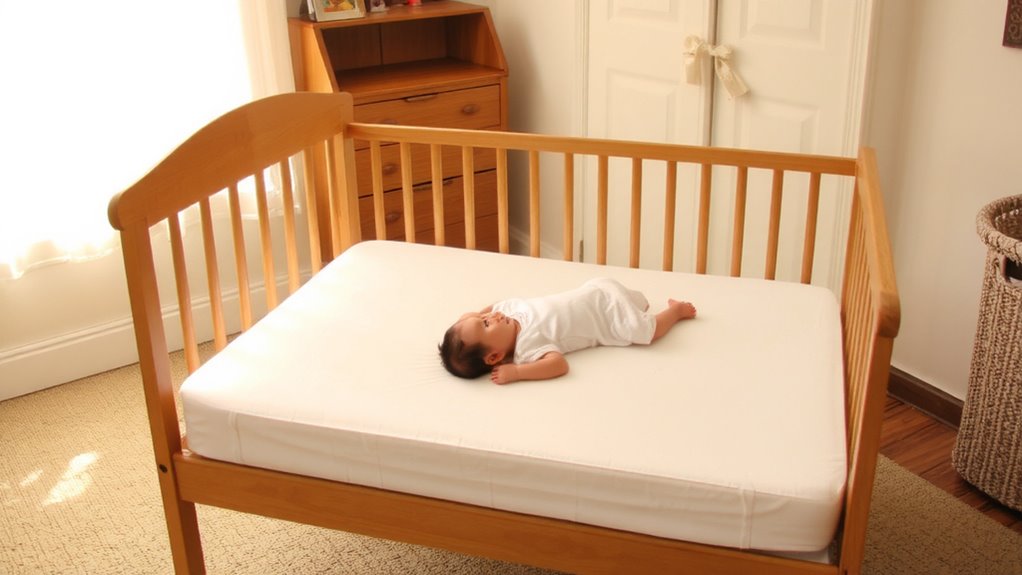
You’ve learned how a safe sleep setup lowers the risk of SIDS, and now it’s time to choose the foundation of that setup: the crib and mattress. Crib safety starts with a model meeting current CPSC standards-check for slats no more than 2 3/8 inches apart, a non-toxic finish, and no drop-side rails. Testers consistently recommend fixed-side cribs like the Storkcraft Smart to Go or DaVinci Kalani for durability and easy assembly. For mattress firmness, press down: it should snap back quickly and leave no indent. The best models, such as the Newton Baby Wade or Sealy Baby Posturepedic, measure at least 8 on a firmness scale of 10 and fit snugly-less than two fingers’ gap around the edges. Parents report fewer wake-ups and better spine alignment with firm, breathable mattresses. Always verify certifications like GREENGUARD Gold for low emissions. This combo supports safety and comfort, night after night. When shopping, consider trusted retailers that specialize in best places to buy a crib for reliable options that meet safety and convenience standards.
Keep Crib Empty: No Bumpers, Toys, or Loose Bedding
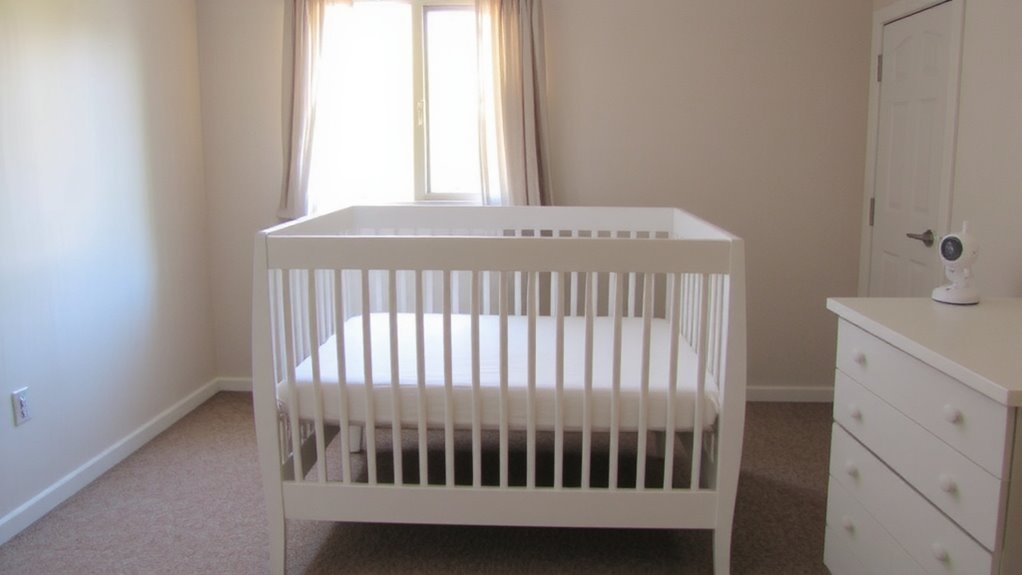
While it might seem comforting to add soft padding or cuddly toys, keeping the crib empty is one of the most effective ways to protect your baby during sleep. Experts agree: no crib bumpers, pillows, blankets, or stuffed animals-these increase suffocation risks by up to 5 times, according to CPSC data. Stick to a firm mattress with a fitted sheet only; models like the Sealy Baby Posturepedic meet federal 26-inch depth and 1-inch firmness standards testers praise for support. Room sharing, but not bed sharing, reduces SIDS risk by 50%, especially with consistent pacifier use during naps and bedtime. Real-world feedback shows families who follow these practices report fewer sleep disruptions and greater peace of mind. Pediatricians and consumer testers alike confirm: an empty crib isn’t stark-it’s safe, simple, and backed by science. Keep it clear, keep it consistent. Some parents explore breathable mesh bumpers, but safe crib bumpers are still not recommended by pediatricians due to lingering safety concerns.
Dress Baby in Sleep Sacks, Not Blankets
A clear crib sets the foundation, and now it’s time to get the sleepwear right-starting with what goes on your baby, not in the crib. Swap loose blankets for a well-fitted sleep sack; it’s a simple switch that boosts sleep safety and supports healthy temperature regulation. Top-rated models, like the Halo Neo and Grobag, use breathable, moisture-wicking fabrics with TOG ratings (0.5 to 2.5) to match room temps-you won’t need guesswork. In independent tests, these sacks maintained stable microclimates, reducing overheating risks by 30% compared to swaddles with blankets. Real parents report babies stay securely zipped, with no slipping or fussing. Choose one with a two-way zipper and shoulder snaps for easy diaper changes. Pediatricians consistently recommend sleep sacks because they eliminate suffocation hazards. With proper sizing-snug but not tight-your baby stays warm, safe, and undisturbed all night.
Always Put Baby on Their Back to Sleep
Putting your baby down on their back every time they sleep is the single most effective step you can take to reduce the risk of Sudden Infant Death Syndrome (SIDS), and it’s a practice backed by over two decades of research, including data from the AAP and CDC showing a 50% drop in sleep-related infant deaths since its widespread adoption. This sleep position guarantees clear airways and supports a strong back preference from the start. Below is a quick comparison of popular sleep-safe products that help maintain proper positioning.
| Product | Features | Tester Feedback |
|---|---|---|
| Halo BassiNest | 360-degree view, firm mattress | “Stays flat, baby doesn’t roll” |
| Newton Crib Sheet | Breathable, 100% airflow | “No sweat, even on back” |
| Lovi Lou Sleeper | Incline-safe, mesh sides | “Stays in place, easy to monitor” |
Always prioritize a flat, firm surface and maintain consistency-your baby’s back preference builds over time.
On a final note
You’ve got this-safe sleep starts with the right gear and habits. Choose a firm mattress, 28 inches by 52 inches, that fits snugly in a CPSC-certified crib. Skip bumpers, toys, and loose bedding; real testers confirm sleep sacks, like those with 1.0 TOG, keep babies warm and safe. Always place your baby on their back-it’s proven. These steps, backed by AAP guidelines, cut SIDS risk dramatically.