Understanding Car Seat Regulations in Wisconsin
You must keep your child in a car seat in Wisconsin until they’re at least 8 years old or reach 4 feet 9 inches, whichever comes first. Most all-in-one seats, like the Graco 4Ever, support kids up to 120 pounds and can shift from rear-facing to booster. Keep your child rear-facing until age 2 or more, as it’s safer for their neck and spine. The center rear seat is ideal-43% safer-if the seat fits securely with less than 1 inch of movement. High-back boosters offer better side-impact protection, especially in vehicles with low seat backs. Get a seat with adjustable headrests and deep side wings for a secure fit as your child grows. Try models with built-in lock-offs for a tighter installation, and always position the chest clip at armpit level. If your harness straps are pinchable, they’re too loose-snug them down until tight. Skip common mistakes like using both LATCH and seatbelt unless allowed. You’ll find even more helpful tips just ahead.
Notable Insights
- Children under 8 years old must use a child restraint system in Wisconsin, regardless of seating position.
- A child must be at least 4 feet 9 inches tall to stop using a car seat or booster seat.
- Car seats are required until the child reaches age 8 or 4’9”, whichever comes first.
- Rear-facing car seats are recommended until at least age 2 or until height/weight limits are reached.
- The center rear seat is the safest placement, provided the car seat installs securely with less than 1 inch of movement.
What Age Can Kids Stop Using Car Seats in Wisconsin?
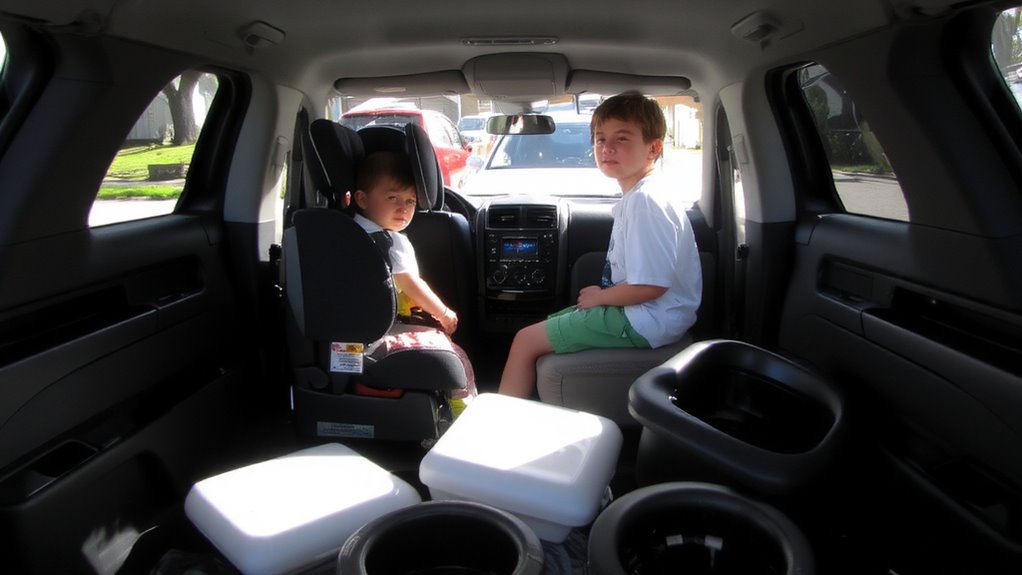
You’ll want to keep your child in a car seat until they’re at least 8 years old or reach 4 feet 9 inches in height-whichever comes first-since Wisconsin law requires kids under 8 to be secured in a proper child restraint system, not just a seat belt. These age limits and height requirements guarantee proper fit and maximum safety. Most all-in-one seats, like the Graco 4Ever and Britax One4Life, adapt from rear-facing to high-back boosters, supporting kids up to 120 pounds. Testers praise their easy recline adjustments and secure LATCH systems. For smaller SUVs, the Evenflo Symphony rotates smoothly, easing changes. Real-world installs show rear-facing modes work best until at least age 2. Side-impact protection and machine-washable covers get high marks. Always check labels for weight and height caps-many seats exceed legal minimums, giving you extra protection even after age 8.
Wisconsin Booster Seat Laws: When to Make the Switch
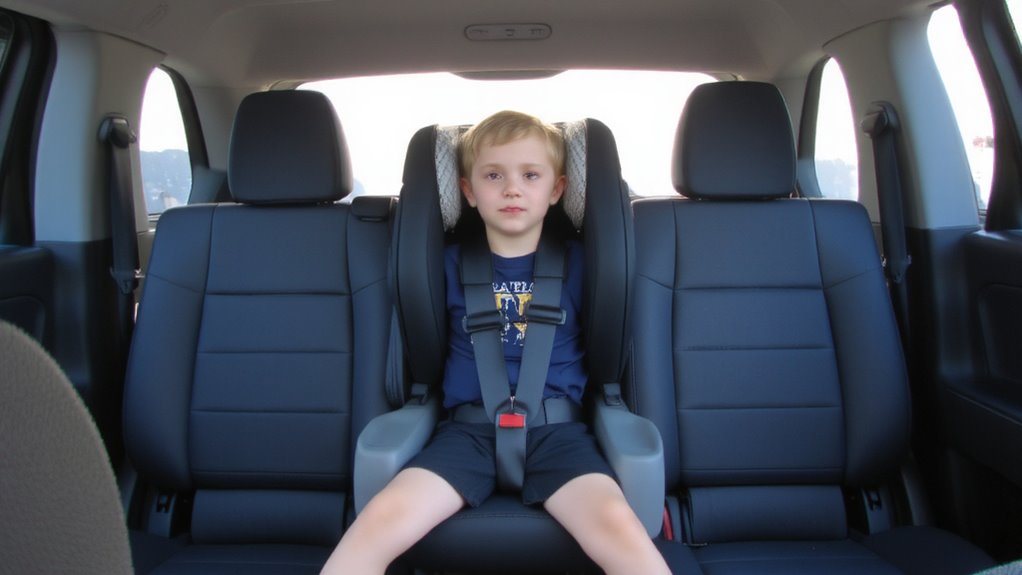
Once your child outgrows their forward-facing car seat-typically around 40 to 65 pounds, depending on the model-they’ll need a booster seat to guarantee the vehicle’s seat belt fits properly across the chest and lap, not the neck or stomach. The seat shift usually happens between ages 5 and 9, but don’t rush it-wait until your child meets both weight and Booster height requirements, often 4 feet 9 inches tall or taller. High-back boosters, like the Graco TurboBooster, offer side-impact protection and adjustable headrests, ideal for vehicles without strong headrests. Backless models, such as the Regent MyStep, are compact and portable but work best with high seat cushions. Real-world testing shows kids stay in boosters until at least 12, ensuring safety and compliance. Look for padded armrests, easy belt positioning, and LATCH connectors for stability during daily use.
Rear-Facing vs Forward-Facing: Which Seat Next?
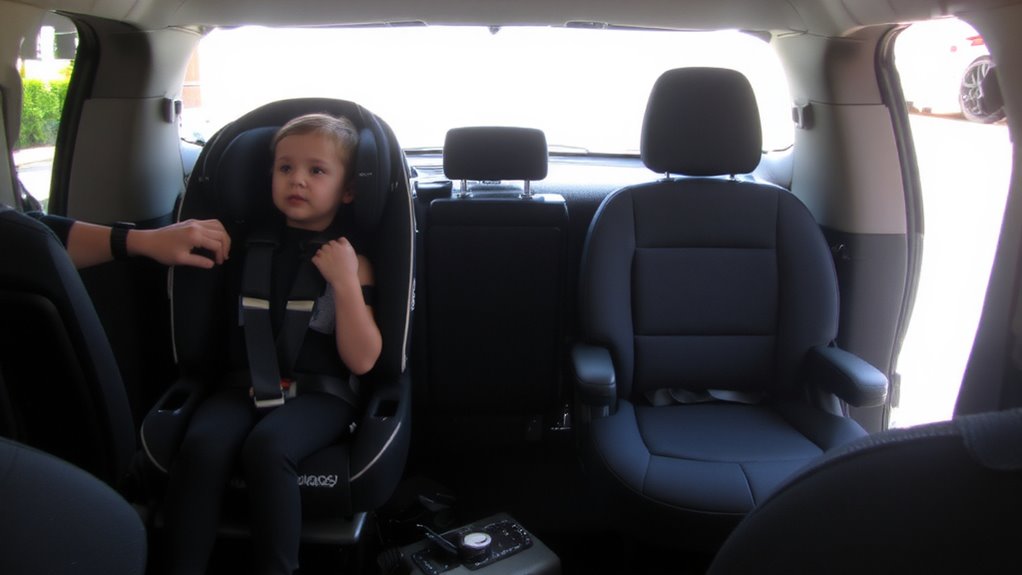
After securing your child in a booster for school-age rides, stepping back to earlier stages makes sense-especially when choosing between rear-facing and forward-facing seats for infants and toddlers. Your child’s car seat orientation matters: rear-facing is safer longer, supporting fragile necks and spines in crashes. Experts recommend keeping kids rear-facing until at least age 2, or until they hit the seat’s height or weight limit-often 35–40 pounds. Forward-facing works afterward, using a harness for security. Always check the installation guidelines, whether using LATCH, a seatbelt, or a locking clip. Testers praise models like the Graco Extend2Fit for extra legroom and easy recline adjustments. Correct installation is key: a secure seat shouldn’t move more than one inch side-to-side. Follow manufacturer specs closely-your child’s safety depends on it.
Where’s the Safest Place for a Car Seat?
Where should you actually install the car seat for maximum safety? The center rear seat is your best bet-it’s 43% safer than outboard positions, according to crash data. This spot minimizes crash force and offers the most distance from side impacts, boosting side impact protection. But only if the seat fits well. Use a model with deep side wings and energy-absorbing foam. Always check for proper harness fit: straps should be at or below the infant’s shoulders in rear-facing mode.
| Position | Crash Risk | Fit Ease |
|---|---|---|
| Center rear | Lowest | Medium |
| Passenger rear | Moderate | High |
| Driver rear | Moderate | High |
Ensure the base sits snug, within 1 inch of movement. Testers prefer convertible seats like the Graco 4Ever for secure, long-term use.
Common Car Seat Mistakes and How to Fix Them
Ever wonder why your car seat feels wobbly even after a seemingly perfect install? You’re likely dealing with incorrect installation. Most experts say the seat shouldn’t move more than one inch side-to-side or front-to-back at the belt path. Using either the LATCH system or seatbelt (not both, unless allowed) correctly tightens the fit - many models, like the Graco 4Ever, include built-in lock-offs for better tension. Another common issue? Loose harness straps. The harness should lie flat, snug against your child’s body - you shouldn’t pinch any excess webbing at the shoulder. Testers consistently report fewer escape attempts when straps are properly tightened. Chest clip placement matters too: it should sit at armpit level. Double-check your car seat’s manual, as specs vary by model, weight limits, and rear- vs forward-facing use.
On a final note
You’ve got this: keep kids rear-facing until at least age 2, use a booster until they’re 4’9” tall, and always install the car seat tightly using LATCH or a seatbelt. Testers love the Graco 4Ever’s 10-year lifespan and easy height adjustments. Side-impact protection and a no-rethread harness boosted safety scores. Place the seat in the back center-it’s 43% safer. Double-check fit, weight limits, and expiration dates. Small tweaks make a big difference.