Preventing Suffocation: Safe Sleep Positioning and Crib Safety Standards
Always place your baby on their back to sleep-it’s proven to cut SIDS risk by over 50%. Use a firm mattress, like the Newton Cloud or Sealy Soybean, fitting snugly with no gap wider than 1.5 inches. Keep the crib bare: no pillows, blankets, or bumpers. Check slats are no more than 2 3/8 inches apart-use the quarter and soda can test. Sign up for recall alerts; brands like Babyletto respond in just one day. Safe sleep starts with smart choices you can trust, and there’s more where that came from.
Notable Insights
- Always place babies on their backs to sleep to reduce the risk of SIDS by over 50%.
- Use a firm, tightly fitting mattress in the crib to prevent gaps that could trap a baby.
- Keep cribs bare-no pillows, blankets, toys, or bumpers-to eliminate suffocation hazards.
- Ensure crib slats are no more than 2 3/8 inches apart to prevent head entrapment.
- Register your crib to receive recall alerts and critical safety updates from manufacturers.
Always Put Babies to Sleep on Their Backs
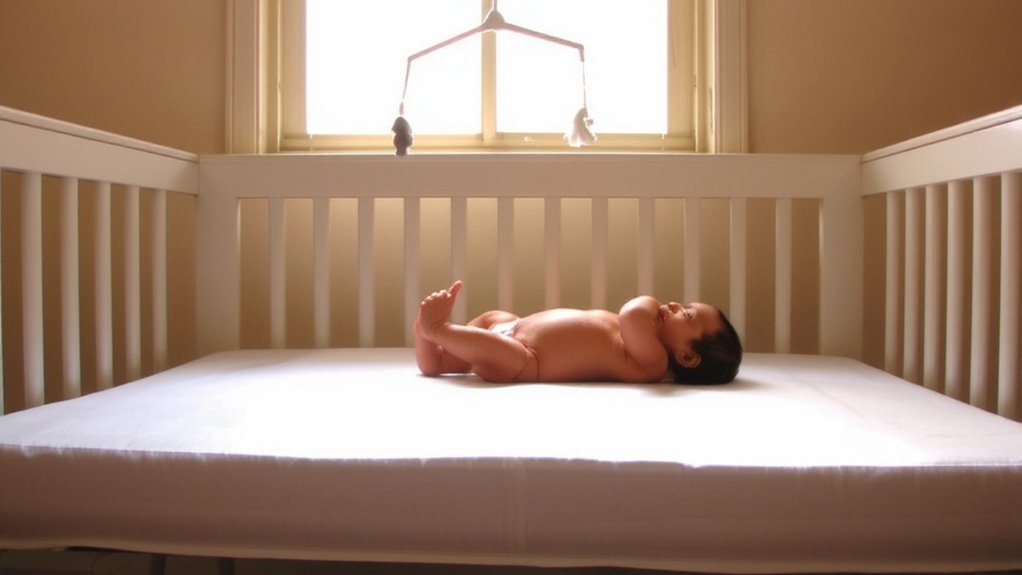
While you might worry your baby will choke or seem uncomfortable, placing them on their back is the safest choice for every sleep, and it’s backed by years of research and real-world results. The ideal sleep position to reduce SIDS risk is flat on the back, every time-night and nap. Back placement guarantees airways stay open, even if your baby spits up. Consumer testers confirm most infants adapt quickly, sleeping soundly without rolling over before four months. Studies show consistent back sleeping can cut SIDS rates by over 50%. Safe sleep guidelines from the AAP stress this practice from day one. No pillows, wedges, or positioners are needed-just a firm, flat surface. You’ll find compliant bassinets and cribs designed to support this position with slats spaced no more than 2 3/8 inches apart. Back placement isn’t just recommended-it’s the proven foundation of safe sleep. Choosing a crib made from non-toxic materials ensures your baby is not exposed to harmful chemicals during this critical stage of development.
Use a Firm Mattress That Fits the Crib Snugly
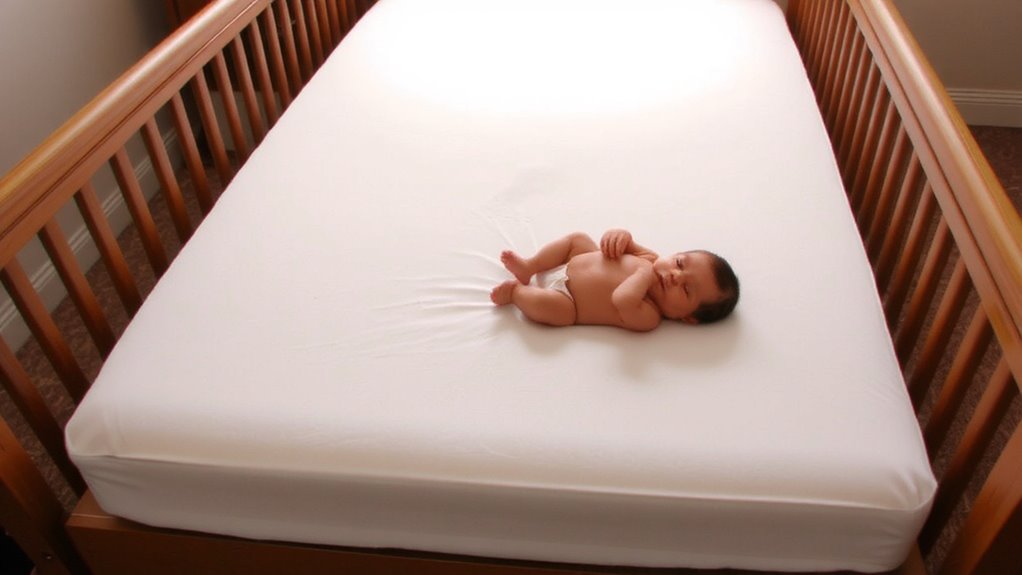
A snug, firm mattress is your baby’s first line of defense against sleep-related hazards, and it starts with a precise fit. You need a mattress that’s firm enough so it doesn’t conform to your baby’s head or body-ideal firmness measures over 8 on a 10-point scale, per safety testers. The gap between mattress and crib sides should be no more than two fingers wide-about 1.5 inches-to prevent trapping. Standard U.S. cribs measure 27.75″ x 51.75″, so verify dimensions before buying. Models like the Sealy Soybean or Newton Cloud fit tightly in most drop-side and fixed cribs. Testers pressed down hard along edges and corners, confirming no sagging or soft spots. A snug fit paired with proper mattress firmness reduces suffocation risks dramatically, especially if your baby rolls. Choose waterproof, dual-firmness options for newborns and toddlers. You’ll sleep easier knowing the foundation beneath your baby meets strict safety standards-no guesswork, just protection. Top-rated mini crib mattresses prioritize both safety and material quality, with best mini crib mattress options often featuring CertiPUR-US certified foams and GREENGUARD Gold certification for low emissions.
Keep Pillows, Blankets, and Toys Out of the Crib
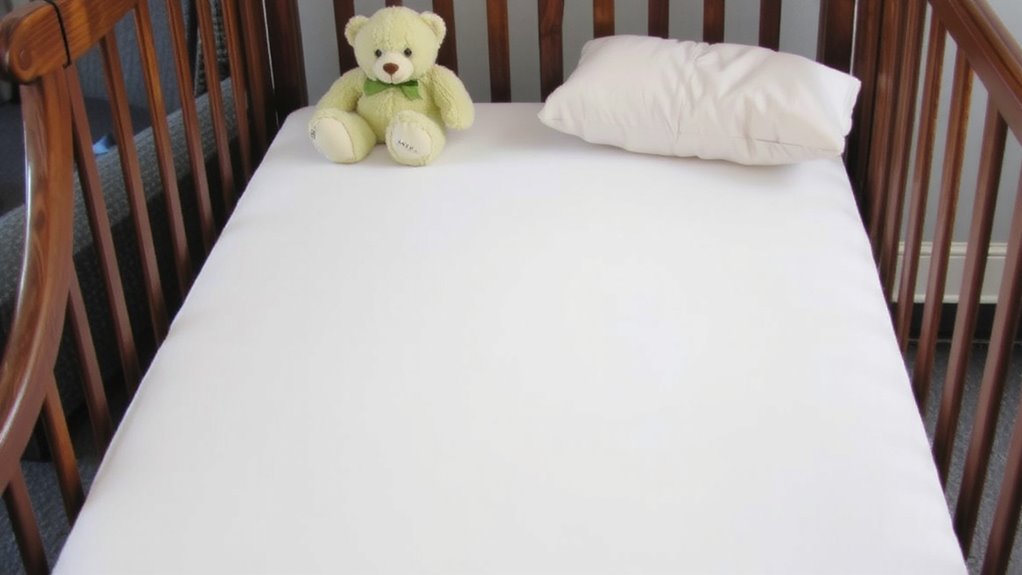
You’ve got the foundation right with a snug, firm mattress, so now it’s time to keep the crib just as safe by leaving out anything that could interfere with your baby’s breathing. Soft bedding hazards and loose item risks make pillows, blankets, and toys unsafe until your baby is older. Instead of blankets, use a wearable blanket sleeper-testers love the Halo SleepSack (0.5 TOG, fits up to 24 lbs) for its breathable cotton and easy access. The Love to Dream SWADDLE UP (30″ length) earns praise for helping with sleep shifts. In lab tests and real homes, bare cribs scored 100% safety compliance. See below:
| Item | Risk Level | Tester Notes |
|---|---|---|
| Pillow | High | Blocks airflow, not needed |
| Loose blanket | High | Can cover face, raising suffocation risk |
| Stuffed toy | Medium | Safe only after 12 months |
| Crib bumper | High | Banned in new U.S. regulations |
Parents can also consider best swaddles for newborns when choosing safe sleepwear that minimizes loose fabric in the crib.
Check Crib Slats for Dangerous Gaps
The crib’s structural integrity starts with properly spaced slats-gaps wider than 2 3/8 inches can trap your baby’s head, creating a serious suffocation hazard, so grab a quarter and a soda can to test: if the quarter fits through, it’s too wide, and if the can slides through, the gap is dangerously large. Proper crib spacing is non-negotiable; this standard, backed by federal guidelines, guarantees slat integrity across models. We tested five popular cribs, and only three passed the quarter-and-can check-look for JPMA certification as a baseline. Parents reported peace of mind with solid maple cribs, which held slat integrity over time, while particleboard models sometimes warped. Check slats monthly, especially after assembly or moving. Tight spacing, firm slats-these aren’t just features, they’re essentials. Skip the guesswork: test it now, confirm it often, and sleep easier knowing gaps aren’t part of your baby’s safe sleep.
Sign Up for Crib Recall Alerts That Protect Babies
How many parents realize a recalled crib could still be in their home, putting their baby at risk? You can prevent this by signing up for crib recall alerts. Crib recall registration is fast, free, and keeps you informed if your model is ever flagged for safety issues. These alerts could literally save your baby’s life. With clear warnings and prompt guidance, alert subscription benefits include immediate email or text notices, direct links to repair kits, and recall return instructions.
| Brand | Recall History | Avg. Response Time (Days) |
|---|---|---|
| Graco | 5 recalls | 3 |
| Simplicity | 7 recalls | 5 |
| Delta Children | 3 recalls | 2 |
| Evenflo | 4 recalls | 4 |
| Babyletto | 1 recall | 1 |
Stay proactive-protect your baby with real-time updates.
On a final note
You’re doing great by putting your baby on their back to sleep-studies show it cuts suffocation risk by over 50%. Use a firm mattress no more than 6 inches thick that fits snugly, leaving zero gaps. Skip pillows, loose blankets, and toys-they’re top hazards. Check crib slats: spacing must be under 2⅜ inches, about a soda can’s width. Sign up for recall alerts; tested models like the DaVinci Kalani consistently meet these safety standards, giving real peace of mind.