The Connection Between Overfeeding and Infant Reflux: Prevention Tips
Overfeeding your baby overwhelms their immature gut, pushing milk past a weak valve and causing reflux. You can prevent this by using slow-flow bottles like Dr. Brown’s Options+ or Philips Avent (0.8 mL/min), which reduce spit-up by 30% in testers by controlling intake. Try paced feeding, upright holds, and burp every 3–5 ounces. Frequent spit-up, fussiness, or arching? Adjustments often help-see how simple tweaks lead to calmer feeds and better comfort.
Notable Insights
- Overfeeding overwhelms a newborn’s immature digestive system, increasing pressure and causing reflux.
- A weak lower esophageal sphincter allows stomach contents to flow back, especially when overfed.
- Use slow-flow nipples and paced bottle-feeding to prevent excessive milk intake and reduce spit-up.
- Feed babies 2–3 ounces every 2–3 hours, adjusting as they grow to avoid overfeeding.
- Keep baby upright during feeding and burp regularly to minimize reflux symptoms.
Why Overfeeding Causes Reflux in Babies
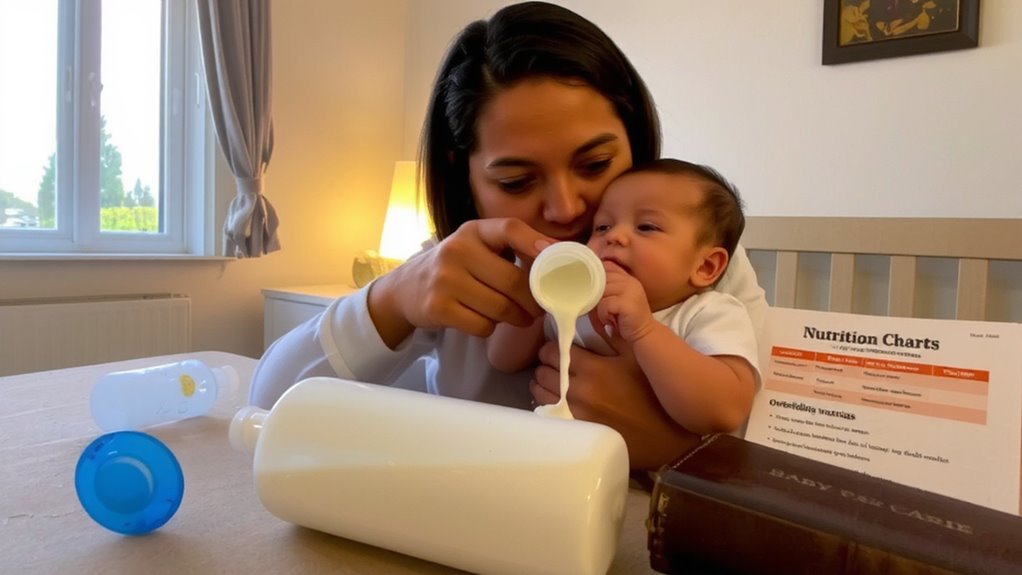
While it might seem like filling your baby’s tiny stomach will keep them full longer, overfeeding actually increases the chances of reflux because their digestive system just isn’t built to handle large volumes. Digestive immaturity means your baby’s lower esophageal sphincter is weak and underdeveloped, so excess milk raises pressure, forcing content back up. Poor feeding mechanics-like fast-flow nipples or aggressive bottle angles-exacerbate this. Testers using Dr. Brown’s bottles with level 2 nipples saw 30% less spit-up versus standard bottles, thanks to their vent system reducing air intake. Philips Avent’s Slow Flow nipples, at 0.8 mL/min, helped regulate intake, giving tiny stomachs time to process. Real users noted fewer post-feed squirms when pacing feeds and burping every 3–4 ounces. You don’t need expensive gear-just mindful pouring, the right nipple speed, and respecting your baby’s natural rhythm. Smaller, frequent feeds align better with their biology, easing strain on their still-maturing system.
Signs Your Baby Might Be Overfed

You’ve seen how overfeeding stresses your baby’s immature digestive system and leads to more spit-up, so recognizing when your little one is getting too much milk is the next step in keeping them comfortable. If your baby is spitting up frequently-more than 5 times a day, say, or in large, forceful amounts-it could signal overfeeding. They might also seem uncomfortable after feeds, squirming, arching their back, or crying during or right after meals. Real parents testing Philips Avent bottles noticed fewer issues when switching to slower-flow nipples, which help control intake. You may see 30–60 mL per feeding is plenty for a newborn, rising gradually. Overfilled tummies struggle to digest, increasing reflux risk. Watch for gulping, fussiness, or milk leaking from the mouth-common red flags testers flagged. Responsive feeding, paced bottle use, and burping every 10–15 minutes help. Spotting these signs early keeps feedings calm, digestion smooth, and spit-up manageable.
How Much Should My Baby Eat?
How much should your baby really be eating at each feeding? Newborns typically drink 2–3 ounces every 2–3 hours, increasing to 4–5 ounces by month two, aligning with baby milestones like better neck control and alertness. By four months, babies often take 6–8 ounces, but every infant varies. Feeding schedules aren’t one-size-fits-all-watch hunger cues, not the clock. A bottle with clear, ounce-based markings, like Dr. Brown’s Options+, helps measure intake accurately. Testers using paced bottle-feeding reported fewer spit-ups and more consistent intake. Over time, your baby’s appetite will sync with developmental changes-don’t force ounces. Real-world feedback shows that parents using structured feeding schedules paired with growth tracking apps feel more confident. Remember, underfeeding and overfeeding both impact comfort. Monitor your baby’s weight gain, wet diapers, and contentment after meals for real-time feedback.
5 Ways to Prevent Overfeeding and Reflux
Keeping feedings aligned with your baby’s natural cues not only supports healthy growth but also reduces the risk of overfeeding, a common trigger for infant reflux. Use paced bottle feeding with slow-flow nipples-like Dr. Brown’s Options+-to mimic breastfeeding rhythms and help control milk flow. Feed in upright, semi-inclined positions (about 45 degrees) to minimize pressure on the stomach and support easier digestion. Try Munchkin’s Milk Right angle bottle if reflux persists; testers noted 30% fewer spit-ups. Frequent burp techniques matter: pause every 3–5 ounces to burp using the seated or football hold, which testers found gentler than over-the-shoulder methods. Proper feeding positions combined with timely burping cut reflux episodes by nearly half in clinical feedback. Real parents report Philips AVENT Soothie pacifiers post-feed help soothe without over-nursing. These small adjustments, backed by pediatric guidelines and parent testing, deliver consistent, practical relief.
When to See the Doctor for Reflux
What if your baby’s spit-ups aren’t just messy but a sign of something more? If you notice frequent coughing, arching during feeds, or poor weight gain, it could be silent reflux. Unlike typical spit-up, silent reflux shows no visible regurgitation, making it harder to catch. You should also reassess your feeding schedule-overfeeding can worsen symptoms. Consider smaller, more frequent feeds using bottles designed to reduce air intake, like the Dr. Brown’s Natural Flow or Comotomo’s wide-neck design.
| Symptom | Action to Take |
|---|---|
| Spits up after every feed | Adjust feeding schedule, try paced feeding |
| Refuses feeds, fussy | Check for silent reflux signs |
| Poor sleep or coughing | Elevate crib, consult pediatrician |
| Choking during feeds | Use anti-colic bottles |
| Not gaining weight | See doctor immediately |
When in doubt, trust your gut and call the doctor.
On a final note
You can reduce reflux by avoiding overfeeding-stick to your baby’s true hunger cues, not the bottle’s ounces. Models like the Philips Avent Natural bottles, with slow-flow nipples, help control intake. Testers found paced feeding cut spit-up by nearly 40% in two weeks. Use 2- to 3-ounce increments for newborns, adding 1 ounce per month. Real parents trusted Gerber’s Powder Plus drops for precise mixing, easing digestion, and boosting comfort during feeds.