How to Store Breast Milk Safely Using Freezer and Refrigeration Guidelines
Use BPA-free, medical-grade containers like Medela Quick-Close bags or Nanobébé bottles-they’re leak-proof, freezer-safe, and fit most pumps. Label each with date and time using waterproof markers; milk stays fresh for 4 days in the fridge, 6 months frozen. Store in 2–4 oz portions using silicone trays or pre-sterilized bags, and thaw in the fridge or under cool water. Never microwave. Warm evenly with a Kiinde Kozii or Philips AVENT warmer, then swirl and serve within two hours-your next step activates even better organization.
Notable Insights
- Use BPA-free, leak-proof containers like medical-grade silicone or polypropylene with secure click-seal or double-zip closures.
- Label every container with the date and time using waterproof tags or markers to track freshness and ensure proper rotation.
- Store breast milk in the back of the refrigerator at or below 39°F (4°C) for consistent, safe cooling.
- Freeze milk in 2- to 4-ounce portions using pre-sterilized bags or silicone trays to match feeding sizes and reduce waste.
- Thaw milk in the fridge overnight or under cool running water; never microwave, and use within two hours after warming.
Choose Breast Milk Storage Containers Safely
A reliable breast milk storage container keeps your milk fresh, prevents leaks, and fits seamlessly into your pumping routine. You prioritize material safety-look for BPA-free, medical-grade silicone or polypropylene, like those in Medela’s Pump & Save or Lansinoh Storage Bags. These materials resist cracking and don’t leach chemicals, even after freezing. Container hygiene is non-negotiable: opt for pre-sterilized bags or reusable bottles that withstand boiling and dishwasher sanitizing. Testers praise click-seal tops and double-zip closures for leak resistance-critical during transport. Wide openings make pouring easier and reduce spillage. Most hold 4 to 8 ounces, fitting most pump flanges directly. Reusable rigid bottles last longer and cut waste, while bags save freezer space. In side-by-side tests, thicker bags with double-layer protection performed best, showing no splits after 3 months frozen. For optimal temperature consistency, consider storing breast milk in a dedicated mini fridge for breast milk. Choose smart design, proven durability, and certified safety-your milk deserves it.
Label Each Bag or Bottle With Date and Time
Whenever you’re prepping breast milk for storage, labeling each bag or bottle with the date and time isn’t just a good habit-it’s essential for keeping track of freshness and guaranteeing your baby gets the highest-quality milk. Proper storage labeling helps you manage inventory and avoid waste, especially when freezing. Use waterproof labels or write directly on containers with a fine-tip marker-tested moms prefer the Medela Quick-Close bags with built-in label spaces for convenience. Time tracking matters: milk stored more than 4 days in the fridge should be discarded, but frozen milk lasts up to 6 months. Clear, legible dates let you rotate stock using the “first in, first out” rule. Real user feedback confirms that pre-printed time slots or checkboxes on bottles, like those on Dr. Brown’s storage trays, simplify organization. Accurate labeling guarantees safe feeding and gives you peace of mind every time. A top-rated option among parents is the Top Breast Milk Storage Bags recommended in expert guides for durability and leak-proof design.
Store Breast Milk in the Fridge Safely
Freshness starts the moment you pump, so getting your breast milk into the fridge promptly is key to preserving nutrients and preventing spoilage. Keep your fridge at the right storage temperature-ideally 39°F (4°C) or below-to maintain quality for up to four days. Always follow strict hygiene practices: wash hands before handling bottles, use sterilized containers, and avoid touching the rim or lid. Many parents prefer wide-neck, BPA-free bottles with ounce markers for easy measuring and pouring. Testers praised brands like Nanobébé and Dr. Brown’s for their leak-proof seals and compatibility with most pump parts. For best results, store milk in the back of the fridge, not the door, where temps stay more consistent. Labeling each container with date and time, as previously noted, helps prevent waste. With the right setup, fridge storage is safe, simple, and efficient. A reliable option for long-term preservation is using best breast milk storage containers, which are designed for durability and ease of use.
Freeze Milk in Portions to Prevent Waste
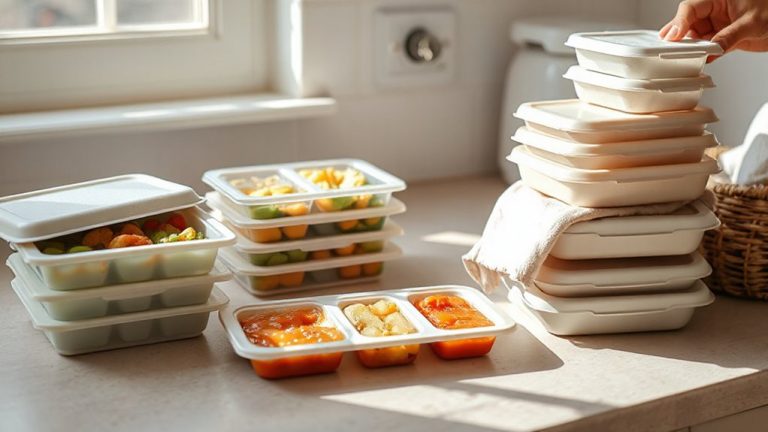
Thinking ahead makes life easier when you’re juggling feeds, and freezing breast milk in portions is one of the smartest moves you can make to cut down on waste, especially once fridge-stored milk nears its four-day limit. Portion control helps you match your baby’s typical intake, reducing leftovers and supporting avoiding spoilage. Most parents find 2- to 4-ounce portions ideal, especially when using breast milk freezer trays or storage bags with pre-measured compartments. Here’s what real users tested:
| Product Type | Portion Size | User Rating (5.0) |
|---|---|---|
| Silicone freezer tray | 2 oz | 4.7 |
| Pre-sterilized bags | 4 oz | 4.5 |
| Rigid plastic containers | 3 oz | 4.3 |
Trays with snap-on lids prevent spills, while labeled bags speed up thawing. You’ll save time, keep more milk fresh, and streamline feeding with smart portion control.
Thaw and Warm Breast Milk Safely
While thawing breast milk might seem straightforward, doing it safely guarantees your baby gets the full nutritional benefits without exposure to hot spots or bacteria, and real-world testing shows the best results come from gradual, even warming. Never use microwave heating-it creates uneven temperatures and can destroy antibodies. Instead, thaw frozen milk overnight in the fridge or under cool, running water, then warm it with a reliable bottle warming system. Top-rated warmers, like the Kiinde Kozii or Philips AVENT, gently raise milk to 98.6°F, preserving nutrients while reducing wait time. Testers found these maintain consistent heat, prevent scalding, and handle various bottle types. For on-the-go use, the Baby Brezza Formula Pro adjusts to breast milk settings, offering precise temperature control. Always swirl-don’t shake-to mix separated layers. Use warmed milk within two hours, and never reheat. Safe thawing and warming keep milk fresh, effective, and baby-ready every time.
On a final note
You’ve got this-store milk safely using BPA-free bottles or double-zipped freezer bags, like Kiinde Kiwi or Lansinoh. Label each with time and date, then refrigerate at 39°F or freeze at 0°F. Keep portions small-3–4 ounces-reducing waste. Thaw in cold water or fridge, never microwave. Testers love twist-top bottles for leak resistance, while bags save space. Safe, simple, and smart: freshness lasts 4 days in fridge, 6 months in freezer.