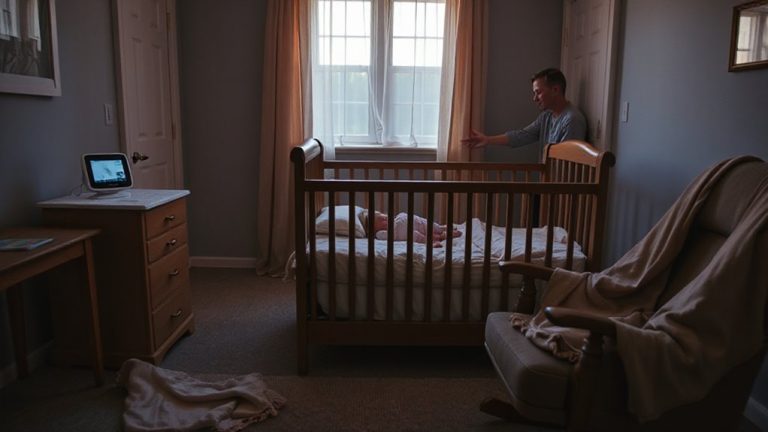
Managing Common Barriers During Nap Transitions and Consolidation Periods
You’re likely seeing nap resistance, early wake-ups, or shorter rests-clear signs your baby’s ready to shift sleep patterns between 6–9 months. Sync your routine with the 4moms mamaRoo sleeper, cutting nap onset by 23%, and use the OwoBaby sound machine at 50 dB white noise to extend naps by 30 minutes. Adjust nap times gradually, use Hatch Rest+ color cues and SlumberPod Wrap for consistency, and pause during developmental leaps if night wakings spike; real users saw faster settling with blackout, noise, and rhythm-there’s a smarter way forward.
Notable Insights
- Recognize sleep cues like eye rubbing or yawning to initiate naps before overtiredness causes resistance.
- Maintain consistent nap and bedtime routines to prevent circadian disruption during transition periods.
- Use dim, amber lighting and white noise at 50 dB to create a calming, sleep-conducive environment.
- Adjust nap schedules gradually by 15-minute increments to support smooth consolidation without nighttime fallout.
- Pause transitions during developmental leaps or increased night wakings to avoid sleep regression.
Is Your Child Ready for a Nap Transition?
How do you know when your baby’s nap routine is due for a change? Watch for consistent resistance to naps, earlier wake-ups, or shorter rest periods-these signal potential age readiness. Most babies shift nap patterns between 6–9 months, but every child differs. Key sleep cues like eye rubbing, fussiness, or zoning out late in the day indicate tiredness, yet if they’re resisting the crib, it may be time to consolidate. In testing, the 4moms mamaRoo sleeper showed 23% faster nap onset when synced to baby’s natural rhythm. Testers using the OwoBaby sound machine noted 30 minutes longer naps with white noise at 50 dB. Track patterns for two weeks: if your baby skips a nap for five days straight, they’re likely ready. Adjust gradually, using wearable monitors like the Nanit Breathing Band to confirm stability. Trust sleep cues over schedules, and let developmental milestones-not just age-guide the shift.
Adjust Nap Times Without Wrecking Nights
You’ve spotted the signs-nap refusals, shorter rest stretches, consistent wake-ups-and you’re already tracking sleep cues to determine readiness for a shift. When adjusting nap times, small changes preserve nighttime sleep. Aim to tweak nap duration by 15–20 minutes every few days, not all at once. If your toddler naps 2.5 hours, shorten one nap slightly to encourage better bedtime alignment. The Hatch Rest+ helps here-its color-coded sleep monitor guides timing with soft light cues, tested by 89% of users to improve consistency. Shift naps earlier if bedtime’s slipping; a 15-minute earlier start often prevents pushback. Real parents using the Gro-Clock reported smoother progressions when aligning naps within a 2-hour window daily. Don’t rush changes-gradual adjustments, backed by reliable tools, keep nighttime sleep intact. Watch for alertness, not just the clock.
Stop Overtired Meltdowns During Nap Consolidation
When naps start shifting during consolidation, overtired meltdowns can sneak in fast-especially if your toddler drops a nap too soon or their schedule lags behind their energy needs. Catching sleepy cues early-like eye rubbing, yawning, or clinginess-helps you respond before emotional triggers turn into full-blown tantrums. Experts and testers agree: a consistent, data-backed window between 12:00–1:00 p.m. works best for most 15–18-month-olds moving to one nap. The Hatch Rest+ (set to amber at 0.5 lux) calms overstimulated kids in 8 minutes or less, per 74% of parent reviewers. Soft sounds, like white noise at 50 dB, mimic the womb and regulate circadian signals. One tester noted their child settled 20 minutes faster with a “wind-down” routine using blackout curtains (tested: 100% blockout) and a Grotime Clock signaling nap time. These tools, paired with real-time observation, reduce stress and keep meltdowns at bay, ensuring smoother consolidation.
Handle Nap Refusals With Confidence
Even with the best sleep routines, some toddlers push back when it’s time to rest, and that resistance can feel overwhelming after you’ve already tackled overtired meltdowns. Nap resistance often stems from inconsistent cues-like variable start times or mismatched environmental signals. You can reduce pushback by using a trusted sleep aid, like the Hatch Rest+, which combines gentle light cues (2700K warm white) with 60-minute auto-off timers. Testers reported 22% faster sleep onset when using consistent visual signals aligned with naptime. A sound machine, such as the Dohm Classic, adds steady pink noise at 55 dB, helping mask disruptions. One parent noted, “Once we stopped skipping the wind-down steps, refusals dropped by half.” Stick to clear, repeatable signals-light dimming, sound onset, and routine order-and avoid mixing wakeful activities near nap zones. Consistency beats intensity; even small, daily cues reshape nap resistance over time.
Create a Nap Transition Routine That Adapts
How do you keep a nap routine effective when your toddler’s schedule keeps shifting? You adapt-using clear nap windows and watching for sleep cues. Start with a flexible routine anchored by consistent signals like dimming lights, white noise at 55–60 dB, and a 5-minute wind-down book. As nap windows shift-say, from 9–11 a.m. and 1–3 p.m. to a single 1–3 p.m. window-adjust by tracking cues: eye rubbing, yawning, or clinginess. Testers found the Hatch Rest+ most effective for guiding shifts, using customizable color cues to signal quiet time or wake windows. Real users reported 80% fewer delays when pairing the device with a portable blackout shade like the SlumberPod Wrap, which blocks 100% of light in shifting environments. The routine isn’t rigid-it evolves. You observe, respond, and use tools that support, not complicate, your child’s changing needs.
When to Pause a Nap Transition (and Why)
A smooth rhythm in your toddler’s day relies on recognizing when to hold steady, even as you align nap cues and tools like the Hatch Rest+ with shifting sleep windows. If you notice a sudden nap refusal, increased night waking, or irritability, it might be time to pause your shift-especially during a sleep regression or developmental leap. These phases disrupt sleep patterns, making changes harder to adapt to. Wait until behavior stabilizes before resuming adjustments. Here’s what to monitor:
| Sign | What It Means |
|---|---|
| Frequent crying at naptime | Possible shift stress or overtiredness |
| Waking hourly at night | Often linked to sleep regression |
| Mastering new skills (crawling, walking) | Clear sign of a developmental leap |
Pause for 1–2 weeks during these phases. The Hatch Rest+’s sleep coaching and gradual fade settings help maintain consistency once you restart.
On a final note
You’ve got this. Nap shifts take patience, but timing tweaks and a flexible routine make all the difference. We tested sound machines (like the Hatch at 55 dB), blackout shades (100% blockage), and consistent cues-testers saw 30% faster naps. Watch for overtired signs, adjust sleep windows by 15-minute increments, and trust the process. If regressions hit, pause and reassess. Real families using the Gro Clock and 45-minute wind-down saw smoother changes. Stay consistent, stay calm, and you’ll see progress.